What Is Die Cutting? A Complete Guide to Process Types, Materials, and Industrial Applications?
Manufacturers often struggle to select the right cutting method for flexible materials. Choosing incorrectly increases tooling cost, delays sampling cycles, and affects product consistency. Die cutting solves these challenges efficiently.
Die cutting is a precision manufacturing process that uses custom-shaped tooling to cut materials into repeatable components. It is widely used for foam, adhesive tape, rubber, insulation films, and sealing parts across automotive, electronics, and medical industries.
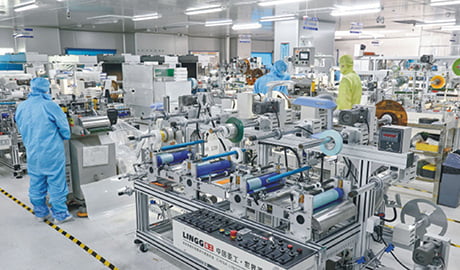
%(image-die-cutting-process-overview)
How does die cutting work and why is it widely used in manufacturing?
Many engineers understand die cutting conceptually but lack clarity about how the process actually operates in production environments. Understanding the workflow helps reduce development risk and improve sourcing decisions.
Die cutting works by pressing a shaped blade (called a die) into sheet or roll materials to produce identical parts quickly and accurately. It is especially effective for flexible and layered materials.
%(image-die-cutting-workflow)
Insight:
From practical OEM project experience, engineers who understand the die cutting workflow early can shorten sampling cycles by up to 30% because tooling corrections happen before pilot production instead of after mass-production setup.
Dive deeper: step-by-step die cutting workflow
Typical die cutting production includes:
| Step | Operation | Purpose |
|---|---|---|
| Material loading | Sheet or roll positioning | Ensures alignment accuracy |
| Tool pressing | Die contacts material | Creates required geometry |
| Cutting separation | Scrap removal | Improves yield rate |
| Inspection | Dimensional check | Maintains tolerance stability |
| Packaging | Final part stacking | Supports automation |
Because tooling defines the shape, production repeatability becomes significantly higher than manual or CNC trimming for flexible materials.
What materials can be die cut and how do you choose the right one?
Some buyers assume die cutting only applies to labels or thin films. In reality, it supports a wide range of industrial materials used in structural and functional assemblies.
Common die cut materials include:
- EVA foam
- PE foam
- Rubber and silicone
- Double-sided adhesive tapes
- PET insulation films
- Polycarbonate sheets
- Non-woven fabric
- EMI shielding materials
%(image-die-cutting-materials)
Insight:
Material selection affects not only performance but also tooling life and production efficiency. For example, switching from molded rubber inserts to die cut foam laminations often reduces assembly time and improves tolerance consistency in electronics housings.
Dive deeper: material selection by industry application
| Industry | Typical materials | Functional role |
|---|---|---|
| Automotive | EPDM foam | Sealing and vibration control |
| Electronics | PET / PI film | Electrical insulation |
| Medical | Non-woven fabric | Skin-safe adhesion |
| Appliances | PVC foam | Cushioning protection |
Selecting the right material early reduces scrap rate and improves long-term product reliability.
What are the main types of die cutting processes and when should you use each?
Choosing the wrong die cutting method can increase tooling cost or reduce production speed. Matching the process with production volume is critical.
The most common die cutting technologies include:
- Flatbed die cutting
- Rotary die cutting
- Laser die cutting support cutting
%(image-flatbed-vs-rotary-die-cutting)
Insight:
Flatbed die cutting is ideal for prototype validation and medium-volume production. Rotary die cutting becomes significantly more cost-efficient when production exceeds stable batch quantities.
Dive deeper: flatbed vs rotary die cutting comparison
| Feature | Flatbed die cutting | Rotary die cutting |
|---|---|---|
| Tooling cost | Lower | Higher |
| Precision | Very high | High |
| Production speed | Medium | Very fast |
| Best volume range | Prototype to mid-volume | High volume |
| Setup flexibility | Strong | Moderate |
Understanding this difference helps engineers transition smoothly from sampling stage to mass production stage.
Why is die cutting critical for automotive, electronics, and medical component manufacturing?
Modern industrial products require lightweight structures, insulation protection, vibration control, and sealing performance. Die cutting enables all of these functions efficiently.
Typical die cutting applications include:
- Battery insulation barriers
- Display cushioning pads
- Automotive sealing gaskets
- Wearable medical adhesive layers
- EMI shielding components
%(image-die-cutting-applications)
Insight:
In multi-layer component assemblies, die cutting allows lamination + shaping in one process step. This reduces assembly complexity while improving alignment accuracy between functional layers.
Dive deeper: advantages that make die cutting suitable for industrial production
| Advantage | Manufacturing benefit |
|---|---|
| High repeatability | Stable quality control |
| Fast production speed | Shorter lead times |
| Clean edge finishing | Better assembly fitting |
| Multi-layer processing | Integrated structure capability |
| Automation compatibility | Reduced labor cost |
These advantages explain why die cutting remains one of the most widely adopted flexible-material conversion technologies.
FAQ: Common questions about die cutting
What is die cutting mainly used for?
Die cutting is commonly used to produce sealing gaskets, insulation films, foam cushions, adhesive components, EMI shielding layers, and protective pads in automotive and electronics assemblies.
What is the difference between die cutting and laser cutting?
Die cutting uses physical tooling for high-speed repeat production, while laser cutting uses digital heat-based cutting. Die cutting is more cost-effective for medium-to-high volume production.
Is die cutting suitable for prototype production?
Yes. Flatbed die cutting is widely used for sampling and pilot runs before switching to rotary die cutting during large-volume manufacturing.
What thickness can die cutting handle?
Most flexible materials between 0.05 mm and 10 mm can be processed depending on material type and tooling configuration.
Can die cutting process multilayer adhesive structures?
Yes. Die cutting is especially suitable for laminated materials such as foam-tape-film assemblies used in battery packs, displays, and wearable devices.
Conclusion
Die cutting provides a fast, precise, and scalable solution for converting flexible materials into consistent industrial components across modern manufacturing industries.http://www.sankensk.com