
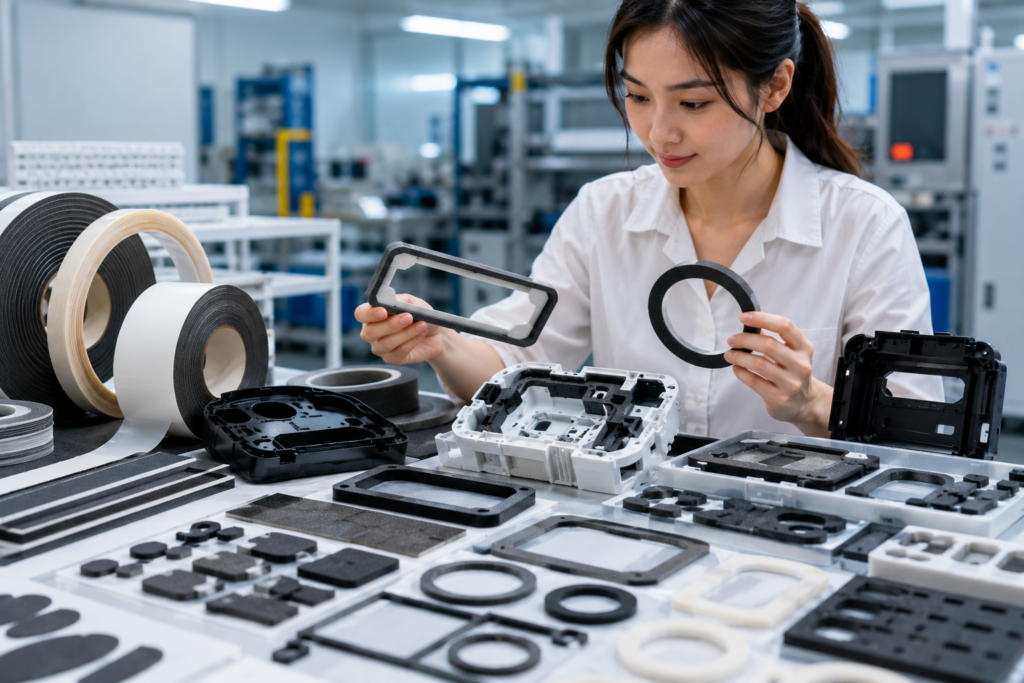
Foam gaskets help OEM manufacturers seal interfaces, cushion sensitive components, fill assembly gaps and reduce vibration. However, choosing a suitable material involves more than comparing thickness or selecting the softest sample.
EVA, PE, PU, EPDM and silicone foam respond differently to compression, environmental exposure, adhesive bonding and repeated assembly stress. A material that performs well as a cushioning pad may not provide consistent sealing inside an electronic enclosure.
The right choice depends on the gasket’s function, assembly gap, operating environment and manufacturing requirements.
Start With the Actual Gasket Function
Before choosing a foam material, identify what the component must accomplish after installation.
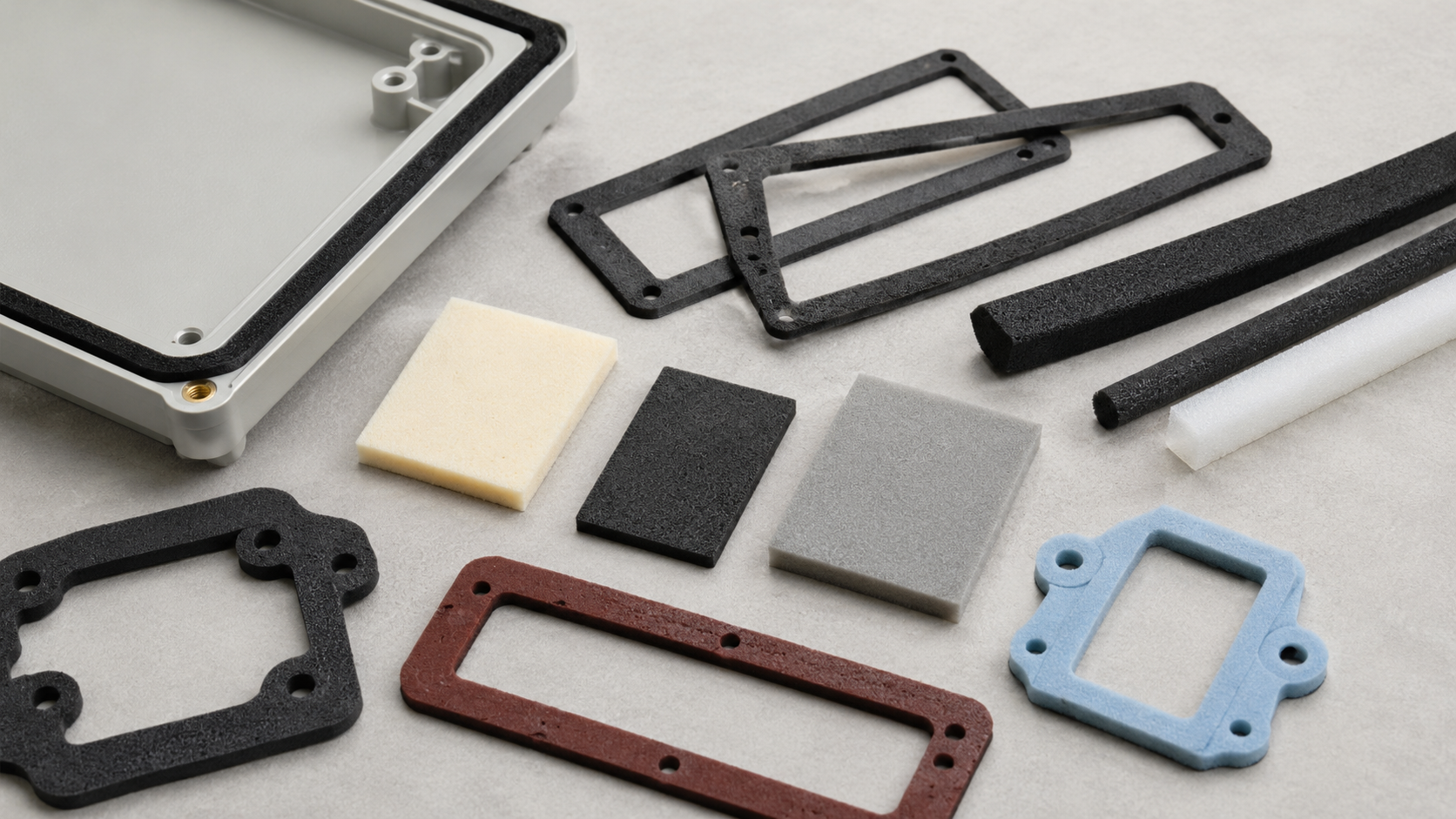
A sealing gasket needs consistent contact between mating surfaces. A cushioning pad should protect adjacent components without generating excessive pressure. An anti-rattle part must reduce unwanted movement or contact noise.
Typical functions include:
- Sealing electronic housings and protective covers.
- Cushioning delicate components during assembly.
- Filling variable gaps between neighboring parts.
- Reducing vibration and contact noise.
- Protecting surfaces against abrasion.
- Supporting accurate component positioning.
Some applications require multiple functions. For example, a foam frame around a display assembly may provide cushioning, gap compensation and controlled positioning at the same time.
Understanding the primary requirement helps narrow the material options before evaluating thickness, adhesive and die-cut design.
Compare Common Foam Gasket Materials
Different foam materials offer different combinations of compressibility, recovery, environmental resistance and processing stability.
| Foam Material | Typical OEM Applications | Important Selection Factors |
|---|---|---|
| EVA foam | Cushioning pads, protective spacers and general-purpose foam components | Density, compression behavior and dimensional stability |
| PE foam | Protective cushioning, gap filling and selected sealing applications | Cell structure, thickness consistency and environmental exposure |
| PU foam | Soft cushioning, conformable contact and selected gasket applications | Compression recovery, softness and application-specific performance |
| EPDM foam | Sealing components, anti-rattle parts and automotive applications | Material grade, recovery behavior and operating conditions |
| Silicone foam | Sealing and cushioning in applications involving elevated temperatures | Verified temperature suitability, compression behavior and adhesive compatibility |
Material names alone do not guarantee performance.
Some PU foam grades are suitable for gasketing applications, while certain EVA materials are better suited to cushioning than demanding long-term sealing.
Similarly, silicone foam should only be selected for elevated-temperature conditions after confirming the specific material and adhesive specifications.
The most reliable approach is to evaluate the selected foam grade against the actual assembly requirements.
Check Compression, Recovery and Assembly Gap
A foam gasket must match the real space between assembled components.
If the material is too thin, it may not create sufficient contact across the sealing interface. If it is too thick or too firm, the assembly may become difficult to close or place unnecessary stress on a plastic housing.
Key considerations include:
- Minimum and maximum assembly gap.
- Foam thickness before installation.
- Available closing force.
- Compression during assembly.
- Recovery after repeated loading.
- Risk of permanent deformation.
- Variation between production components.
Compression recovery is particularly important when a gasket remains under load for extended periods. If the foam becomes permanently flattened, the component may lose sealing pressure or cushioning effectiveness.
Density should also be considered alongside compression behavior. A denser material is not automatically better if the housing cannot apply enough force to compress it effectively.
For a more detailed discussion, review how to choose foam thickness for custom die-cut foam gaskets.
Consider Adhesive Backing and Bonding Surfaces
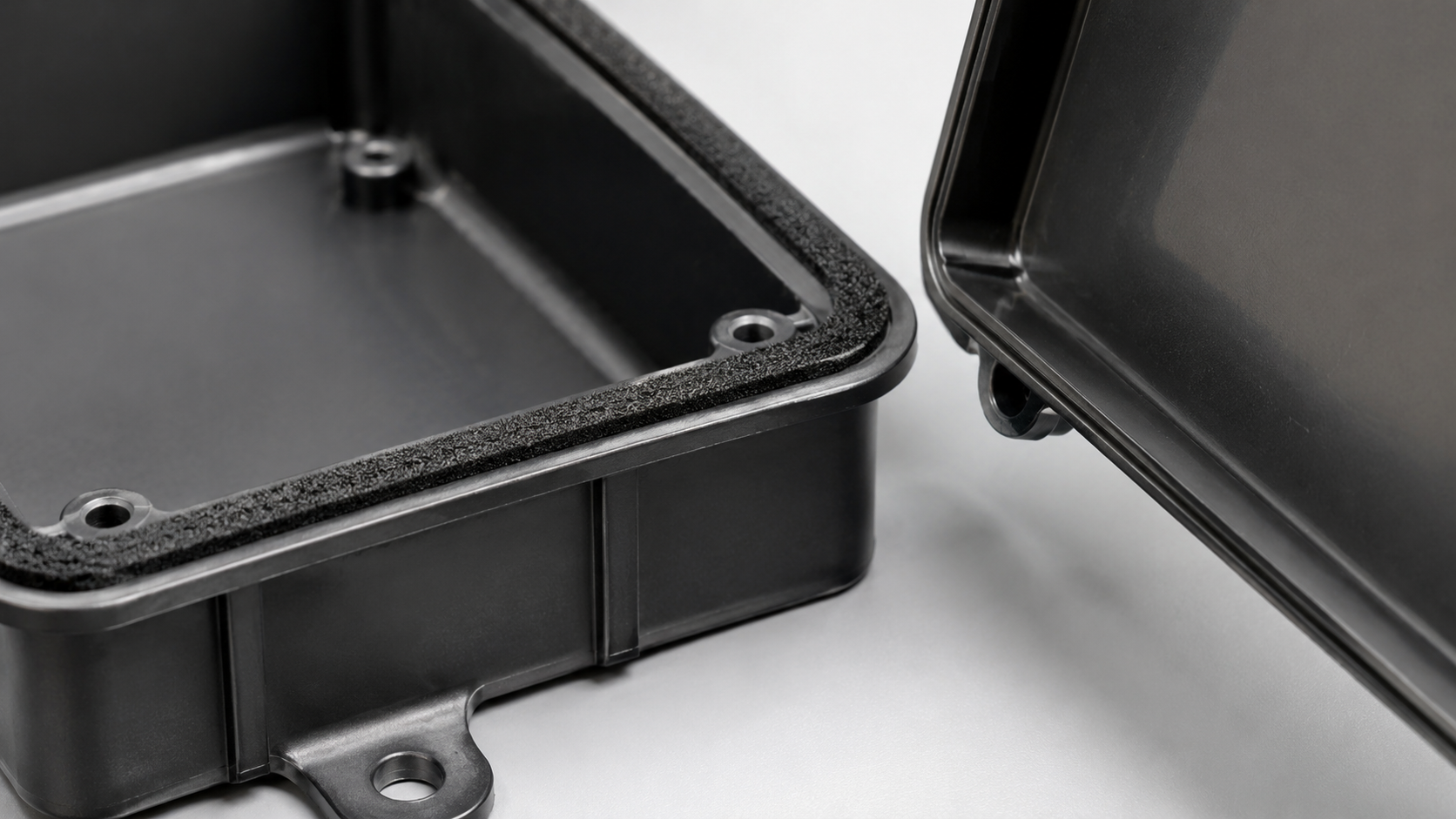
Many custom foam gaskets require pressure-sensitive adhesive to keep the component in place during installation.
The adhesive must be compatible with both the foam and the surface receiving the part.
Common bonding surfaces include:
- Plastic housings.
- Glass or coated surfaces.
- PET film components.
- Painted enclosure parts.
- Automotive interior panels.
- Appliance assemblies.
If the adhesive is unsuitable, the gasket may lift, shift or peel away even when the foam itself meets the performance requirements.
Surface texture, cleanliness and assembly pressure can also influence bonding reliability. Narrow foam frames may require additional attention because limited adhesive contact increases the risk of edge lifting.
The release liner is equally important. A liner that is difficult to remove can stretch soft foam parts, while an unsuitable release level may cause handling problems during production.
For related selection guidance, see how to choose adhesive-backed foam gaskets for OEM assembly.
Review Die Cutting and Part Design
Foam selection should always be considered together with the shape and manufacturing method of the finished component.
A suitable material can still create production problems if the gasket has narrow sections, difficult internal corners or a structure that deforms during cutting.
Important design factors include:
- Gasket frame width.
- Inner and outer corner geometry.
- Hole placement and edge distance.
- Adhesive coverage.
- Release liner configuration.
- Waste removal during die cutting.
- Part spacing on sheets or rolls.
- Handling requirements during installation.
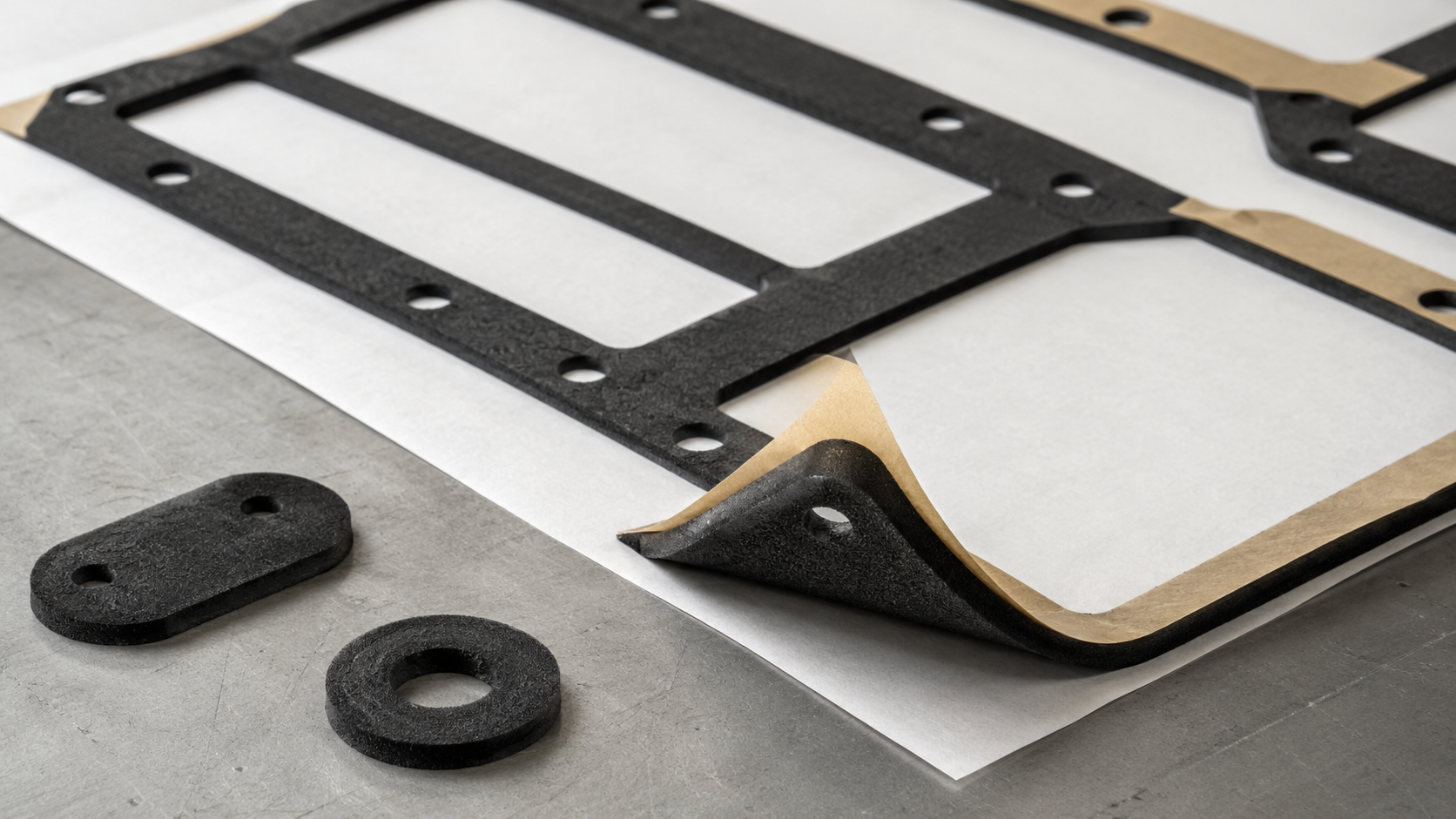
Depending on the assembly, foam materials can be converted into custom frames, strips, pads, rings and adhesive-backed sealing components.
For selected applications, kiss-cut foam parts supplied on release liners can make handling and positioning more efficient.
Explore Sanken’s precision die-cutting services and custom die-cut parts for additional information about component formats and converting capabilities.
Match the Material to the Application
The same foam material can perform differently depending on its grade, thickness, adhesive structure and installation conditions.
| Application | Typical Die-Cut Component | Main Requirement |
|---|---|---|
| Electronic housings | Foam gasket frames and sealing strips | Consistent contact and controlled compression |
| Automotive interiors | Anti-rattle pads and cushioning strips | Vibration reduction and reliable positioning |
| Display assemblies | Protective foam frames and spacing pads | Surface protection and controlled assembly pressure |
| Appliance components | Foam sealing pads and vibration-control parts | Stable fit and suitable environmental resistance |
| Industrial control panels | Custom gasket frames and cushioning components | Repeatable assembly and dependable gap compensation |
For automotive-related projects, the component should be evaluated according to its actual installation location rather than assuming every foam material is suitable across the entire vehicle.
More application information is available through Sanken’s automotive manufacturing solutions.
Avoid Common Foam Gasket Selection Mistakes
Many gasket failures occur because the material was selected without considering the complete assembly.
Common mistakes include:
- Choosing foam only by price or thickness.
- Assuming every foam grade provides the same sealing performance.
- Ignoring long-term compression and recovery.
- Selecting adhesive without checking the bonding surface.
- Using material that is too firm for a lightweight housing.
- Designing narrow gasket sections that tear during installation.
- Overlooking release liner handling and delivery format.
- Approving a material without reviewing the operating environment.
A more effective process evaluates the foam material, adhesive, component geometry and installation method together.
Conclusion
The right foam gasket material depends on the real sealing, cushioning or gap-filling requirements of the assembly.
EVA, PE, PU, EPDM and silicone foam can support different OEM applications when their compression behavior, material grade, adhesive structure and manufacturing requirements are properly evaluated.
For a new custom gasket project, provide the component drawing, assembly gap, operating conditions, preferred adhesive construction and expected production volume so the material and converting process can be reviewed together.
Related Articles
- https://sankenprecision.com/how-to-choose-adhesive-backed-foam-gaskets-for-oem-assembly/
- https://sankenprecision.com/how-to-choose-foam-thickness-for-custom-die-cut-foam-gaskets/
- https://sankenprecision.com/custom-adhesive-foam-gaskets-materials-applications-and-manufacturing-process/
- https://sankenprecision.com/custom-die-cut-foam-gaskets-for-automotive-electronics/
- https://sankenprecision.com/how-to-stop-foam-gaskets-from-losing-sealing-performance/