

How Is EVA Foam Used in Die-Cut and Converted Products?
EVA foam is widely used in die-cut and converted products because it is lightweight, flexible, shock-absorbing, easy to process, and suitable for custom shapes. For OEM buyers, EVA foam is not just a soft material. It can become a functional component that improves protection, assembly efficiency, vibration control, sealing support, and product reliability.
But EVA foam only performs well when the right material grade, thickness, density, adhesive structure, and converting method are selected.
Many problems happen when buyers treat EVA foam as a simple sheet material. A foam part may look acceptable during sampling, but later collapse under compression, peel after adhesive backing, deform during die cutting, or fail in automotive and electronics applications.
At Sanken Manufacturing, we help customers turn EVA foam into precision die-cut pads, adhesive-backed parts, laminated foam assemblies, cushioning components, protective liners, anti-vibration parts, and custom converted products for automotive, electronics, packaging, medical equipment, consumer goods, and industrial applications.
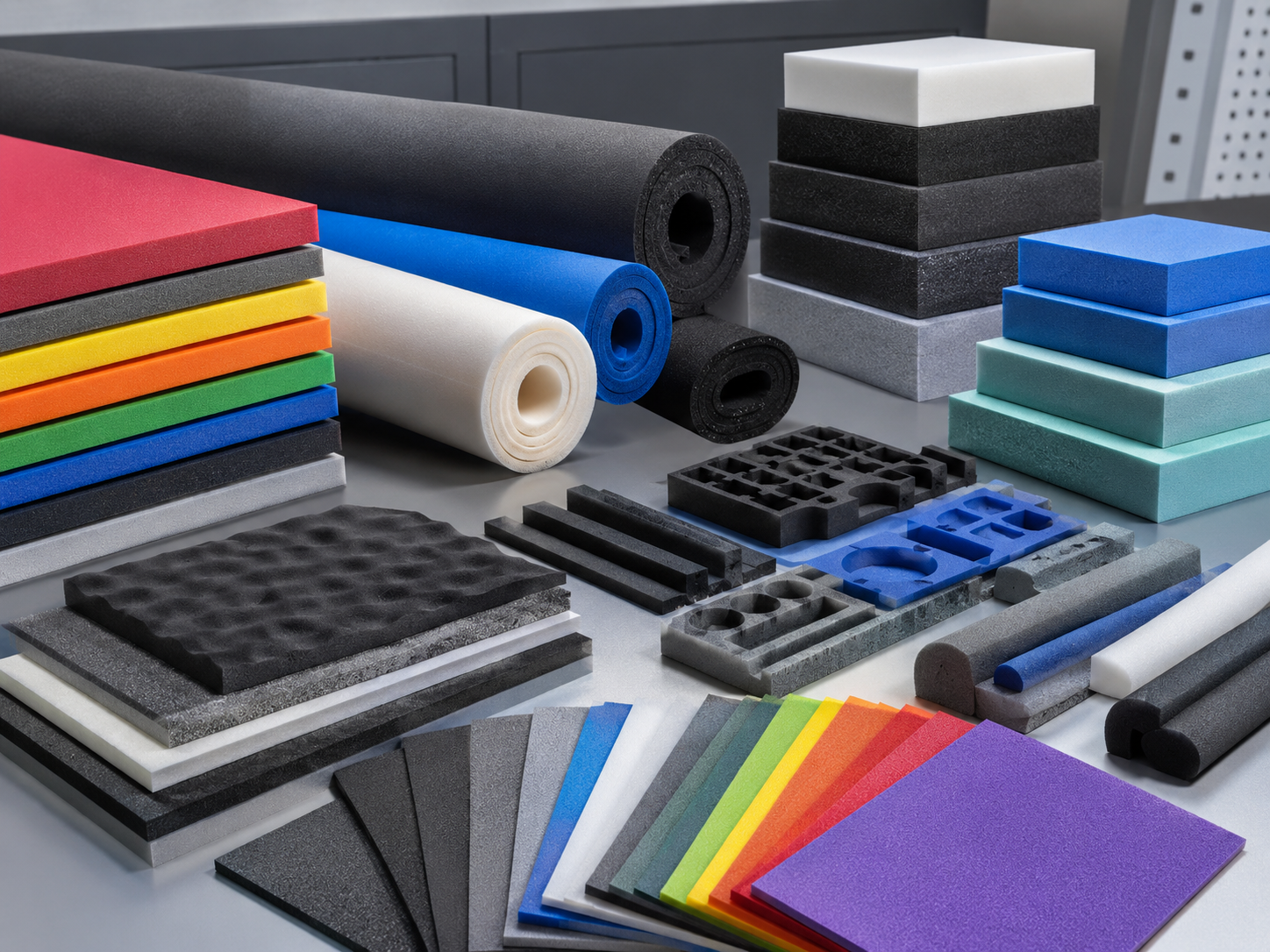
What Is EVA Foam?
EVA stands for ethylene-vinyl acetate. It is a flexible polymer material often produced as foam sheets, rolls, molded foam parts, and adhesive-backed components.
EVA foam is popular because it offers a strong balance of:
- Cushioning
- Flexibility
- Shock absorption
- Lightweight performance
- Water resistance
- Easy die cutting
- Easy lamination
- Cost efficiency
For industrial products, EVA foam is commonly used when a component needs to protect, cushion, separate, seal lightly, reduce vibration, or improve assembly fit.
Why EVA Foam Is Suitable for Die Cutting
Die cutting allows EVA foam to be converted from flat sheets or rolls into precise custom shapes.
This is useful because most OEM customers do not need raw EVA foam sheets. They need finished parts that can be installed directly into a product.
Common die-cut EVA foam parts include:
| Product Type | Main Function |
|---|---|
| Foam pads | Cushioning and protection |
| Foam strips | Gap filling and anti-rattle support |
| Foam gaskets | Light sealing and spacing |
| Foam washers | Cushioning around holes or fasteners |
| Packaging inserts | Product protection during shipping |
| Adhesive-backed parts | Fast assembly and positioning |
| Multilayer foam parts | Combined acoustic, bonding, or insulation functions |
EVA foam is especially suitable for die cutting because it can be processed into clean shapes, holes, slots, strips, curves, and complex contours.
However, soft foam can deform if the cutting pressure, tooling, or material support is not controlled correctly. That is why precision converting experience matters.
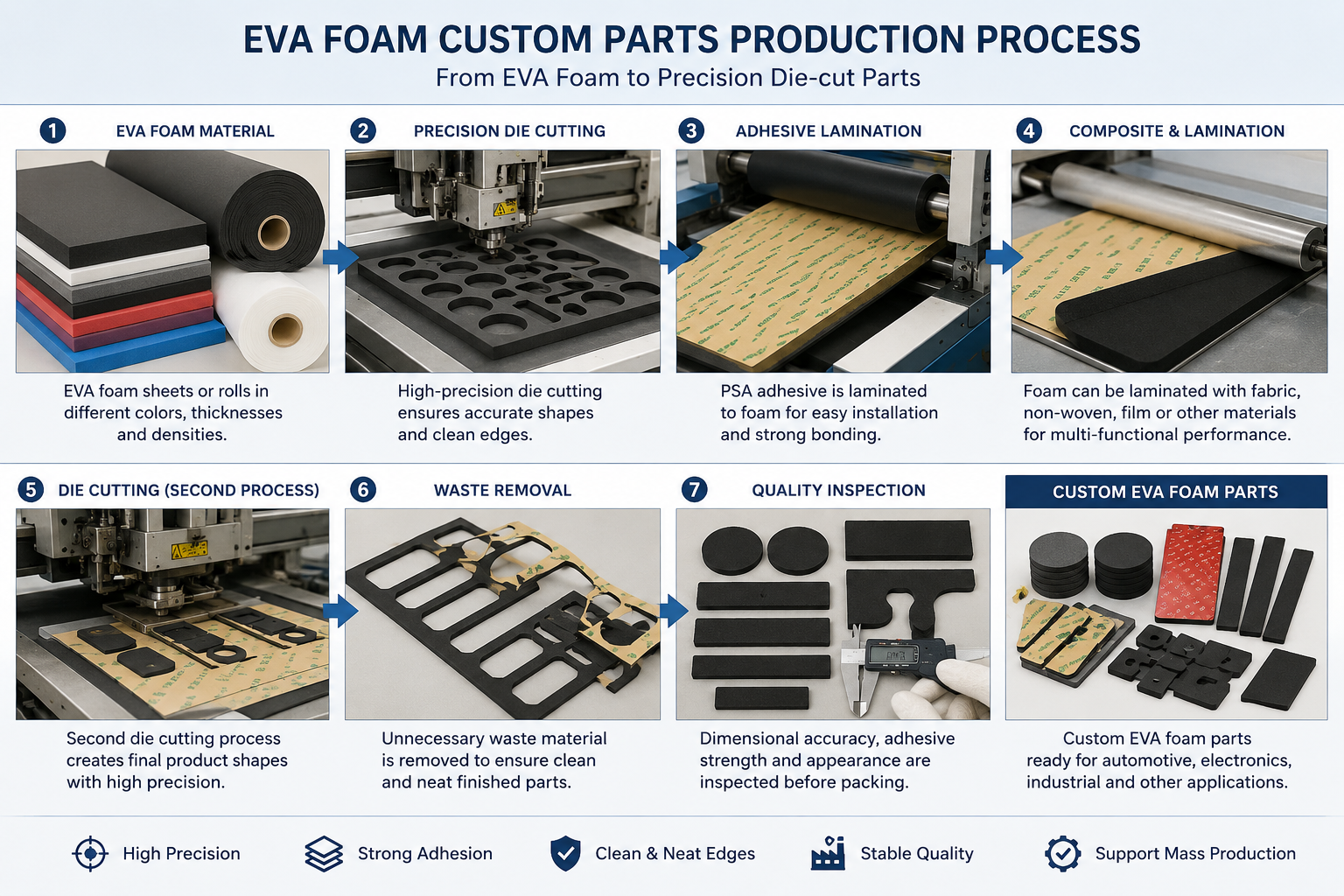
How EVA Foam Is Converted Into Functional Products
EVA foam converting usually includes more than cutting.
Depending on the project, the process may involve several steps.
1. Material Selection
The first step is choosing the right EVA foam grade.
Buyers should confirm:
- Density
- Thickness
- Hardness
- Color
- Cell structure
- Compression recovery
- Heat resistance
- Odor performance
- Flame-retardant requirement
- Adhesive compatibility
A low-density EVA may be soft and economical, but it may collapse under long-term pressure. A high-density EVA may provide better support, but it may be too hard for cushioning.
The correct choice depends on the final application.
2. Slitting and Sheet Cutting
Before precision die cutting, EVA foam may be slit into narrower rolls or cut into sheets.
This helps improve material handling and production efficiency.
For mass production, correct roll width or sheet size can also reduce material waste.
3. Adhesive Lamination
Many EVA foam parts need adhesive backing.
This allows the part to be applied quickly during assembly.
Adhesive-backed EVA foam is commonly used for:
- Automotive interior pads
- Electronics protection parts
- Anti-slip pads
- Spacer strips
- Packaging support parts
- Industrial mounting components
The adhesive must match the EVA surface and final environment. If the wrong adhesive is used, the part may peel, lift, or shift after installation.
4. Precision Die Cutting
After lamination, EVA foam is cut into the required shape.
The die-cutting method depends on material thickness, shape complexity, and production volume.
Common methods include:
- Flatbed die cutting
- Rotary die cutting
- Kiss cutting
- Laser cutting for special designs
- CNC cutting for samples or thick parts
For adhesive-backed EVA foam, kiss cutting is often useful. It cuts the foam layer while keeping the release liner intact, making the part easier to peel and apply.
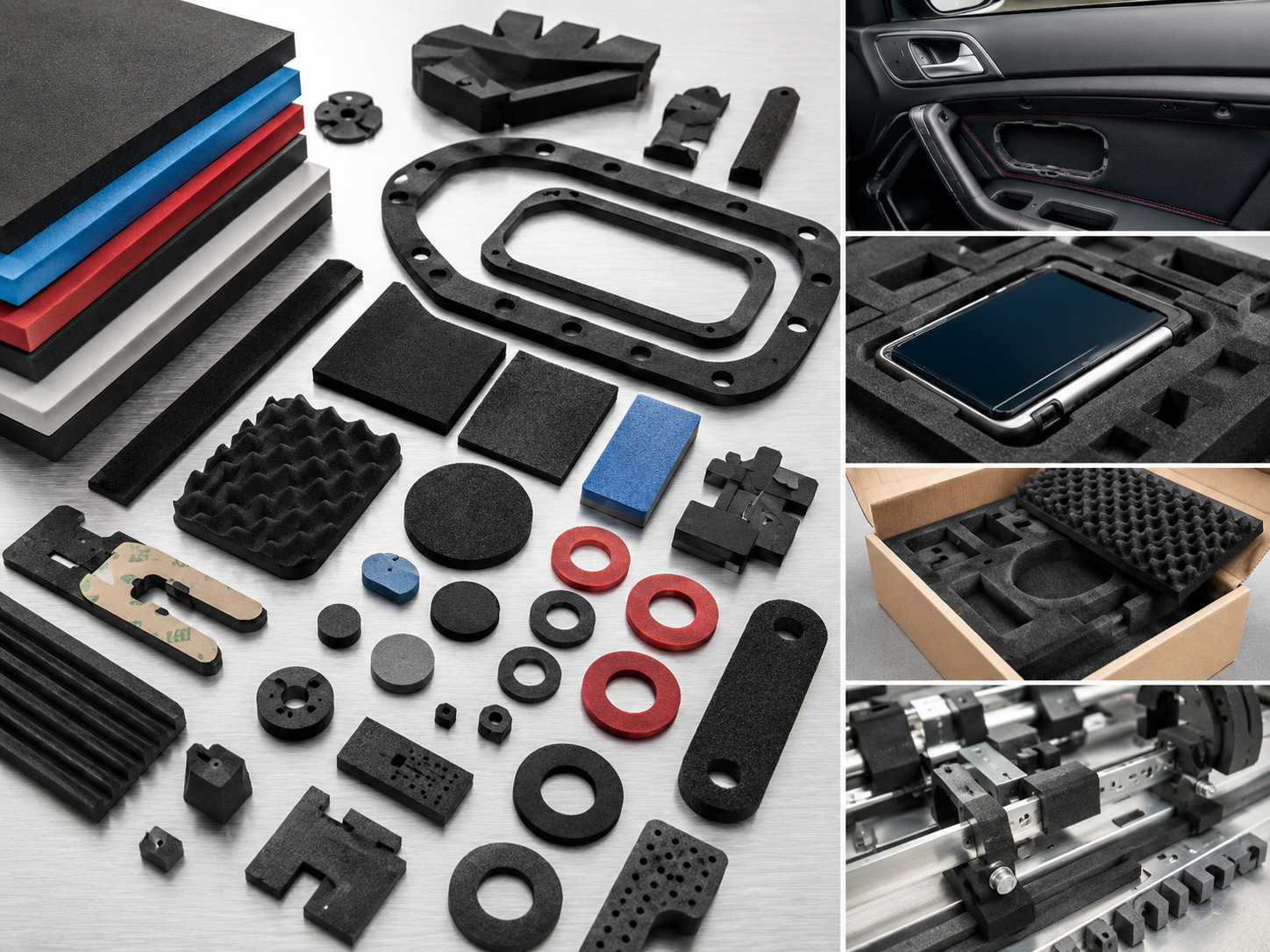
Main Applications of Die-Cut EVA Foam Products
EVA foam is used in many industries because it can be customized easily.
Automotive Applications
Automotive manufacturers use die-cut EVA foam for hidden functional parts inside the vehicle.
Common applications include:
- Anti-rattle pads
- Door trim cushions
- Dashboard spacer pads
- Wire harness protection
- Interior panel support strips
- Trunk liner cushioning
- Light sealing supports
- Protective packaging for auto parts
For automotive buyers, EVA foam must be evaluated carefully. The part may face heat, humidity, vibration, compression, odor requirements, and adhesive aging.
A foam pad that works during prototype testing may fail after months of vehicle use if density, adhesive, or compression performance is not correct.
At Sanken, we help customers review the real installation environment before recommending EVA foam structure and converting methods.
Electronics Applications
Electronics products often require soft protection in compact spaces.
Die-cut EVA foam can be used for:
- Battery protection pads
- Speaker cushioning parts
- Camera module protection
- Dust protection layers
- Display packaging inserts
- Shock-absorbing pads
- Internal assembly spacers
In electronics, tolerance and cleanliness are important.
If EVA foam parts are not cut cleanly, rough edges or loose particles may affect assembly quality. If thickness is unstable, the part may create pressure on sensitive components.
Packaging Applications
EVA foam is widely used for protective packaging because it can absorb impact and improve product presentation.
Common products include:
- Tool case inserts
- Instrument packaging
- Medical device packaging
- Electronics packaging
- Luxury product inserts
- Reusable protective trays
Compared with lower-cost packaging foams, EVA often provides a cleaner appearance and better dimensional stability.
Precision cutting is important because the insert must hold the product securely without being too tight or too loose.
Industrial Applications
Industrial customers use EVA foam parts for:
- Equipment liners
- Protective pads
- Anti-slip pads
- Cushioning strips
- Light sealing parts
- Vibration reduction pads
- Assembly spacers
These parts often need adhesive backing, custom shape cutting, or multilayer lamination.
Common Problems in EVA Foam Die Cutting
EVA foam is easy to process, but problems can still happen.
Foam Deformation
Soft foam may compress during cutting.
This can cause inaccurate dimensions or uneven edges.
Adhesive Lifting
If the adhesive is not compatible with EVA foam, the edges may lift after application.
Poor Edge Quality
Dull tools, wrong cutting pressure, or unsuitable material support can cause rough edges.
Compression Collapse
Some EVA grades flatten under long-term pressure.
This reduces cushioning, sealing, or anti-vibration performance.
Wrong Material Selection
A foam chosen only by color or thickness may not meet the real performance requirement.
For OEM buyers, these problems can increase scrap rate, slow assembly, and create customer complaints.
EVA Foam Combined With Other Materials
EVA foam can be converted into more advanced products by combining it with other materials.
Common structures include:
| Composite Structure | Purpose |
|---|---|
| EVA + adhesive tape | Easy installation |
| EVA + non-woven fabric | Acoustic and surface protection |
| EVA + rubber | Better sealing or vibration control |
| EVA + PET film | Surface protection and stability |
| EVA + aluminum film | Thermal reflection |
| EVA + release liner | Easy handling and assembly |
These multilayer products are common in automotive interiors, electronics, packaging, and industrial assemblies.
The challenge is controlling bonding strength, layer alignment, thickness consistency, and die-cut tolerance.
What Buyers Should Confirm Before Ordering EVA Foam Parts
Before confirming an EVA foam project, buyers should ask:
- What is the final application?
- What density and thickness are required?
- Will the foam stay under compression?
- Does the part need adhesive backing?
- Will it face heat, humidity, vibration, or UV exposure?
- Does it need flame resistance or odor control?
- What tolerance is required?
- Is the part applied by hand or machine?
- Does the part need kiss cutting or full die cutting?
- Will it be produced as a prototype or mass production part?
These questions help prevent wrong material selection and reduce later production risk.
How Sanken Helps Customers With EVA Foam Converting
At Sanken Manufacturing, we focus on helping customers solve practical production problems.
Our EVA foam converting capabilities include:
- Material selection support
- Foam slitting
- Adhesive lamination
- Precision die cutting
- Kiss cutting
- Hot pressing
- Multilayer lamination
- Custom assembly
- Prototype and mass production support
We support customers in automotive, electronics, medical equipment, packaging, consumer products, and industrial manufacturing.
For OEM buyers, our value is not only cutting foam into shape. We help reduce assembly problems, improve part consistency, shorten development time, and simplify supplier management.
Conclusion
EVA foam is widely used in die-cut and converted products because it is lightweight, flexible, shock-absorbing, easy to laminate, and suitable for custom shapes. It can be converted into pads, gaskets, strips, liners, spacers, packaging inserts, adhesive-backed parts, and multilayer assemblies.
For reliable results, buyers must consider density, thickness, compression recovery, adhesive compatibility, cutting tolerance, and application environment. At Sanken Manufacturing, we help customers transform EVA foam into precision die-cut and converted components that solve real manufacturing challenges and support stable mass production.