
Optical Protective Film Manufacturer
Custom Optical Protective Film for Displays, Lenses and Electronic Assemblies
Sanken Manufacturing provides custom die-cut optical protective films for display modules, optical lenses, camera modules, touch panels, sensors and precision electronic products. We support PET film converting, adhesive lamination, clean handling, precision die cutting and OEM production delivery.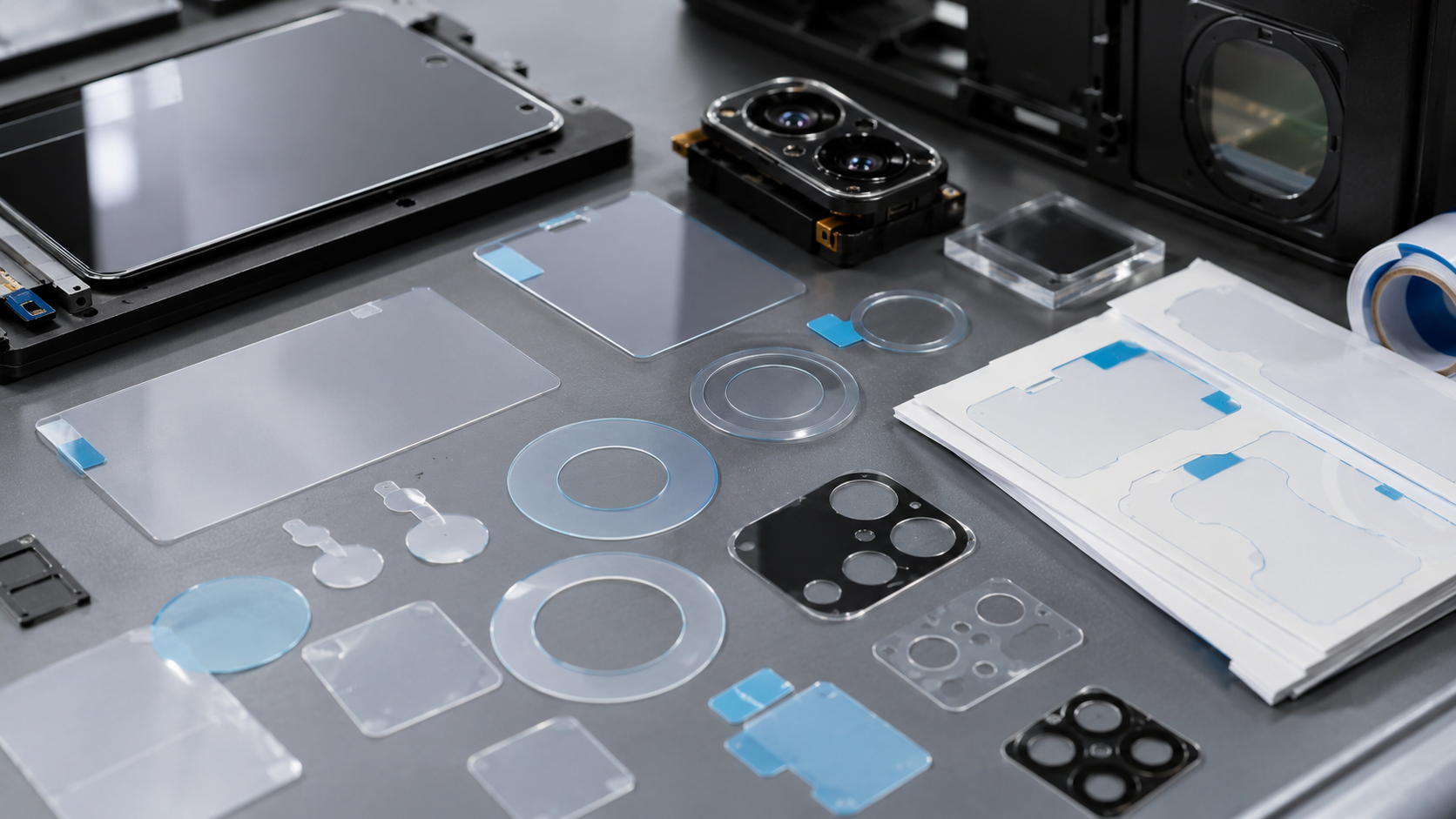
Protective Film Solutions for Optical Products
Optical protective film is used to protect sensitive surfaces during production, transportation, assembly and final product handling. For optical products, the film must offer stable adhesion, clean release, accurate die-cut profiles and reliable surface protection.Display Protective Film
Custom die-cut films for LCD, OLED, touch panels, display covers and module assembly protection.Lens Protective Film
Clean protective film components for optical lenses, camera covers, transparent panels and precision surfaces.Sensor Protective Film
Protective films for optical sensors, wearable modules, electronic windows and compact optical assemblies.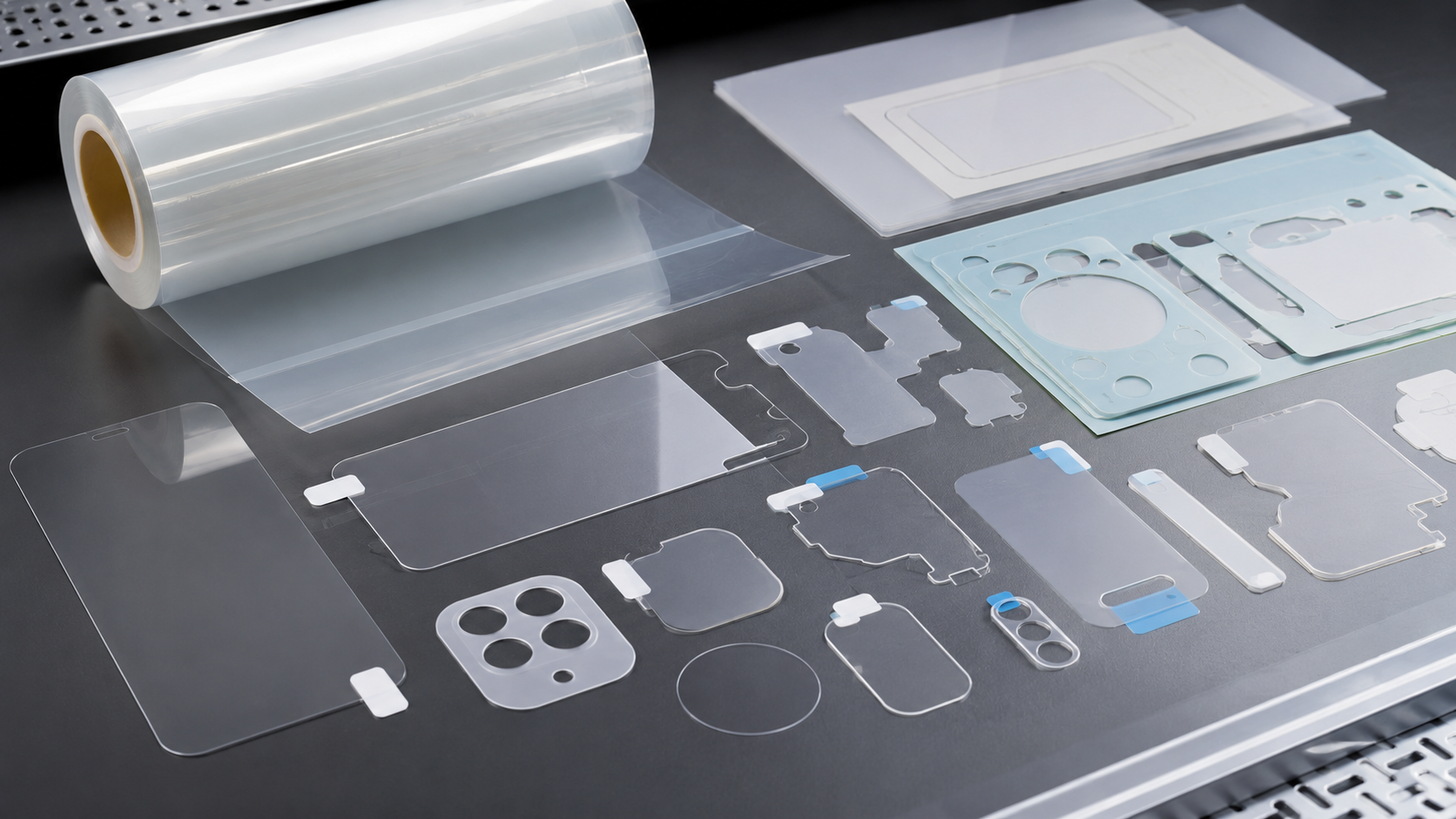
Common Problems When Protective Film Is Not Properly Selected
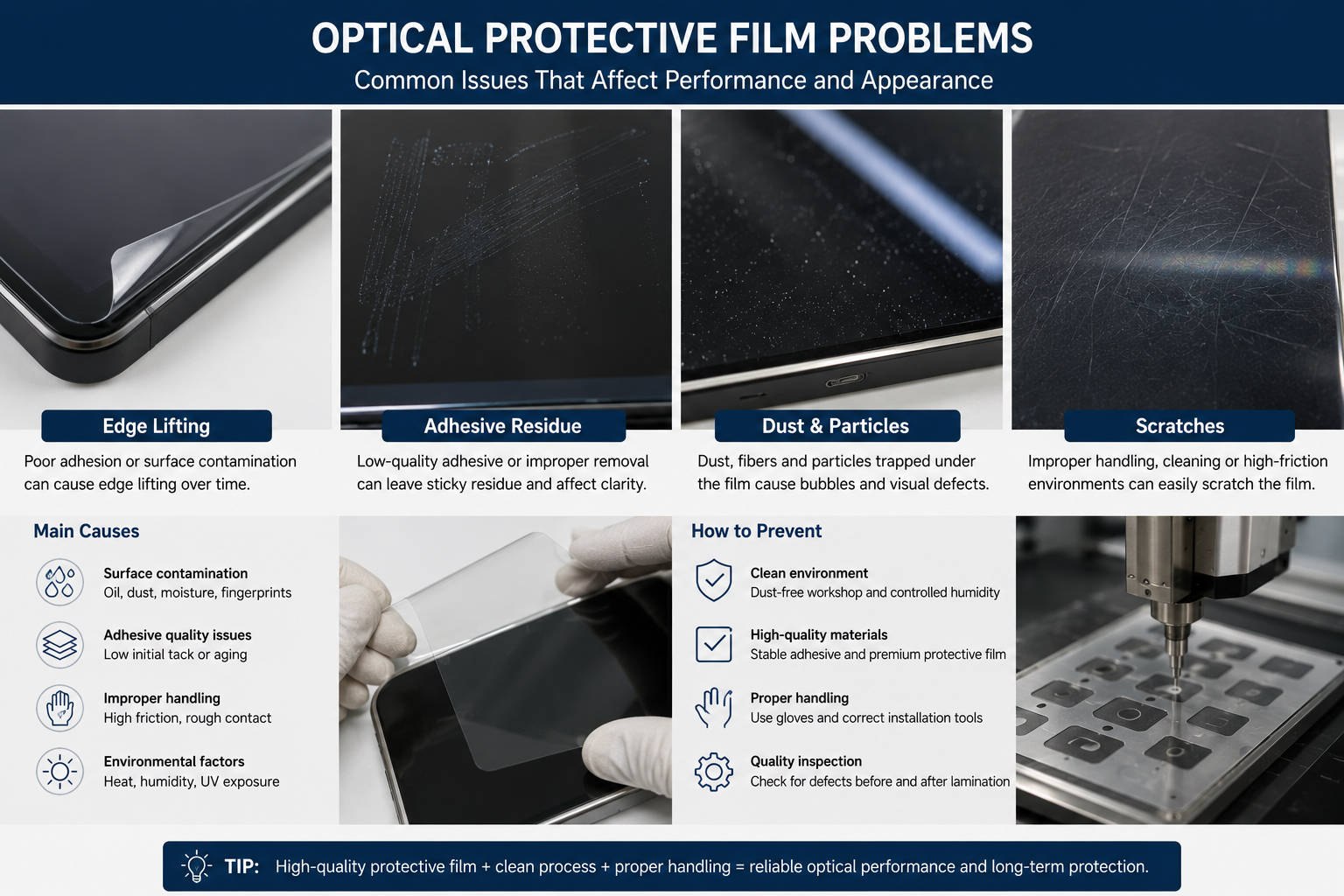
Many optical protection problems are caused by incorrect adhesive selection, poor cutting quality, unsuitable liner design or unstable handling during production.Customer Pain Points
- Adhesive residue after film removal
- Film lifting at edges or corners
- Dust, particles or scratches during handling
- Film deformation after die cutting
- Poor peeling performance during assembly
- Protective film size mismatch with optical parts
- Unstable adhesion under temperature or storage changes
Custom Die Cutting and Film Converting Capability
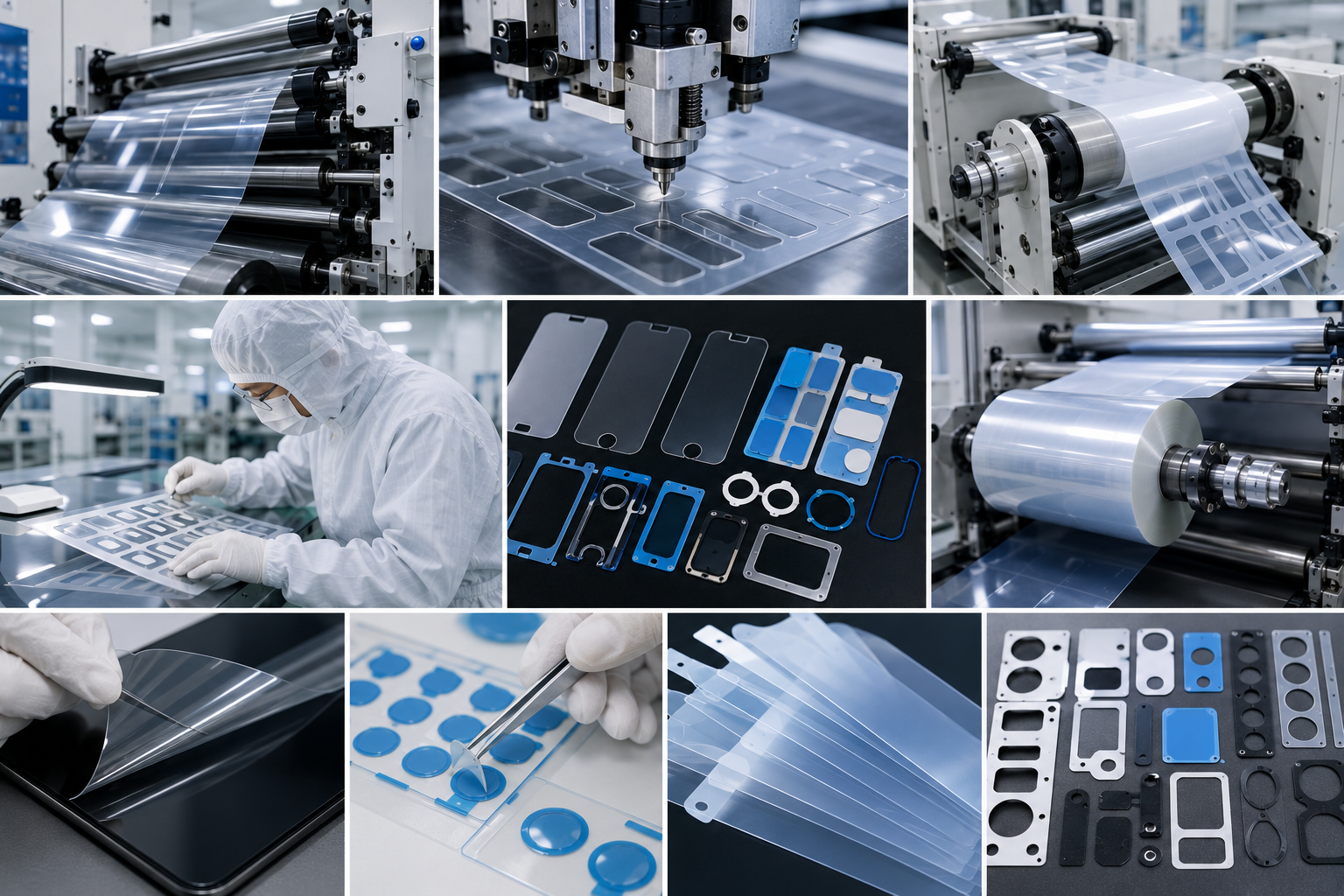
Sanken supports optical protective film projects from material evaluation to die-cut sampling and mass production. We can process film structures with adhesive layers, release liners, tabs, holes, slots, windows and custom shapes.Manufacturing Support
- PET, PE, PP and other protective film converting
- Single-sided or double-sided adhesive lamination
- Kiss cutting and through cutting
- Custom pull tabs, holes, windows and positioning features
- Sheet, roll or individual part delivery
- Clean handling and appearance inspection
Optical Protective Film Material Options
Different optical applications require different film substrates, adhesive levels, liner structures and surface protection performance. Sanken can help review your application before production.| Material / Structure | Typical Function | Common Application |
|---|---|---|
| PET Protective Film | Surface protection, dimensional stability, clean appearance | Displays, touch panels, optical lenses, electronic panels |
| PE Protective Film | Flexible surface protection and temporary masking | Plastic parts, panels, housings and general assembly protection |
| Low-Tack Adhesive Film | Easy removal with reduced residue risk | Optical surfaces, lenses, screens and transparent parts |
| Medium-Tack Protective Film | Stable adhesion during handling and shipping | Display modules, glass panels, electronic assemblies |
| Film with Release Liner | Improved handling, die cutting and assembly positioning | Custom die-cut protective film parts supplied in sheets or rolls |
| Protective Film with Pull Tab | Easy peeling and operator-friendly assembly | Camera modules, displays, lens covers and optical windows |
Application Areas
Our optical protective film products can be customized for many precision industries where appearance, cleanliness and surface protection are critical.Display Modules
Protective films for LCD, OLED, touch panels, display covers and backlight module assembly.Camera Modules
Die-cut protective films for lens covers, camera windows, optical openings and dust protection.Wearable Devices
Protective films for compact sensors, optical windows, display surfaces and small electronic modules.Consumer Electronics
Surface protection for screens, panels, plastic covers, glass parts and electronic accessories.Industrial Optical Devices
Protective films for optical instruments, control panels, transparent windows and precision assemblies.Medical Electronics
Clean protective film components for medical device panels, display windows and electronic interfaces.Why Choose Sanken for Optical Protective Film?
For optical products, protective film is not just a simple cover. It affects appearance, assembly efficiency, rework rate and final customer experience.Sanken Advantages
- OEM manufacturing experience with optical and electronic components
- Custom die cutting based on drawings or samples
- Material structure review before production
- Support for adhesive, liner, tab and packaging design
- Dimensional and appearance inspection before delivery
- Flexible supply in sheets, rolls or custom kits
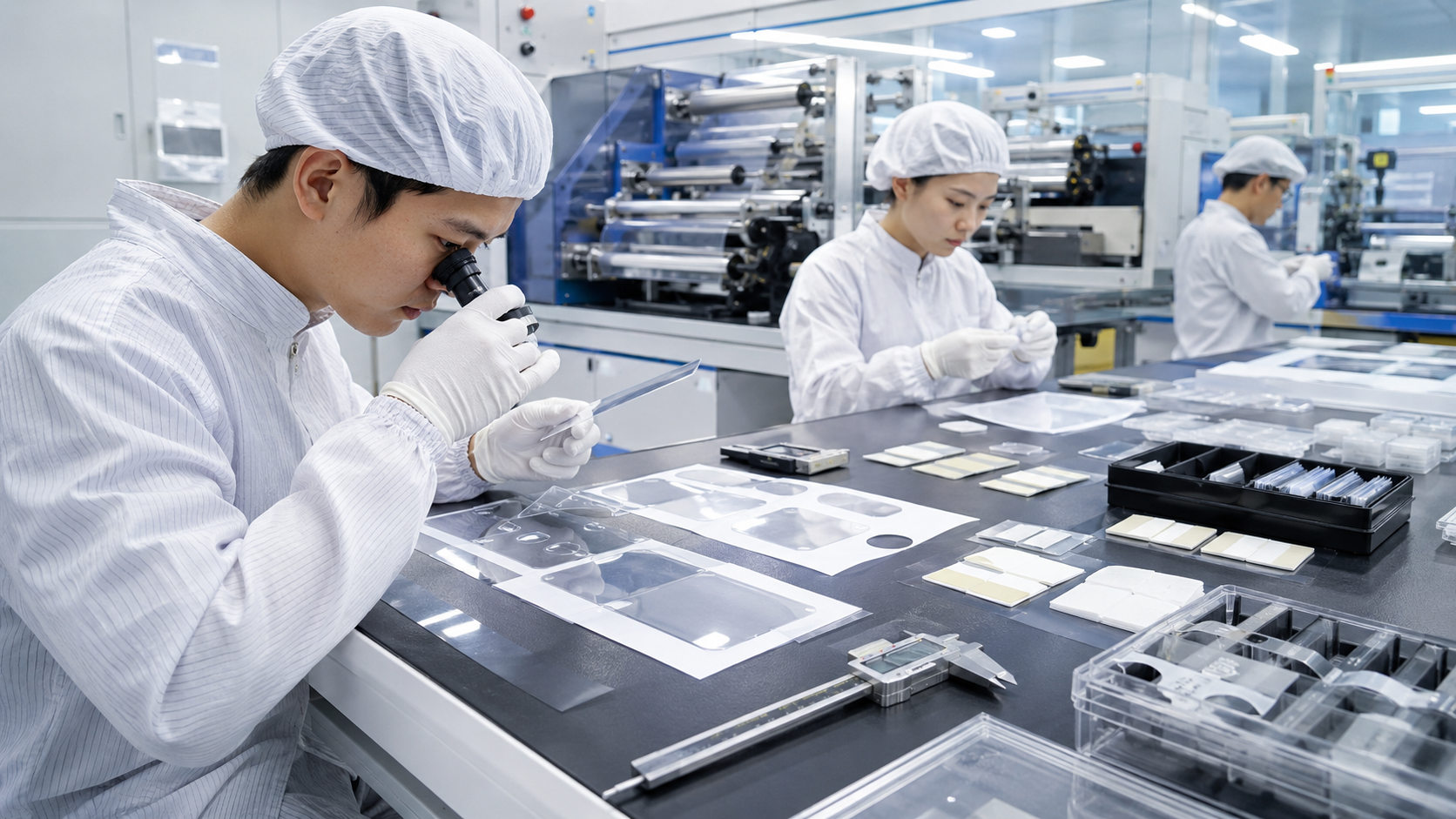
From Sample Review to Mass Production
We help OEM customers reduce trial errors by reviewing material, structure, tolerance and assembly requirements before mass production.
1
Requirement Review
Check application, surface, adhesion level, size and delivery format.
2
Material Selection
Recommend suitable film, adhesive and liner structure.
3
Die-Cut Sample
Prepare samples for fit, peeling, handling and appearance test.
4
Process Confirmation
Confirm cutting method, tolerance, packaging and inspection points.
5
Mass Production
Supply optical protective film parts in sheets, rolls or kits.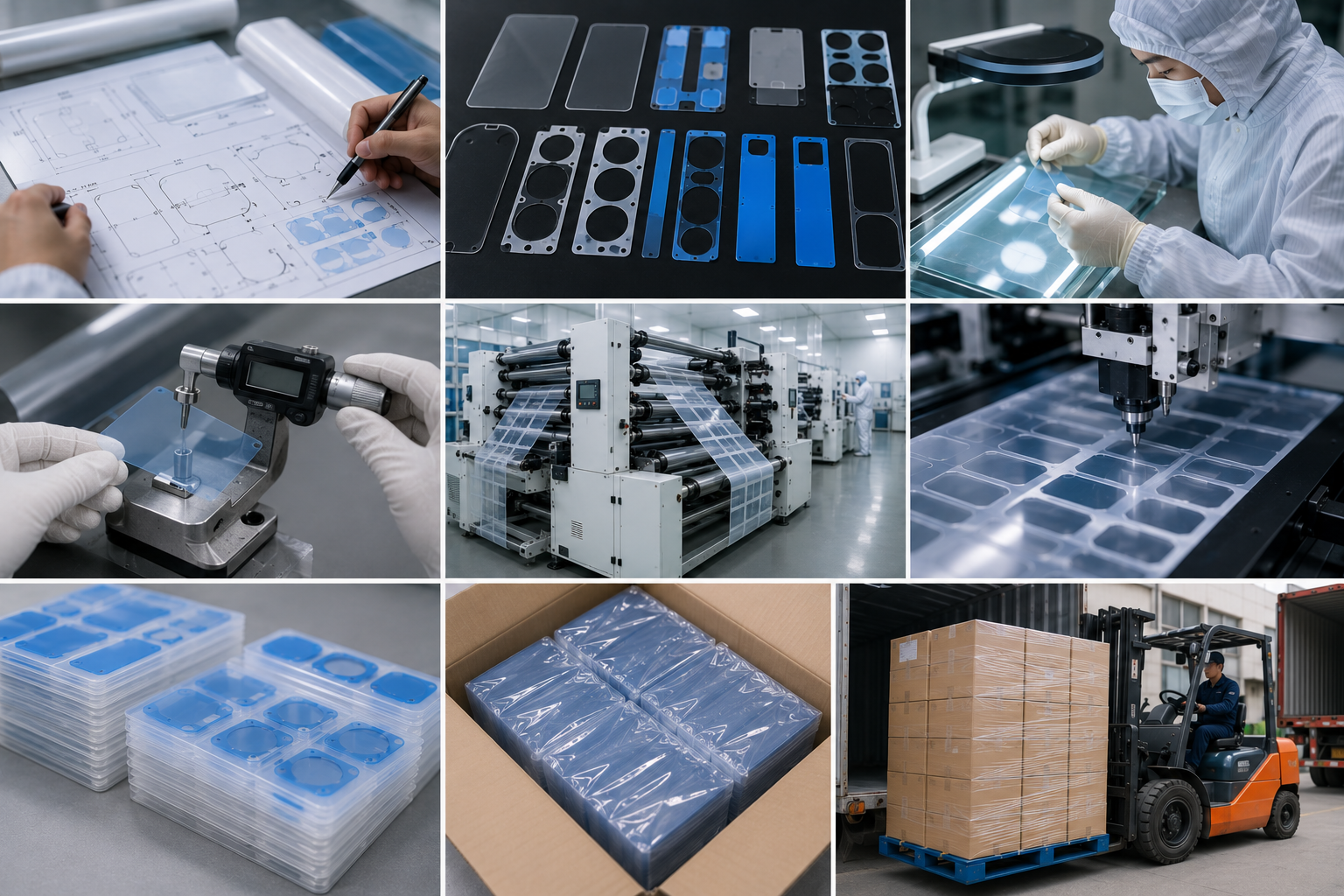
What Information Should You Send for Quotation?
To provide a faster and more accurate quotation, please send your drawing, material requirement, thickness, adhesive level, application, quantity and packaging preference.Drawing or Sample
Include shape, size, hole position, tab design, tolerance and special cutting requirements.Material Requirement
Tell us the film type, adhesive strength, thickness, color, transparency and surface protection needs.Application Condition
Share the target surface, assembly process, storage condition, peeling method and estimated order quantity.
If you are not sure which optical protective film is suitable, Sanken can help compare film substrate, adhesive strength, liner structure and die-cutting feasibility before sample production.