
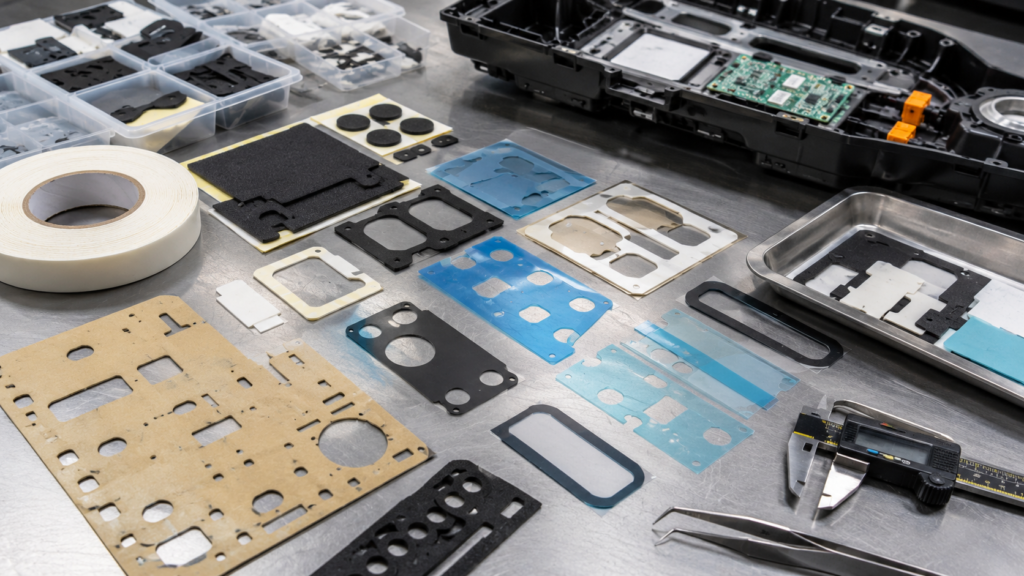
Most engineers focus on the gasket itself.
The foam.
The rubber.
The sealing material.
But at Sanken, we often ask a different question first:
“What happens if the adhesive fails?”
Suddenly the conversation changes.
Because in real manufacturing environments, the adhesive tape is not just a bonding layer. It is the invisible force that keeps the entire die-cut structure stable under heat, vibration, pressure, humidity, and time.
And surprisingly, many product failures begin exactly there.
Not with the material.
Not with the design.
But with the adhesive system nobody paid enough attention to.
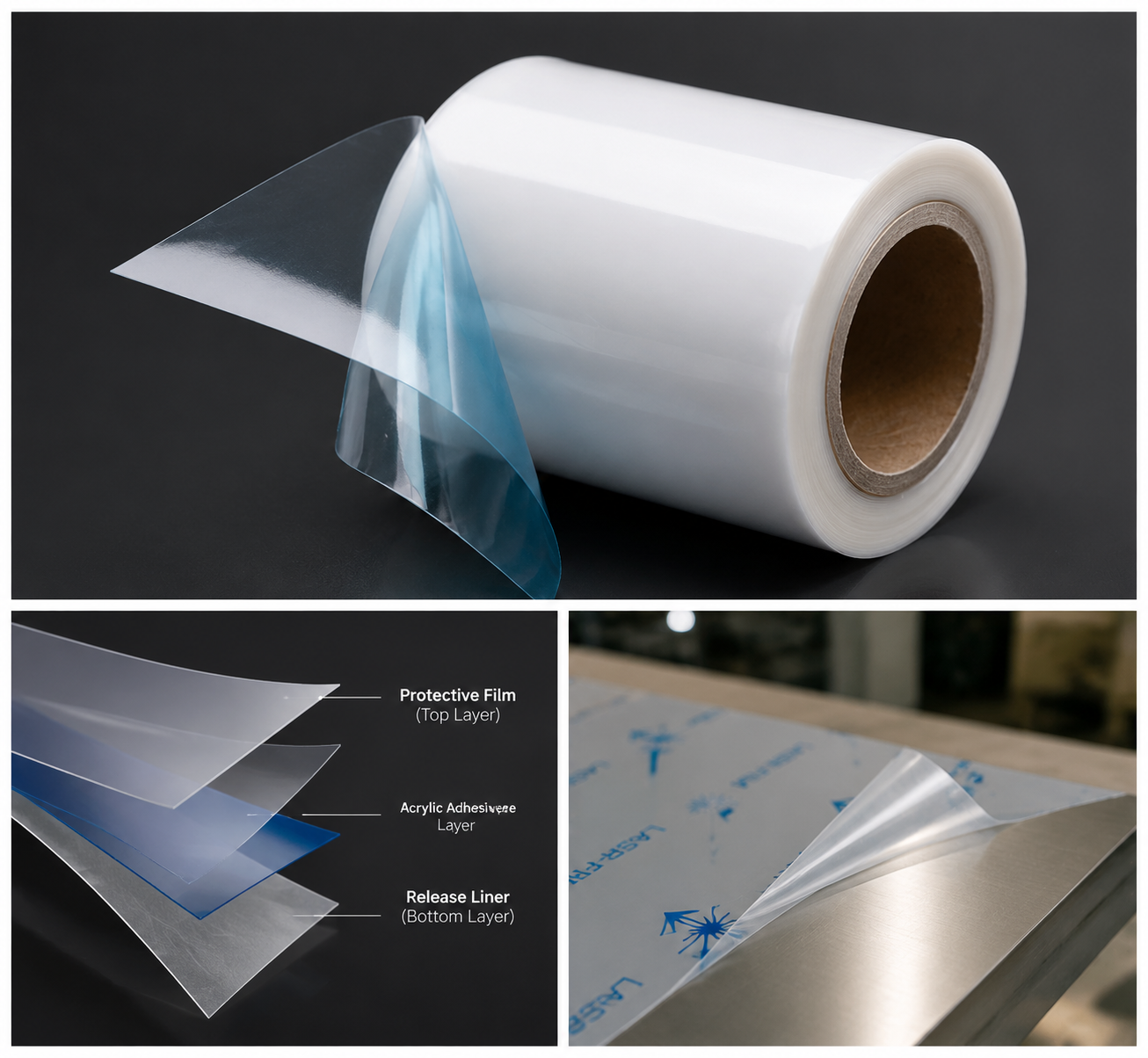
Why are adhesive tapes so important in die-cut gasket applications?
A gasket without stable bonding is just a loose component waiting to move.
In automotive, electronics, medical, and industrial assemblies, adhesive tapes perform multiple functions simultaneously:
- positioning
- sealing support
- vibration stabilization
- thermal compensation
- assembly simplification
Modern manufacturing relies heavily on pressure-sensitive adhesive systems because they:
- reduce mechanical fasteners
- improve assembly speed
- lower weight
- simplify automation
But here is the difficult part:
Not all adhesive tapes behave the same after installation.
That is where real engineering begins.
Why do adhesive failures happen even when the tape “sticks” initially?
Because initial adhesion and long-term stability are completely different things.
A tape may bond perfectly during assembly.
Then months later:
- edge lifting appears
- bubbles form
- adhesive migration begins
- temperature cycling weakens cohesion
- vibration creates micro-separation
This is especially dangerous in:
- automotive interiors
- EV battery systems
- electronic modules
- sealing assemblies
At Sanken, we evaluate adhesive systems based not only on “bond strength,” but on:
- aging behavior
- compression interaction
- substrate compatibility
- environmental durability
- stress distribution
Because the real test begins after the product leaves the factory.
What types of adhesive tapes are commonly used for die-cut parts?
Common Adhesive Tapes for Gaskets and Die-Cut Parts
| Adhesive Tape Type | Main Advantage | Typical Application |
|---|---|---|
| Acrylic adhesive tape | Good aging, UV and temperature resistance | Automotive interiors, electronics and outdoor parts |
| Double-sided PET tape | Thin, stable and easy to die cut | Film bonding, labels, electronic components |
| Foam adhesive tape | Gap filling and vibration damping | Gaskets, seals, panels and uneven surfaces |
| Transfer adhesive film | Ultra-thin bonding with low thickness variation | Lightweight assemblies and precision bonding |
| Heat-resistant adhesive tape | Better thermal stability | Battery, electronics and high-temperature areas |
| Conductive adhesive material | Electrical or EMI-related bonding | Shielding parts and electronic assemblies |
| Removable positioning tape | Temporary fixing and cleaner removal | Assembly aids, protective films and reworkable parts |
Different applications require completely different adhesive technologies.
At Sanken, common solutions include:
- acrylic adhesive tapes
- double-sided PET tapes
- foam bonding tapes
- transfer adhesive films
- heat-resistant adhesive systems
- conductive adhesive materials
- removable positioning tapes
Each serves a different engineering purpose.
For example:
Acrylic adhesive tapes
Excellent for:
- long-term durability
- UV resistance
- automotive interior stability
Foam adhesive tapes
Useful for:
- gap compensation
- vibration damping
- uneven surface bonding
Transfer tapes
Ideal when:
- ultra-thin bonding is needed
- weight reduction matters
- minimal thickness variation is required
Choosing the wrong adhesive can quietly destroy an otherwise excellent gasket design.
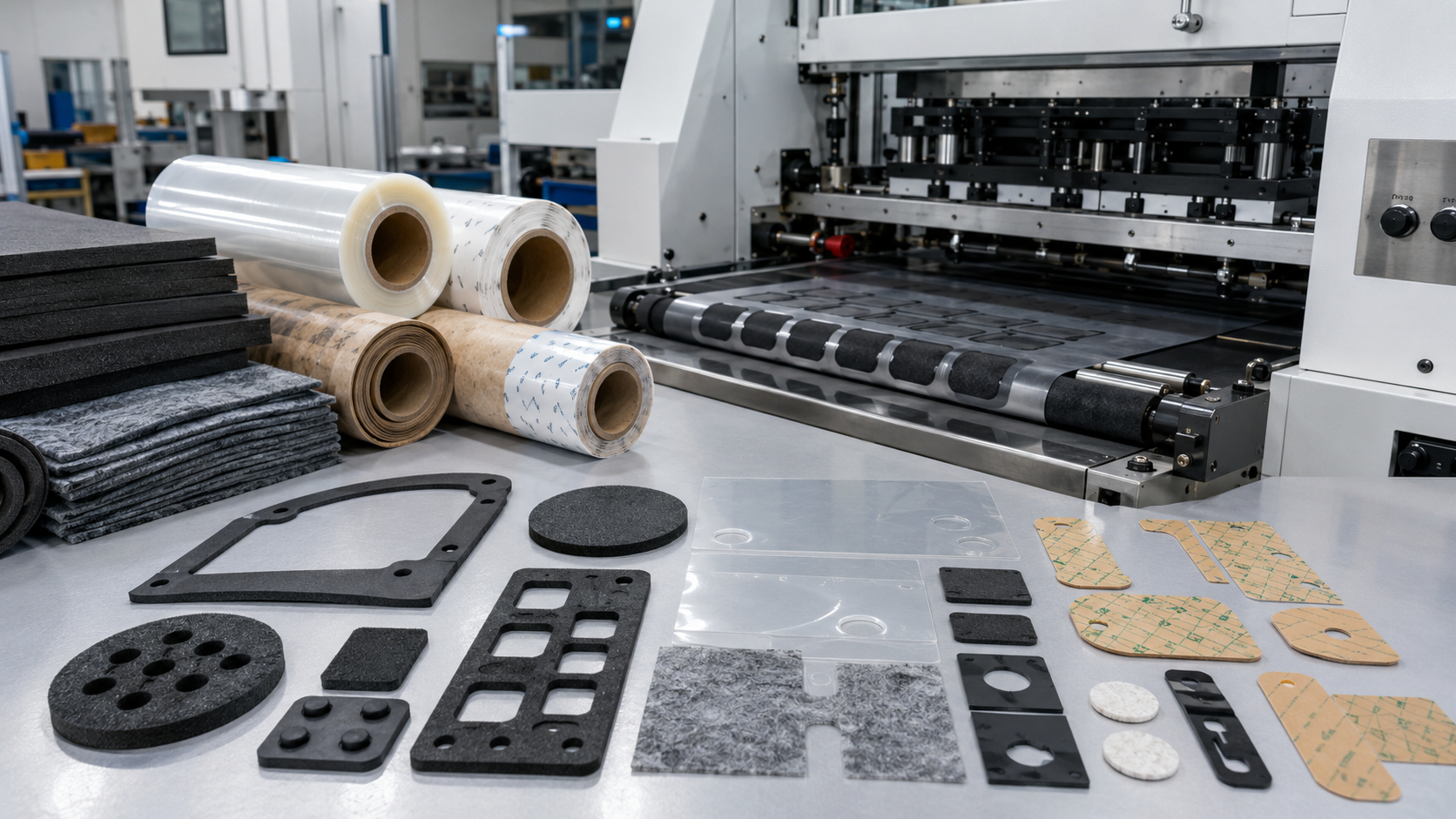
Why adhesive selection is more complicated in automotive applications
Automotive environments are brutal.
Inside one vehicle, adhesive tapes may face:
- high summer dashboard temperatures
- winter freezing cycles
- humidity fluctuation
- constant vibration
- plasticizer migration
- chemical exposure
This means automotive adhesive systems must balance:
- adhesion strength
- shear resistance
- peel performance
- thermal aging stability
- dimensional consistency
At Sanken, we frequently help customers redesign adhesive structures because many original failures are caused by:
- incompatible substrate pairing
- incorrect adhesive thickness
- stress concentration at corners
- unstable compression zones
The tape itself is often innocent.
The system design is the real problem.
What OEM Buyers Should Confirm Before Choosing Adhesive Tape
Before selecting adhesive tape for gaskets or die-cut parts, OEM buyers should confirm the real application environment, not only the initial bonding strength.
Key points include:
- Surface material and surface energy
- Operating temperature range
- Humidity and aging exposure
- Compression force from the gasket
- Peel strength and shear resistance
- Adhesive thickness
- Release liner type
- Kiss-cut or through-cut requirement
- Part size, hole position and edge design
- Manual or automated assembly method
- Required delivery format: roll, sheet, individual piece or kit
This review helps reduce edge lifting, residue, liner tearing, poor peeling, assembly delay and long-term sealing failure.
How does precision die cutting affect adhesive tape performance?
More than most people realize.
Poor die-cutting can create:
- rough edges
- liner instability
- adhesive overflow
- uneven release behavior
- tension distortion during assembly
These issues may seem small.
But in automated production lines, tiny instability becomes large-scale inefficiency very quickly.
That is why at Sanken, we place heavy emphasis on:
- precision kiss cutting
- liner management
- tolerance control
- clean edge processing
- release consistency optimization
Because adhesive performance is deeply connected to converting quality.
A premium tape processed poorly still creates failure.
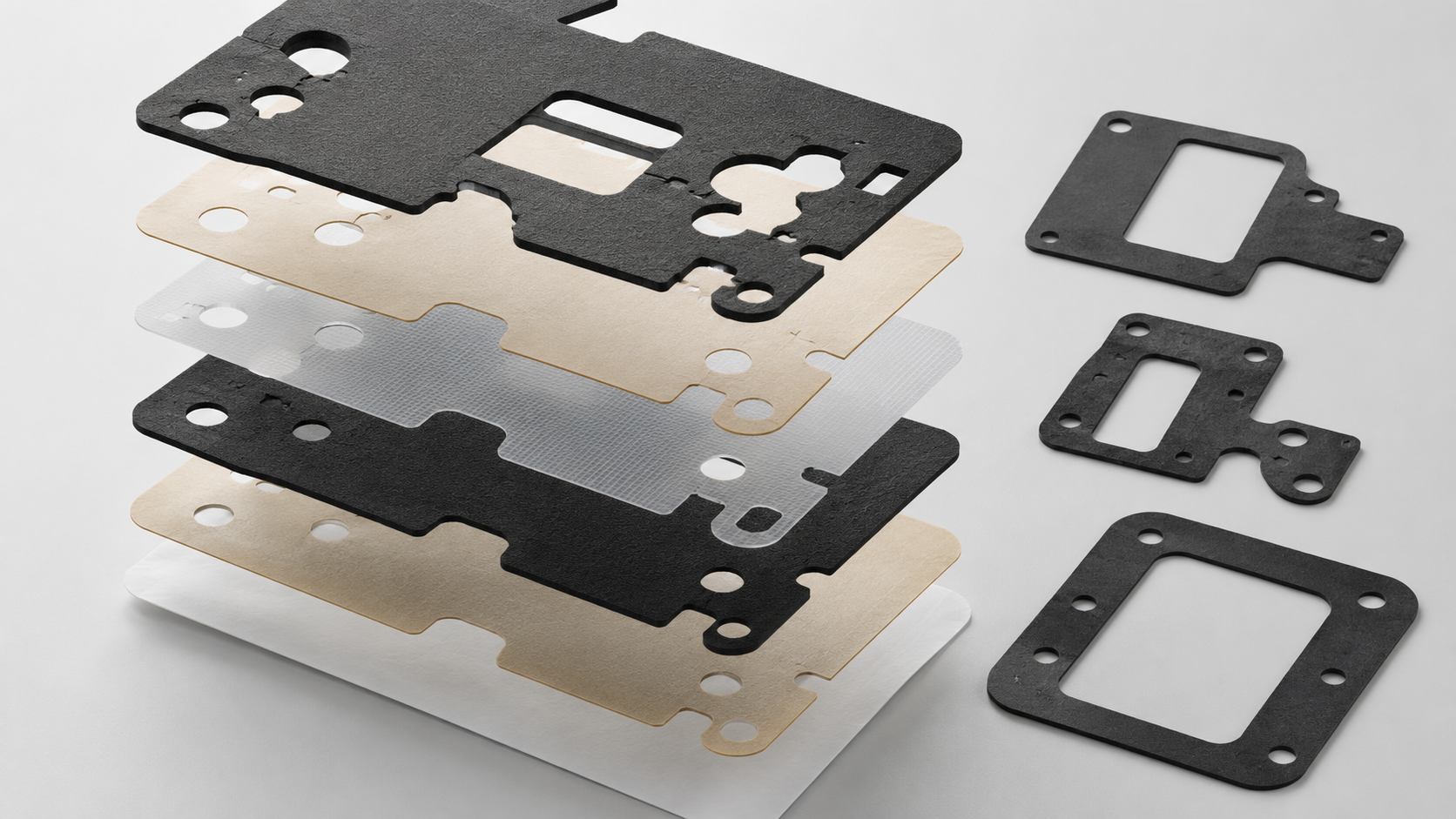
Why multi-layer die-cut structures are becoming more common
Modern products rarely use single-material solutions anymore.
Today’s gasket systems often combine:
- foam
- adhesive
- PET film
- non-woven material
- thermal barriers
- conductive layers
Into one integrated die-cut assembly.
This creates:
- better assembly efficiency
- reduced part count
- improved installation accuracy
- simplified supply chain management
At Sanken, our multi-layer lamination capability allows customers to receive complete assembly-ready parts instead of managing separate suppliers.
That dramatically reduces:
- handling errors
- alignment issues
- production delays
Why OEMs increasingly prefer integrated converting partners
The manufacturing world is moving toward supplier consolidation.
OEMs no longer want:
- one supplier for foam
- another for adhesive
- another for converting
- another for assembly prep
Too many handoffs create:
- communication gaps
- tolerance mismatch
- quality inconsistency
- accountability confusion
At Sanken, we solve this through integrated manufacturing capability:
- material sourcing
- adhesive lamination
- precision die cutting
- hot pressing
- multi-process converting
- inspection and traceability
One coordinated process chain creates much higher stability.
Especially for high-volume automotive and electronics production.
How Sanken Supports Adhesive Tape Gaskets and Die-Cut Parts
Sanken supports OEM customers with adhesive tape selection, material converting, lamination, kiss cutting, through cutting, liner management, precision die cutting and assembly-ready packaging.
We work with foam tapes, double-sided tapes, PET-backed tapes, transfer adhesive films, protective films, rubber, foam, non-woven fabric, insulation films and multilayer converted materials.
For gasket and die-cut part projects, Sanken can help review adhesive structure, substrate compatibility, liner release, cutting depth, part tolerance, edge cleanliness, packaging format and mass production stability.
How Sanken Supports Adhesive Tape Gaskets and Die-Cut Parts
Sanken supports OEM customers with adhesive tape selection, material converting, lamination, kiss cutting, through cutting, liner management, precision die cutting and assembly-ready packaging.
We work with foam tapes, double-sided tapes, PET-backed tapes, transfer adhesive films, protective films, rubber, foam, non-woven fabric, insulation films and multilayer converted materials.
For gasket and die-cut part projects, Sanken can help review adhesive structure, substrate compatibility, liner release, cutting depth, part tolerance, edge cleanliness, packaging format and mass production stability.