Custom Sealing Gaskets
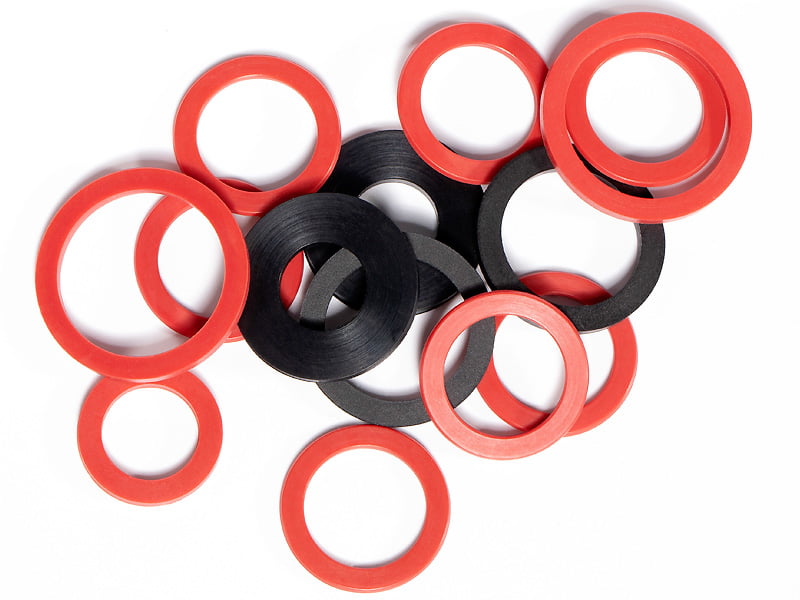
Custom sealing gaskets are flat sealing components used between two mating surfaces to prevent leakage of air, liquid, oil, or other media. They are widely applied in valves, pumps, flanges, covers, fittings, and industrial assemblies where stable compression sealing is required.
Quick Highlights
- Designed for static face sealing
- Available in multiple diameters and thicknesses
- Suitable for custom OEM dimensions
- Supports sealing stability in assembled equipment
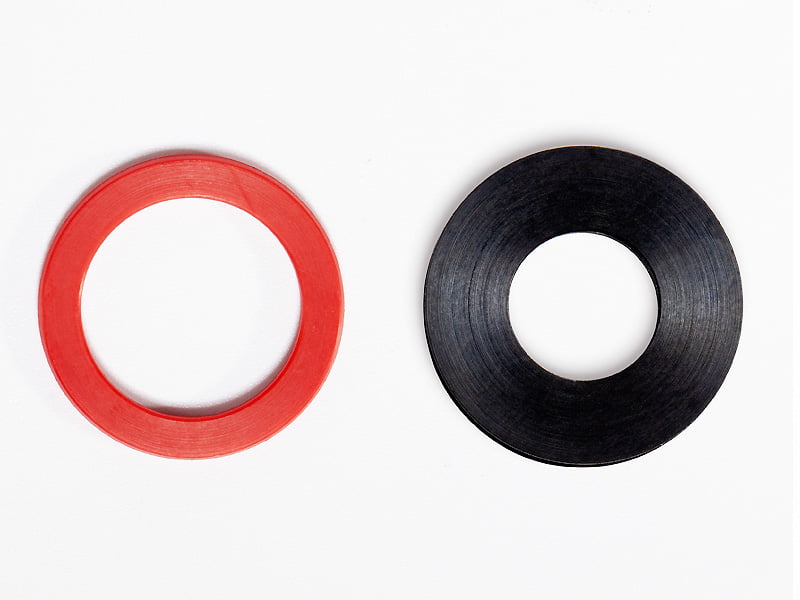
- Available in different materials and colors
Why Buyers Care
- Unstable gasket thickness can cause uneven compression
- Poor material choice can lead to swelling or early failure
- Low precision edges can affect sealing contact
- Repeat order inconsistency can disrupt assembly quality
Main Application Areas
Valves & Flanges
Used where two flat surfaces must be clamped together to prevent leakage in pipe and valve connections.
Pumps & Fluid Systems
Suitable for sealing interfaces that require reliable static compression under working fluid pressure.
Industrial Equipment
Applied in covers, housings, access panels, and mechanical joints that rely on face sealing.
OEM Assemblies
Widely used in custom product lines that require multiple gasket sizes across different equipment models.
Why Sealing Gaskets Are Chosen Instead of Standard O-Rings
Sealing gaskets are typically selected when the sealing structure is based on flat mating surfaces rather than a circular groove. In these cases, a flat gasket can provide broader sealing contact and better suitability for flange-style or cover-style assemblies.
This makes them especially valuable in equipment where the designer needs stable surface sealing across a larger area, not just a round-line contact. For many industrial buyers, the choice is not about which part is simpler. It is about which structure better matches the actual sealing method of the product.
At Sanken Electronic Manufacturing Co., Ltd., we manufacture custom sealing gaskets with a focus on thickness control, dimensional consistency, and application-matched material selection. That helps reduce leakage risk and improve repeatability in long-term OEM supply.
Core Performance Advantages
Stable Face Sealing
Sealing gaskets are built to create a reliable barrier between two compressed flat surfaces, helping reduce leakage in static sealing environments.
Dimensional Control Matters
Better consistency in inner diameter, outer diameter, and thickness helps maintain more uniform compression across assembled parts.
Flexible OEM Development
Gaskets can be customized for size, thickness, material, hardness, and color to suit different product series and application conditions.
Cleaner Assembly Fit
Better edge quality and flatness improve installation stability and help reduce sealing problems caused by poor part geometry.
Material-Driven Performance
The right gasket material helps improve compatibility with media, compression behavior, and service life in actual operating conditions.
Lower Hidden Cost
A better gasket reduces rework, leakage complaints, maintenance issues, and the sourcing risk that often comes with low-grade generic supply.
Sealing Gasket vs. O-Ring
When a Sealing Gasket Is Better
- Flat or flange-style sealing surfaces
- Broader sealing contact is required
- No dedicated O-ring groove exists in the design
- Multiple thickness options are needed for compression control
- Custom outer and inner diameter combinations are required
What Buyers Should Check
- Working medium compatibility
- Temperature range
- Required compression level
- Mating surface finish and flatness
- Long-term repeat supply consistency
Typical Product Characteristics
| Characteristic | What It Means | Customer Benefit |
|---|---|---|
| Flat Face Sealing Structure | Designed for sealing between compressed mating surfaces | Suitable for flanges, covers, joints, and interfaces |
| Thickness Consistency | Affects sealing compression and contact stability | Helps reduce uneven sealing and leakage risk |
| Dimensional Accuracy | Controls inner diameter, outer diameter, and fit | Improves assembly compatibility in OEM products |
| Material Selection Flexibility | Can be matched to different media and service conditions | Improves functional life and reduces mismatch problems |
| Batch Repeatability | Stable production matters for long-term purchasing | Supports consistent product quality across repeat orders |
| Customization Capability | Supports multiple sizes, thicknesses, and colors | Useful for multi-SKU OEM and replacement programs |
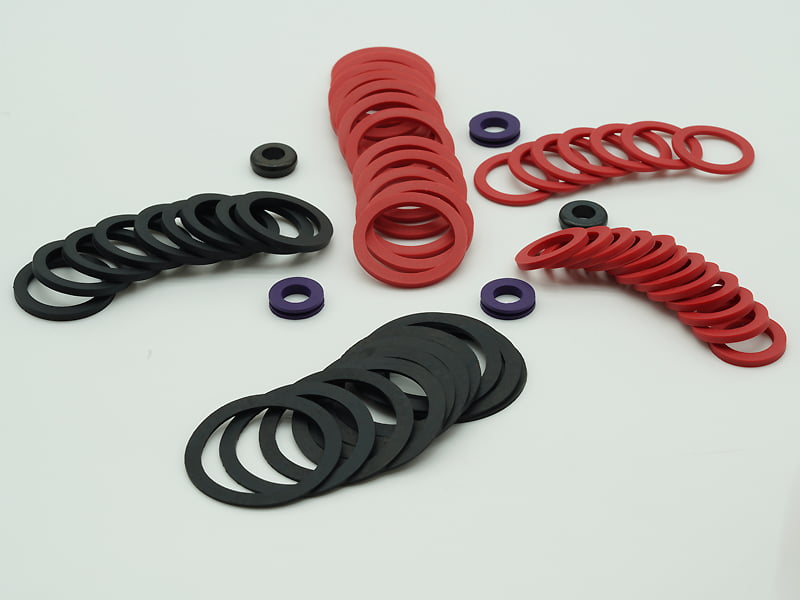
Available in Different Sizes and Configurations
OEM Customization Options
Many buyers need more than one standard gasket. They may need a full range of diameters, different thickness combinations, application-specific materials, or color identification for different assemblies. That is why custom support matters in actual procurement.
Why Buyers Choose Sanken Over Generic Suppliers
Better Thickness Control
We focus on more stable gasket thickness and dimensional accuracy, which directly affects compression sealing performance.
Cleaner Product Quality
Better edge quality and more consistent production help reduce assembly issues and sealing instability.
Application-Focused Material Support
We do not treat all gaskets as the same. Material selection is aligned with media, temperature, and actual service conditions.
OEM Project Flexibility
We support non-standard sizes, multi-SKU programs, sample development, and drawing-based customization for industrial customers.
Frequently Asked Questions
What is a sealing gasket used for?
A sealing gasket is used to create a seal between two mating surfaces in order to prevent leakage of liquid, gas, or outside contaminants.
Can Sanken produce custom sealing gaskets?
Yes. We support custom inner diameter, outer diameter, thickness, material, color, and OEM production based on drawings or samples.
How do I choose between an O-ring and a flat gasket?
In general, O-rings are more suitable for groove-based sealing, while flat gaskets are more suitable for face sealing between flat or flange-style mating surfaces.
Request a Quote for Custom Sealing Gaskets
Looking for a reliable supplier for custom sealing gaskets? Send us your drawing, sample, size requirement, material preference, or application details.
Sanken can support custom development, sample making, and stable batch production for OEM and industrial sealing projects.
Email: sophia82668@gmail.com