OEM Precision Rubber Components
Custom Rubber Diaphragms
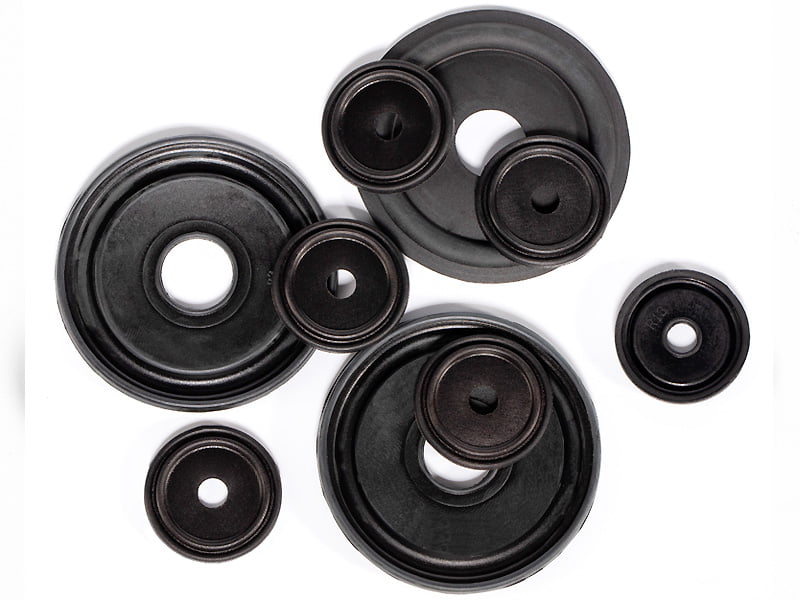
Rubber diaphragms are flexible sealing and actuation components designed to isolate media, transmit pressure, and control movement in valves, pumps, regulators, actuators, and fluid control systems.For industrial buyers, a diaphragm is not just a molded rubber part. It directly affects sealing reliability, pressure response, fatigue life, and equipment stability. That is why material selection, dimensional accuracy, and molding consistency all matter.- Designed for sealing, pressure transmission, and motion control
- Suitable for valves, pumps, regulators, actuators, and metering systems
- Available in custom shapes, diameters, thicknesses, and compounds
- Support for OEM development based on drawings or samples
Product Overview
A rubber diaphragm is a flexible membrane component used to separate two media, transfer force, or maintain a controlled seal under changing pressure conditions. Compared with standard static seals, diaphragms work in applications where controlled flexing, repeated movement, and pressure sensitivity are required.In real projects, customers usually care about more than appearance. They care about whether the diaphragm responds accurately, resists cracking under cyclic movement, seals reliably around the edge, and stays stable in long-term operation. Poor diaphragm quality can lead to leakage, unstable pressure control, reduced cycle life, and equipment downtime.At Sanken Electronic Manufacturing Co., Ltd., we manufacture custom rubber diaphragms for OEM and industrial applications with a strong focus on material matching, process control, and repeat production consistency. This helps customers reduce development risk and build more reliable fluid control products.Common Buyer Problems
Buyers often face unstable flex life, inconsistent thickness, poor edge sealing, dimensional variation, and material mismatch with media or operating conditions. These problems usually appear later in testing or field use, where the real cost becomes much higher than the part price.What Sanken Focuses On
We focus on diaphragm function, not only molding. That means better attention to geometry, material performance, pressure behavior, fatigue resistance, and stable production for repeat OEM orders.Key Advantages of Custom Rubber Diaphragms
1. Reliable Sealing Under Dynamic Conditions
Rubber diaphragms are widely used when the sealing element must flex during operation. A properly designed diaphragm can maintain edge sealing while allowing controlled movement in the active area.2. Sensitive Pressure Response
Diaphragms are suitable for systems that depend on pressure transfer or regulation. Stable thickness and material consistency help improve repeatable response in valves, regulators, and control devices.3. Good Flex Fatigue Performance
Repeated movement is one of the main working conditions of a diaphragm. The right compound and molding control help improve fatigue life and reduce the risk of early cracking or deformation.4. Material Flexibility for Different Media
Different applications require different material behavior. Depending on the system, the diaphragm can be developed for better resistance to water, oils, chemicals, heat, or environmental aging.5. Custom Geometry for Functional Fit
Diaphragms are often application-specific. Diameter, center hole, bead design, thickness distribution, and edge structure may all need to be customized to match the equipment design.6. Better Long-Term Value Than Generic Supply
A generic supplier may only match the outline. A manufacturing-focused supplier supports real functional performance, including sealing stability, flex life, and repeat production quality.Material and Design Flexibility
One diaphragm design does not fit every application. Depending on the medium, temperature, motion frequency, and pressure conditions, customers may need different material formulations, hardness levels, or profile structures.This is especially important in OEM development. A diaphragm may look simple, but its actual performance depends on how well the material, thickness, bead structure, and edge sealing area are matched to the product design. Better customization means better functional reliability.- Custom diameter, center opening, and edge sealing structure
- Material selection based on media and operating environment
- Suitable for different product series and sealing requirements
- Better support for prototype, validation, and repeat production
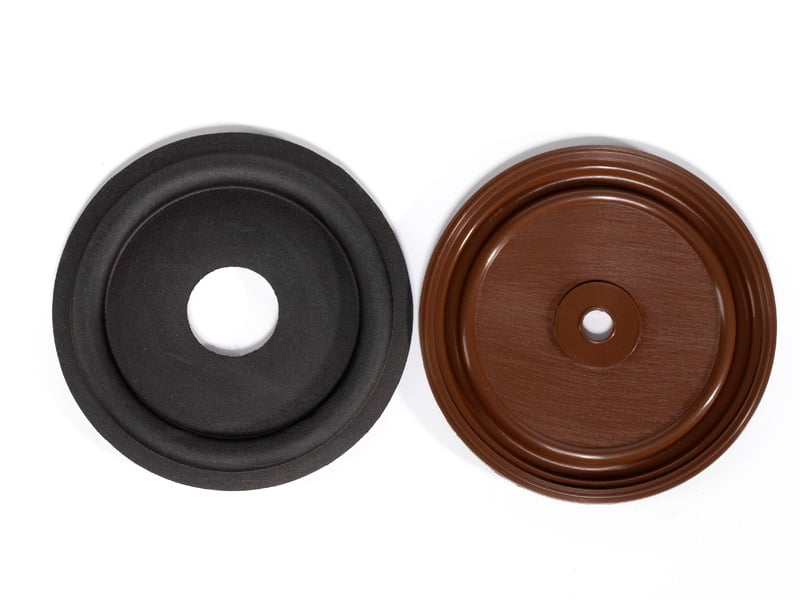
Diaphragm examples showing different appearance and design options for OEM sealing and pressure control applications.
Typical Product Characteristics
| Characteristic | What It Means | Customer Value |
|---|---|---|
| Flexible Motion Capability | Designed to flex repeatedly during operation | Suitable for pressure-regulating and actuating systems |
| Sealing Function | Separates media while maintaining controlled sealing | Helps reduce leakage risk in valves and fluid systems |
| Pressure Transfer Performance | Responds to pressure changes in working systems | Supports reliable control and repeatable system behavior |
| Fatigue Life | Important for repeated flexing and cyclic operation | Helps improve service life and reduce maintenance frequency |
| Custom Geometry | Can be tailored by diameter, hole size, bead, and thickness | Better fit for non-standard OEM equipment |
| Production Consistency | Stable molding and dimensional control are essential | Improves batch-to-batch reliability in long-term supply |
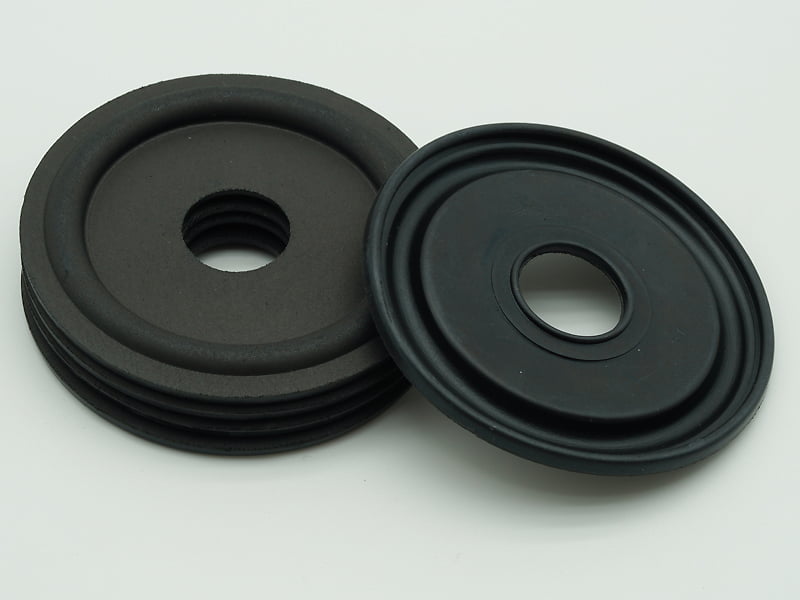
Close product view highlighting diaphragm profile, sealing edge, and molded surface consistency.
Why Molding Quality Matters
A diaphragm works by controlled deformation. If thickness distribution is unstable, the edge is poorly formed, or the molded profile is inconsistent, the part may not respond evenly in service. That can reduce pressure accuracy, shorten flex life, or create sealing instability.Buyers who focus only on low price often face hidden costs later in the form of testing failures, early field complaints, and repeated sourcing adjustments. Better molding control helps reduce those risks and supports more stable end-product performance.Why Buyers Choose Sanken Over Generic Suppliers
| What Buyers Often Face | What Sanken Delivers |
|---|---|
| Suppliers that only copy the shape without understanding function | More application-focused diaphragm support for real operating conditions |
| Unstable thickness and dimensional variation | Better molding consistency for repeat OEM production |
| Premature cracking or weak flex life | Greater focus on material matching and fatigue-related performance |
| Poor edge sealing and unstable system response | More controlled part geometry and sealing-area stability |
| Slow response during sample and drawing development | Faster communication for OEM customization and project support |
Main Application Areas
Valves and Regulators
Used in systems that require flexible pressure control, media isolation, and stable sealing performance.Pumps and Metering Devices
Suitable for applications where the diaphragm helps control flow, movement, or fluid separation during operation.Pneumatic and Fluid Control Equipment
Applied in equipment where repeated flexing, pressure response, and sealing accuracy are all important.Industrial and OEM Assemblies
A practical solution for custom machinery, process equipment, and specialized control devices requiring tailored diaphragm geometry.Selection Guidance
Rubber diaphragms are generally selected when the component must both seal and flex during operation. They are especially useful in systems where pressure transmission, fluid separation, or controlled movement is part of the working function.They are a strong option when:- The part needs to flex repeatedly during service
- The system requires controlled pressure response
- Edge sealing and active movement must work together
- Standard static seals cannot meet the functional design
- OEM buyers need a custom geometry and stable repeat production