
What Are Common Defects and Solutions in Film Die Cutting?
Film die cutting is widely used in industries such as consumer electronics, automotive electronics, medical devices, batteries, and industrial equipment.
As products become more precise and compact, OEM customers expect die-cut film components to achieve tight tolerances, clean edges, and consistent quality.
However, even with advanced equipment, defects can still occur if materials, tooling, process settings, or environmental conditions are not properly controlled.
Understanding common die-cutting defects and their root causes can help manufacturers reduce scrap, improve yields, and ensure stable production.
At Sanken, we often help customers identify and eliminate these issues before they impact product performance or delivery schedules.
Why Defect Control Matters in Film Die Cutting
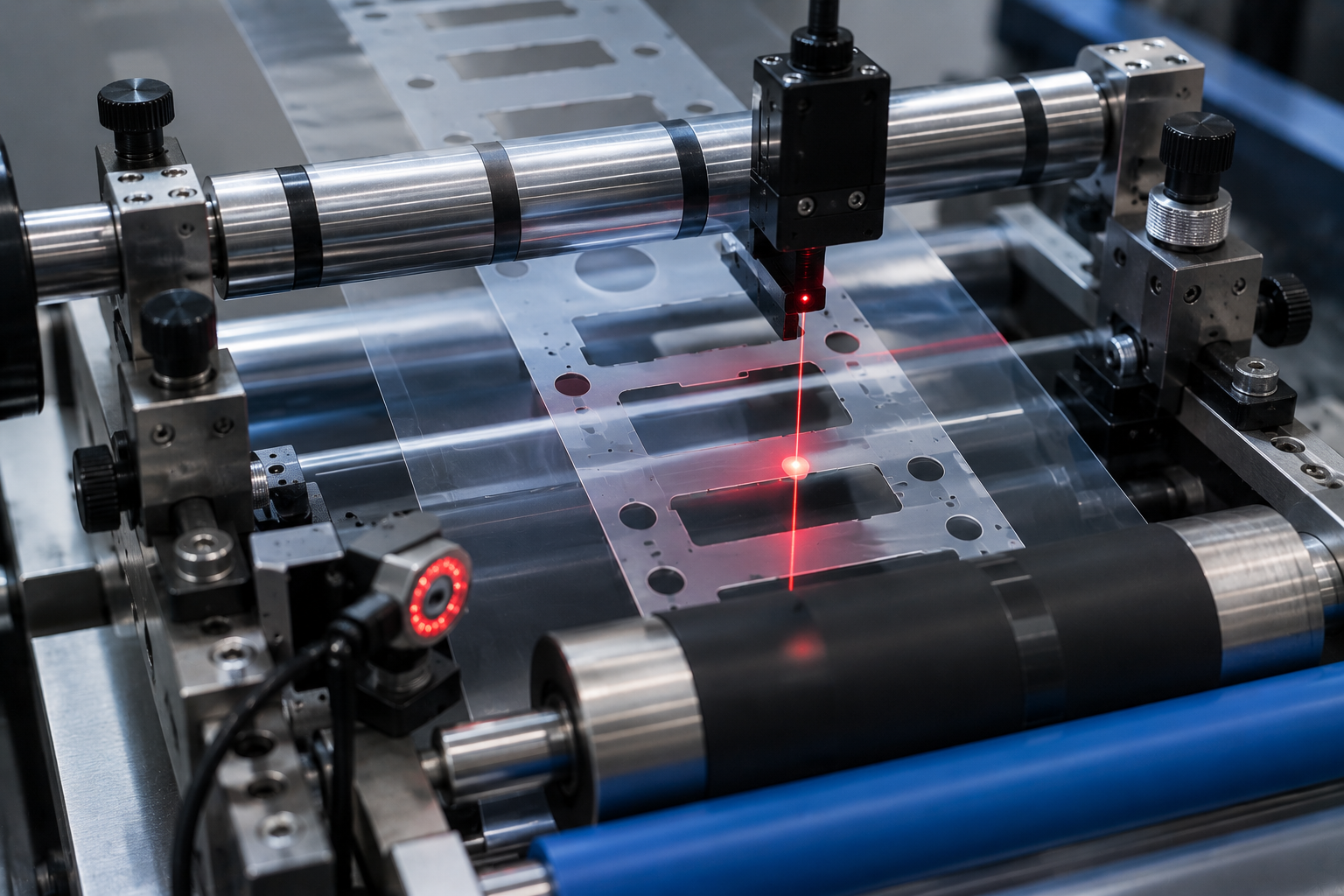
A small defect in a film component can create major problems later during assembly.
Potential consequences include:
- Assembly failures
- Adhesive leakage
- Display misalignment
- Cosmetic defects
- Reduced product reliability
- Customer complaints
For high-volume OEM programs, even a small defect rate can result in significant costs.
This is why defect prevention is often more valuable than defect detection.
Defect 1: Burr Formation
Burrs are one of the most common die-cutting defects.
They appear as small raised edges or rough material residues along the cut line.
Common Causes
- Worn tooling
- Incorrect cutting pressure
- Poor tool alignment
- Unsuitable material selection
Potential Problems
- Poor appearance
- Assembly interference
- Particle contamination
- Reduced product quality
Solutions
- Replace worn dies regularly
- Optimize cutting pressure
- Improve tool alignment
- Use precision tooling designed for the material
Proper tooling maintenance is often the most effective solution.
Defect 2: Incomplete Cutting
Incomplete cutting occurs when the material is not fully separated during the die-cutting process.
The component may remain partially attached to the waste matrix.
Common Causes
- Insufficient cutting pressure
- Tool wear
- Incorrect die height
- Material thickness variation
Potential Problems
- Production delays
- Difficult part removal
- Assembly errors
- Increased labor costs
Solutions
- Adjust cutting pressure
- Verify die condition
- Monitor material thickness
- Perform routine process validation
Regular quality checks can help identify incomplete cuts before shipment.
Defect 3: Dimensional Inaccuracy
Dimensional variation can significantly affect component performance.
Even small deviations may create problems in precision applications.
Common Causes
- Material stretching
- Improper tension control
- Registration errors
- Environmental fluctuations
Potential Problems
- Assembly failures
- Misalignment
- Functional issues
- Product rejection
Solutions
- Use closed-loop tension systems
- Improve registration control
- Maintain stable production conditions
- Implement Statistical Process Control (SPC)
For electronics and optical applications, dimensional stability is critical.
Defect 4: Misregistration
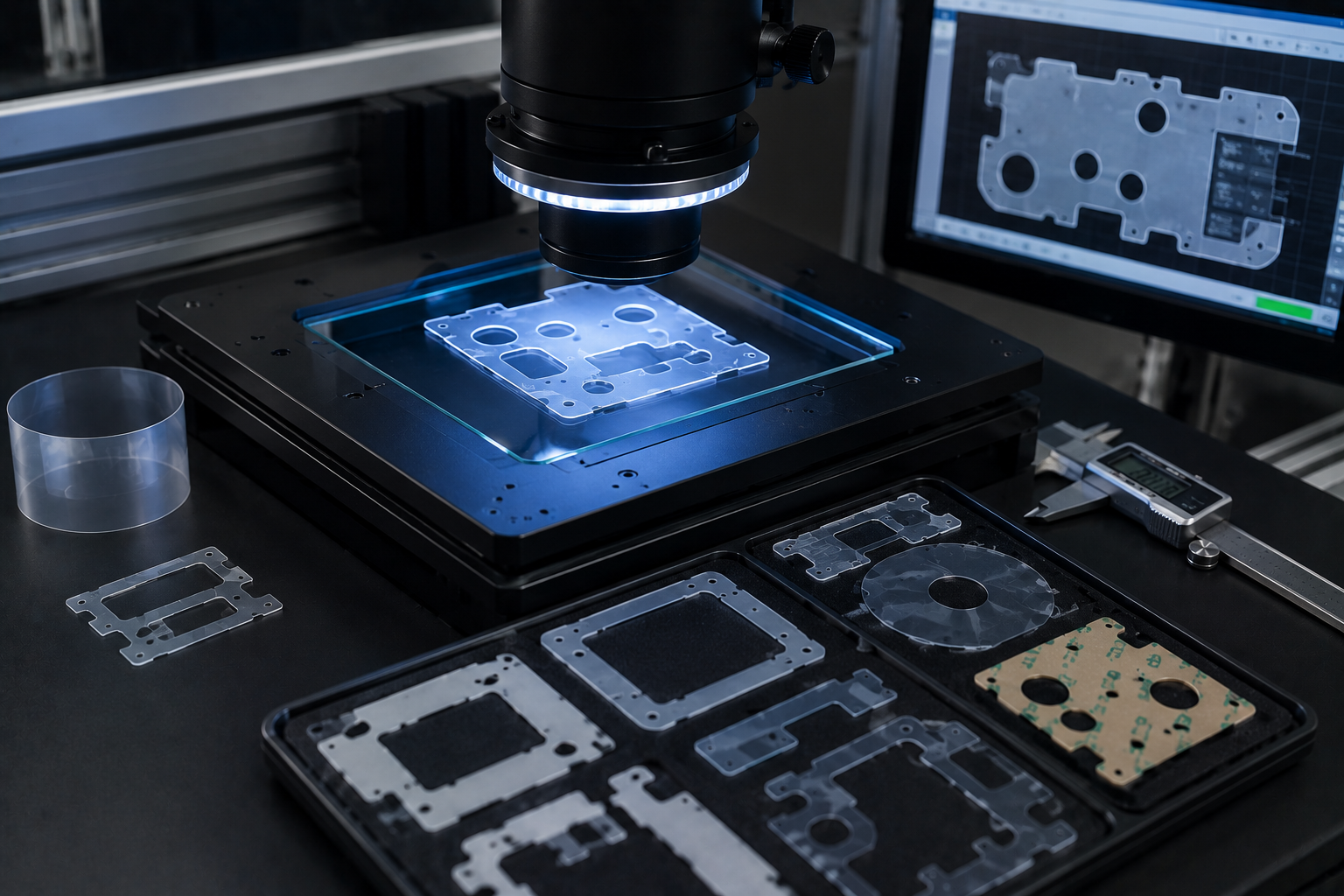
Misregistration occurs when cut features do not align correctly with printed graphics, adhesive layers, or functional elements.
Common Causes
- Material drift
- Sensor inaccuracies
- Registration mark detection errors
- Improper machine calibration
Potential Problems
- Poor appearance
- Functional failures
- Assembly issues
Solutions
- Use vision alignment systems
- Improve sensor calibration
- Monitor registration continuously
- Maintain stable material feeding
Accurate registration becomes increasingly important as component complexity increases.
Defect 5: Material Wrinkling
Wrinkles may occur during material feeding, lamination, or die cutting.
Thin films are particularly susceptible.
Common Causes
- Uneven tension
- Roller misalignment
- Excessive material speed
- Improper storage conditions
Potential Problems
- Poor cutting accuracy
- Cosmetic defects
- Adhesive inconsistencies
Solutions
- Balance web tension
- Inspect roller alignment
- Control material speed
- Store materials properly
Preventing wrinkles often begins before production starts.
Defect 6: Edge Tearing
Edge tearing occurs when the material fractures rather than cuts cleanly.
This defect is especially noticeable in thin films and narrow features.
Common Causes
- Dull cutting tools
- Excessive cutting force
- Improper die geometry
- Material brittleness
Potential Problems
- Reduced appearance quality
- Dimensional inconsistency
- Functional concerns
Solutions
- Sharpen or replace tooling
- Optimize cutting pressure
- Select appropriate die geometry
- Evaluate material suitability
A clean cut edge is often a sign of a healthy converting process.
Defect 7: Adhesive Oozing
Many die-cut film components include pressure-sensitive adhesives.
Adhesive oozing occurs when adhesive flows beyond the intended boundary.
Common Causes
- Excessive pressure
- High temperatures
- Incompatible adhesive systems
- Long-term material compression
Potential Problems
- Contamination
- Assembly difficulties
- Reduced appearance quality
Solutions
- Select appropriate adhesives
- Optimize cutting parameters
- Control storage conditions
- Validate material compatibility
Adhesive behavior should always be evaluated during prototype development.
Defect 8: Liner Lifting
Release liner lifting can occur during converting or part removal.
This issue is particularly common with intricate geometries.
Common Causes
- Weak liner adhesion
- Excessive cutting depth
- Poor material compatibility
Potential Problems
- Processing interruptions
- Component damage
- Reduced productivity
Solutions
- Adjust kiss-cut depth
- Improve liner selection
- Optimize material combinations
Proper liner selection often prevents this issue entirely.
Defect 9: Particle Contamination
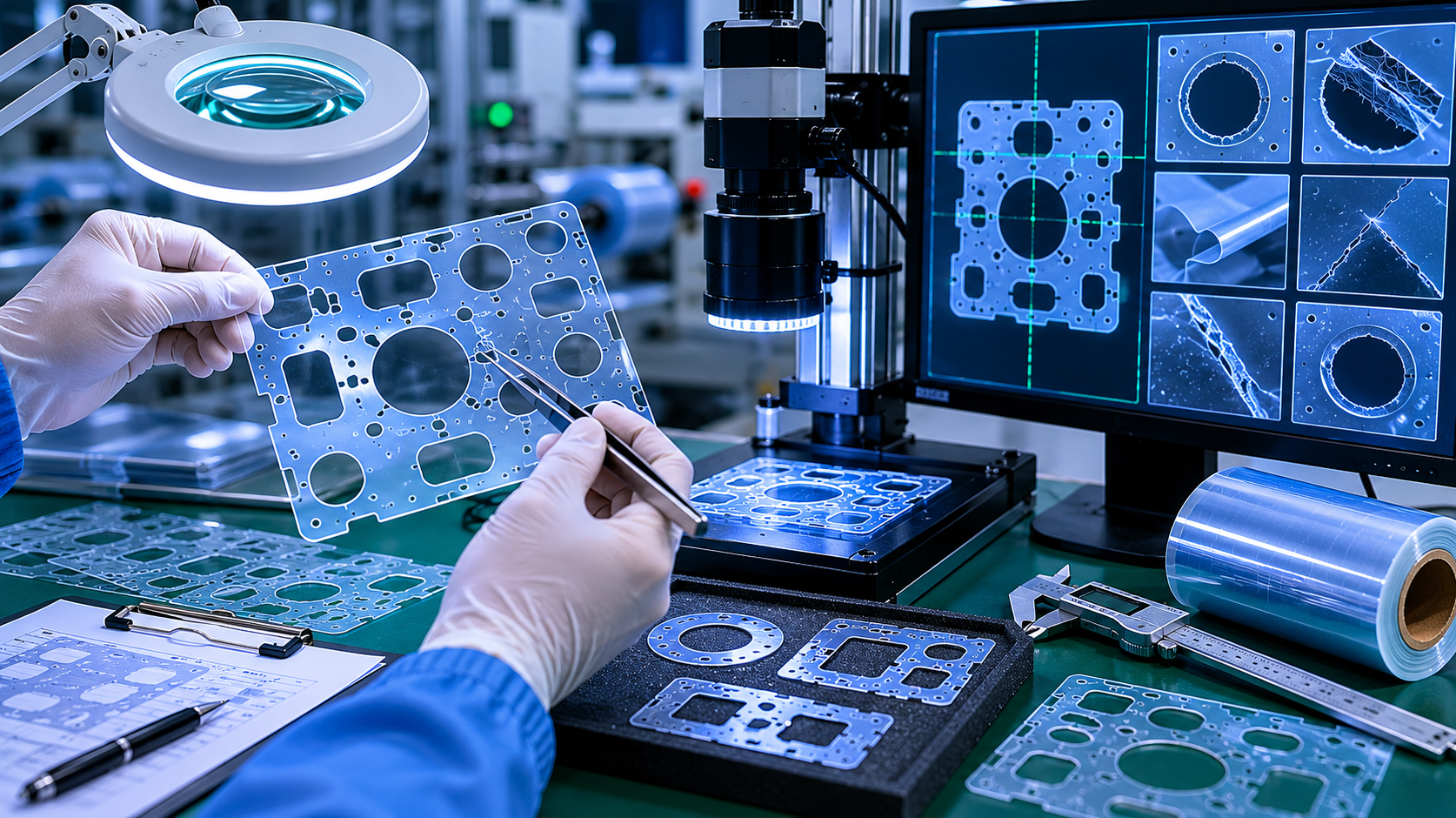
Dust and particles can significantly affect product quality, especially in optical and electronic applications.
Common Causes
- Static electricity
- Poor housekeeping
- Material abrasion
- Inadequate cleanroom control
Potential Problems
- Optical defects
- Display contamination
- Product failure
Solutions
- Utilize cleanroom production
- Implement ESD control measures
- Install ionizing equipment
- Improve cleaning procedures
For display-related applications, contamination control is often as important as dimensional accuracy.
Defect 10: Layer Shifting in Laminated Structures
Multi-layer film constructions may experience layer movement during processing.
Common Causes
- Poor lamination quality
- Uneven tension
- Material mismatch
- Improper adhesive selection
Potential Problems
- Registration errors
- Functional failure
- Cosmetic issues
Solutions
- Optimize lamination parameters
- Improve tension control
- Validate material compatibility
- Perform prototype testing
Stable lamination is essential for high-precision assemblies.
How Preventive Quality Control Reduces Defects
The best approach to defect management is prevention.
Effective quality systems typically include:
- Incoming material inspection
- Tooling maintenance programs
- Automated vision inspection
- SPC monitoring
- Cleanroom manufacturing
- Operator training
These measures help identify problems before defects reach customers.
How Sanken Controls Film Die Cutting Defects
At Sanken, we combine precision converting expertise with robust quality control systems to minimize production defects.
Our capabilities include:
- Precision film die cutting
- Optical film converting
- Vision inspection systems
- Multi-layer lamination
- Cleanroom manufacturing
- Prototype validation
- High-volume OEM production
By controlling every stage of the converting process, we help customers achieve consistent quality, reduced scrap rates, and improved production efficiency.
Conclusion
Film die-cutting defects can impact product quality, manufacturing efficiency, and customer satisfaction.
Common issues such as burrs, incomplete cuts, dimensional variation, misregistration, contamination, and adhesive problems often originate from controllable process variables.
By combining proper material selection, precision tooling, process optimization, inspection technologies, and preventive quality control, manufacturers can significantly reduce defect rates and improve production consistency.
At Sanken, we help OEM customers identify, prevent, and eliminate film die-cutting defects to ensure reliable, high-quality components for demanding applications.