

How Long Does EVA Foam Last? What OEM Buyers Should Know Before Choosing Foam Materials
EVA foam can last for several years, but its real service life depends on density, thickness, compression load, temperature, humidity, UV exposure, adhesive system, and how the foam is used.
For simple packaging, EVA foam may only need to protect a product during shipping. For automotive, electronics, medical equipment, or industrial applications, the foam may need to perform reliably for years.
That is why the better question is not only “How long does EVA foam last?” The better question is: “Can this EVA foam maintain its function throughout my product’s expected service life?”
At Sanken Manufacturing, we help OEM customers select, die cut, laminate, and convert EVA foam into cushioning pads, adhesive-backed parts, protective liners, anti-vibration components, sealing supports, and custom assemblies for stable mass production.
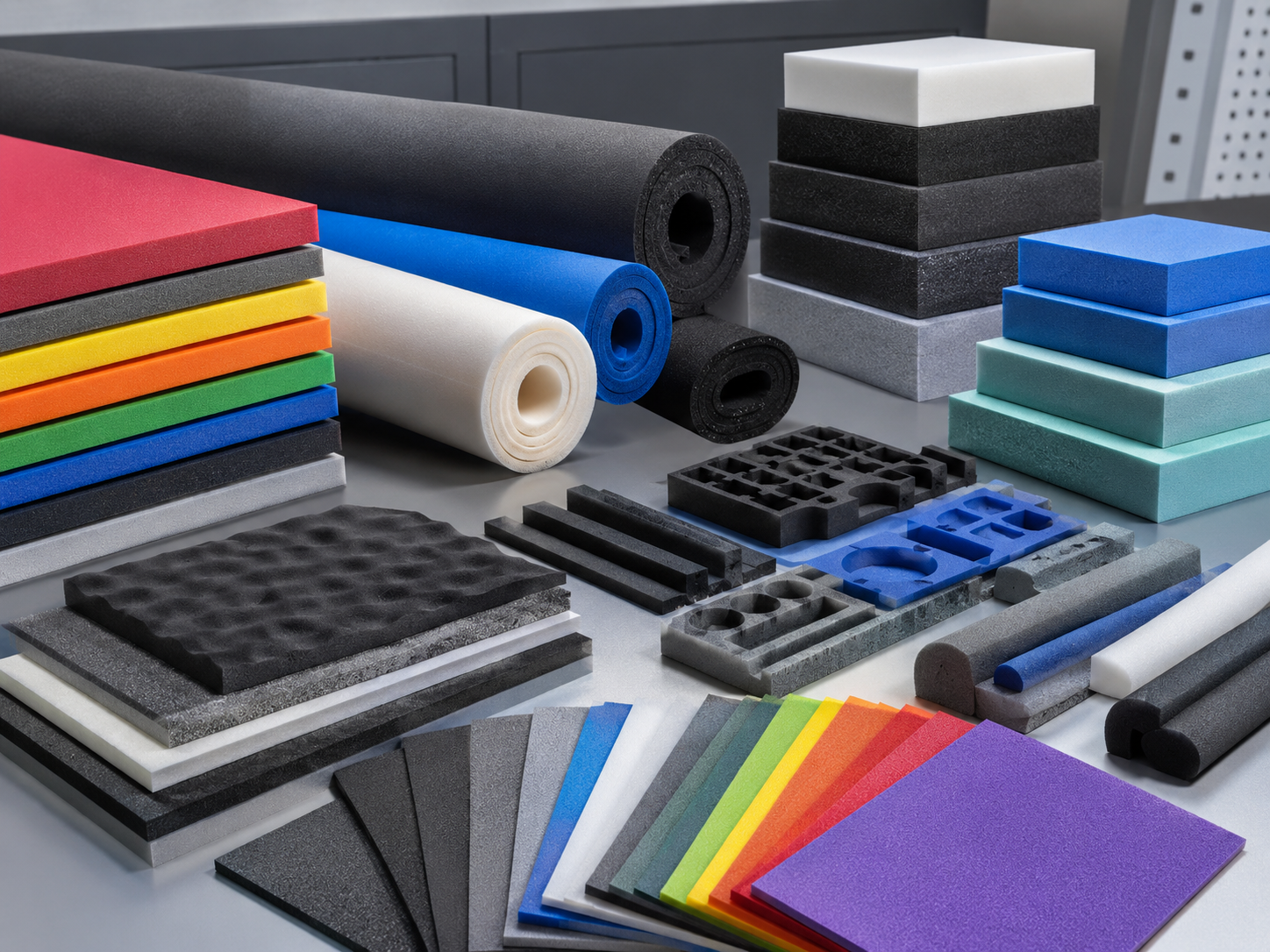
What Affects the Lifespan of EVA Foam?
EVA foam does not fail at the same speed in every application.
A foam insert kept indoors may last much longer than an automotive foam pad exposed to heat, pressure, and vibration every day.
The main factors include:
| Factor | Impact on EVA Foam Life |
|---|---|
| Density | Higher density usually improves support and durability |
| Compression load | Long-term pressure may cause foam collapse |
| Heat exposure | High temperature may speed aging or deformation |
| Humidity | Moisture may affect adhesive or laminated structures |
| UV exposure | Sunlight may cause discoloration or surface aging |
| Adhesive system | Poor adhesive may fail before the foam itself |
| Application environment | Automotive and industrial use require stronger validation |
For buyers, EVA foam lifespan should always be judged by application conditions, not only by material name.
How Long Can EVA Foam Last in Normal Use?
In general indoor applications, good-quality EVA foam can often last several years.
For example:
- Packaging inserts may last through repeated handling if not heavily compressed.
- Protective pads may remain usable for years in controlled environments.
- Cushioning parts may last longer if compression is moderate.
- Automotive EVA foam parts need stricter aging and compression evaluation.
However, if EVA foam is exposed to constant heat, heavy load, strong sunlight, oil, chemicals, or high compression, its service life may be shorter.
This is why industrial buyers should not approve EVA foam only by appearance or initial softness.
A sample may feel good on day one but perform poorly after long-term use.
What Are Common Signs of EVA Foam Aging?
EVA foam usually does not fail suddenly.
It gradually changes.
Common aging signs include:
- Permanent compression
- Hardening
- Surface cracking
- Shrinkage
- Loss of cushioning
- Adhesive lifting
- Odor after heat exposure
- Edge deformation
- Color fading
For OEM products, these issues can create real production and customer problems.
For example, a foam pad that loses thickness may no longer reduce vibration.
An adhesive-backed EVA strip that lifts may cause assembly failure.
A foam cushion that collapses may reduce product protection during shipping.
Small foam failures can become expensive quality complaints.
Why Compression Set Is Critical
One of the most important EVA foam durability concerns is compression set.
Compression set means the foam does not fully recover after being compressed for a long time.
This matters in applications such as:
- Automotive anti-rattle pads
- Cushioning spacers
- Sealing support parts
- Protective liners
- Electronic assembly pads
- Industrial vibration pads
If the foam becomes permanently flattened, it may lose its function.
For buyers, density and hardness must be selected carefully.
A foam that is too soft may feel comfortable at first, but it may collapse too quickly.
A foam that is too hard may last longer, but it may not provide enough cushioning.
The right choice depends on the pressure, assembly space, and product life requirement.
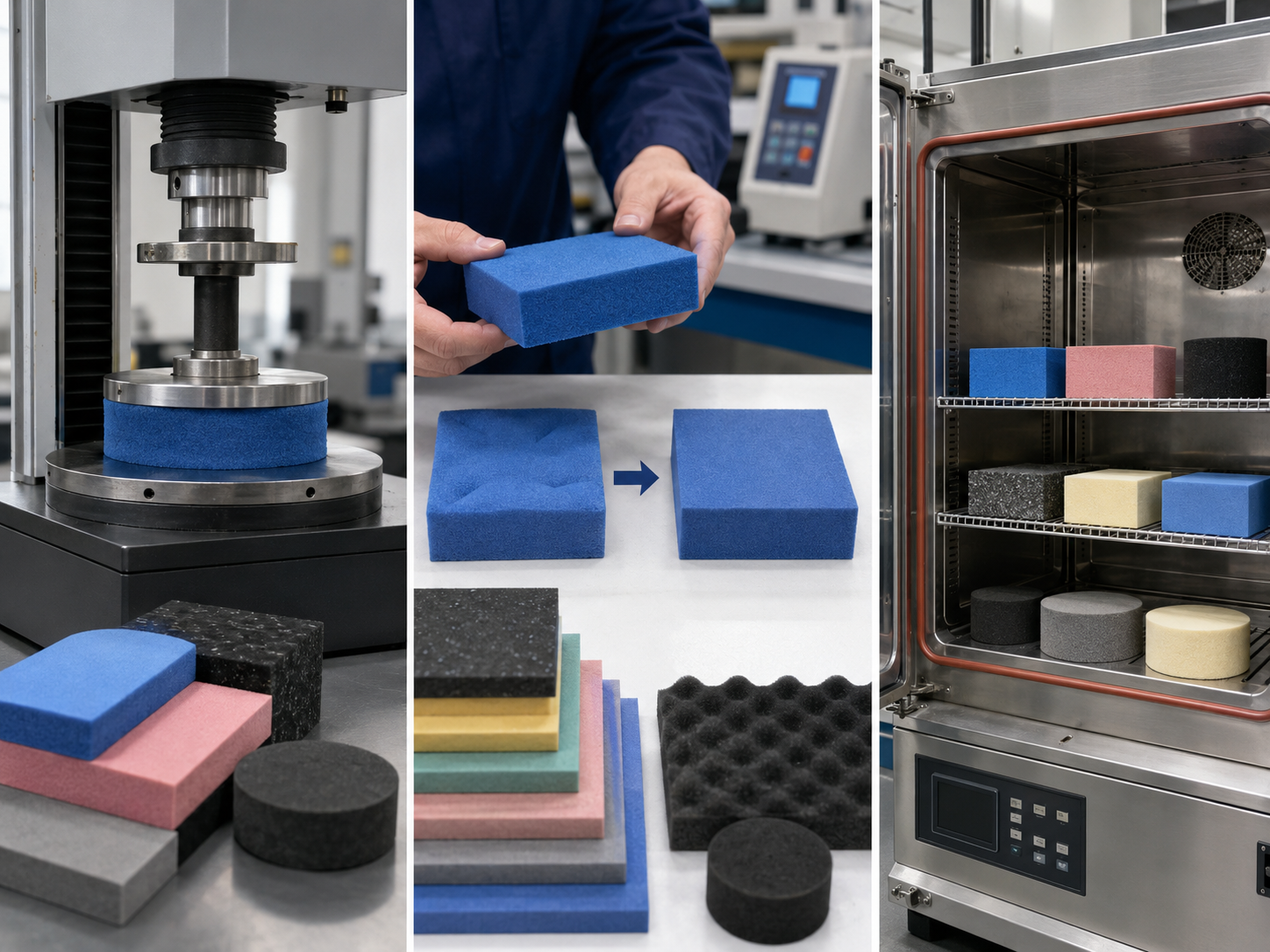
Does Heat Reduce EVA Foam Lifespan?
Yes, heat can reduce EVA foam lifespan.
This is especially important for automotive interiors, electronics, industrial equipment, and products stored in hot environments.
High temperature may cause:
- Shrinkage
- Hardness change
- Odor release
- Adhesive failure
- Dimensional change
- Faster aging
Automotive interiors can become very hot when a vehicle is parked under sunlight. If EVA foam is used inside a car, buyers should confirm whether the selected grade can handle the required temperature range.
For some demanding applications, EVA may need to be replaced or combined with higher-performance materials such as EPDM foam, rubber, silicone foam, or multilayer composites.
Does Water Damage EVA Foam?
EVA foam generally has good water resistance.
That is one reason it is popular in packaging, sports goods, industrial pads, and protective applications.
However, water resistance does not mean every EVA structure is fully waterproof.
The final performance depends on:
- Foam cell structure
- Surface skin
- Density
- Lamination
- Adhesive backing
- Exposure time
- Water pressure
If the EVA part includes adhesive or laminated layers, the adhesive system may fail before the foam itself.
For products used in humid environments, the full material structure should be tested, not just the foam sheet.
EVA Foam Lifespan in Automotive Applications
Automotive use is more demanding than ordinary indoor use.
EVA foam may face:
- Heat
- Humidity
- Vibration
- Compression
- Odor requirements
- Flame resistance requirements
- Adhesive aging
- Long-term assembly pressure
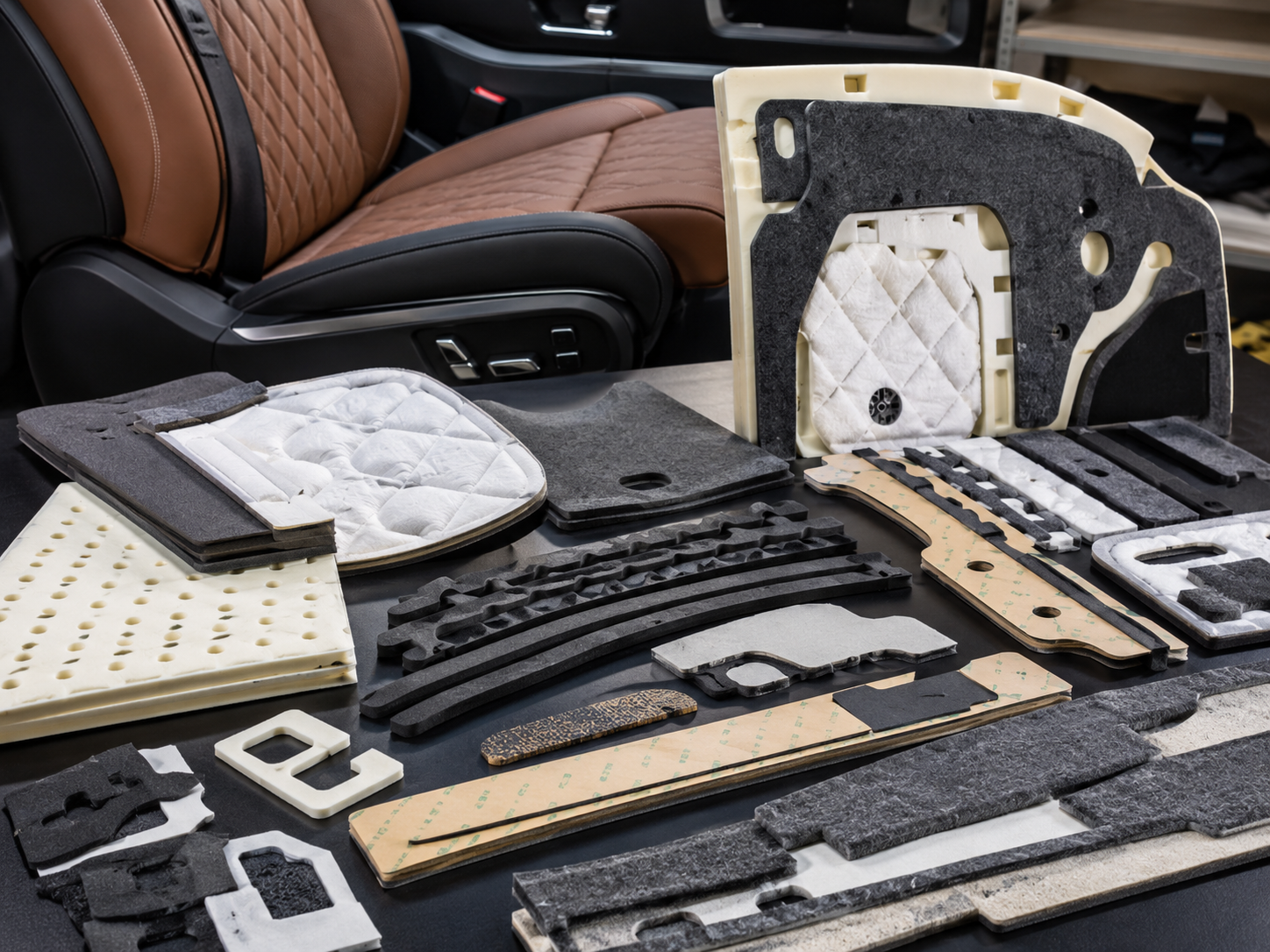
In automotive interiors, EVA foam may be used for:
- Anti-rattle pads
- Door trim cushions
- Dashboard spacers
- Wire harness protection
- Trunk liner support
- Interior panel cushioning
- Protective packaging for parts
For these applications, the buyer should not ask only how long EVA foam lasts. They should ask whether the EVA foam can pass the required aging, compression, odor, and adhesive durability tests.
At Sanken, we help customers review the actual application before recommending EVA foam density, adhesive structure, and die-cut design.
EVA Foam Lifespan in Packaging Applications
For packaging, EVA foam usually has a different requirement.
The foam may need to protect a product during shipping, storage, and repeated handling.
In this case, buyers should consider:
- Impact protection
- Drop resistance
- Surface cleanliness
- Compression recovery
- Appearance
- Insert durability
High-quality EVA foam inserts can be reused many times if the load is not excessive.
However, if the packaged product is heavy or sharp-edged, the foam may deform faster.
Precision cutting is also important because poorly cut inserts may loosen, tear, or fail to hold the product properly.
EVA Foam Lifespan in Electronics Applications
Electronics applications often require stable dimensions and clean edges.
EVA foam may be used for:
- Cushioning pads
- Battery protection
- Speaker damping
- Dust protection
- Assembly spacers
- Shock absorption
Here, the lifespan depends not only on the foam but also on the environment inside the device.
Heat from batteries or electronic components may affect foam aging.
Adhesive-backed EVA parts must also maintain bonding strength over time.
If the foam shifts or lifts, it may affect product reliability.
How to Extend EVA Foam Service Life
Buyers can improve EVA foam lifespan by making better decisions early.
Choose the Right Density
Higher density usually improves durability and support, but it may reduce softness.
Confirm Compression Requirements
The foam should be tested under real assembly pressure.
Select the Right Adhesive
If adhesive backing is required, the adhesive must match EVA surface properties and the final environment.
Avoid Unnecessary Heat Exposure
High temperature can accelerate aging.
Use Lamination When Needed
EVA can be combined with film, non-woven fabric, rubber, or adhesive layers to improve performance.
Use Precision Die Cutting
Accurate parts fit better, reduce stress, and improve long-term reliability.
Common Buyer Mistakes
Many EVA foam problems come from early selection mistakes.
Common mistakes include:
- Choosing only by lowest price.
- Approving foam based only on initial softness.
- Ignoring compression set.
- Using the wrong adhesive.
- Skipping heat aging evaluation.
- Not testing real assembly conditions.
- Choosing thickness without checking fit.
- Treating packaging-grade EVA as automotive-grade EVA.
These mistakes can lead to rejected parts, delayed projects, customer complaints, and expensive redesign.
What Should Buyers Ask Before Choosing EVA Foam?
Before approving EVA foam, buyers should confirm:
- What is the expected product life?
- What density and hardness are required?
- Will the foam stay compressed?
- Will it face heat, humidity, or UV exposure?
- Does it need adhesive backing?
- Does it require flame resistance?
- Is odor control important?
- What die-cut tolerance is needed?
- Is the part for automotive, electronics, packaging, or industrial use?
- Can the supplier support prototype and mass production?
These questions help define whether EVA foam is the right choice.
They also help the supplier recommend a better material structure.
How Sanken Helps Customers Improve EVA Foam Reliability
At Sanken Manufacturing, we do not simply cut foam sheets.
We help customers solve real production problems.
For EVA foam projects, we support:
- Material selection
- Density and thickness review
- Adhesive lamination
- Foam converting
- Precision die cutting
- Hot pressing
- Custom assembly
- Prototype validation
- Mass production support
Our goal is to help customers reduce foam failure, improve assembly consistency, shorten development time, and receive stable parts ready for production.
Conclusion
EVA foam can last for several years in normal use, but its actual lifespan depends on density, compression, heat, humidity, UV exposure, adhesive performance, and application environment. For OEM buyers, the most important issue is not the general lifespan of EVA foam, but whether the selected EVA structure can maintain cushioning, protection, vibration reduction, or sealing support throughout the product’s service life.
At Sanken Manufacturing, we help customers select, laminate, die cut, and convert EVA foam into reliable components for automotive, electronics, packaging, medical equipment, and industrial applications.