
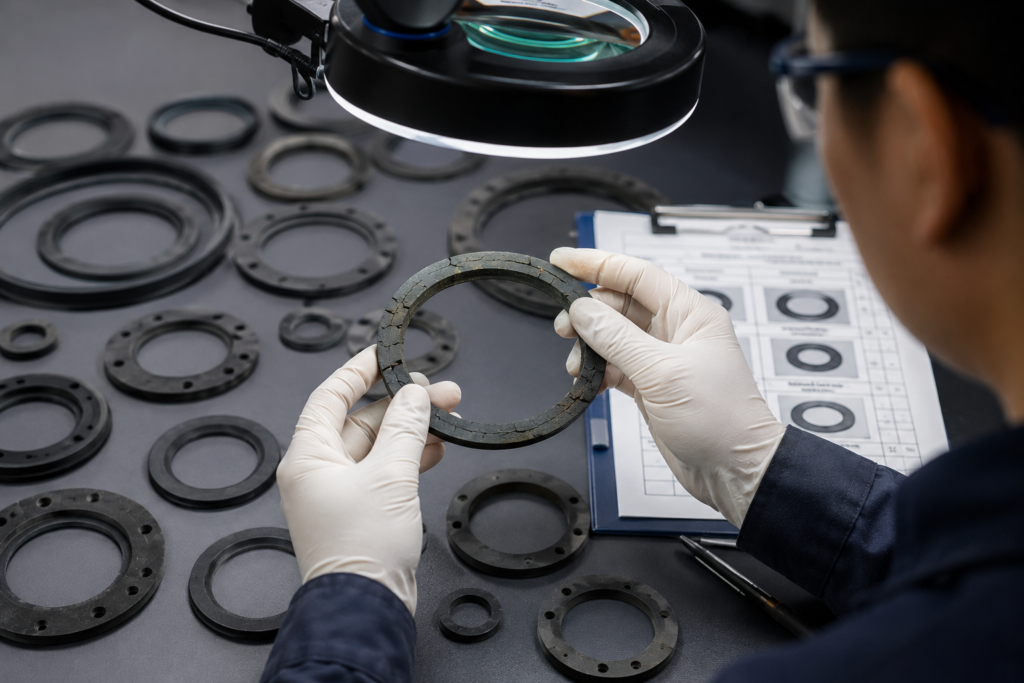
Silicone rubber is widely used in automotive electronics, medical devices, consumer electronics, industrial equipment, and sealing applications because of its excellent heat resistance, flexibility, and long-term durability. However, many engineers and buyers wonder whether such a soft and elastic material can be converted into precise components without edge defects, dimensional variation, or tearing.
Yes, silicone rubber can be precision die cut cleanly when the proper material grade, tooling design, cutting process, and manufacturing controls are used. Modern die-cutting technology can produce highly accurate silicone gaskets, seals, insulation pads, thermal interface components, and custom-shaped parts with excellent edge quality and dimensional consistency.
The challenge is not whether silicone can be die cut, but how to control the material's elasticity throughout the converting process.
Why Is Silicone Rubber Difficult to Die Cut?
Unlike rigid materials such as PET film or polycarbonate, silicone rubber is highly elastic.
During die cutting, silicone can:
- Stretch under pressure
- Compress during cutting
- Rebound after release
- Distort if tooling is not optimized
These characteristics make silicone more challenging than many other converting materials.
Theme: Silicone Rubber Material Inspection
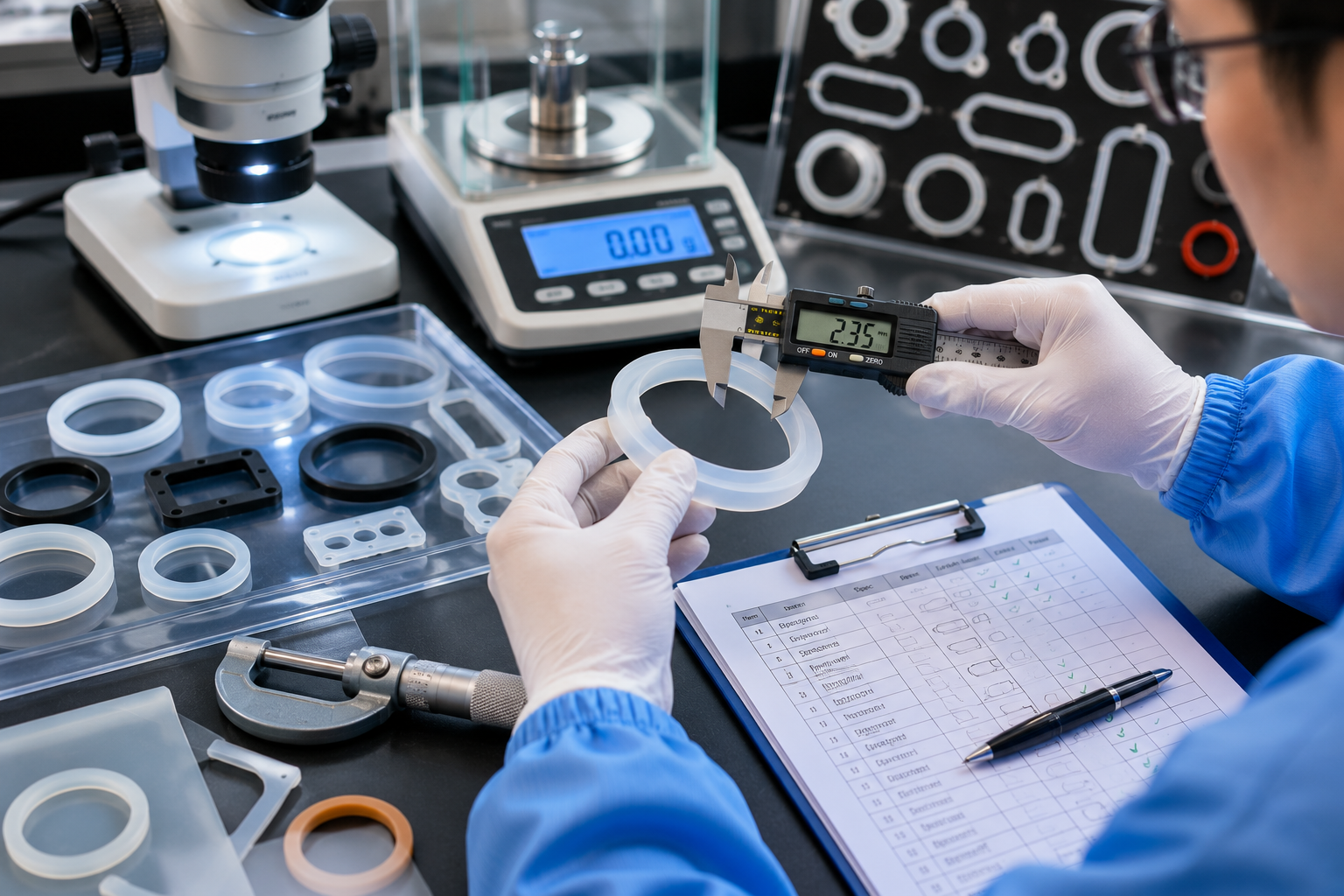
What Makes Silicone Suitable for Precision Components?
Despite its elasticity, silicone offers several advantages for die cutting.
Excellent Dimensional Stability
High-quality silicone maintains its shape over a wide temperature range.
Consistent Thickness
Precision-calendered silicone sheets provide excellent thickness control.
Smooth Surface Quality
Silicone surfaces are typically uniform and suitable for precision converting.
Long-Term Durability
Silicone resists:
- UV exposure
- Ozone
- Moisture
- Extreme temperatures
This makes it ideal for demanding OEM applications.
Which Die Cutting Methods Work Best for Silicone?
Several cutting technologies can process silicone rubber.
Flatbed Die Cutting
Flatbed die cutting is commonly used for:
- Thick silicone sheets
- Large gaskets
- Industrial sealing components
Advantages:
- Excellent cutting force
- Suitable for thicker materials
- Cost-effective tooling
Rotary Die Cutting
Rotary die cutting is preferred for:
- Thin silicone materials
- High-volume production
- Roll-to-roll converting
Advantages:
- High productivity
- Consistent quality
- Excellent repeatability
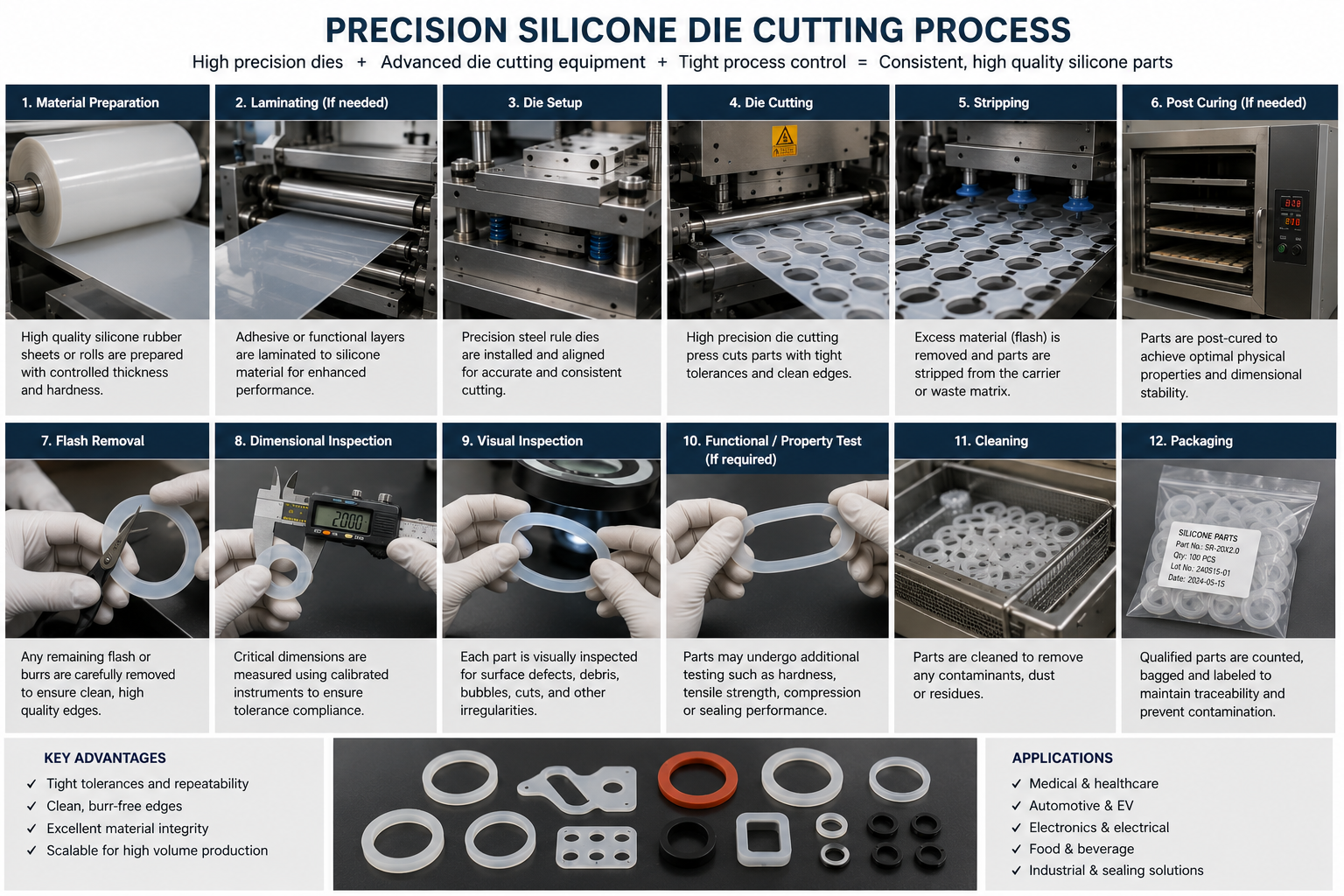
Theme: Precision Silicone Die Cutting Process
Digital Knife Cutting
Digital cutting is often used for:
- Prototypes
- Low-volume production
- Design validation
Advantages:
- No tooling investment
- Fast modifications
However, die cutting generally provides better efficiency for production quantities.
What Factors Affect Edge Quality?
Clean edge quality depends on several variables.
Material Hardness
Very soft silicone can deform more easily.
Higher-durometer grades generally cut more cleanly.
Tool Sharpness
Worn tooling may create:
- Rough edges
- Material pulling
- Dimensional variation
Regular tool maintenance is essential.
Cutting Pressure
Excessive pressure can compress silicone excessively.
Insufficient pressure may leave incomplete cuts.
Proper process control is critical.
Common Problems During Silicone Die Cutting
Edge Tearing
Can result from:
- Dull tooling
- Soft material grades
- Improper cutting parameters
Dimensional Variation
May occur because of:
- Material stretch
- Tension instability
- Improper registration
Part Distortion
Often caused by:
- Excessive compression
- Poor material support
- Incorrect handling procedures
Most of these issues can be eliminated through proper engineering controls.
Applications for Precision Die-Cut Silicone Components
Consumer Electronics
Silicone components are commonly used for:
- Waterproof seals
- Display gaskets
- Thermal management pads
- Vibration isolation
Automotive Industry
Applications include:
- Environmental seals
- Sensor gaskets
- Battery protection components
- Thermal insulation parts
Theme: Precision Silicone Gasket Components
Medical Devices
Silicone is widely used because of its:
- Biocompatibility
- Chemical resistance
- Long service life
Typical applications include:
- Medical seals
- Protective membranes
- Device cushioning components
Industrial Equipment
Used for:
- High-temperature gaskets
- Environmental sealing
- Vibration damping
Design Tips for Better Silicone Die-Cut Parts
To achieve clean cutting results:
Use Appropriate Material Thickness
Very thin silicone may require specialized converting processes.
Avoid Extremely Sharp Corners
Rounded corners improve manufacturability.
Consider Compression Requirements
Design should account for silicone's elastic behavior.
Validate Production Conditions Early
Prototype testing should use production-intent materials whenever possible.
These steps help minimize risk during mass production.
Quality Control Requirements
Precision silicone die-cut parts should be inspected for:
- Dimensional accuracy
- Edge quality
- Thickness consistency
- Compression performance
- Surface cleanliness
For critical applications, additional environmental testing may be required.
How Sanken Manufacturing Produces Precision Silicone Components
Dongguan Sanken Electronics Manufacturing Co., Ltd. specializes in custom silicone rubber converting and precision die-cut manufacturing solutions.
Our capabilities include:
- Precision die cutting
- Silicone gasket manufacturing
- Adhesive laminating
- Foam converting
- Rubber sealing products
- Injection molding
- Cleanroom production
Key Advantages
- OEM and ODM customization
- ISO 9001 certified quality management
- RoHS and REACH compliant materials
- Domestic and overseas production bases
- Cleanroom precision manufacturing
- Tool development from drawings or samples
We support automotive electronics, consumer electronics, medical devices, industrial equipment, and custom sealing applications.
Featured Snippet Summary
Yes, silicone rubber can be precision die cut cleanly. With the proper material grade, tooling design, and process control, manufacturers can produce highly accurate silicone gaskets, seals, insulation components, and custom parts with excellent edge quality and dimensional consistency.
Conclusion
Silicone rubber is one of the most versatile materials used in precision converting. Although its elasticity presents certain manufacturing challenges, modern die-cutting technologies can produce clean, accurate, and repeatable silicone components for demanding OEM applications.
When material selection, tooling design, and process control are properly managed, precision die-cut silicone parts deliver excellent sealing, insulation, durability, and long-term performance across a wide range of industries.