
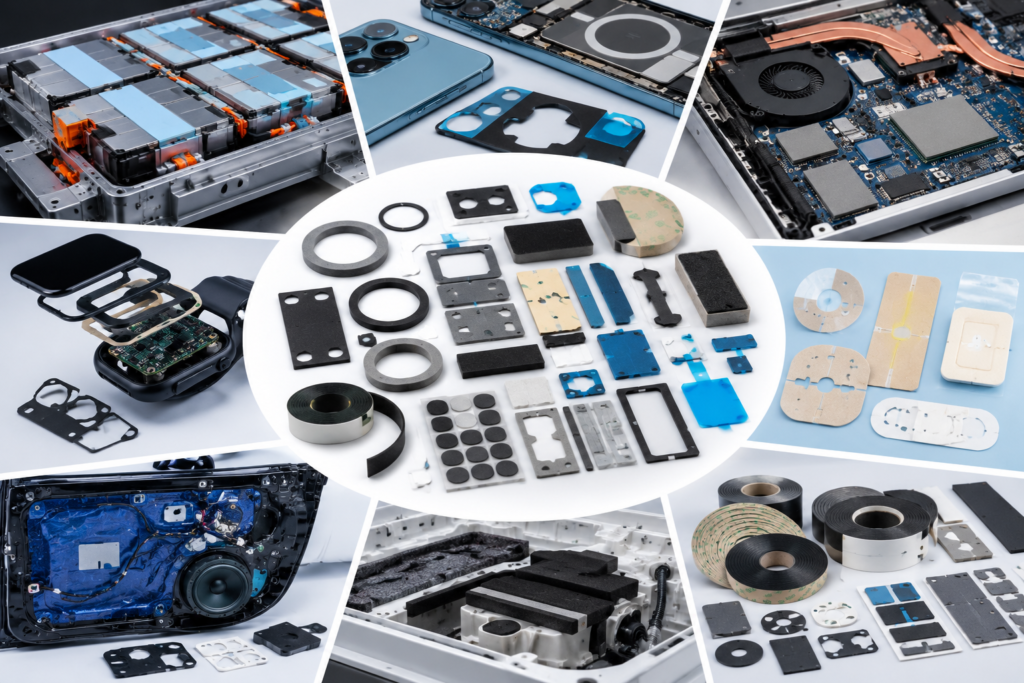
Die cutting is a manufacturing process that uses a custom-shaped tool to cut materials into precise shapes. It is widely used to produce foam gaskets, adhesive tape parts, PET insulation films, rubber pads, non-woven components and protective layers for automotive, electronics, medical and industrial products.
For OEM buyers and engineers, die cutting is not only about cutting material. The real value is repeatable accuracy, clean edges, stable tolerance, fast production and the ability to convert flexible materials into ready-to-assemble components.
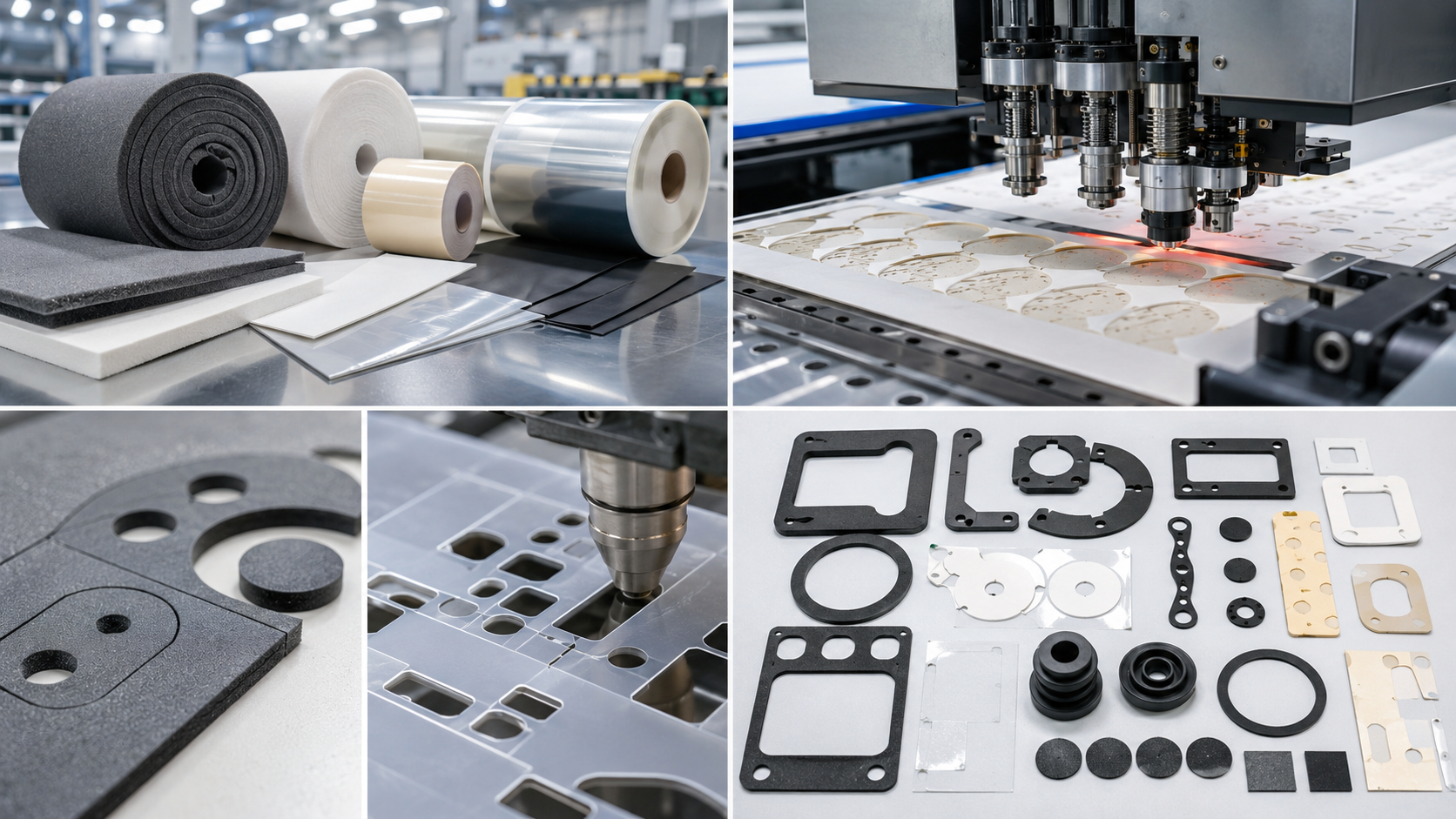
How does die cutting work and why is it essential in modern manufacturing?
Many engineers understand die cutting conceptually but are less familiar with how the workflow supports repeatability and scalability in production environments. Understanding the process helps improve sourcing decisions and shorten development timelines.
Die cutting works by pressing or rotating a shaped blade against materials to produce identical components quickly and accurately. The tooling defines geometry, ensuring stable output quality throughout production runs.
Insight:
In practical OEM production programs, early integration of die cutting during product design often reduces assembly complexity because multiple layers can be laminated and cut in a single conversion process.
Dive deeper: step-by-step die cutting workflow
Typical die cutting production includes:
| Step | Operation | Purpose |
|---|---|---|
| Material preparation | Sheet or roll alignment | Ensures positional accuracy |
| Tool pressing or rotation | Shape formation | Creates final geometry |
| Waste removal | Scrap separation | Improvest material efficiency |
| Inspection | Dimensional verification | Maintains tolerance stability |
| Packaging | Output handling | Supports automated assembly |
Because tooling defines the cutting path, die cutting ensures higher repeatability than manual trimming methods.
What materials can be die cut and how do you select the right option?
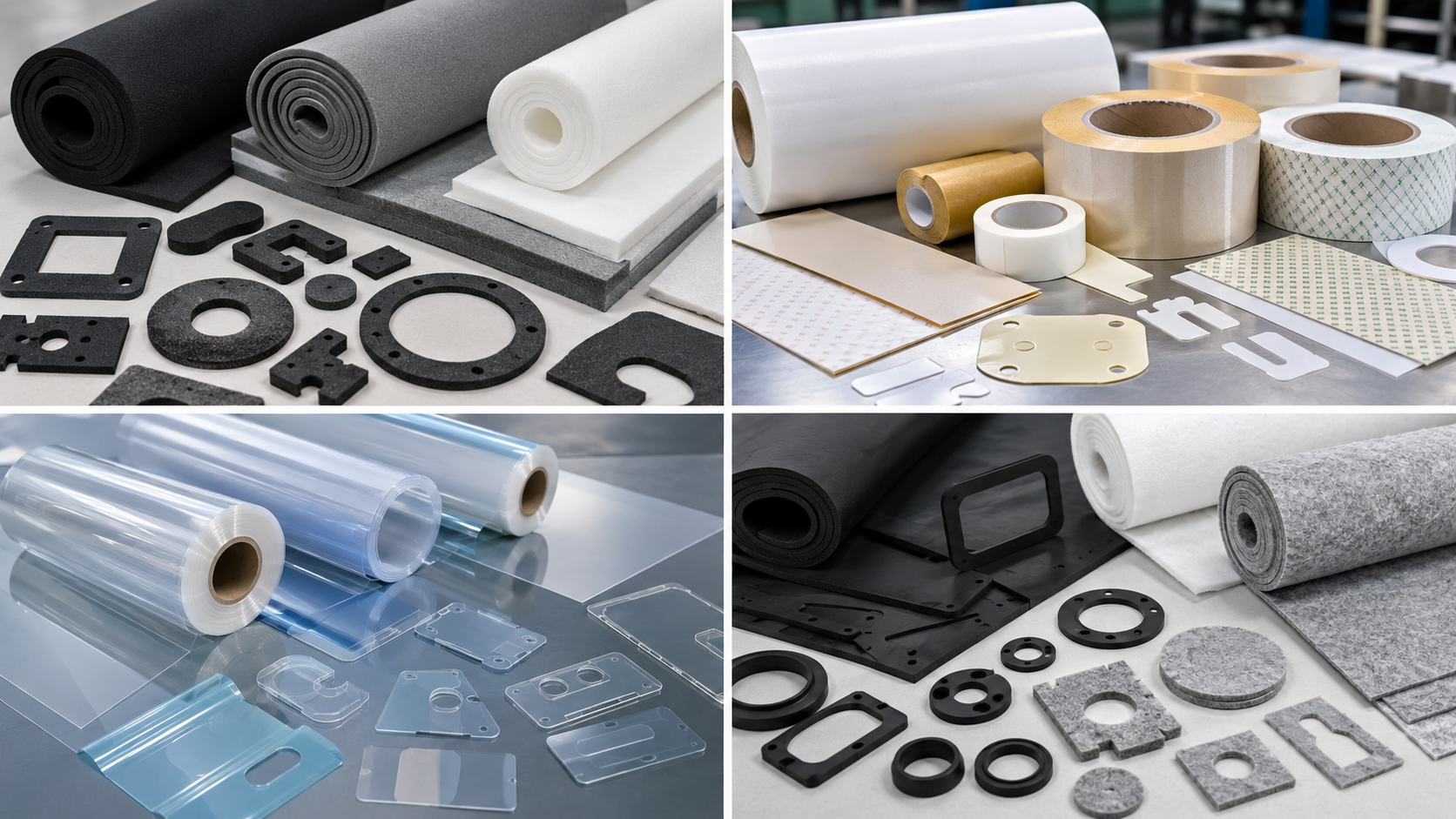
Some buyers assume die cutting only applies to labels or packaging films. In industrial manufacturing, however, it supports a wide range of functional materials used in structural and protective assemblies.
Common die cut materials include:
- EVA foam
- PE foam
- Silicone rubber
- Double-sided adhesive tapes
- PET insulation films
- Polycarbonate sheets
- Non-woven fabrics
- EMI shielding materials
Insight:
Material selection directly influences tooling life, production speed, and assembly performance. Selecting roll-compatible materials early improves production efficiency and reduces downstream alignment issues.
Dive deeper: material selection by industry application
| Industry | Typical materials | Functional role |
|---|---|---|
| Automotive | EPDM foam | Sealing and vibration control |
| Electronics | PET / PI films | Electrical insulation |
| Medical | Non-woven fabrics | Skin-safe adhesion |
| Appliances | PVC foam | Cushioning protection |
Matching material properties with application requirements improves long-term reliability and reduces failure risk.
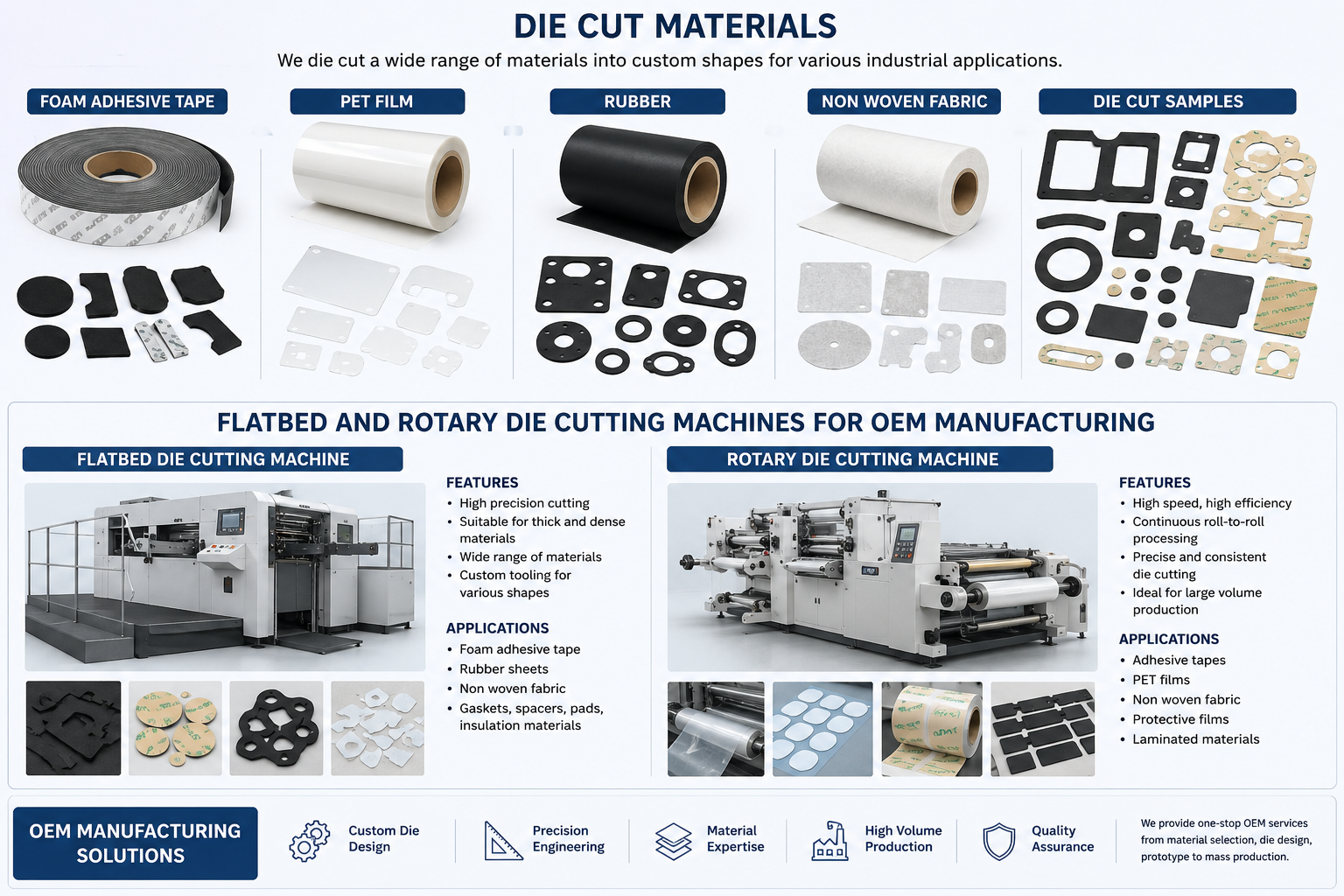
What are the main types of die cutting processes and machines?
Choosing the right die cutting method affects tooling cost, production speed, and scalability. Understanding process differences helps engineers transition smoothly from prototype to mass production.
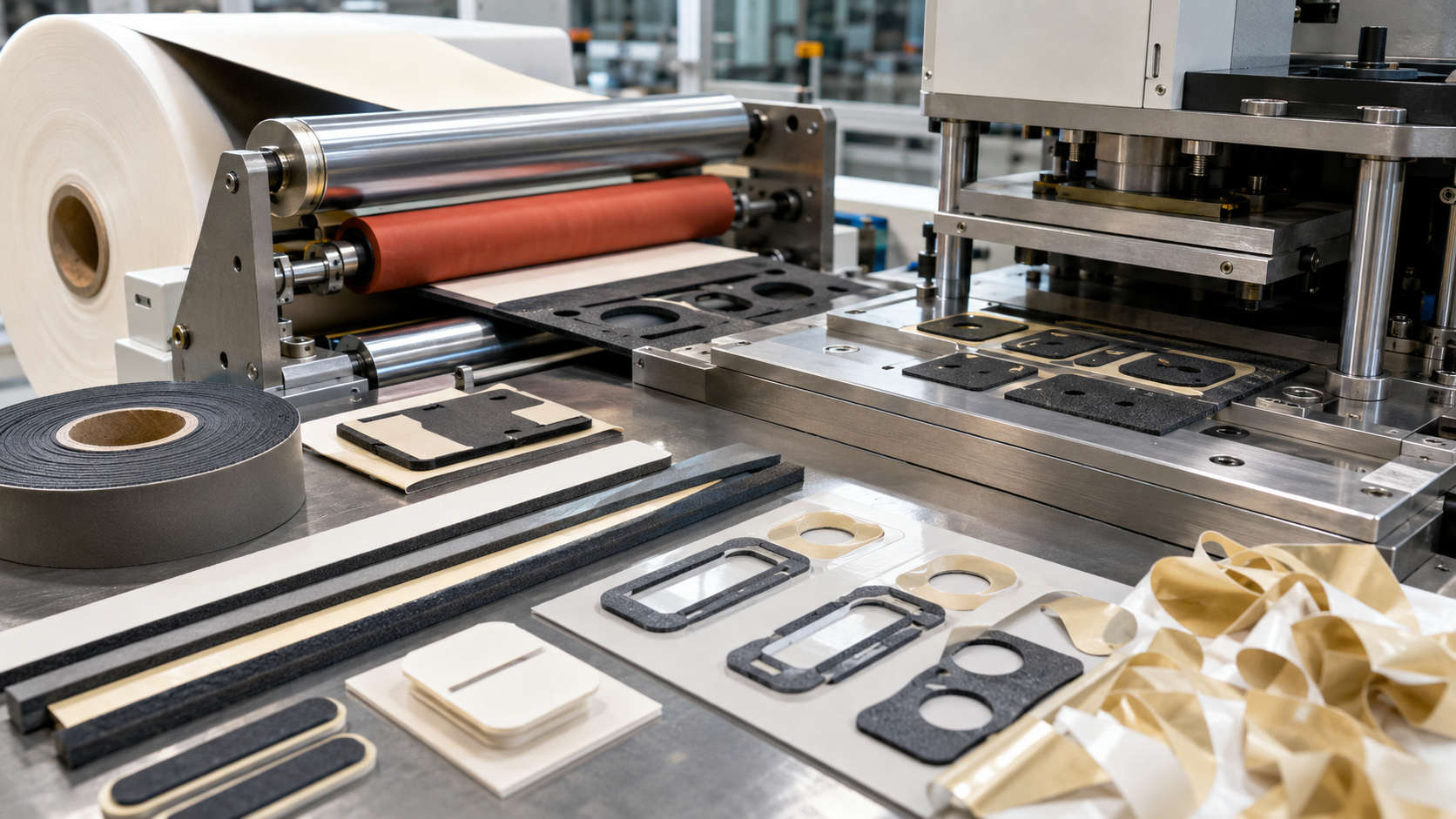
The most common die cutting technologies include:
- Flatbed die cutting
- Rotary die cutting
- Semi-rotary die cutting
- Laser-assisted die cutting (supportive cutting stage)
Insight:
Flatbed die cutting provides strong flexibility during development stages, while rotary die cutting becomes significantly more cost-efficient once production volumes increase.
Dive deeper: comparison of die cutting methods
| Method | Strength | Best volume range |
|---|---|---|
| Flatbed | High flexibility | Prototype to mid-volume |
| Rotary | High speed | Medium to high volume |
| Semi-rotary | Balanced tooling cost | Short-to-medium runs |
| Laser-assisted | Complex geometry support | Sampling and trimming |
Selecting the correct process early reduces tooling redesign and improves launch timelines.
Where is die cutting used and why is it critical for modern product design?
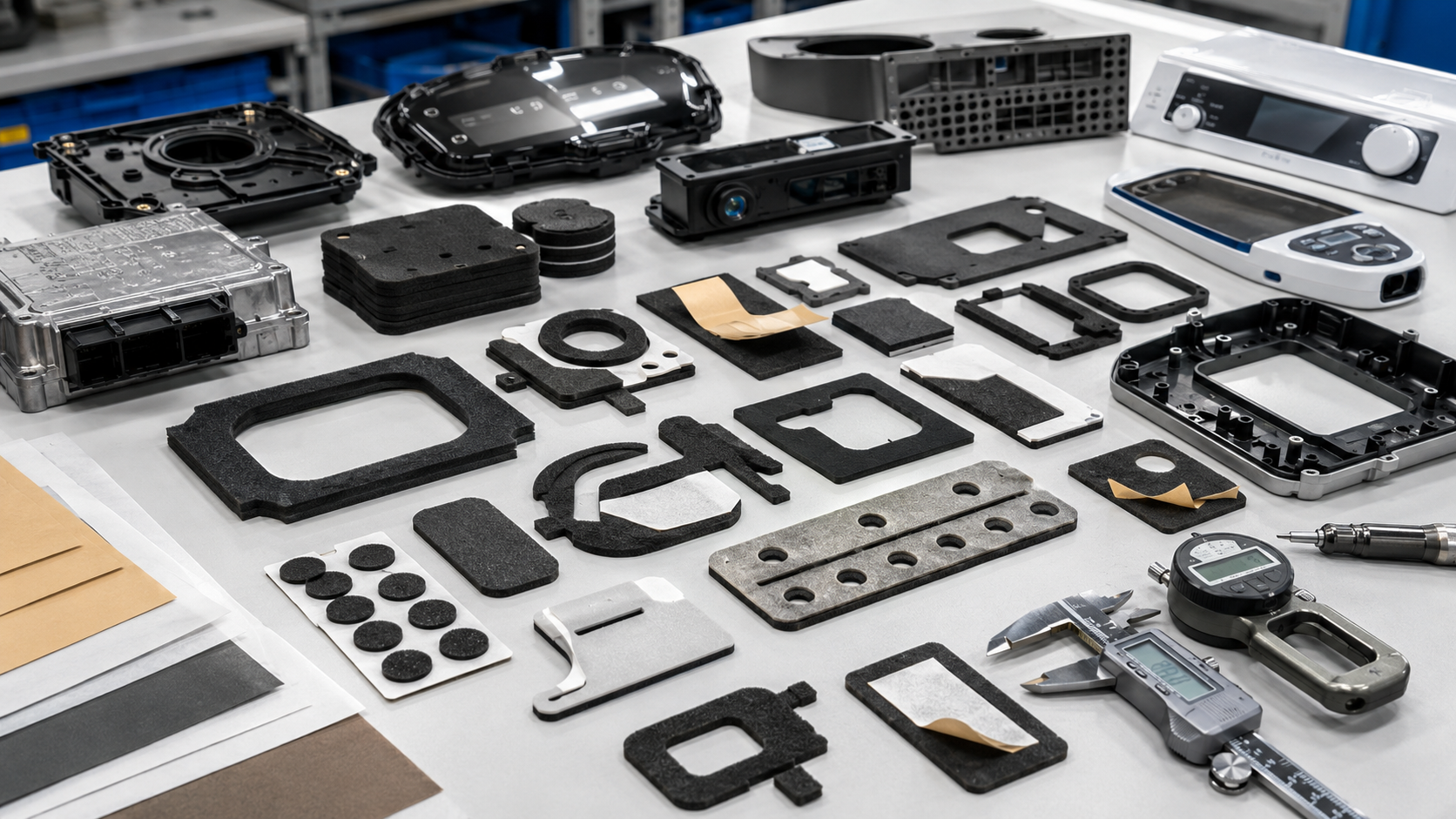
Modern devices require lightweight construction, insulation protection, vibration control, sealing performance, and multilayer integration. Die cutting enables these functions efficiently.
Typical die cutting applications include:
- EV battery insulation layers
- Smartphone cushioning components
- Automotive sealing gaskets
- Wearable medical adhesive layers
- EMI shielding structures
- Display bonding materials
Insight:
In multilayer assemblies such as battery modules and display structures, die cutting supports inline lamination and precision alignment between functional layers, improving assembly reliability.
Dive deeper: advantages that make die cutting essential for scalable production
| Advantage | Manufacturing benefit |
|---|---|
| High repeatability | Stable dimensional accuracy |
| Fast production speed | Shorter production cycles |
| Clean edge finishing | Improved assembly fitting |
| Multi-layer capability | Integrated component structures |
| Automation compatibility | Reduced labor dependency |
These advantages explain why die cutting remains one of the most widely adopted flexible-material conversion technologies in precision manufacturing.
Conclusion
Die cutting provides precise, scalable, and cost-efficient conversion of flexible materials, making it a foundational manufacturing process across modern automotive, electronics, and medical industries.[http://www.sankenprecision.com)