
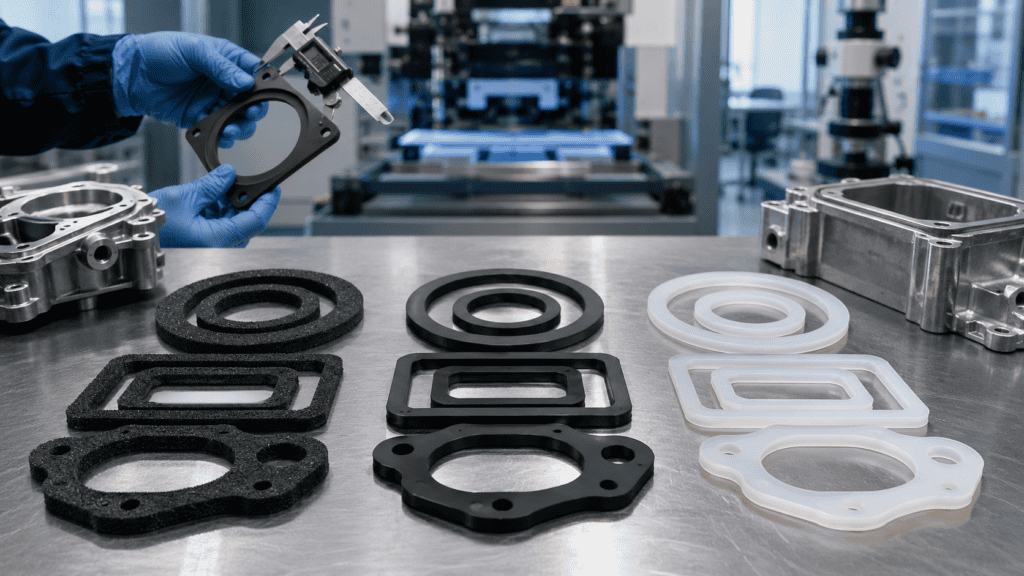
Choosing the wrong gasket material can quietly destroy a product. The sample may fit. The drawing may look correct. But after heat, pressure, vibration, moisture, or aging, the gasket may shrink, leak, peel, or lose compression. That is when a small material decision becomes an expensive production problem.
Foam, rubber, and silicone can all be used for die cut gaskets, but the best choice depends on the sealing target, temperature range, compression requirement, chemical exposure, adhesive surface, and product lifespan. Foam is often better for cushioning, dust sealing, and lightweight compression. Rubber is stronger for waterproof sealing, durability, and mechanical resistance. Silicone performs best when heat resistance, flexibility, and long-term recovery are critical. At Sanken, we help buyers choose based on real application conditions, not guesswork.
I always tell customers this: the “best” gasket material is not the most expensive one. It is the one that survives your product’s real working environment.
What should buyers compare first?
Before choosing foam, rubber, or silicone, buyers should first define the gasket’s function.
Is it used for:
- Waterproof sealing?
- Dust protection?
- Vibration reduction?
- Acoustic insulation?
- Electrical insulation?
- Heat resistance?
- Cushioning?
- Gap filling?
- Assembly positioning?
A gasket used in automotive electronics is different from a gasket used in home appliances. A gasket inside a battery module is different from one used in an indoor display housing.
At Sanken, we start by asking what the gasket must do after assembly. Then we recommend the material, thickness, adhesive, tolerance, and die cutting method.
When is foam better for die cut gaskets?
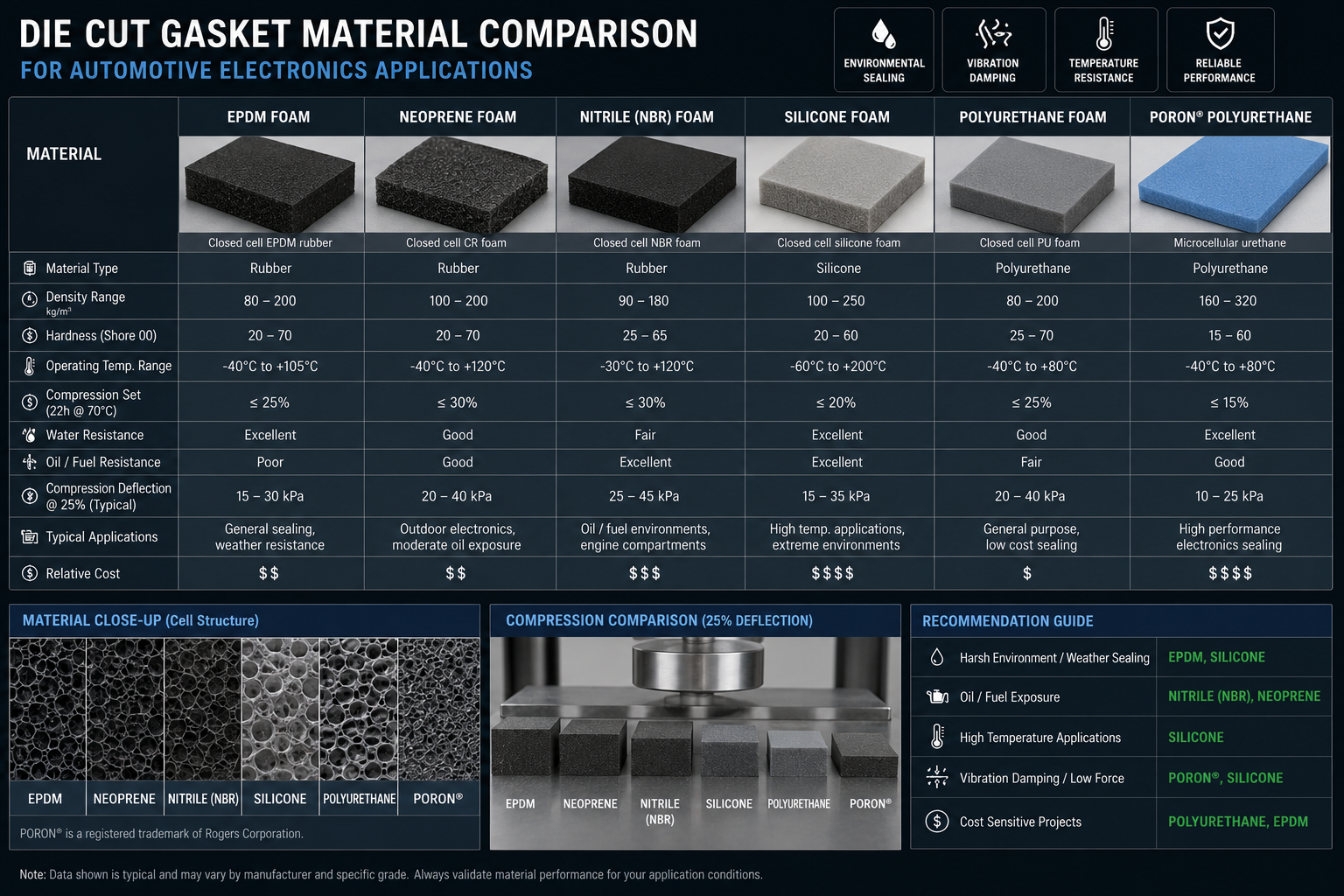
Foam is often the best choice when the gasket needs softness, compression, cushioning, and gap filling.
Common foam materials include:
- EVA foam
- PE foam
- PU foam
- EPDM foam
- CR foam
- PVC foam
- Silicone foam
Foam gaskets are widely used in electronics, automotive interiors, appliances, lighting, displays, and packaging protection.
Foam works well when the surface is slightly uneven. It can compress and fill small gaps.
That makes it useful for dust sealing, vibration reduction, noise control, and lightweight sealing.
However, foam is not always suitable for heavy pressure, aggressive chemicals, or very high temperatures unless the correct foam type is selected.
What are the risks of choosing foam?
Foam can fail if the compression design is wrong.
If the foam is too soft, it may collapse.
If it is too hard, it may not seal properly.
If the thickness is unstable, sealing force becomes inconsistent.
If the foam has poor recovery, it may lose sealing performance after long-term compression.
This is why compression set and recovery matter.
At Sanken, we check foam density, thickness tolerance, compression behavior, adhesive compatibility, and edge quality before mass production.
A foam gasket should not only look soft.
It must stay useful after real assembly pressure.
When is rubber better for die cut gaskets?
Rubber is often better when the gasket must provide stronger sealing, durability, and mechanical resistance.
Common rubber materials include:
- EPDM rubber
- NBR rubber
- CR rubber
- Natural rubber
- SBR rubber
- Silicone rubber
Rubber gaskets are widely used for waterproof sealing, vibration resistance, oil resistance, and industrial protection.
Compared with many foam materials, solid rubber usually provides better strength and sealing stability under compression.
For outdoor, automotive, industrial, and mechanical applications, rubber can be a reliable choice.
But rubber is heavier, less compressible than foam, and may require higher assembly force.
That means the housing design must support the material properly.
What are the risks of choosing rubber?
Rubber can create problems when the design requires easy compression or low closing force.
If the rubber is too hard, assembly becomes difficult.
If the material rebounds too strongly, it may push against the housing.
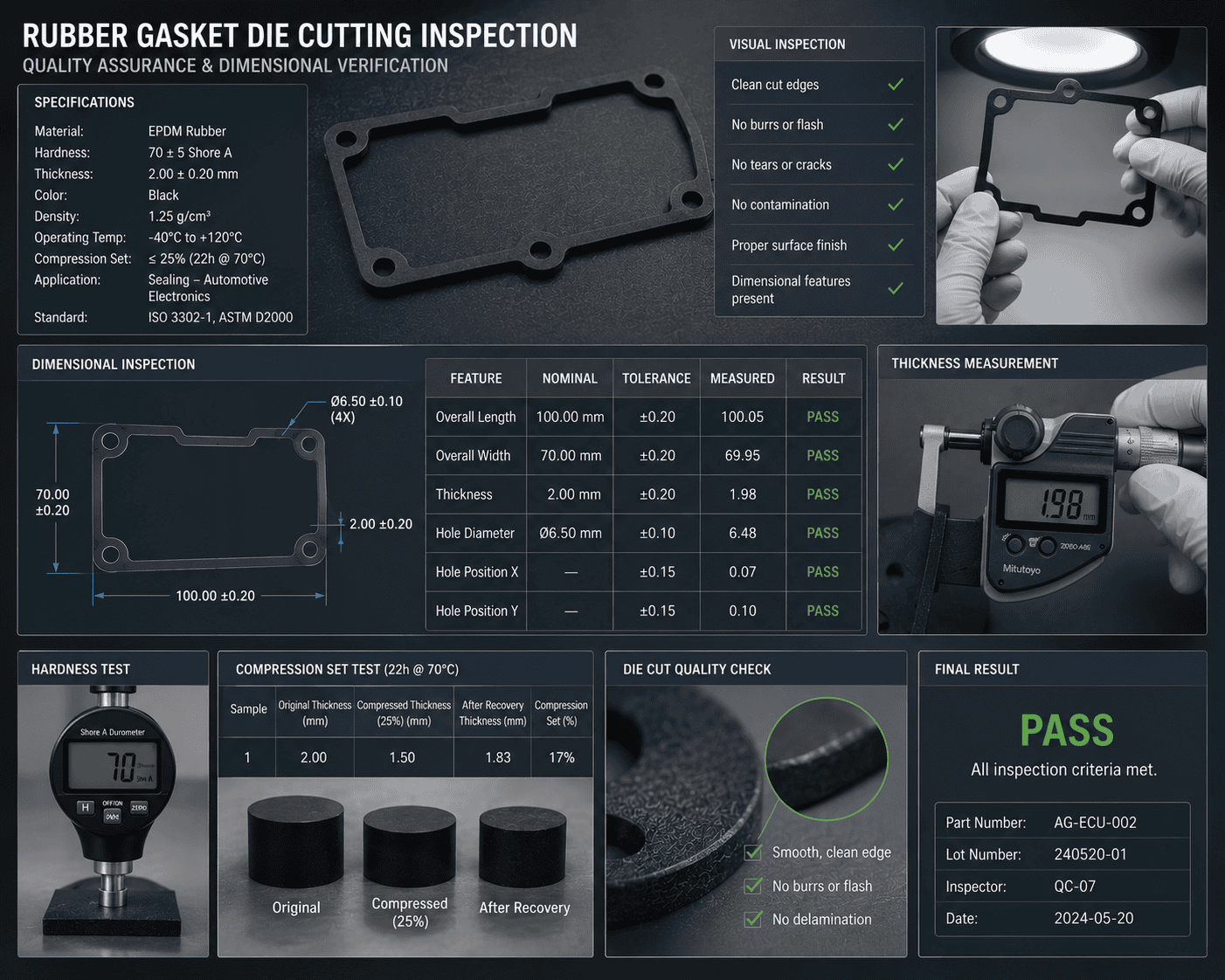
If the cutting process is poor, rubber edges may show burrs, tearing, or dimensional variation.
Different rubber types also behave differently.
For example, EPDM is often strong for weather resistance, while NBR is commonly considered when oil resistance is needed.
At Sanken, we help customers choose rubber based on the actual environment, not only the material name.
Material names are easy.
Performance is where the real work begins.
When is silicone better for die cut gaskets?
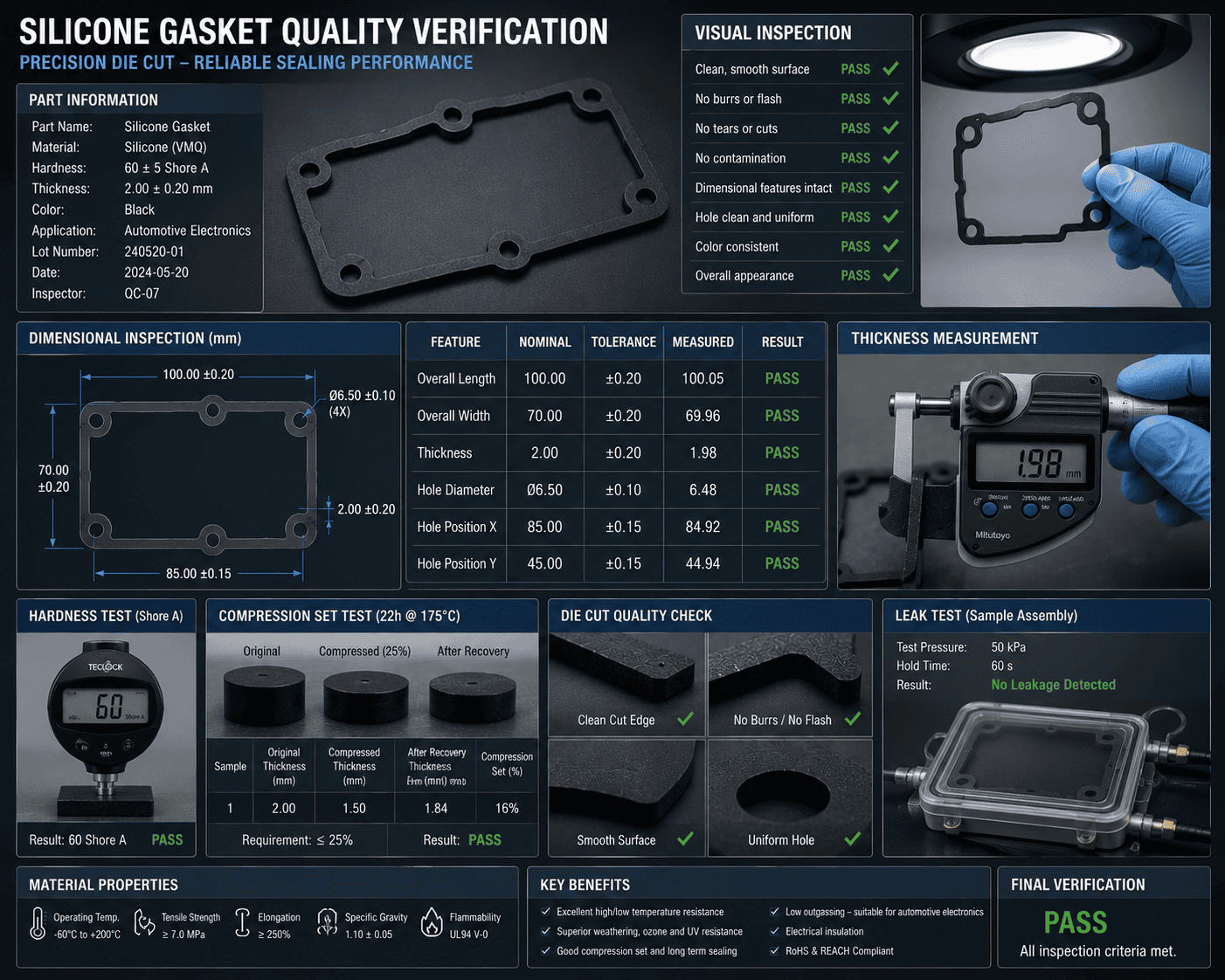
Silicone is usually the better choice when heat resistance, flexibility, aging resistance, and long-term compression recovery are important.
Silicone gaskets are often used in:
- Automotive electronics
- Battery systems
- Lighting modules
- Medical equipment
- Appliances
- High-temperature sealing areas
- Sensitive electronic assemblies
Silicone can remain flexible across a wide temperature range.
It also performs well when the gasket needs stable recovery after repeated compression.
This makes it valuable for demanding applications.
But silicone is usually more expensive than many foam or standard rubber options.
It can also be more difficult to bond with ordinary adhesives.
That is why silicone gasket projects often need careful adhesive selection or special surface treatment.
What are the risks of choosing silicone?
Silicone is excellent, but it is not magic.
The biggest risks include:
- Higher material cost
- Adhesive bonding difficulty
- Surface treatment requirements
- Dimensional control challenges
- Possible over-engineering
Some buyers choose silicone because it sounds premium.
But if the application does not need high temperature or special recovery performance, foam or rubber may be more cost-effective.
At Sanken, we help customers avoid both under-engineering and over-engineering.
One causes failure.
The other wastes money.
Neither makes buyers happy.
Foam vs rubber vs silicone: how do they compare?
Here is a practical comparison for buyers:
| Factor | Foam Gasket | Rubber Gasket | Silicone Gasket |
|---|---|---|---|
| Compression softness | High | Medium to Low | Medium to High |
| Gap filling | Excellent | Medium | Good |
| Waterproof sealing | Medium to Good | Good to Excellent | Good to Excellent |
| Heat resistance | Depends on foam type | Medium to Good | Excellent |
| Cost | Low to Medium | Medium | Medium to High |
| Weight | Light | Heavier | Medium |
| Adhesive compatibility | Good with correct tape | Depends on surface | More difficult |
| Best use | Cushioning, dust sealing, NVH | Waterproof sealing, durability | Heat, aging, recovery |
This table is useful, but it does not replace engineering review.
The final decision should consider application environment, tolerance, compression, adhesive, production volume, and testing requirements.
How does adhesive affect gasket material choice?
Many die cut gaskets need adhesive backing.
This is where material choice becomes more complicated.
Foam usually bonds well when the correct adhesive tape is laminated properly.
Rubber may require specific adhesive systems depending on surface energy and rubber type.
Silicone is more difficult because many standard adhesives do not bond well to silicone surfaces.
Buyers should confirm:
- Bonding surface
- Surface energy
- Temperature exposure
- Peel strength
- Shear force
- Liner release
- Assembly pressure
- Storage condition
At Sanken, we combine adhesive laminating, kiss cutting, and precision die cutting to reduce lifting, shifting, peeling, and adhesive overflow.
A gasket that seals well but falls off during assembly is not a good gasket.
How does die cutting tolerance affect gasket performance?
Material choice is only one part of the answer.
Tolerance control is equally important.
A good material can still fail if the cutting accuracy is poor.
Buyers should check:
- Outer dimensions
- Inner openings
- Hole positions
- Thickness tolerance
- Edge quality
- Adhesive position
- Layer alignment
- Critical sealing areas
Foam may deform during cutting.
Rubber may rebound.
Silicone may stretch.
Adhesive-backed materials may shift or overflow.
That is why precision die cutting experience matters.
At Sanken, we control tooling, cutting pressure, lamination tension, waste removal, and inspection standards to keep gasket quality stable in production.
Why do OEM buyers choose Sanken for die cut gaskets?
Because we do not only cut foam, rubber, or silicone.
We help customers choose the right structure before production.
Our capabilities include:
- Precision die cutting
- Foam converting
- Rubber converting
- Silicone gasket processing
- Adhesive laminating
- Kiss cutting
- Multi-layer bonding
- Hot pressing
- Spraying and gluing
- Silk screen printing
- Injection molding support
For OEM buyers, this means fewer supplier gaps, faster problem-solving, and more stable production.
Conclusion
Foam, rubber, and silicone can all be good choices for die cut gaskets. The best material depends on sealing function, compression, temperature, adhesive, tolerance, and cost target. At Sanken, we help OEM buyers choose smarter, reduce risk, and build more reliable gasket solutions.