

How to Choose the Right Custom Cut Foam for Product Protection?
Choosing the right custom cut foam for product protection is not only about picking a soft material. The right foam must match the product weight, shape, surface sensitivity, shipping risk, compression requirement, and final packaging or assembly method.
A foam insert that looks good in a sample may still fail during transport.
A foam pad that feels soft may collapse after pressure.
A foam gasket that fits today may lose sealing force after aging.
A foam liner that is too tight may scratch the product instead of protecting it.
For OEM buyers, the real question is not simply “Which foam should I use?” The better question is:
“Which foam structure can protect my product without causing movement, pressure damage, scratches, deformation, or assembly delays?”
Custom cut foam is used in electronics, medical devices, automotive parts, instruments, tools, consumer products, industrial equipment, and packaging systems. The best choice depends on the real risk the product faces.
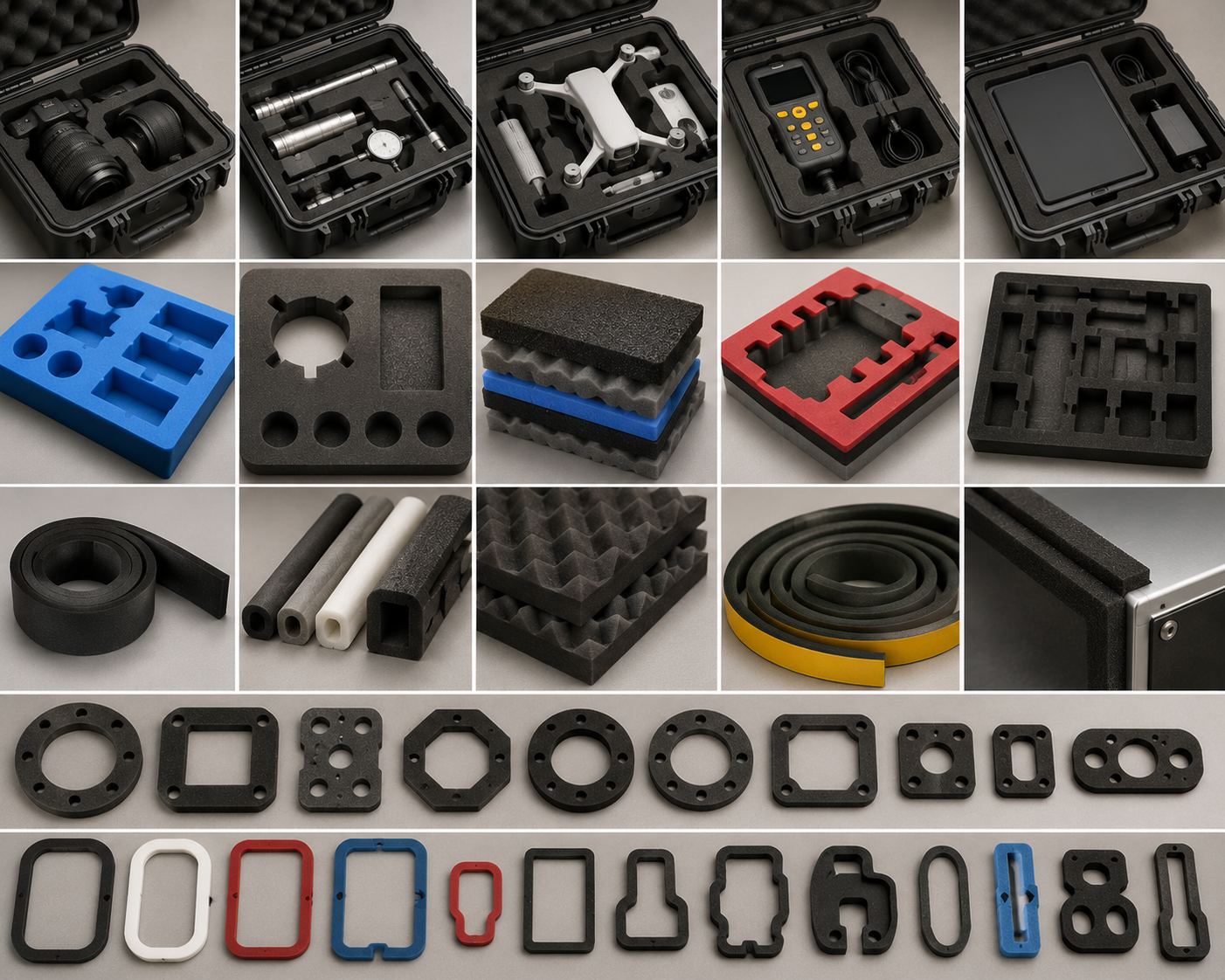
Start With the Product, Not the Foam
Many buyers start by asking for EVA foam, PE foam, PU foam, or sponge. That is not always the best starting point.
Start with the product first.
Ask:
- Is the product heavy or lightweight?
- Is the surface easy to scratch?
- Is it fragile, sharp, glossy, painted, or coated?
- Does it need to stay fixed during shipping?
- Will the foam be used once or reused?
- Is the foam for packaging, sealing, cushioning, or spacing?
- Will the product face vibration, impact, heat, humidity, or compression?
A fragile optical part does not need the same foam as a metal tool. A medical device does not need the same foam as an automotive trim component. A display module does not need the same foam as an industrial sensor.
The foam should be selected based on the product’s failure risk.
Choose Foam Based on Protection Function
Custom cut foam can protect products in different ways.
| Protection Need | Foam Function |
|---|---|
| Shock protection | Absorbs impact during shipping |
| Surface protection | Prevents scratches and contact marks |
| Positioning | Holds product in place |
| Cushioning | Reduces pressure and vibration |
| Gap filling | Prevents movement inside packaging |
| Sealing | Blocks dust, air, or light |
| Anti-rattle | Reduces contact noise |
| Presentation | Makes packaging look clean and professional |
A foam insert for packaging may need shock absorption and positioning. A foam gasket inside electronics may need sealing and compression recovery. A foam pad in automotive trim may need anti-rattle performance.
One foam material cannot solve every problem.
Compare Common Foam Materials
Different foam materials behave differently.
| Foam Type | Best Used For | Main Concern |
|---|---|---|
| EVA foam | General cushioning, packaging, pads | May need correct hardness selection |
| PE foam | Protective packaging, spacing, moisture resistance | Can feel firmer |
| PU foam | Soft cushioning, delicate surface protection | May compress more easily |
| EPDM foam | Automotive sealing, vibration, weather resistance | Higher cost than common foams |
| Rubber foam | Sealing, damping, industrial protection | Heavier and may need testing |
| Silicone foam | Heat resistance and special sealing | Usually higher cost |
| Acoustic foam | Sound absorption | Not always best for load support |
If the product is heavy, foam density and compression strength are critical. If the product has a delicate surface, softness and surface contact matter. If the foam must seal, compression recovery matters. If the foam is used in a vehicle, heat aging and vibration resistance should be reviewed.
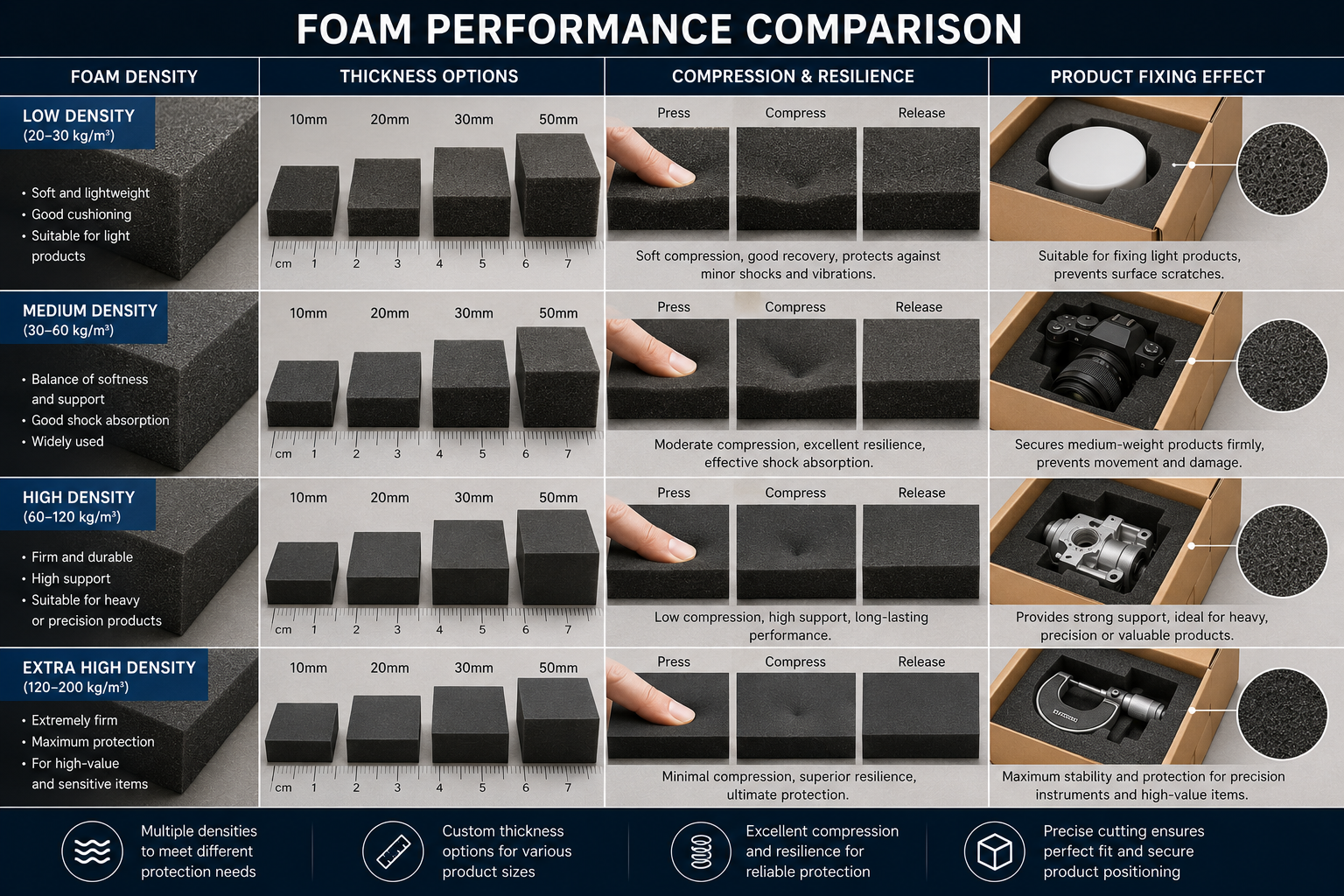
Density and Hardness Matter More Than Appearance
Two foam samples may look similar but perform very differently.
Foam density affects support and durability. Foam hardness affects how the product feels when pressed into the insert. Compression behavior affects whether the foam returns to shape after load.
If the foam is too soft, the product may sink, move, or hit the bottom of the package.
If the foam is too hard, impact force may transfer to the product.
If the foam has poor rebound, it may stay compressed and lose protection.
For product protection, the foam must provide controlled support. It should hold the product securely without creating too much pressure.
This is especially important for displays, sensors, medical devices, optical parts, and coated surfaces.
Match the Foam Shape to the Product
Custom cut foam works best when the shape supports the product correctly.
The foam cavity should hold the product stable, but it should not be so tight that the product is difficult to remove.
Good foam design considers:
- Product outline
- Contact points
- Finger access
- Depth of cavity
- Clearance tolerance
- Product weight distribution
- Sharp corners
- Fragile areas
- Surface finish
- Removal direction
A common mistake is cutting the cavity exactly the same size as the product. In real use, this may be too tight. Small clearance is often needed for easy insertion and removal.
Another mistake is supporting the wrong area. If the foam presses against a weak surface, it may create marks or damage. The foam should contact stronger areas when possible.
Consider Shipping and Handling Conditions
A foam insert must protect the product during real movement, not only while sitting on a table.
During shipping, products may face:
- Drops
- Vibration
- Compression
- Stacking pressure
- Temperature changes
- Humidity
- Repeated handling
- Long-distance transport
For export packaging, the foam may need stronger cushioning and better recovery. For reusable packaging, durability matters more. For one-time packaging, cost and appearance may be more important.
If the product is expensive or fragile, sample testing should include drop tests, vibration tests, and packaging trials.
Decide Whether Adhesive Backing Is Needed
Some custom cut foam parts need adhesive backing.
Adhesive-backed foam is useful when the foam must stay fixed inside a package, housing, panel, or assembly.
It is commonly used for:
- Foam tape pads
- Anti-rattle strips
- Display support foam
- Electronic spacers
- Automotive interior pads
- Packaging retainers
- Sealing gaskets
But adhesive adds another layer of risk.
The adhesive must match the surface material. It must also survive heat, humidity, aging, and handling. If the adhesive is too weak, the foam lifts. If it is too strong and needs removal later, it may leave residue.
For mass production, release liner design also matters. Workers need to peel and apply the foam quickly without stretching or deforming it.
Check Edge Quality and Cleanliness
Edge quality matters more than many buyers expect.
Rough foam edges may create debris, poor appearance, or fitting problems. In electronics, displays, medical devices, and optical products, particles can become serious defects.
Clean cutting helps reduce:
- Loose foam particles
- Poor fit
- Rough presentation
- Difficult assembly
- Surface contamination
- Customer complaints
If the foam will contact sensitive parts, the cutting process, packaging, and handling should be reviewed carefully.
Avoid Choosing Only by Unit Price
Cheap foam may reduce material cost but increase total cost.
Poor foam selection can cause:
- Product movement
- Shipping damage
- Surface scratches
- Foam collapse
- Poor presentation
- Extra rework
- Slow assembly
- Customer returns
The better goal is not the cheapest foam. The goal is the lowest total risk.
For OEM projects, foam should be evaluated by protection performance, consistency, ease of assembly, packaging efficiency, and long-term reliability.
Questions Buyers Should Ask Before Ordering
Before ordering custom cut foam, confirm:
- What product needs protection?
- What is the product weight and size?
- Is the surface easy to scratch?
- Is the foam for packaging, cushioning, sealing, or spacing?
- What shipping conditions will the product face?
- Does the foam need adhesive backing?
- Should the foam be soft, firm, or high rebound?
- Does the foam need clean edges?
- Is the insert disposable or reusable?
- Will workers insert and remove the product manually?
- Is sample testing required before mass production?
- What tolerance is acceptable for the foam cavity?
These questions help avoid repeated sampling and wrong material selection.
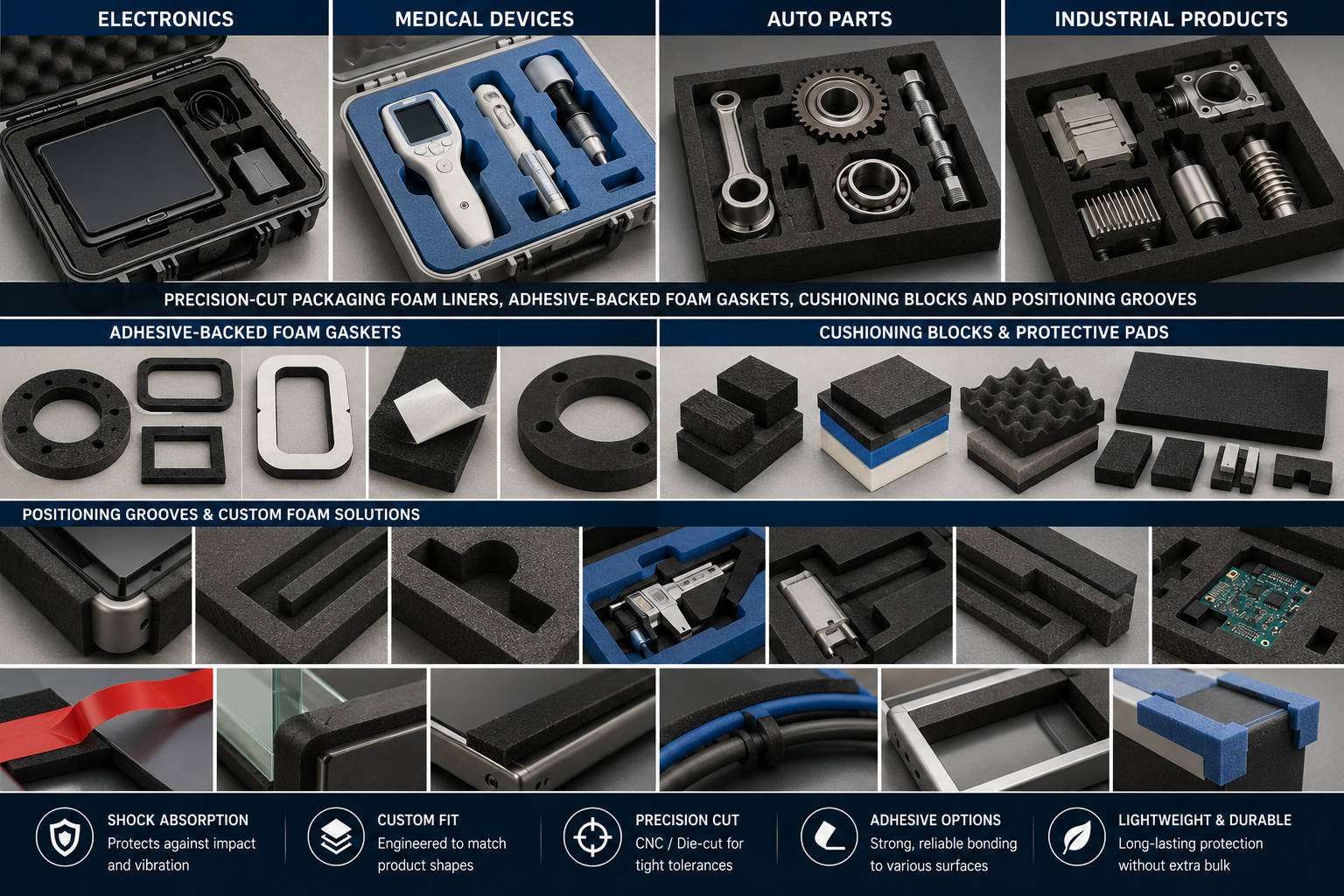
How Sanken Helps With Custom Cut Foam Selection
Sanken Manufacturing helps OEM customers choose and convert custom cut foam based on real product protection needs.
Instead of only cutting foam to a drawing, we help review the problem behind the part:
- Is the product moving during shipping?
- Is the foam causing pressure marks?
- Is the insert too tight or too loose?
- Is the adhesive lifting?
- Is the foam collapsing after compression?
- Is the edge quality affecting appearance or cleanliness?
- Is assembly taking too long?
Sanken supports foam die cutting, adhesive lamination, kiss cutting, foam tape converting, custom foam inserts, gasket cutting, prototype samples, and mass production supply.
The goal is to help customers receive foam parts that fit precisely, protect reliably, and support stable production.
Conclusion
To choose the right custom cut foam for product protection, start with the product risk. Consider weight, surface sensitivity, impact, vibration, compression, shipping conditions, adhesive needs, edge quality, and assembly method.
EVA, PE, PU, EPDM, rubber foam, silicone foam, and other foam materials all have different strengths. The best foam is not simply the softest or cheapest option. It is the foam that holds the product securely, protects the surface, absorbs the right amount of force, and performs consistently in real use.
When custom cut foam is designed correctly, it can reduce shipping damage, improve product presentation, speed up assembly, and help OEM products reach customers safely.