
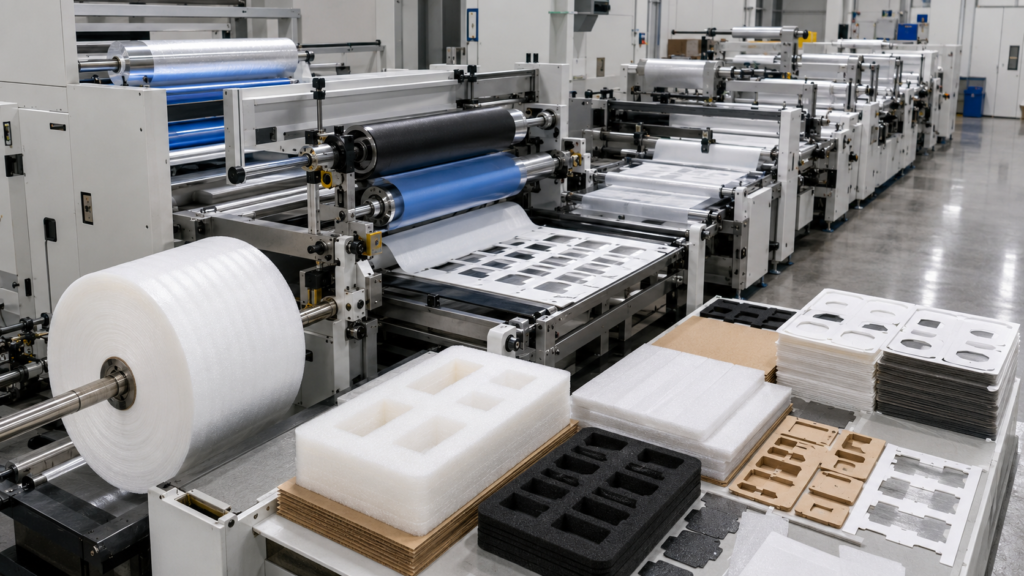
Die cut packaging sounds simple.
Until it breaks your timeline.
A carton cracks at the fold.
A foam insert sheds dust.
A tab tears in transit.
Now your “packaging” becomes a production problem.
That’s the pain: rework, scrap, delayed shipments, and customer complaints before they even touch the product.
Die cut packaging is packaging that’s cut into a precise shape using a die so it can fold, fit, and protect consistently at scale. It includes cartons, sleeves, inserts, trays, pads, spacers, liners, and protective films—often with windows, tabs, hang holes, tear features, and tight-fit geometry. The real purpose is repeatability: fast packing, fewer fit errors, less damage in shipping, and less manual trimming. When the material, die design, and delivery format are engineered together, die cut packaging becomes boring in the best way.
At Sanken, we treat packaging like a functional part.
Because it touches every unit.
And anything that touches every unit can destroy your yield if it’s unstable.
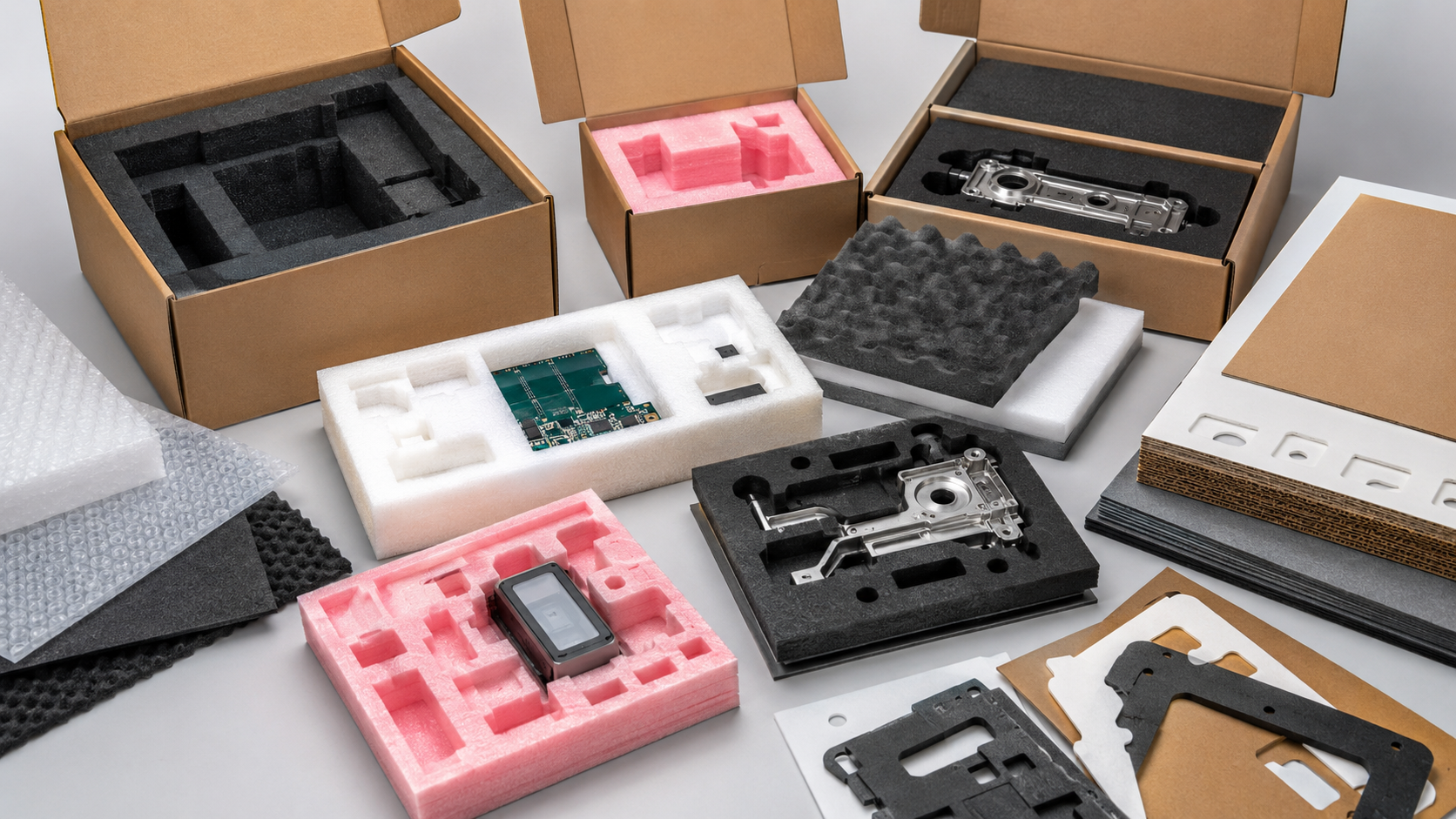
What makes packaging “die cut” instead of just “cut”?
“Cut” is vague.
Die cut is controlled.
A die is a custom tool that defines the outline.
It also defines holes, slots, windows, and tabs.
It repeats the same geometry again and again.
That repetition is the difference.
Hand trimming can look fine on a desk.
It drifts in production.
Drift becomes misfit.
Misfit becomes damage.
Damage becomes returns.
Die cutting turns packaging into a predictable process.
Same shape.
Same fold points.
Same fit.
Same packing speed.
What types of die cut packaging exist in real manufacturing?
| Die Cut Packaging Type | Common Material | Main Function |
|---|---|---|
| Folding cartons and sleeves | Paperboard, corrugated board | Product presentation and outer protection |
| Foam inserts and end caps | EVA, PE, PU, EPE foam | Cushioning, shock absorption and spacing |
| Protective films | PET, PE, TPU film | Scratch prevention and surface protection |
| Spacers and liners | Foam, paperboard, non-woven fabric | Anti-rattle, separation and fit control |
| Trays and carriers | Paperboard, plastic sheet, foam | Orientation, handling and line-side packing |
| Kitted packaging sets | Foam, film, adhesive parts | Faster packing and fewer picking errors |
In OEM work, we often see hybrid needs.
A carton for presentation.
A foam insert for shock.
A film for scratch prevention.
A tab for easy removal.
The buyer pain is not design.
It’s consistency.
If the insert shifts, parts scratch.
If the pad thickness drifts, the lid won’t close.
If the window is off, the barcode is hidden.
And the line stops.
Why do brands and OEMs choose die cut packaging?
Because labor is expensive.
And mistakes are expensive.
Die cut packaging speeds up packing.
Operators fold and load faster.
Parts locate themselves.
Less guessing.
Less “fix it with tape.”
It also reduces shipping damage.
A precise cavity holds the part.
A consistent spacer prevents impact.
A protective film prevents cosmetic marks.
And it improves presentation.
Clean edges look premium.
Windows align properly.
Tabs open smoothly.
What materials are used for die cut packaging?
Material choice decides performance.
Not just price.
Paperboard and corrugated materials are common for cartons and sleeves.
They cut and crease well.
They can crack if the grain direction and fold design are wrong.
That’s a common failure at scale.
Foams are common for cushioning and spacing.
Closed-cell foams resist moisture and keep shape better.
Foams can shed or tear if density and cutting method are wrong.
Films are used for protection and barrier functions.
They prevent scratches and dust.
They can wrinkle if the format is wrong.
Rubber and specialty non-woven materials appear when packaging becomes functional.
Anti-slip.
Damping.
Noise prevention.
Thermal isolation during transport.
In reality, packaging is often a stack-up.
Foam plus adhesive.
Film plus pull tab.
Non-woven plus carrier.
That’s converting, not just cutting.
How is die cut packaging made?
The process depends on the material.
For paperboard, die cutting often includes creasing and perforation features.
This controls fold lines and tear lines.
For foam, the focus is clean edges and stable thickness.
The goal is predictable compression and fit.
For adhesive-backed packaging parts, cut depth and liner control matter.
Peel must be easy.
Parts must stay clean.
For roll materials, rotary processes can deliver high volume and consistent pitch.
For thicker stacks, flatbed processes can provide stronger cutting force and cleaner control.
The core idea is the same.
Control geometry.
Control repeatability.
Control delivery format.
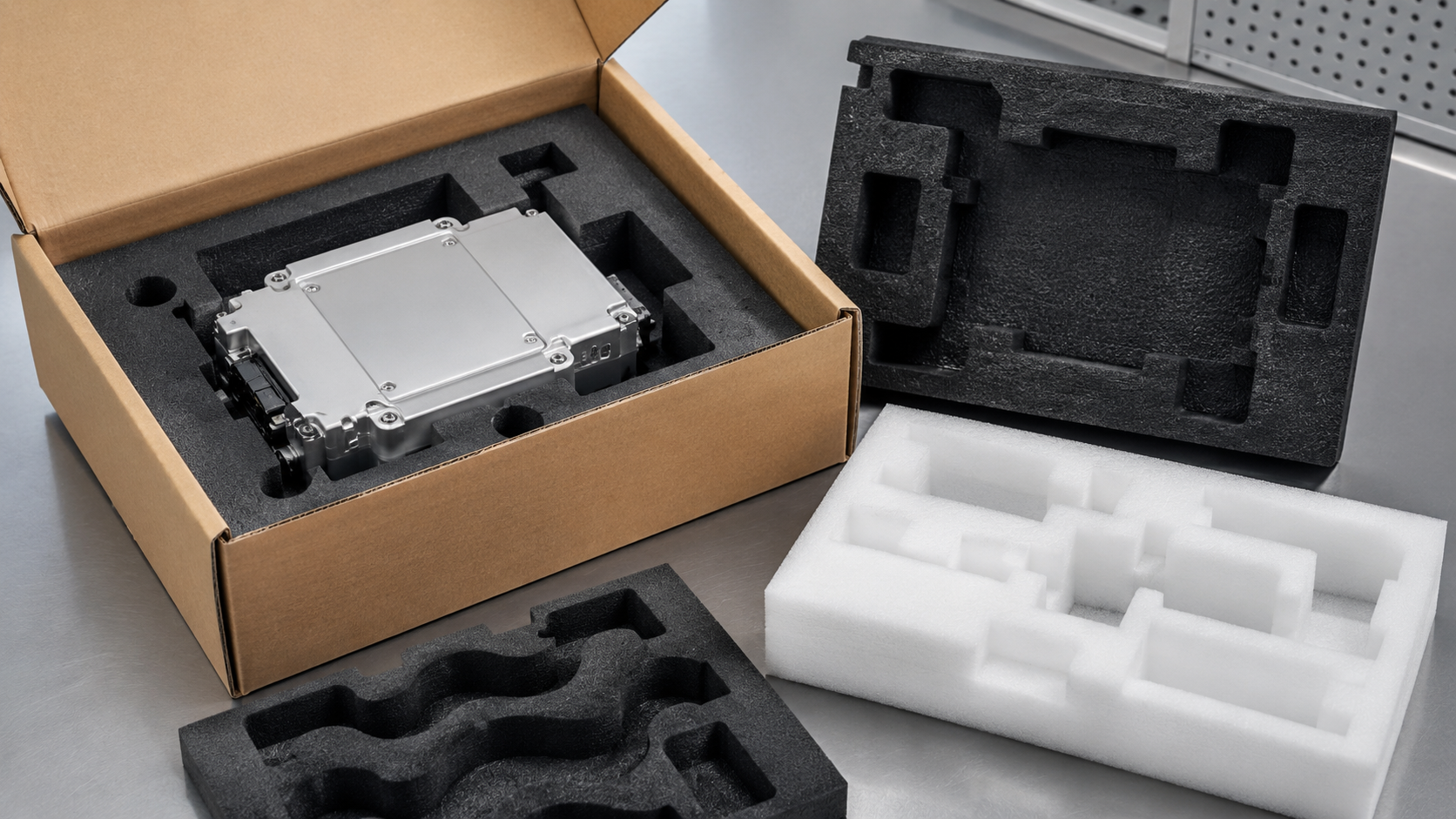
What are the most common die cut packaging failures?
These failures show up in production.
Not in your first prototype.
Cracking at folds
Paperboard cracks when fold design ignores grain direction or bend radius.
Fit drift
Insert cavities drift when material thickness varies or compression behavior isn’t considered.
Dust and contamination
Foam shedding creates cosmetic defects, especially near optics and glossy surfaces.
Tearing tabs and weak tear lines
Perforation patterns that are too aggressive pre-tear in shipping.
Too conservative and operators struggle.
Adhesive residue or lift
Protective films or adhesive pads fail when the adhesive doesn’t match surface and temperature.
Packing speed collapse
A design that needs “careful placement” will fail at volume.
Seconds become hours.
Hours become missed trucks.
The fix is not “work harder.”
The fix is engineering the packaging around real handling.
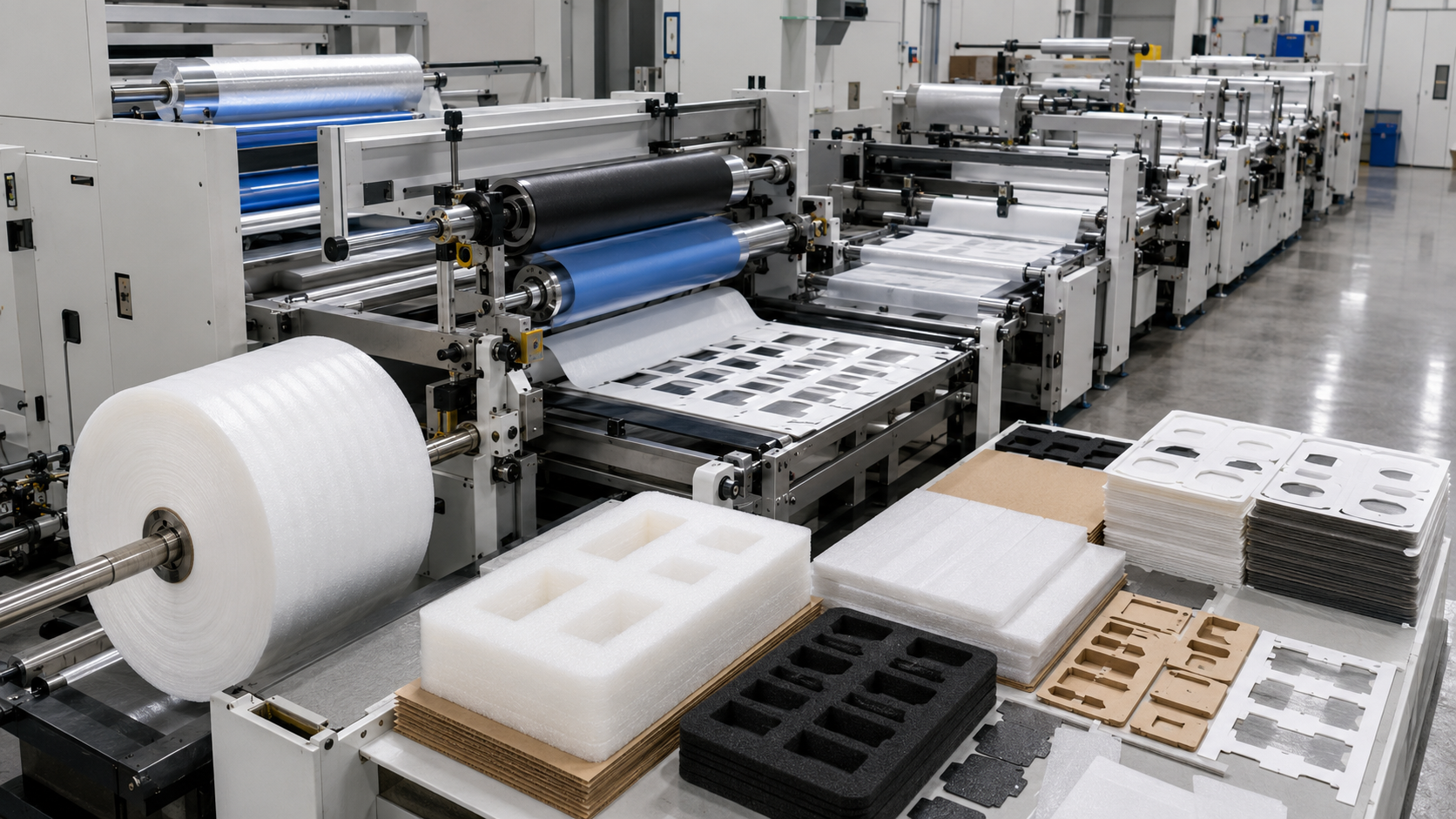
How do we design die cut packaging to avoid rework?
We start with the failure mode.
If you’re seeing scratches, we focus on protection surfaces and retention points.
If you’re seeing cracks, we redesign folds and grain direction.
If you’re seeing shifting, we redesign cavity geometry and thickness control.
If you’re seeing slow packing, we redesign orientation and handling features.
We also design for shipping reality.
Vibration.
Drop events.
Compression in stacking.
Humidity changes.
We don’t assume gentle handling.
We assume real handling.
We also care about how you receive the packaging.
Flat sheets.
Pre-cut stacks.
Kitted sets per carton.
The delivery format can reduce picking errors and speed packing immediately.
What should you specify when sourcing die cut packaging?
If you want stable output, don’t send only a drawing.
Send:
- The product weight and fragility level
- The surfaces that must stay pristine
- The drop/handling expectation for shipping
- The thickness limits and closure constraints
- The required packing speed and station workflow
- Any tear-open or pull-tab requirement
- The target annual volume and variant count
Then share pain history.
Cracked folds.
Rattling.
Scratches.
Slow packing.
Pre-tear.
Those details guide material and geometry decisions fast.
How do we validate die cut packaging before full production?
We validate behavior, not appearance.
We check fit on real parts.
Not a perfect sample.
We simulate packing at real speed.
If it needs careful hands, it will fail.
We check after shipping-style handling.
Vibration and friction reveal weak edges and loose cavities.
We check stacking compression if cartons are palletized.
Compression changes foam behavior and closure geometry.
Then we lock revision control.
Same part number must mean same material grade and thickness range.
Silent changes create silent failures.
Silent failures are the hardest to contain.
Conclusion
Die cut packaging is packaging engineered for repeatable shape, fit, and fast packing at scale. It reduces labor, damage, and rework when material, die design, and delivery format are controlled together. If you share your product constraints and shipping reality, we’ll recommend a die cut packaging approach that stays stable in production.
If you need custom die cut packaging parts such as foam inserts, protective films, spacers, liners, adhesive pads or kitted packing components, Sanken can support material selection, prototyping, die cutting, inspection and stable mass production for OEM projects.