
What Is the Purpose of a Die Cutting Machine?
You call it “just cutting.” Then production starts. Parts don’t fit. Edges lift. Bubbles show up. Operators slow down and rework by hand. Your line bleeds minutes you never budgeted for. That’s the pain. A die cutting machine exists to stop that pain by making parts consistent at scale.
The purpose of a die cutting machine is to convert rolls or sheets—foam, film, non-woven, rubber, and adhesive constructions—into precise, repeatable, assembly-ready parts. It controls geometry, cut depth, waste removal, and delivery format so parts peel cleanly, place fast, and behave the same across lots and shifts. In modern manufacturing, the real output is stability: fewer defects, lower rework, fewer jams, and easier scaling from sample approval to mass production without surprises.
If you keep reading, I’ll explain what the machine actually does, where projects fail, and what you should specify so your “small parts” stop becoming big schedule problems.
We’re Sanken, a precision die cutting and converting manufacturer. Our goal is the same as the machine’s goal: make your parts boring. Because boring parts ship on time.
Why do manufacturers use die cutting instead of manual cutting?
Manual cutting is variability.
Even skilled hands drift.
That drift becomes misalignment.
Misalignment becomes rework.
Rework becomes late shipments.
Die cutting locks shape into a controlled process.
Same outline.
Same holes.
Same edge quality.
The hidden pain manual cutting creates is labor.
A “cheap” hand-cut part looks fine until you count rework minutes across thousands of units.
Then it becomes your most expensive component.
How does a die cutting machine improve product quality?
Quality is consistency.
Not one perfect sample.
A die cutting machine improves:
- dimensional stability of outlines and holes
- edge cleanliness for sealing and cosmetics
- repeatable placement behavior on the line
It helps prevent common failures:
- edge lift from poor geometry and stress concentration
- misalignment from inconsistent shapes
- cosmetic defects from excessive handling
The pain you feel is not only defects.
It is customer perception.
A product can “work” and still feel sloppy because a label is crooked or a film is wrinkled.
What is the difference between kiss-cut and through-cut, and why does it matter?
Kiss-cut means we cut the face material but keep the liner intact.
This makes peel-and-place fast and clean.
It matters because cut depth is a line-speed control point.
Cut too deep and the liner is scored.
Then it tears during peel.
Operators slow down.
Corners bend.
Dust contaminates adhesive.
Cut too shallow and parts won’t release cleanly.
Operators pick edges.
Thin frames stretch.
Placement becomes inconsistent.
Through-cut means we cut through the entire stack.
You get individual loose pieces.
Loose pieces can be right for non-adhesive parts.
But they raise handling risks: dust pickup, bending, counting errors, and mixed orientation.
What kinds of parts does die cutting produce in modern manufacturing?
Most die-cut parts are functional.
Not decorative.
Common examples include:
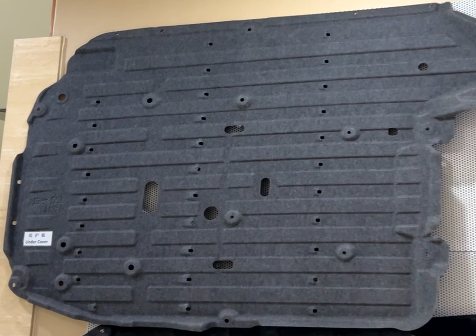
- gaskets and seals
- insulation pads (thermal, acoustic, electrical)
- vibration damping parts
- bonding layers and mounting shapes
- protection films
These parts prevent failures customers actually notice:
- sealing prevents leaks
- insulation prevents overheating and noise issues
- damping prevents squeaks and rattles
- protection films prevent cosmetic rejects
Small parts touch every unit.
So small parts control your defect rate.
Why does die cutting make assembly faster?
Because the part arrives ready.
Right shape.
Right count.
Right format.
Kiss-cut rolls support fast peel-and-place.
Counted sheets reduce picking mistakes.
Kitted sets reduce missing pieces.
The pain without the right format is measurable:
- slow placement
- misalignment
- stop-and-fix cycles
- line jams
That is where profits disappear.
How does die cutting reduce sourcing complexity for OEM buyers?
OEM buyers don’t want ten suppliers for ten small parts.
They want fewer failure points.
A converting partner can combine steps:
- lamination
- slitting
- cutting
- waste removal
- packaging format
That reduces handoffs and reduces variation between steps.
This also reduces supplier arguments.
When one partner controls the stack-up and the cut, defects become solvable faster.
What should you specify to make a die cutting project successful?
Don’t start with “I need a die-cut part.”
Start with reality.
Define:
- material and thickness tolerance
- what it bonds to and how clean that surface is
- environment (heat, humidity, chemicals, UV, storage time)
- CTQs and cosmetic standards
- application method (manual, jig, semi-auto, automation)
- required delivery format (roll direction, core size, max roll diameter, pitch, splice rules)
The pain point is late clarification.
If you define these after sampling, you will pay twice.
How do you validate a die-cut part before mass production?
Samples are not proof.
Pilot runs are proof.
Validate:
- dimensions and edge quality
- release behavior and placement speed on the real line
- edge lift and bubbles after dwell time
- packaging protection against shipping friction and vibration
Then lock revision control.
Same part number must mean the same stack-up, liner, and tool revision.
Silent changes create “same part number, different behavior” disasters.
Is die cutting only for stickers and labels?
No. In OEM manufacturing, most die-cut parts are functional components for sealing, insulation, damping, bonding, and protection.
What’s the biggest reason die-cut parts fail?
Wrong stack-up for the surface and environment, plus weak validation after time and stress. Many failures appear after 24–72 hours, heat exposure, or shipping vibration.
Can die cutting support automation?
Yes, if pitch, roll build, splice rules, and liner release are designed for your applicator and takt time.
What should I send Sanken to get a fast quote?
Cut line or drawing, stack-up limits, thickness targets, surface type, environment, forecast volume, and how the part is applied on your line.
Conclusion
The purpose of a die cutting machine is repeatability at scale. It turns raw materials into consistent, assembly-ready parts that reduce defects and speed up production. Share your cut line, surface, and use conditions, and we’ll recommend a die-cut solution that stays stable at volume.