
What Is the Scope of the Tool & Die Making Profession?
Your product looks perfect in CAD.
Then the die arrives late.
Or it cuts inconsistent edges.
Or it wears out in week two.
That’s the pain.
Tool & die problems don’t stay in the toolroom.
They leak into quality, delivery, and your customer’s trust.
The scope of the tool & die making profession now goes far beyond “making a die.” It covers product-to-process translation, die design, precision machining, heat treatment planning, surface finishing, tryout, capability proof, maintenance strategy, and change control—often tied directly to automation and digital QA. In modern manufacturing, great tool & die work reduces rework, stabilizes tolerances, improves yield, and shortens launches. For buyers, the “best” die partner is the one who proves repeatability, documents revisions, and supports fast, controlled iteration.
If you’re sourcing parts, this matters more than job titles.
Because your die is your process.
And your process is your schedule.
I’ll show you what the profession really covers today.
We’re Sanken, a precision die cutting and converting manufacturer.
So we live at the intersection of tooling reality and production pressure.
My BeeChair CEO side calls it “comfort engineering.”
No surprises.
No drama.
What does “tool & die making” actually include today?
Tool & die making starts before metal meets machine.
It starts when someone turns your drawing into a manufacturable process.
Today the scope includes die design, material selection, machining, grinding, EDM, polishing, tryout, and documentation.
It also includes how the die will be measured, maintained, and revised.
That’s not “extra.”
That’s survival.
For modern programs, tool & die also touches DFM feedback, tolerance stack thinking, and risk controls.
If you want a data point, use this placeholder: tool & die industry scope overview
Why does tool & die capability decide whether die-cut parts succeed or fail?
In die cutting, the die is the factory’s “fingerprint.”
If the die is inconsistent, your part is inconsistent.
Period.
When OEM buyers come to us, their pain is rarely “we can’t cut the shape.”
It’s “we can’t cut it the same way every time.”
Edge quality drifts.
Waste removal fails.
Kiss-cut depth changes.
Then operators slow down and defects climb.
That’s why tool & die scope includes process stability, not just geometry.
We care about cut depth windows, liner protection, and die wear patterns.
Placeholder: kiss-cut depth control basics
Where is the profession growing fastest in modern manufacturing?
Tool & die making grows wherever products get thinner, faster, and more customized.
Which is basically everywhere.
Electronics keep shrinking.
EV platforms push new sealing, insulation, and thermal needs.
Packaging keeps expanding with tracking labels and tamper features.
Medical and hygiene demand repeatability and clean handling.
The scope expands with automation too.
Dies must run at speed without matrix breaks, jams, or edge lift.
That means better design rules, better materials, and better maintenance strategy.
Placeholder: manufacturing automation trend data
Tool & die makers do a lot of invisible work that protects your launch.
And buyers only notice when it’s missing.
They define tryout plans.
They choose steel grades and heat treatment routes.
They manage surface finishes that reduce adhesive sticking to tooling.
They tune clearances and radii to avoid tearing soft materials.
They also document revisions.
That’s huge.
Because uncontrolled tool changes create “same part number, different part” chaos.
Placeholder: ECO/ECN change control
What skills and equipment separate average toolrooms from elite ones?
Elite toolrooms don’t just “make.”
They measure.
They prove.
They control.
Skills that matter: DFM thinking, precision machining, grinding discipline, EDM capability, polishing, and tryout logic.
Equipment that matters: accurate machining, stable grinding, metrology that matches your CTQs.
And the system: calibration, measurement method alignment, and documented acceptance.
If your supplier can’t explain how they measure the critical feature, they can’t protect it.
That’s true for stamping dies.
It’s also true for rotary dies and die cutting tools.
Placeholder: MSA / GR&R basics
How does tool & die scope change for rotary die cutting versus flatbed die cutting?
Rotary die cutting tooling lives in a high-speed world.
It must run continuously, cleanly, and repeatably on rolls.
So the scope includes matrix management, pitch consistency, registration behavior, and cut-depth stability across long runs.
Flatbed tooling can be more forgiving for thicker stacks or larger parts, but still needs edge control and dimensional stability.
For buyers, the key question is not “rotary or flatbed?”
It’s “which process holds my CTQs at my volume?”
Placeholder: rotary vs flatbed comparison
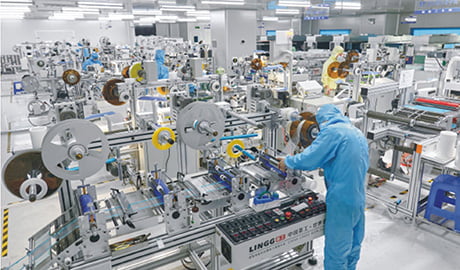
What are the biggest buyer pain points tied to tool & die—and how do we solve them?
Let me name the pain, because it’s always the same list.
You get inconsistent edges.
We solve with die design rules, controlled wear surfaces, and process windows.
You get bubbles, lift, or residue that look like “adhesive issues.”
Often it’s tooling + lamination + handling interacting.
We solve by tuning stack-up, cut geometry, and liner strategy.
Placeholder: edge lift root causes
You lose time on revisions.
We solve by clear ECN control and documented tool versioning.
Placeholder: revision control checklist
And the biggest pain of all: you qualify a sample, then mass production drifts.
We solve with pilot runs and measurable gates like defect PPM and application speed.
Placeholder: PPM calculation
How do we validate a tool & die partner in 30–90 days without wasting a sourcing cycle?
We validate like engineers, not gamblers.
Days 1–7: screen.
We ask for tool design approach, metrology list, example inspection reports, and revision control flow.
Placeholder: supplier screening template
Days 8–30: prove.
We run DFM, define CTQs, align measurement methods, and review first-article reports.
Placeholder: FAI template
Days 31–90: pilot.
We run a small production-like lot and track edge quality, dimensional stability, waste removal stability, and real line application speed.
If it survives the pilot, it’s real.
If it only survives the sample room, it’s marketing.
What should I specify when I request tooling for die-cut parts?
If you want fewer surprises, specify more reality.
Send the cut line.
Send the stack-up.
Send thickness tolerances.
Define CTQs and cosmetic standards.
Define application method (manual, semi-auto, automation).
Define environment (heat, moisture, chemicals, UV).
Placeholder: die cutting RFQ checklist
Also specify the output format you need.
Rolls.
Sheets.
Kits.
Tabs.
Pitch.
Release force targets.
Those “small” decisions often save more money than negotiating one cent off unit price.
Placeholder: liner release force basics
What’s the career scope of tool & die making right now?
It spans design, machining, metrology, tryout, maintenance, and process improvement—plus automation integration. Demand rises where products require tighter control and faster iteration.
(Placeholder: tool & die job trend data)
Why do tooling projects run late?
Unclear CTQs, too many revisions, weak DFM upfront, and slow tryout loops. A disciplined validation plan cuts delay.
(Placeholder: NPI timeline benchmarks)
How do I reduce die wear problems in production?
Use correct tool materials, surface finishing, controlled press settings, and a documented maintenance schedule. Then track drift with simple SPC on CTQs.
(Placeholder: die wear mechanisms)
Can Sanken support tooling + die cutting as one package?
Yes. We’re built around precision die cutting and converting, so we focus on tool stability, repeatable cutting, and line-friendly delivery formats—not just “making a shape.”
(Placeholder: one-stop converting workflow)
Conclusion
Tool & die making now covers design-to-production control: die design, machining, metrology, tryout, maintenance, and change control. For OEMs, the “scope” you should care about is repeatability at volume. Share your cut line and stack-up, and we’ll recommend a stable die-cutting path.