
What Materials Can Be Die Cut?
Picking a die-cut material feels easy. Then your part curls, lifts, or sheds dust in production. Operators slow down, rework piles up, and shipments slip. The worst part is discovering it late, after approvals. We prevent this by choosing materials based on surface, environment, and application speed from day one.
We can die cut far more than paper. We convert films, foams, rubber sheets, non-woven and felt, and pressure-sensitive adhesive constructions into repeatable parts. The best material is the one that stays stable at volume: it keeps shape, keeps edges clean, and keeps adhesion predictable after time, heat, and handling. When the material is wrong, you see edge lift, bubbles, leaks, squeaks, residue, cosmetic marks, and applicator jams. Choosing the right material upfront protects yield and delivery on your line.
Stay with me. I’ll map the main die-cut materials to the failures they trigger. I’ll also show the inputs we need to quote fast and keep production stable for you.
What counts as a die-cuttable material in real factories?
At Sanken, “die-cuttable” means it can run repeatedly.
Not once.
Not slowly.
Not with a “careful operator.”
A die-cuttable material must cut cleanly.
It must strip waste cleanly.
It must pack without damage.
It must apply fast.
This is the hidden pain.
Many materials cut fine, but handle badly.
They stretch under tension.
They curl from roll memory.
They drop fibers into adhesive.
Then you blame the die.
But the defect started in the material.
My BeeChair CEO habit is simple.
If a process requires “gentle hands,” it will fail on a busy shift.
Which plastic films are most common for die cutting?
Films are popular because they are thin and clean.
They are used for protection, insulation, and carrier layers.
PET film is a common choice for stable geometry.
PC film can fit higher heat situations.
PP film can be cost-effective, but bonding can be harder on some plastics.
Film pain shows up as curl, static, and edge lift.
Curl is often storage plus thickness variation.
Static attracts dust.
Dust becomes bubbles in a laminate.
Edge lift often starts at sharp corners and grows after heat.
If your part is cosmetic, finish matters.
Gloss shows fingerprints.
Matte hides handling marks.
That difference can change your reject rate.
When is foam the better choice than film?
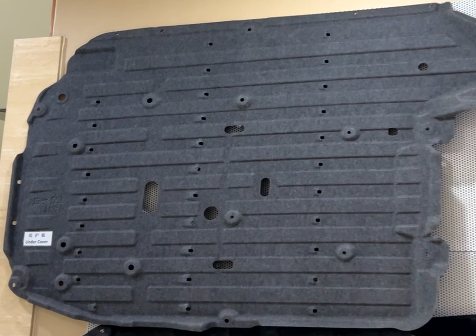
Choose foam when you need compression and gap fill.
Sealing.
Cushioning.
Vibration damping.
Noise control.
Foam failures are usually delayed.
A gasket passes day-one checks.
Then it leaks weeks later.
That is compression set.
Another common issue is thickness drift.
Thickness drift changes clamp load.
Clamp load changes sealing.
Foam edge quality matters too.
Some foams tear at sharp inside corners.
Some fray during waste stripping.
We fix this with foam structure, corner radii, and the right process for the density.
We design to installed thickness.
Not free thickness.
That is how you avoid “random” leaks.
What should you know before choosing rubber and elastomers?
Rubber is chosen for resilience and sealing life.
It is also chosen for chemical exposure.
Oil.
Coolant.
Outdoor weather.
The pain is assuming rubber behaves like metal.
It does not.
It relaxes.
It can move slightly after cutting.
It also wears tooling faster.
So the real question is exposure first.
If the rubber family is wrong, the gasket fails quietly.
Then it fails publicly in the field.
We reduce risk by locking material spec early.
We also align inspection to elastic behavior.
For tight features, we adjust geometry so the part is stable after relaxation, not just right off the tool.
How do adhesive tapes and PSA films become “die-cut parts”?
Many die-cut parts are adhesive shapes.
They replace screws, clips, and messy tape strips.
Your pain points are predictable.
Edge lift.
Residue during rework.
Slow placement.
Edge lift usually means one of three things.
Too little contact area.
Sharp corners.
A surface that is hard to bond.
Residue is usually a removability mismatch.
A “temporary” label that becomes permanent after heat.
A service step that was never defined.
We treat adhesive parts as systems.
Adhesive.
Liner.
Cut depth.
Format.
If your roll jams, your “perfect adhesive” is still a problem.
When do multi-layer laminates beat single materials?
When one material cannot do all jobs at once.
Many OEM parts are stack-ups.
Foam plus adhesive plus film.
Non-woven plus adhesive plus film.
Rubber plus adhesive plus liner.
This reduces supplier count.
It also reduces variation.
One process controls alignment, cleanliness, and bonding pressure.
The risks are bubbles, delamination, and matrix tearing.
Bubbles usually come from dust, trapped air, or a rushed lamination window.
Delamination usually shows up after time and heat, not in a quick sample check.
If you have repeated field returns, a controlled laminate is often the professional fix.
How do we prevent the five most common material-driven failures?
First is edge lift.
We reduce stress with radii.
We increase bonding land where stress lives.
We match adhesive behavior to your surface and temperature.
Second is bubbles.
We control cleanliness.
We tune lamination pressure and speed.
We avoid air traps in geometry.
Third is dimensional drift.
We choose materials that do not stretch in your process.
We control tension.
We supply a format that does not fight roll memory.
Fourth is contamination.
We avoid shedding materials when the assembly is sensitive.
We protect parts in packaging.
We keep fingers off adhesive with liner design.
Fifth is “works in samples, fails later.”
We validate after dwell time.
We validate after heat cycling if your product sees heat.
We validate after shipping vibration.
Then we lock revision control so the part does not quietly change.
If you want fewer supplier issues, start with failure mode.
Then choose the material that beats it.
What should you send Sanken to lock the right material choice?
Send the surface truth, not just a cut line.
Tell us what the part touches: plastic type, coating, texture, and cleaning step.
Tell us the environment: temperature, humidity, oils, UV, and storage time.
Tell us the application method: manual, jig, semi-auto, or automation, plus roll direction and pitch.
Finally, tell us how it fails today.
Lift after 48 hours? Bubbles after shipping? Residue during rework?
With that, we propose a material and format, then pilot for stability at scale.
Do die-cut materials have to be on rolls?
No. Rolls usually win for volume. Sheets can be better for thick parts, large parts, or simpler handling.
How do we choose between film, foam, and rubber fast?
Film for thin protection and insulation. Foam for compression and gap fill. Rubber for durable sealing and chemical exposure.
What should you send Sanken for an accurate quote?
Cut line or drawing, stack-up limits, thickness targets, volume forecast, application method, and use environment. If you have a failure, tell us when it appears.
Conclusion
We can die cut films, foams, rubber, non-woven, felt, tapes, and laminates. The best choice depends on surface, environment, and line speed. Share your failure mode and constraints, and we will recommend a stable stack-up that runs cleanly at volume.