
Best Insulator of Heat: Air, Water, Wool, Foam and Rubber Compared
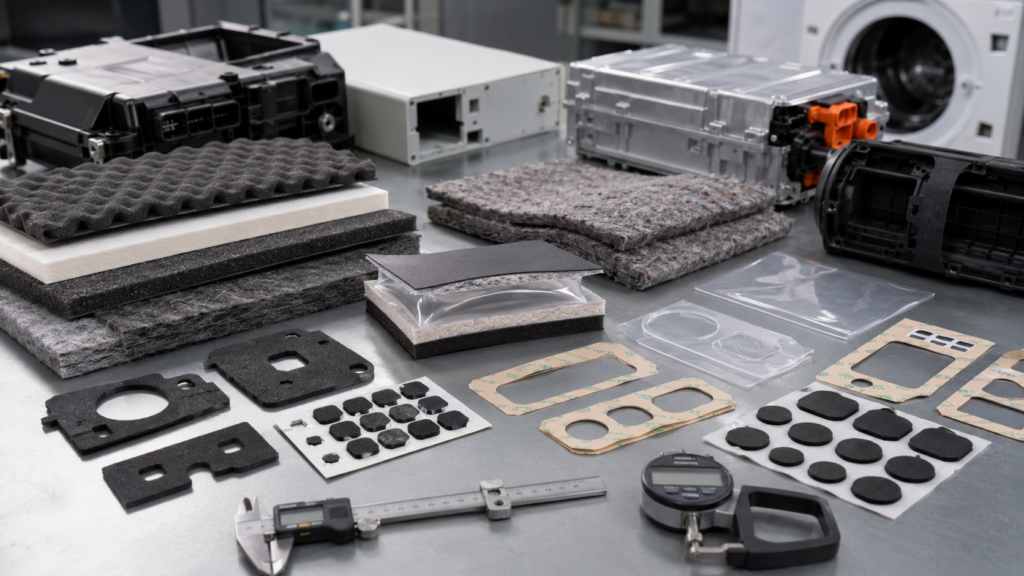
The best insulator of heat depends on how the material is used. Air can be an excellent insulator when it is trapped and cannot move. Wool works well because it traps many small pockets of air. Foam is widely used in OEM products because its closed or open cell structure can reduce heat transfer while also providing sealing and cushioning. Rubber is not usually the best thermal insulator, but it is useful when heat resistance, sealing, flexibility, and durability are required. Water is generally a poor heat insulator because it transfers heat more easily than trapped air and can move heat by convection.
For OEM engineers and buyers, the real question is not only which material has the lowest heat transfer. The more practical question is which material can insulate, seal, fit, compress, bond, age, and survive real production conditions.
At Sanken, we help customers choose and convert materials such as foam, rubber, PET film, adhesive tape, and non-woven felt into custom die cut components for automotive electronics, industrial equipment, appliances, electronics, and medical-related applications.
Why This Topic Matters for OEM Manufacturing
Heat insulation is not only a building or clothing topic. It also matters in many OEM products.
Inside automotive electronics, battery systems, appliances, industrial devices, sensors, displays, and medical equipment, small insulation components may be used to reduce heat transfer, protect sensitive parts, fill gaps, prevent vibration, or improve assembly stability.
A material may look suitable in theory, but fail in production if it cannot be cut accurately, bonded properly, compressed evenly, or survive the working environment.
For example, a foam pad may provide better insulation and sealing than solid rubber, but it may tear if the wall is too narrow. A rubber part may not be the best thermal insulator, but it may perform better where compression, vibration, and durability are more important. A PET film may not be selected mainly for heat insulation, but it may be needed for electrical insulation inside electronics.
This is why engineers should compare insulation materials by function, not by thermal performance alone.
Common Problems and Production Risks
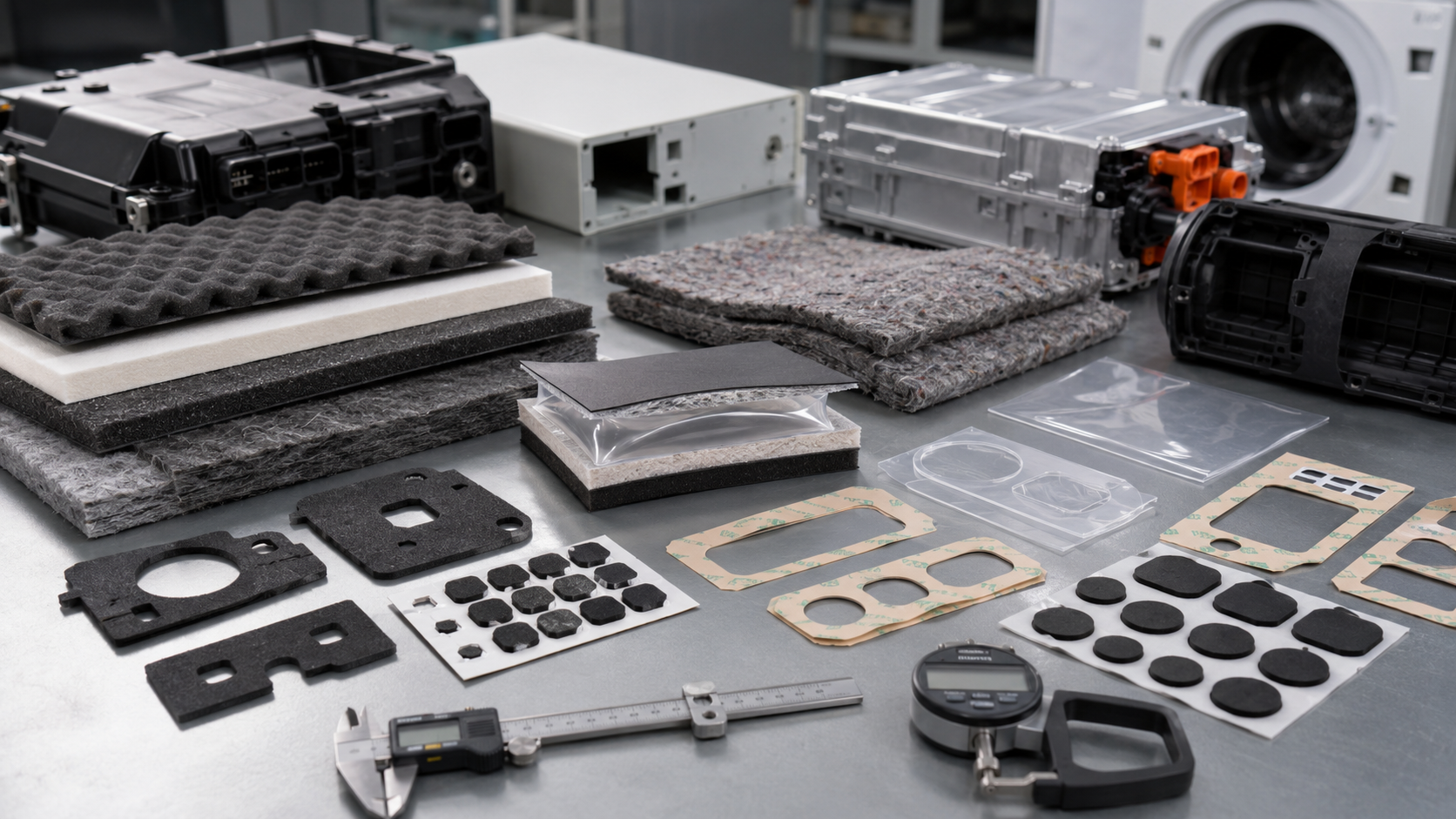
Choosing the wrong insulation material can create problems during sampling, assembly, or long-term use.
| Problem | Common Cause | OEM Risk |
|---|---|---|
| Poor heat insulation | Material conducts heat too easily | Sensitive parts overheat |
| Weak sealing | Material does not compress correctly | Air, dust, or moisture leakage |
| Material deformation | Wrong density or temperature resistance | Poor fit after assembly |
| Adhesive failure | Adhesive not matched to surface or heat | Lifting, shifting, or peeling |
| Foam tearing | Narrow wall or poor die cutting process | Low yield and assembly scrap |
| Rubber hardening | Wrong grade for heat or aging | Loss of sealing performance |
| Water absorption | Open structure or unsuitable material | Reduced insulation and reliability |
| Batch inconsistency | Weak material or process control | Unstable mass production |
These risks are important because insulation parts are often hidden inside the final product.
A customer may not see the part, but if it fails, the product may become noisy, hot, unstable, or unreliable.
Air, Water, Wool, Foam and Rubber Compared
The basic rule of heat insulation is simple: materials that slow heat transfer are better insulators. But real performance depends on structure, thickness, moisture, compression, airflow, and application conditions.
| Material | Heat Insulation Performance | Key Advantage | Main Limitation |
|---|---|---|---|
| Trapped air | Excellent when still | Very low heat transfer when enclosed | Poor if air moves freely |
| Water | Poor as an insulator | Can store and transfer heat | Conducts and circulates heat |
| Wool | Good | Traps air in fibers | Can absorb moisture |
| Foam | Good to very good | Traps air or gas in cells, easy to die cut | Performance depends on density and cell structure |
| Rubber | Moderate | Durable, flexible, good for sealing | Usually conducts more heat than foam or trapped air |
The comparison shows why trapped air is often the hidden reason behind many good insulation materials.
Wool insulates because its fibers hold air.
Foam insulates because its cell structure traps air or gas.
Air itself is effective only when it is not moving. If air can circulate, it can transfer heat by convection.
Water is different. It transfers heat much more easily than trapped air and can move heat through circulation. This is why wet insulation often performs worse than dry insulation.
Rubber has moderate insulation ability, but it is valuable in OEM components because it can seal, absorb vibration, resist wear, and maintain flexibility.
What Buyers or Engineers Should Check First
Before choosing a heat insulation material for an OEM component, engineers should confirm the real application conditions.
| Checklist Item | What to Confirm | Why It Matters |
|---|---|---|
| Heat source | Battery, motor, housing, electronics, environment | Defines insulation requirement |
| Temperature range | Normal and peak temperature | Prevents aging or deformation |
| Material function | Insulation, sealing, cushioning, bonding, spacing | Guides material selection |
| Thickness limit | Available assembly gap | Controls insulation and fit |
| Compression need | Static or dynamic compression | Affects foam or rubber choice |
| Moisture exposure | Dry, humid, splash, outdoor | Prevents water-related failure |
| Adhesive requirement | With or without adhesive backing | Affects assembly and reliability |
| Die cut design | Holes, slots, narrow walls, edge distance | Controls production stability |
| Testing method | Heat aging, compression, peel, sealing | Confirms real performance |
| Packaging format | Roll, sheet, liner-backed, individual part | Supports assembly efficiency |
The best material on paper may not be the best material in the product.
A soft foam may insulate well but fail if it is compressed too much. A rubber part may provide less insulation but survive better under mechanical stress. A fiber material may insulate well when dry but lose performance if moisture is absorbed.
Why Trapped Air Is a Strong Heat Insulator
Air is often considered one of the best practical insulators when it is trapped.
The reason is that still air transfers heat slowly. Many insulation materials work because they hold air in small spaces and prevent it from moving freely.
This is why foam, wool, fiberglass, and many porous materials can reduce heat transfer.
However, free-moving air is different.
If air can move through a gap, it can carry heat from one side to another. This reduces insulation performance. In OEM design, this matters when there are open gaps, poor sealing paths, or unstable gasket compression.
A foam gasket may help not only by insulating, but also by sealing air gaps. This can reduce heat movement, dust entry, noise, and vibration at the same time.
Why Water Is Not a Good Heat Insulator
Water is not a good heat insulator in most OEM applications.
It transfers heat much faster than trapped air and can move heat through convection. When insulation material becomes wet, its performance often drops because water replaces trapped air inside pores or fibers.
This is why moisture resistance matters.
For example, a foam material used in automotive or industrial applications should be reviewed for water absorption, closed-cell structure, sealing performance, and long-term stability.
In some applications, water may be useful for heat transfer or cooling, but that is different from insulation. If the goal is to prevent heat transfer, water is usually not the right choice.
Wool as an Insulator
Wool insulates well because it has a fiber structure that traps air.
This makes it useful in clothing, acoustic materials, padding, and some thermal applications. Wool can also provide softness and cushioning.
However, for precision OEM die cut components, wool is not always the first choice. It may absorb moisture, vary in thickness, or be less suitable for tight tolerance industrial assemblies.
Non-woven felt can sometimes provide similar functional benefits in automotive and industrial applications, especially for sound absorption, anti-rattle control, and cushioning. When thermal performance, acoustic performance, and fit are all needed, engineers should review the exact fiber material, density, thickness, and cutting edge quality.
Foam as a Practical OEM Heat Insulator
Foam is one of the most practical insulation materials for custom die cut OEM components.
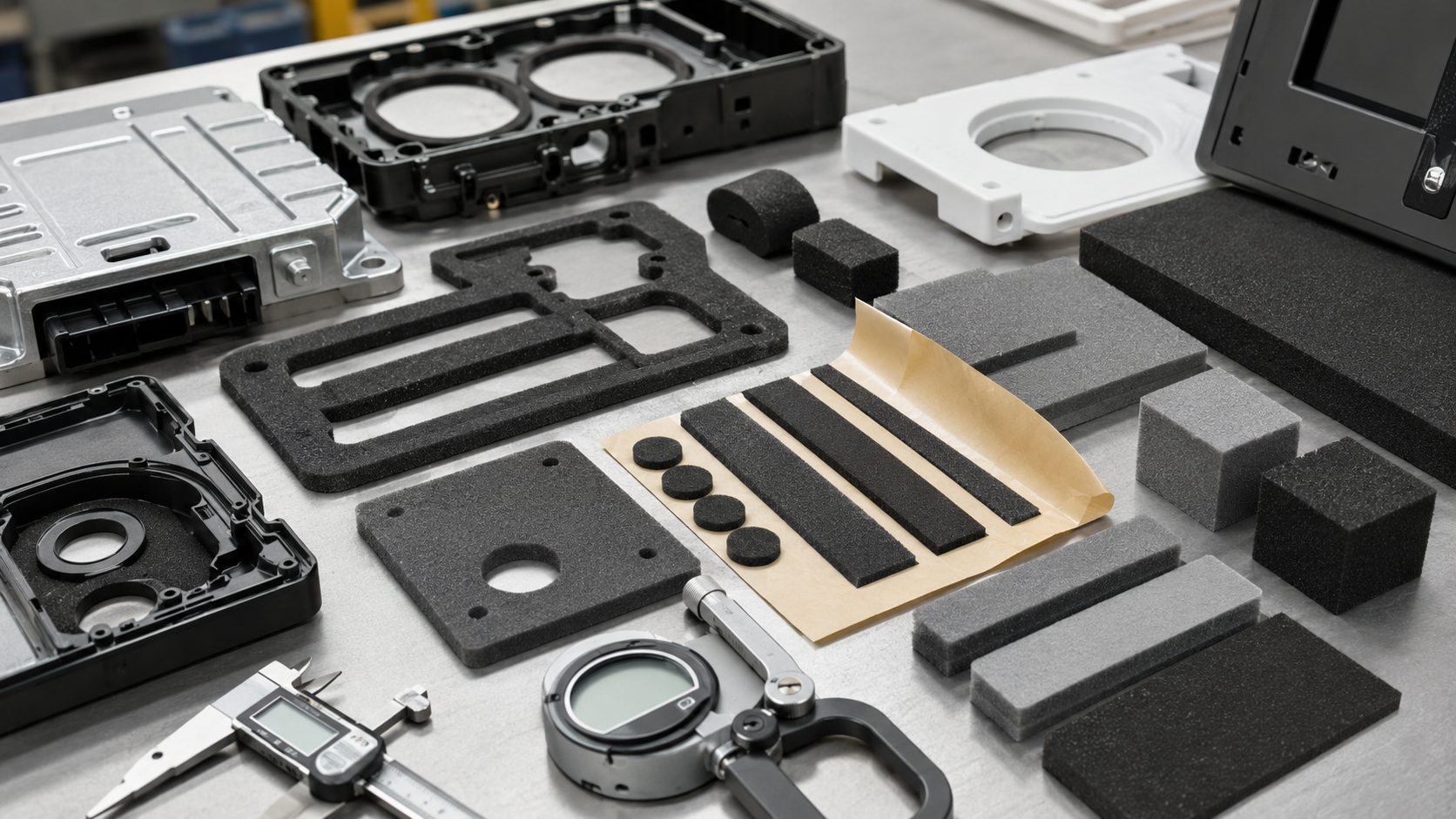
Foam can trap air in its cell structure. Depending on the material and design, it can also provide sealing, cushioning, spacing, vibration reduction, and dust protection.
Common foam materials include PU foam, EVA foam, PE foam, EPDM foam, CR foam, and silicone foam.
Each material behaves differently.
PU foam is soft and useful for cushioning or dust sealing.
PE foam can provide better moisture resistance and shape stability.
EPDM foam is often used in automotive and outdoor sealing because of its weather resistance.
CR foam can support industrial sealing and vibration control.
Silicone foam may be selected where heat resistance and long-term recovery are important.
For engineers, foam selection should consider:
- Cell structure
- Density
- Thickness
- Compression recovery
- Temperature resistance
- Water absorption
- Adhesive compatibility
- Die cutting tolerance
- Minimum wall width
- Packaging method
A foam that insulates well must also survive cutting, handling, and assembly.
Rubber as a Heat Insulation Material
Rubber is not usually the best heat insulator when compared with trapped air, wool, or foam. However, rubber is still widely used because it offers other valuable properties.
Rubber can seal, rebound, resist wear, reduce vibration, and handle mechanical pressure better than many soft insulation materials.
In OEM applications, rubber may be selected when the part must survive compression, friction, movement, or harsh conditions.
Common rubber-related components include sealing pads, cushioning pads, anti-slip parts, dust covers, vibration pads, and custom gaskets.
For heat-related applications, engineers should choose the rubber grade carefully. Different rubber materials have different temperature resistance, aging behavior, oil resistance, and rebound properties.
If the main purpose is thermal insulation, foam may often be better. If the part must also seal under pressure, resist deformation, or survive mechanical stress, rubber may be the better engineering choice.
Material and Process Considerations
The insulation material is only one part of the decision.
The converting process also matters.
A heat insulation component may need adhesive backing, kiss cutting, lamination, clean holes, narrow slots, accurate thickness, or custom packaging.
Foam may tear if the wall is too narrow.
Rubber may require controlled cutting pressure.
PET insulation film may need clean edges and tight hole alignment.
Adhesive-backed parts may need stable liner release and no adhesive overflow.
Non-woven felt may need clean edges and fiber control.
A professional supplier should review both the material and the production method before sampling.
At Sanken, we check whether the selected material can be die cut, laminated, handled, inspected, and packed reliably before mass production.
How Sanken Helps Reduce Risk Before Mass Production
Sanken Manufacturing Co., Ltd. supports OEM customers with precision die cutting, material converting, adhesive lamination, foam and rubber components, PET insulation films, non-woven felt parts, sealing gaskets, automotive electronics components, and custom industrial parts.
For heat insulation-related components, we help customers review the practical performance of materials such as foam, rubber, PET film, adhesive structures, and felt materials.
We focus on application needs such as sealing, cushioning, insulation, heat resistance, compression, bonding, thickness, tolerance, and assembly format.
For foam parts, we review density, cell structure, compression recovery, thickness, minimum width, adhesive backing, and cutting stability.
For rubber parts, we review hardness, rebound, thickness, edge quality, temperature resistance, and sealing load.
For PET insulation films, we review thickness, dielectric function, hole accuracy, edge cleanliness, and packaging.
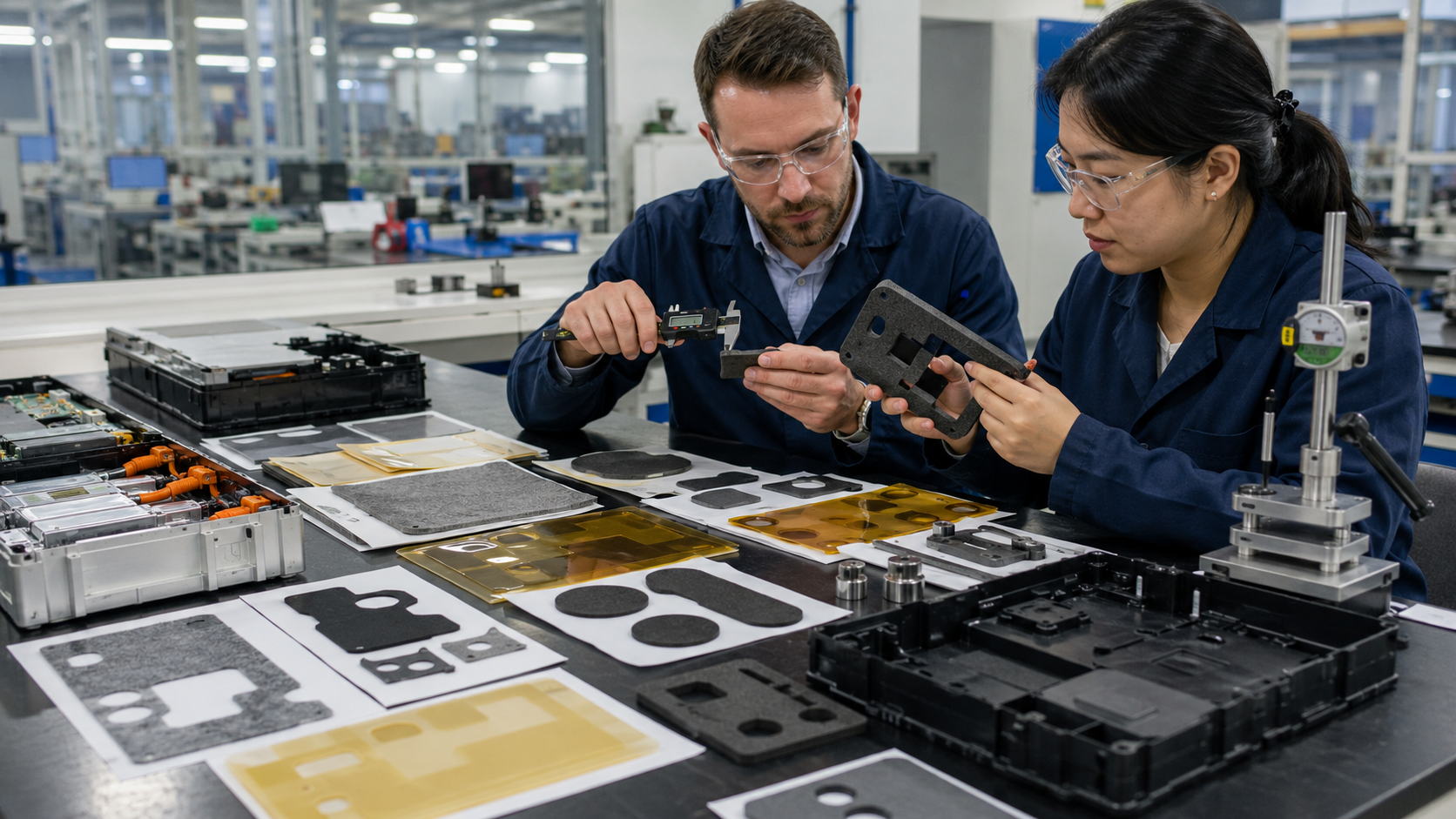
Our goal is to help buyers choose materials that work not only in theory, but also in real OEM production.
FAQ
What is the best insulator of heat among air, water, wool, foam and rubber?
Trapped air is usually the best insulator among these options when it is enclosed and cannot move. Foam and wool are effective because they trap air. Water is generally a poor insulator, and rubber offers moderate thermal insulation with strong sealing and durability benefits.
Why is air a good heat insulator?
Air is a good heat insulator when it is still because it transfers heat slowly. Many insulation materials work by trapping air in small pockets and preventing airflow.
Why is water a poor heat insulator?
Water transfers heat more easily than trapped air and can move heat through convection. When insulation materials become wet, water often replaces trapped air and reduces insulation performance.
Is foam a good heat insulator?
Yes. Foam can be a good heat insulator because its cell structure traps air or gas. It is also practical for OEM parts because it can be die cut into custom gaskets, pads, spacers, and sealing components.
Is rubber good for heat insulation?
Rubber provides moderate heat insulation, but its main strengths are sealing, flexibility, rebound, vibration control, and durability. It is useful when mechanical performance is as important as insulation.
Which insulation material is best for OEM components?
For OEM components, the best material depends on application requirements such as heat range, compression, sealing, thickness, moisture exposure, adhesive needs, tolerance, and assembly method. Foam is often practical for insulation and sealing, while rubber is useful for durability and mechanical stress.
How can buyers reduce material selection risk?
Buyers can reduce risk by sharing application details, temperature range, assembly gap, compression requirement, adhesive needs, tolerance priorities, testing standards, and expected production volume before sampling.
Conclusion
The best insulator of heat depends on the application. Trapped air offers excellent insulation when enclosed. Wool and foam work well because they trap air. Water is generally a poor insulator because it transfers heat and can move heat by convection. Rubber is not the strongest thermal insulator, but it is valuable when sealing, flexibility, vibration control, and durability are required.
For OEM buyers and engineers, material choice should balance heat insulation, mechanical performance, moisture resistance, adhesive behavior, die cutting feasibility, and mass production stability. At Sanken, we help customers select and convert foam, rubber, PET film, adhesive tape, and felt materials into custom components that support reliable OEM assembly.