
How Custom Die Cut Felt Parts Improve Automotive Interior Comfort?
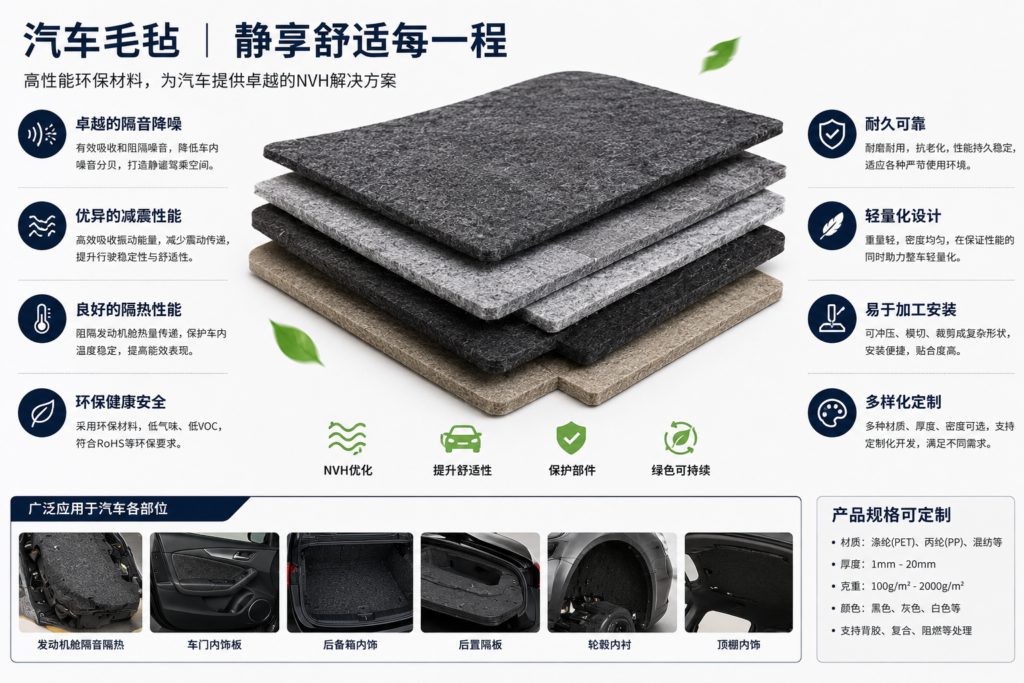
Automotive comfort is not only about seats and screens. Small felt parts inside the cabin can reduce noise, vibration, rubbing, and harsh contact between interior components.
Custom die cut felt parts improve automotive interior comfort by absorbing noise, reducing squeaks and rattles, cushioning contact points, and improving fit between trim parts. For OEM automotive projects, precision die-cut needle-punched felt and non-woven components help create a quieter, softer, and more stable cabin experience.
Why Felt Parts Matter in Automotive Interiors
Many interior noise problems come from small contact points.
Plastic touches plastic.
Trim panels vibrate.
Wires rub against brackets.
Clips move slightly during driving.
Over time, these small movements create:
- Squeaks
- Rattles
- Buzzing noise
- Friction marks
- Customer complaints
Custom die cut felt parts solve these problems by acting as soft isolation layers between contact surfaces.
Theme: Automotive Die Cut Felt Components
What Materials Are Used for Die Cut Felt Parts?
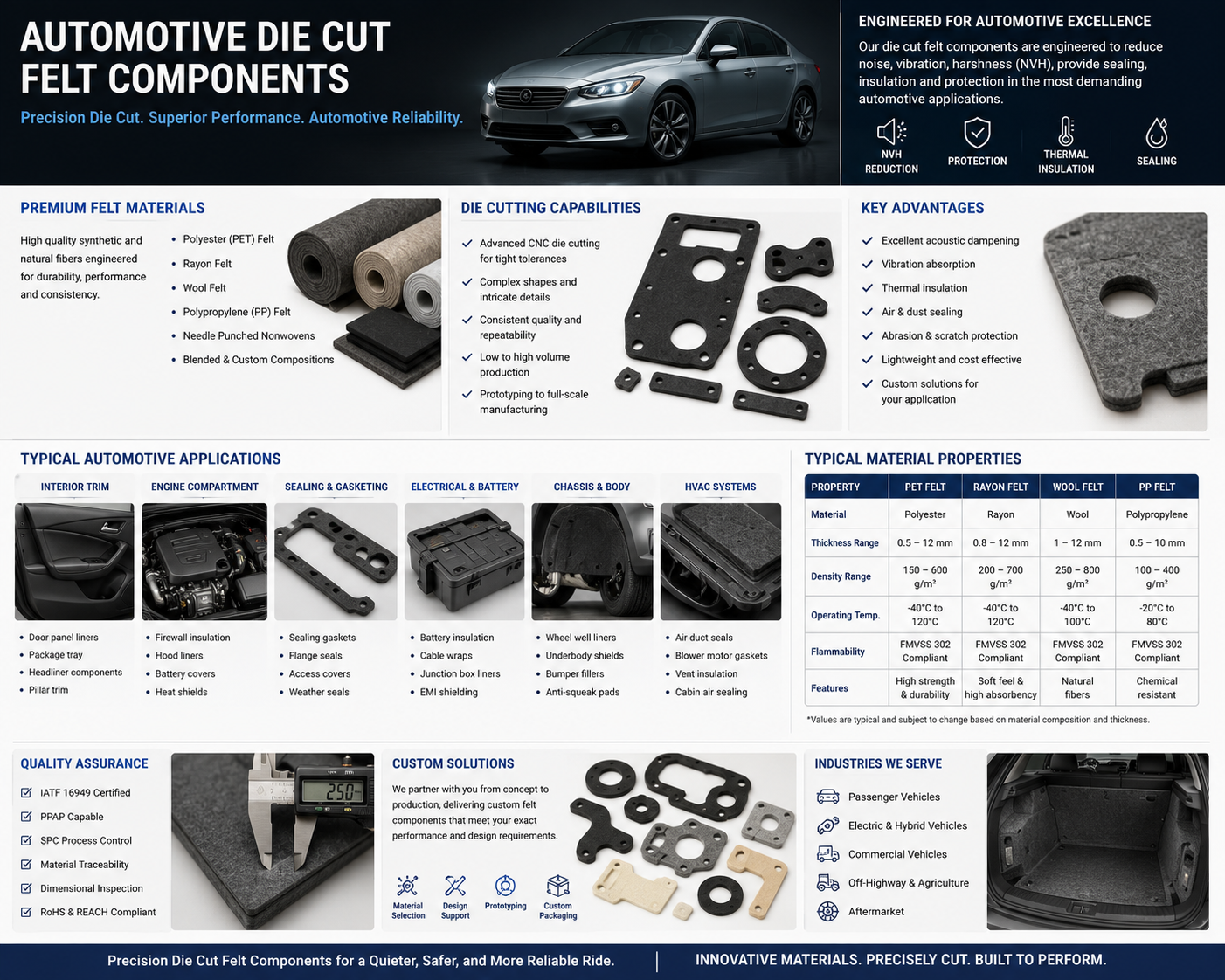
Automotive felt parts are often made from:
- Needle-punched felt
- Polyester non-woven fabric
- Acoustic insulation felt
- Laminated felt with adhesive backing
- Felt combined with foam or film layers
Needle-punched felt is especially common in automotive NVH applications because it provides sound absorption, durability, and easy forming.
At Dongguan Sanken Electronics Manufacturing Co., Ltd., felt materials can be converted into custom shapes according to customer drawings or samples.
How Die Cut Felt Reduces Noise
Felt has a fiber structure that helps absorb sound energy.
When installed inside a vehicle, it can reduce:
- Interior trim vibration
- Door panel noise
- Console friction noise
- Dashboard contact noise
- Wire harness movement noise
Unlike hard plastic spacers, felt creates a softer interface. This reduces direct impact between components and improves the perceived quality of the vehicle interior.
How Felt Parts Prevent Squeaks and Rattles
Squeaks often happen when two surfaces rub together.
Rattles often happen when a component has small movement clearance.
Die cut felt parts help by:
- Filling small gaps
- Softening hard contact points
- Reducing friction
- Preventing repeated impact
- Stabilizing loose areas
This is why felt pads, felt strips, and felt gaskets are widely used in dashboards, doors, seats, consoles, roof liners, and trunk areas.
Theme: Automotive NVH Felt Insulation
Why Precision Die Cutting Is Important
Felt parts may look simple, but poor cutting can cause assembly problems.
If the part is too large, it may interfere with installation.
If it is too small, it may not cover the contact area.
If the adhesive backing is poorly controlled, the part may shift or lift.
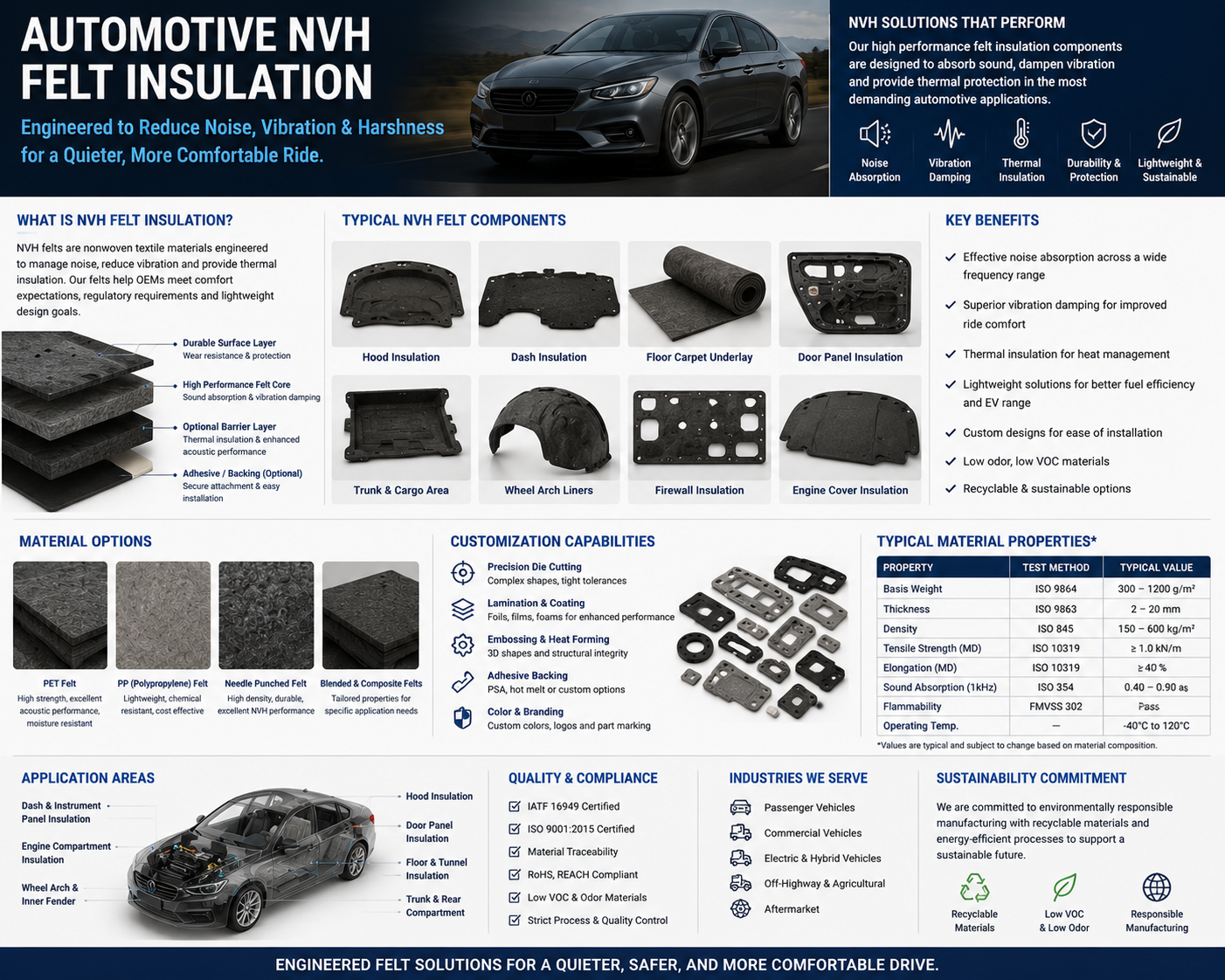
Precision die cutting helps ensure:
- Stable dimensions
- Clean edges
- Accurate hole position
- Fast assembly
- Consistent quality across batches
For high-volume automotive production, repeatability is critical.
Adhesive-Backed Felt Parts
Many automotive felt components are supplied with pressure-sensitive adhesive.
This allows operators to install parts quickly without extra glue.
Adhesive-backed felt parts are commonly used for:
- Anti-rattle pads
- Anti-squeak strips
- Wire harness protection
- Interior trim cushioning
- Door panel damping
The adhesive must match the surface, temperature range, and service environment. Poor adhesive selection can lead to lifting after heat exposure or long-term vibration.
Applications in Automotive Interiors
Custom die cut felt parts are used in many areas of a vehicle.
Dashboard and Console Areas
Felt pads reduce rubbing noise between plastic trim parts and hidden mounting structures.
Door Panels
Felt strips reduce vibration, absorb sound, and improve closing feel.
Seat Systems
Felt components reduce friction between moving seat parts and nearby trim.
Wire Harness Protection
Felt wraps and pads prevent wires from rubbing against metal or plastic edges.
Trunk and Cargo Areas
Felt parts reduce impact noise and protect surfaces during use.
Sanken Manufacturing Capabilities
Dongguan Sanken Electronics Manufacturing Co., Ltd. provides custom automotive felt and non-woven die cutting solutions for OEM and ODM projects.
Our capabilities include:
- Precision die cutting
- Needle-punched felt converting
- Non-woven fabric processing
- Adhesive lamination
- Foam and felt composite converting
- Custom gasket and sealing component production
Key Advantages
- OEM/ODM customization
- ISO 9001 quality management
- RoHS and REACH compliant materials
- Domestic and overseas production bases
- Cleanroom precision production
- Mold opening from drawings or samples
We support automotive NVH noise reduction, consumer electronics die-cut materials, optical components, and custom rubber/plastic sealing products.
Theme: Custom Automotive Felt Die Cutting Solutions
How to Choose the Right Felt Part
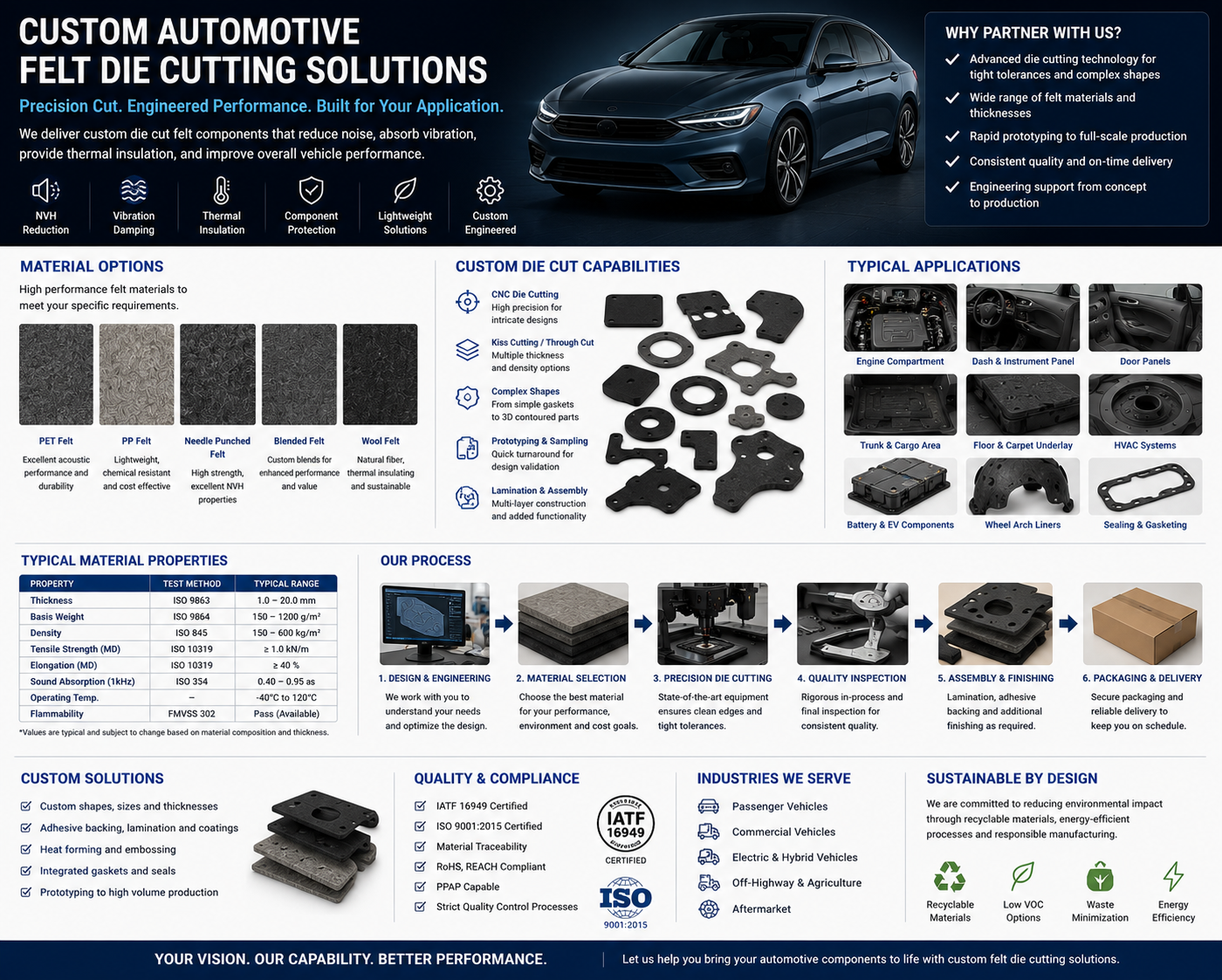
When selecting die cut felt components, consider:
- Material thickness
- Density
- Acoustic performance
- Compression behavior
- Adhesive type
- Temperature resistance
- Installation position
- Required tolerance
For automotive interiors, the best solution is not always the thickest felt. It is the material that balances sound absorption, compression, durability, and assembly efficiency.
Featured Snippet Summary
Custom die cut felt parts improve automotive interior comfort by reducing squeaks, rattles, vibration, and friction between interior components. They are commonly used in dashboards, doors, seats, consoles, wire harnesses, and trunk areas to improve NVH performance and cabin quality.
Conclusion
Custom die cut felt parts are small components with a large impact on automotive comfort. They help reduce noise, soften contact points, prevent friction, and improve interior quality.
For automotive OEMs, precision die-cut felt and non-woven parts provide a practical solution for NVH control and assembly stability. With the right material, adhesive, and cutting process, felt components can help create quieter, more comfortable vehicle interiors.