
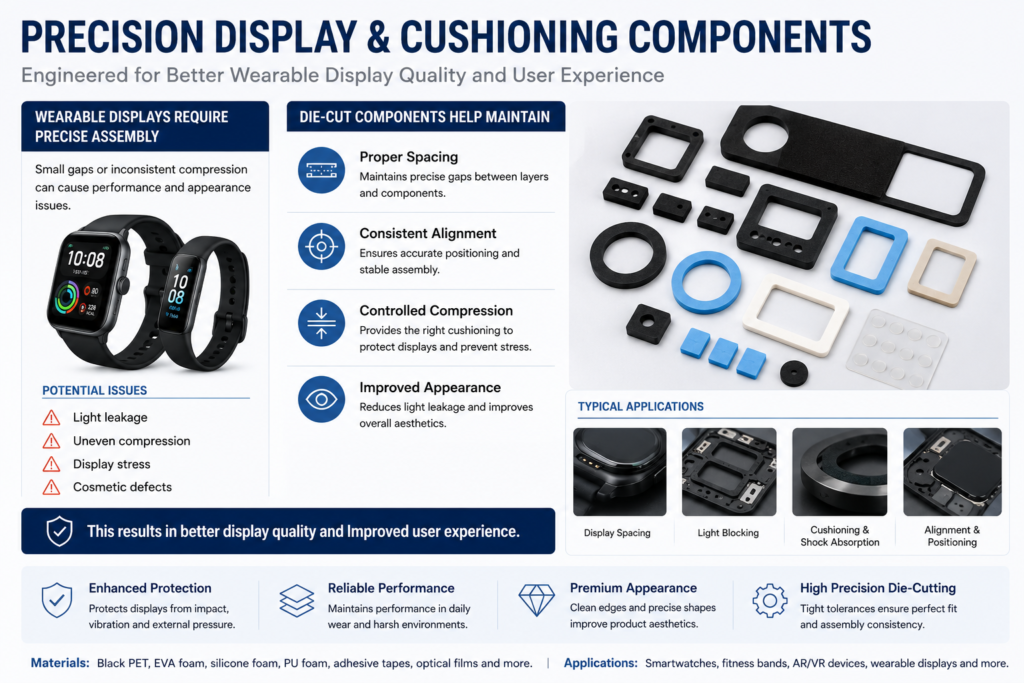
Wearable devices have become part of everyday life. Smart watches, fitness trackers, wireless earbuds, health monitoring devices, and AR/VR products are expected to be lightweight, comfortable, durable, and reliable. However, achieving these requirements inside extremely compact devices presents significant engineering challenges.
Die cut wearable device components improve comfort and reliability by providing cushioning, sealing, insulation, light blocking, vibration control, and precise component positioning. By converting foam, PET films, TPU materials, adhesives, and light-shielding materials into custom shapes, manufacturers can enhance user experience while protecting sensitive electronic components.
As wearable devices become smaller and more feature-rich, precision die-cut components play an increasingly important role in product performance.
Why Wearable Devices Require Specialized Components
Unlike many electronic products, wearable devices maintain direct contact with the user for extended periods.
This creates unique requirements:
- Comfortable skin contact
- Lightweight construction
- Waterproof protection
- Sweat resistance
- Shock protection
- Optical sensor accuracy
- Long-term durability
Because internal space is extremely limited, every component must serve multiple functions while occupying minimal volume.
Theme: Precision Wearable Device Components
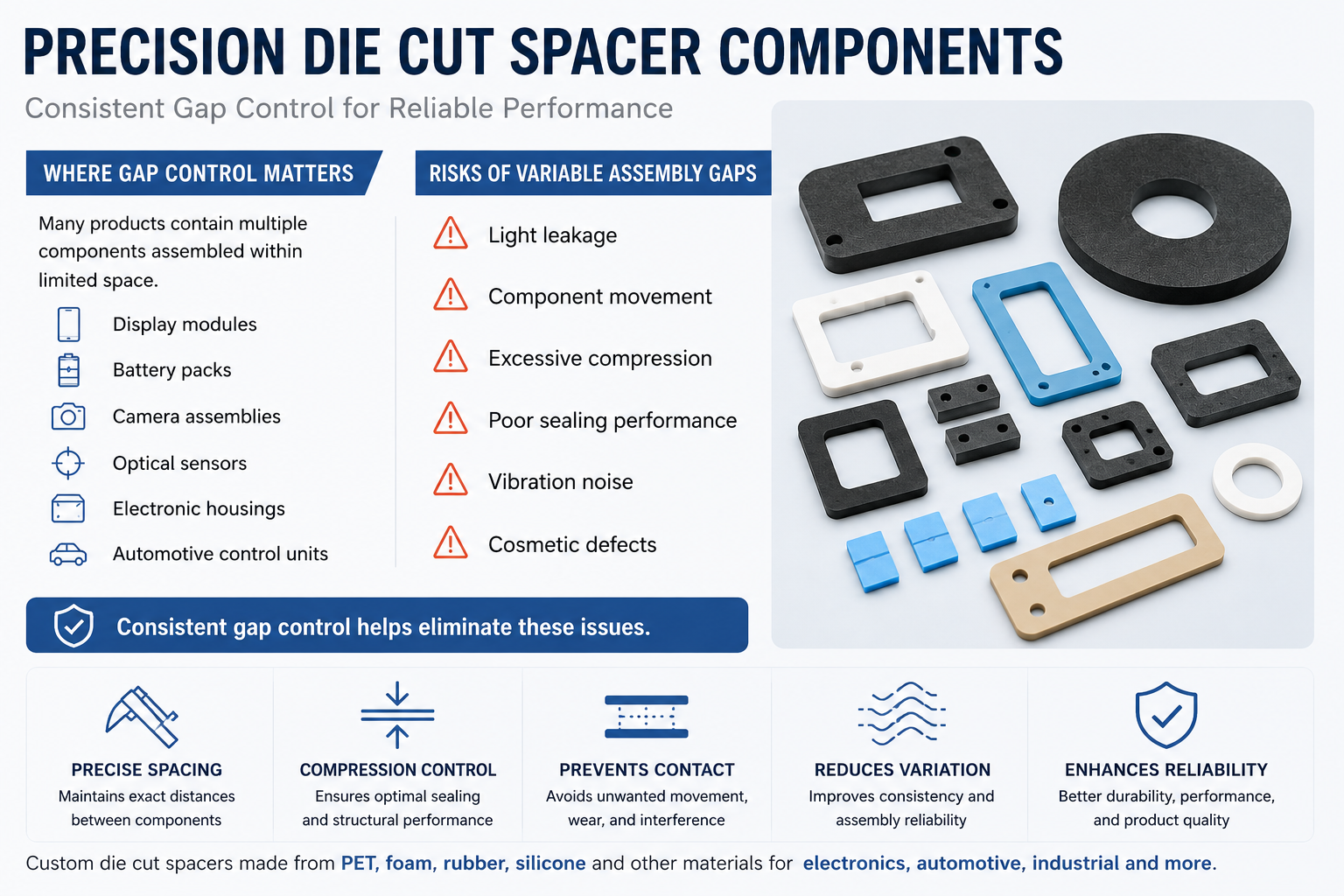
Improving User Comfort
Comfort is one of the most important factors influencing wearable device adoption.
Poorly designed products may cause:
- Skin irritation
- Pressure points
- Excessive weight
- Uncomfortable fit
Die-cut foam and soft cushioning materials help improve comfort by:
- Distributing pressure
- Reducing hard contact points
- Providing flexible support
- Improving fit against the body
This is especially important for devices worn continuously throughout the day.
Supporting Waterproof Performance
Many wearable devices are exposed to:
- Sweat
- Rain
- Hand washing
- Exercise environments
Water ingress can damage:
- Sensors
- Batteries
- Circuit boards
- Charging systems
Custom die-cut sealing components help create reliable waterproof barriers.
Common materials include:
- Silicone foam
- Closed-cell foam
- Waterproof adhesive gaskets
- Rubber sealing materials
These components support the high IP ratings required for modern wearable devices.
Improving Optical Sensor Accuracy
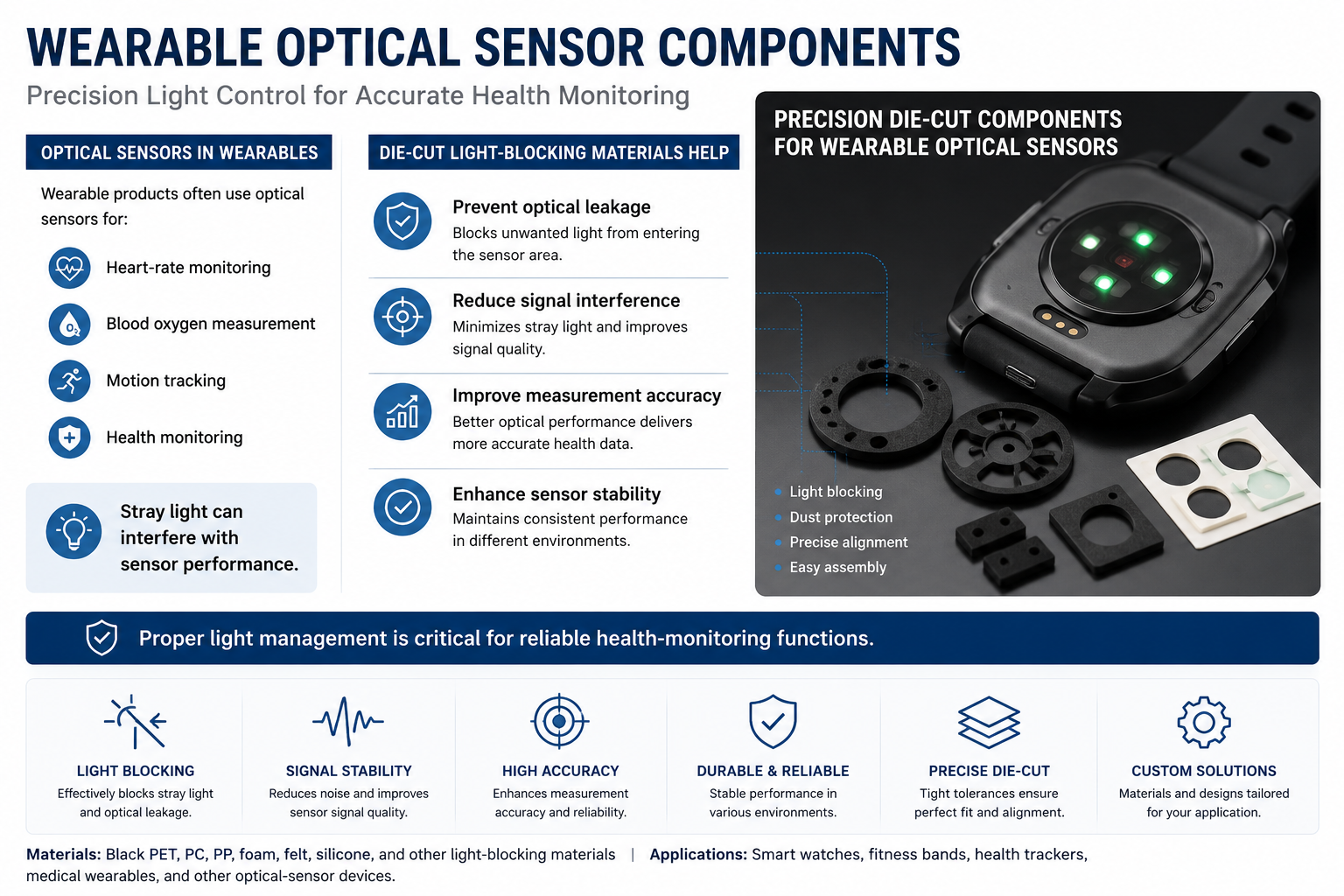
Wearable products often use optical sensors for:
- Heart-rate monitoring
- Blood oxygen measurement
- Motion tracking
- Health monitoring
Stray light can interfere with sensor performance.
Die-cut light-blocking materials help:
- Prevent optical leakage
- Reduce signal interference
- Improve measurement accuracy
- Enhance sensor stability
Proper light management is critical for reliable health-monitoring functions.
Theme: Wearable Optical Sensor Components
Protecting Internal Electronics
Wearable devices are frequently subjected to:
- Drops
- Vibration
- Daily movement
- Repeated impacts
Die-cut foam components help protect:
- Circuit boards
- Batteries
- Sensors
- Displays
Benefits include:
- Shock absorption
- Vibration isolation
- Improved durability
- Reduced component wear
This helps extend product lifespan while maintaining reliability.
Managing Battery Safety and Stability
Battery systems are among the most critical components in wearable electronics.
Die-cut materials help:
- Position batteries accurately
- Prevent movement
- Provide electrical insulation
- Reduce vibration
Common materials include:
- PET insulation films
- Foam spacers
- Double-sided adhesive components
These materials contribute to both safety and performance.
Enhancing Display Assembly Quality
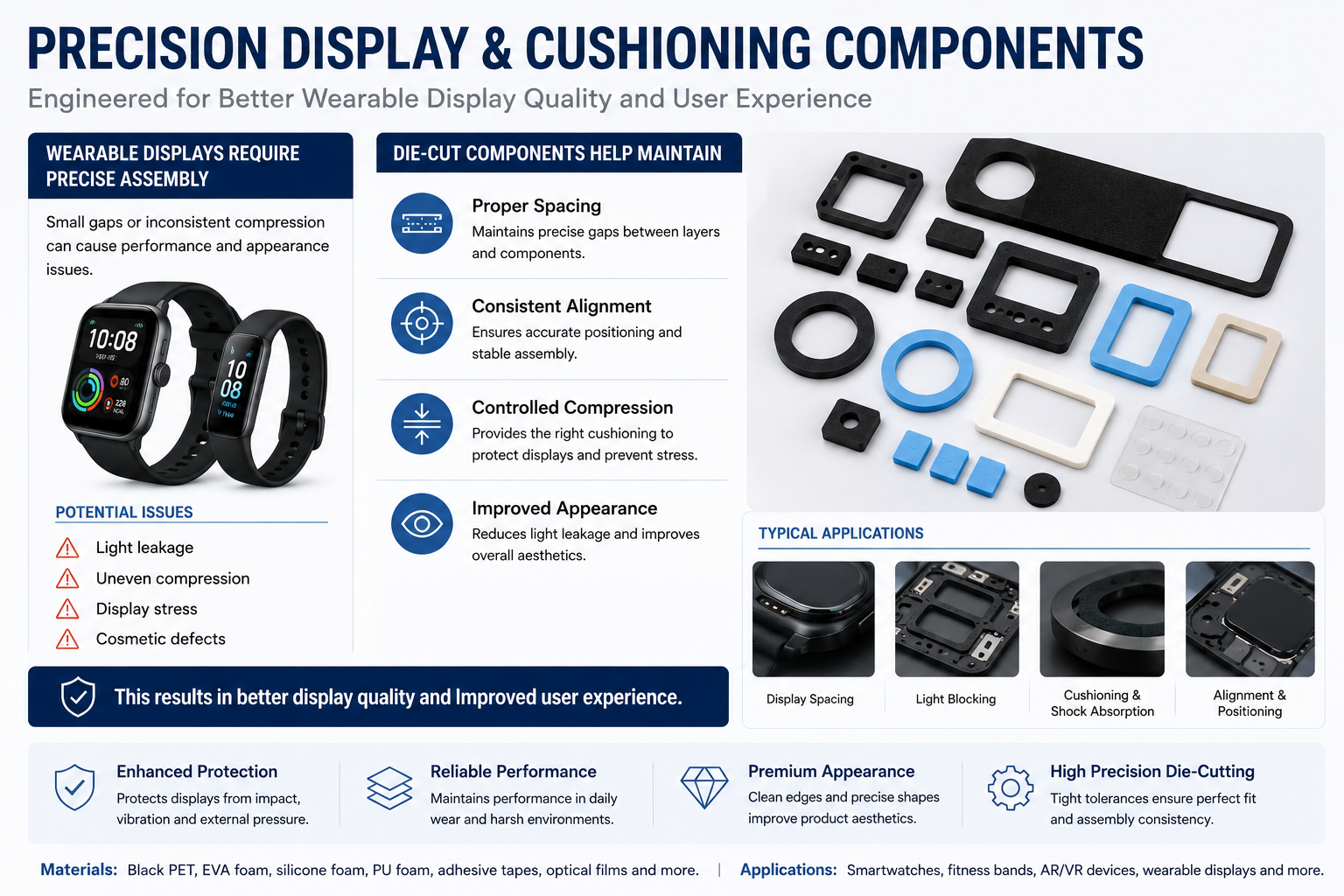
Wearable displays require precise assembly.
Potential issues include:
- Light leakage
- Uneven compression
- Display stress
- Cosmetic defects
Die-cut components help maintain:
- Proper spacing
- Consistent alignment
- Controlled compression
- Improved appearance
This results in better display quality and improved user experience.
Theme: Precision Display and Cushioning Components
Supporting Lightweight Product Design
Weight is a major consideration in wearable devices.
Heavy products can become uncomfortable during long-term use.
Die-cut materials help reduce weight by:
- Replacing bulky mechanical solutions
- Combining multiple functions into one component
- Reducing part count
Examples include:
- Foam gaskets with adhesive backing
- Multi-layer insulation assemblies
- Integrated sealing and cushioning components
This helps manufacturers achieve compact and lightweight designs.
Common Die Cut Materials Used in Wearables
Foam Materials
Used for:
- Cushioning
- Sealing
- Vibration isolation
PET Films
Used for:
- Electrical insulation
- Battery protection
- Structural support
TPU Materials
Used for:
- Flexible protection
- Wear resistance
- Waterproof applications
Light Blocking Materials
Used for:
- Sensor isolation
- Optical performance improvement
Adhesive Components
Used for:
- Bonding
- Assembly simplification
- Component positioning
Each material contributes to overall product comfort and reliability.
Why Precision Die Cutting Matters
Wearable devices contain extremely small and densely packed components.
Poorly converted materials can cause:
- Assembly difficulties
- Sensor misalignment
- Sealing failures
- Reduced comfort
- Product defects
Precision die cutting ensures:
- Accurate dimensions
- Clean edges
- Consistent thickness
- Reliable assembly performance
For wearable products, even minor dimensional variations can impact functionality.
How Sanken Manufacturing Supports Wearable Device Projects
Dongguan Sanken Electronics Manufacturing Co., Ltd. specializes in precision die-cut components for wearable devices, consumer electronics, and optical products.
Our capabilities include:
- Precision die cutting
- PET insulation film converting
- TPU material processing
- Foam gasket manufacturing
- Light-blocking material converting
- Adhesive laminating
- Cleanroom precision production
Key Advantages
- OEM and ODM customization
- ISO 9001 certified quality management
- RoHS and REACH compliant materials
- Domestic and overseas production bases
- Cleanroom manufacturing environment
- Tool development from drawings or samples
We support smart watches, fitness trackers, wearable medical devices, AR/VR products, wireless earbuds, and next-generation wearable electronics.
Featured Snippet Summary
Die-cut wearable device components improve comfort and reliability by providing cushioning, waterproof sealing, optical light blocking, battery insulation, vibration protection, and precise component positioning. Common materials include foam, PET films, TPU materials, adhesives, and light-blocking components converted into custom shapes.
Conclusion
Wearable devices must balance comfort, durability, functionality, and compact design. Precision die-cut components help achieve these goals by providing multiple functions within minimal space while improving assembly efficiency and long-term reliability.
By combining advanced materials with precision die-cutting technology, manufacturers can create wearable devices that are more comfortable to wear, more reliable to use, and better suited to the demands of modern consumers.