
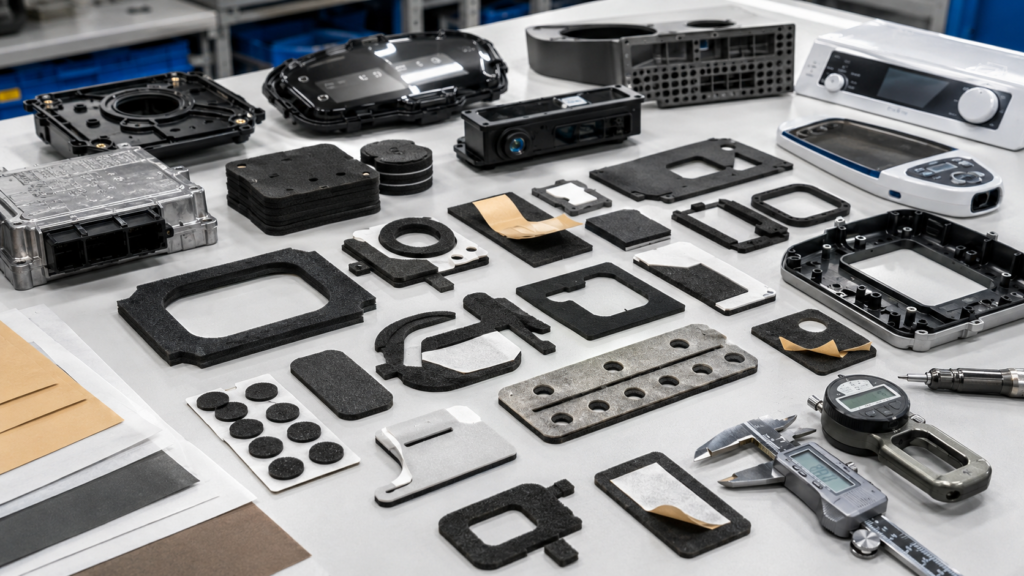
Foam tape works by combining a compressible foam carrier with adhesive on one or both sides to bond, seal, cushion, fill gaps, and reduce vibration between two surfaces. For OEM engineers and buyers, the key question is not only whether foam tape can stick. The real question is whether the foam type, adhesive system, thickness, compression, die-cut shape, liner, and assembly process can remain stable in mass production.
At Sanken, we help OEM customers convert foam tape into custom die cut gaskets, pads, strips, spacers, cushioning parts, sealing components, and adhesive-backed parts for automotive electronics, consumer electronics, medical devices, appliances, and industrial equipment.
Why This Topic Matters for OEM Manufacturing
Foam tape is widely used in OEM assembly because it solves several problems at the same time.
It can bond parts together.
It can fill uneven gaps.
It can absorb vibration.
It can reduce noise.
It can seal against dust, air, moisture, and light.
It can also make assembly faster because operators can peel the liner and apply the part directly.
This is why foam tape is common in automotive electronics housings, sensor modules, appliance panels, display assemblies, battery-related components, medical device parts, control panels, and industrial enclosures.
However, foam tape does not work well just because it has adhesive.
The foam carrier must compress correctly. The adhesive must match the bonding surface. The liner must release smoothly. The die cut shape must survive peeling and assembly. The final part must stay stable after heat, vibration, compression, humidity, and long-term use.
A foam tape part should be treated as a functional assembly component, not just a sticky strip.
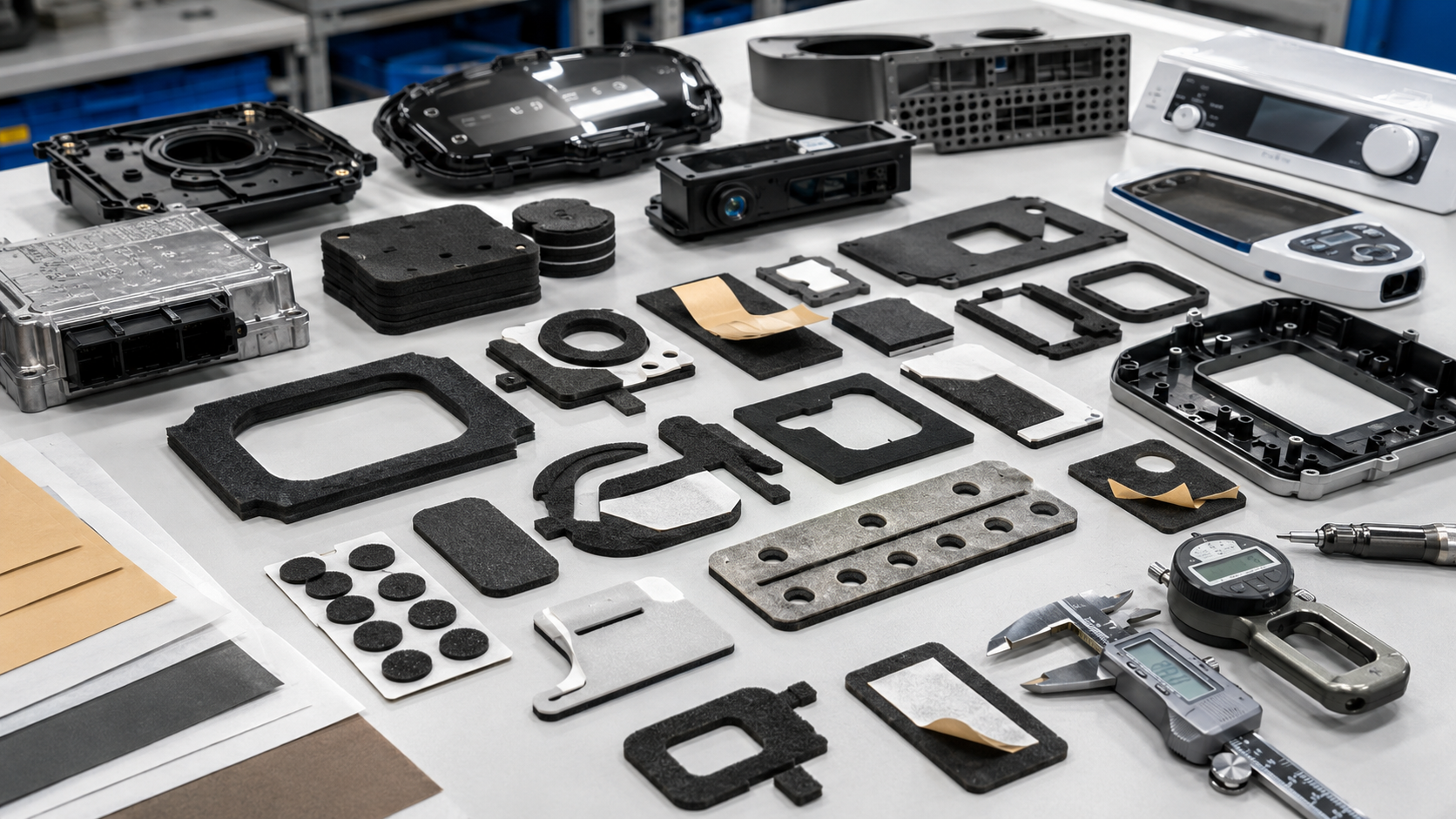
How Foam Tape Bonds and Seals
Foam tape usually has a foam carrier in the middle and pressure-sensitive adhesive on one or both sides.
When pressure is applied, the adhesive flows into small surface details and creates contact with the bonding surface. At the same time, the foam compresses and fills gaps between two parts.
This combination is what makes foam tape useful.
The adhesive provides bonding.
The foam provides thickness, compression, cushioning, and gap filling.
For sealing applications, foam tape works by compressing between two surfaces. The compressed foam creates contact pressure and blocks air, dust, vibration, or moisture paths.
For bonding applications, the adhesive must wet the surface properly. Clean, smooth, and compatible surfaces usually bond better than dusty, oily, rough, or low-surface-energy plastics.
For cushioning applications, the foam must absorb movement without collapsing too much.
This means foam tape performance depends on both adhesive behavior and foam behavior.
Common Foam Tape Structures
Foam tape can be made with different foam materials and adhesive systems. Each structure works differently in OEM applications.
| Foam Tape Type | Typical Function | Key Engineering Concern |
|---|---|---|
| PE foam tape | Sealing, cushioning, mounting | Thickness, density, compression |
| PU foam tape | Soft cushioning and dust sealing | Compression and recovery |
| EVA foam tape | Cushioning, spacing, general bonding | Edge stability and fit |
| EPDM foam tape | Automotive and outdoor sealing | Weather resistance and compression set |
| CR foam tape | Industrial sealing and vibration control | Cutting pressure and durability |
| Silicone foam tape | Heat-resistant sealing | Adhesive compatibility and rebound |
| Acrylic foam tape | Strong bonding and mounting | Surface match and temperature resistance |
There is no single best foam tape for every project.
A soft foam may seal small gaps well, but it may tear if the die cut shape is too narrow. A high-density foam may be easier to handle, but it may require more pressure during assembly. A heat-resistant foam may be necessary near motors, batteries, or lighting modules.
The right foam tape depends on application function, bonding surface, compression requirement, service environment, and production method.
Common Problems and Production Risks
Many foam tape failures happen because the project focuses only on adhesive strength or tape thickness. In real OEM production, foam tape must also cut cleanly, peel smoothly, align accurately, and survive compression.
| Problem | Common Cause | OEM Risk |
|---|---|---|
| Weak bonding | Wrong adhesive for the surface | Part lifting or falling off |
| Poor sealing | Wrong foam thickness or compression | Dust, air, water, or noise leakage |
| Foam tearing | Narrow die cut shape or soft foam | Scrap and assembly failure |
| Adhesive overflow | Soft adhesive or excessive cutting pressure | Contamination and poor appearance |
| Difficult liner release | Wrong liner or kiss cutting depth | Slow assembly and damaged parts |
| Tape stretching | Thin or soft foam structure | Poor positioning |
| Edge lifting | Low pressure or dirty surface | Long-term bonding failure |
| Compression loss | Wrong foam density or aging resistance | Sealing failure after use |
A foam tape sample may look acceptable before assembly. But once the customer peels it, applies it, compresses it, or exposes it to heat and vibration, hidden problems may appear.
This is why foam tape should be tested in real assembly conditions whenever possible.
What Buyers or Engineers Should Check First
Before ordering foam tape or custom die cut foam tape parts, engineers should confirm the real function and production conditions.
| Checklist Item | What to Confirm | Why It Matters |
|---|---|---|
| Main function | Bonding, sealing, cushioning, spacing, insulation | Defines foam and adhesive choice |
| Bonding surface | Plastic, metal, glass, rubber, coating, paint | Determines adhesive compatibility |
| Foam material | PE, PU, EVA, EPDM, CR, silicone, acrylic foam | Affects compression and durability |
| Thickness | Available gap and compression target | Controls sealing and fit |
| Density | Soft, medium, or firm foam | Affects strength and recovery |
| Adhesive type | Acrylic, rubber-based, silicone, specialty adhesive | Controls bonding and aging |
| Die cut design | Holes, slots, strips, tabs, narrow walls | Affects cutting and peeling |
| Liner type | Paper, film, easy-release liner | Affects assembly speed |
| Environment | Heat, humidity, vibration, chemicals, outdoor use | Confirms long-term reliability |
| Delivery format | Roll, sheet, liner-backed part, kit | Supports production efficiency |
A good foam tape selection should not start with price only.
It should start with application.
If the tape must seal an automotive electronic housing, compression and aging matter. If it must bond a display part, adhesive stability and clean edges matter. If it must reduce vibration inside an appliance, foam density and recovery matter.
Why Compression Matters in Foam Tape
Compression is one of the most important factors in foam tape performance.
Foam tape must be compressed enough to make contact with the surface, but not so much that the foam structure collapses.
If compression is too low, sealing may be weak.
If compression is too high, the foam may lose rebound and fail over time.
For gaskets and sealing strips, engineers should review the housing gap, foam thickness, target compression ratio, screw pressure, and long-term compression set.
For cushioning pads, the foam should absorb impact without becoming permanently flattened.
For vibration control, the foam must remain stable under repeated movement.
This is why foam tape thickness cannot be chosen randomly. It must match the final assembly gap and working condition.
How Adhesive Affects Foam Tape Performance
The adhesive layer controls bonding strength, surface contact, and long-term holding power.
Different surfaces need different adhesives.
Metal, glass, ABS, PC, PP, PE, painted surfaces, powder-coated parts, rubber, and textured plastics may all require different adhesive choices.
Low-surface-energy plastics such as PP or PE can be difficult to bond. Rough surfaces may need thicker foam tape to improve contact. High-temperature applications may need heat-resistant adhesive. Medical or clean applications may require special adhesive review.
Adhesive strength alone is not enough.
The adhesive must also die cut well, release from the liner smoothly, avoid overflow, and stay stable during packaging and assembly.
A very aggressive adhesive may bond strongly, but it may make peeling difficult. A soft adhesive may wet the surface well, but it may flow at the edge during cutting.
At Sanken, we review adhesive type, bonding surface, liner release, cutting pressure, and final assembly method before mass production.
How Foam Tape Is Die Cut Into Custom Parts
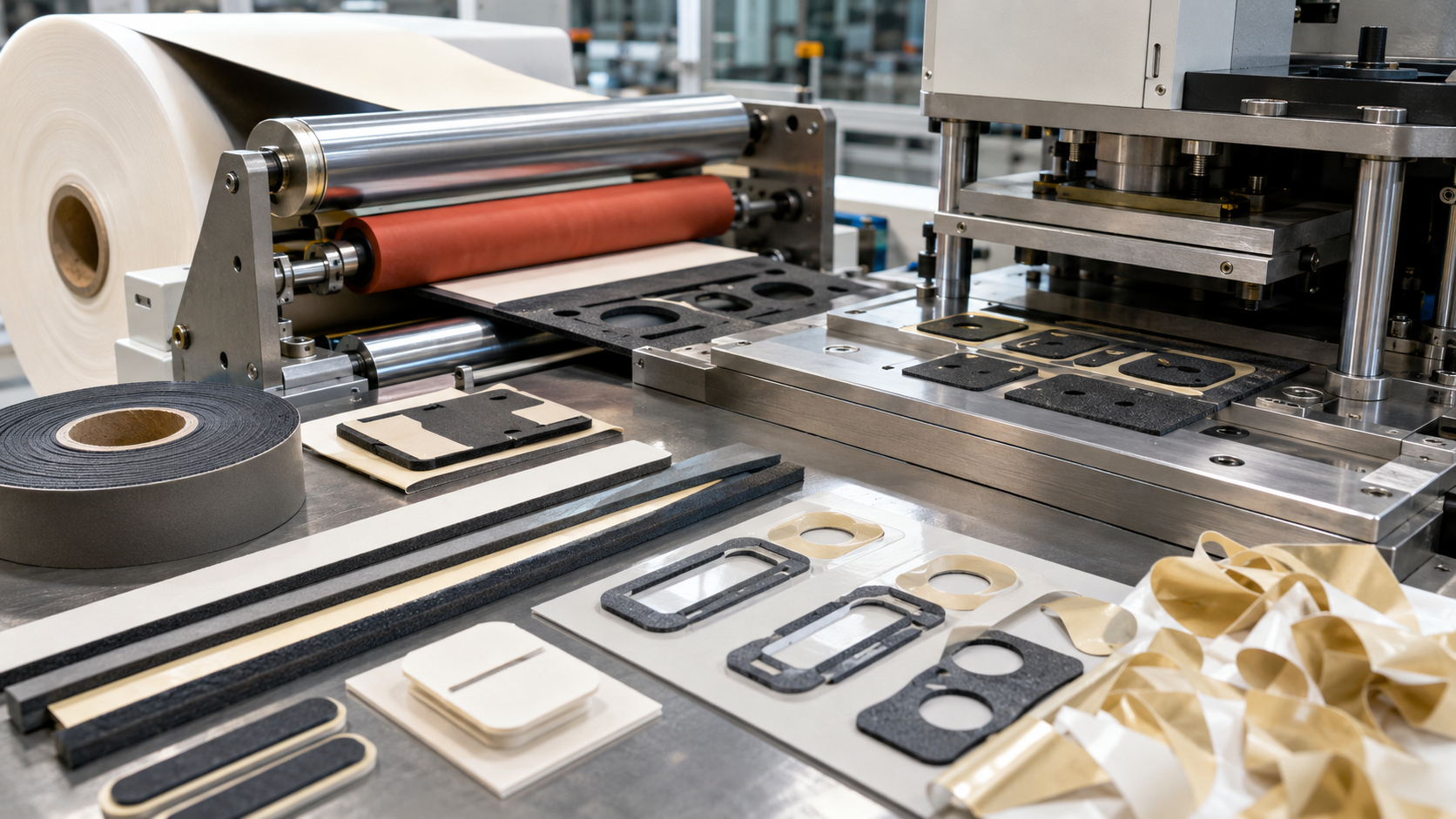
Foam tape is often die cut into custom shapes to improve assembly efficiency.
Common die cut foam tape parts include:
- Foam sealing gaskets
- Adhesive-backed foam pads
- Foam mounting tapes
- Dustproof foam strips
- Automotive electronics gaskets
- Cushioning spacers
- Appliance sealing strips
- Battery module foam pads
- Industrial enclosure seals
Die cutting allows the foam tape to match holes, edges, windows, screw positions, and housing shapes.
For adhesive-backed foam tape, kiss cutting is often used. The foam and adhesive are cut, but the release liner remains uncut. This allows the finished part to stay on the liner and be peeled during assembly.
If kiss cutting is too shallow, the part may not release cleanly.
If kiss cutting is too deep, the liner may tear.
Waste removal is also important. Narrow foam strips, small holes, soft foam, and complex gasket shapes can tear or deform if stripping is not controlled.
Material and Process Considerations
Foam tape converting must be matched to the material and final part design.
Soft foam needs careful cutting pressure because it can compress and distort.
Thick foam may need stronger tooling and stable support.
Narrow foam walls may tear during waste removal.
Adhesive-backed foam may stretch when peeled from the liner.
Foam tape supplied in rolls may need controlled tension and spacing.
Foam tape supplied in sheets may need stable layout and clean liner release.
Packaging also matters. Foam parts can deform if packed under pressure. Adhesive surfaces can become contaminated if the liner or stacking method is wrong.
A reliable foam tape supplier should review the entire process from material selection to final packaging.
How Sanken Helps Reduce Risk Before Mass Production
Sanken Manufacturing Co., Ltd. supports OEM customers with precision die cutting, adhesive lamination, foam and rubber components, PET insulation films, non-woven felt parts, sealing gaskets, automotive electronics components, and custom industrial parts.
For foam tape projects, we review foam material, density, thickness, adhesive type, bonding surface, liner release, die cut shape, tolerance, cutting depth, waste removal, and packaging format.
For automotive electronics, we help develop foam tape gaskets, dustproof seals, anti-rattle pads, sensor housing seals, and adhesive-backed cushioning parts.
For consumer electronics, we support foam tape spacers, protective pads, display-related parts, and small adhesive-backed components.
For medical, appliance, and industrial applications, we focus on clean cutting, stable release, compression performance, and assembly-friendly delivery.
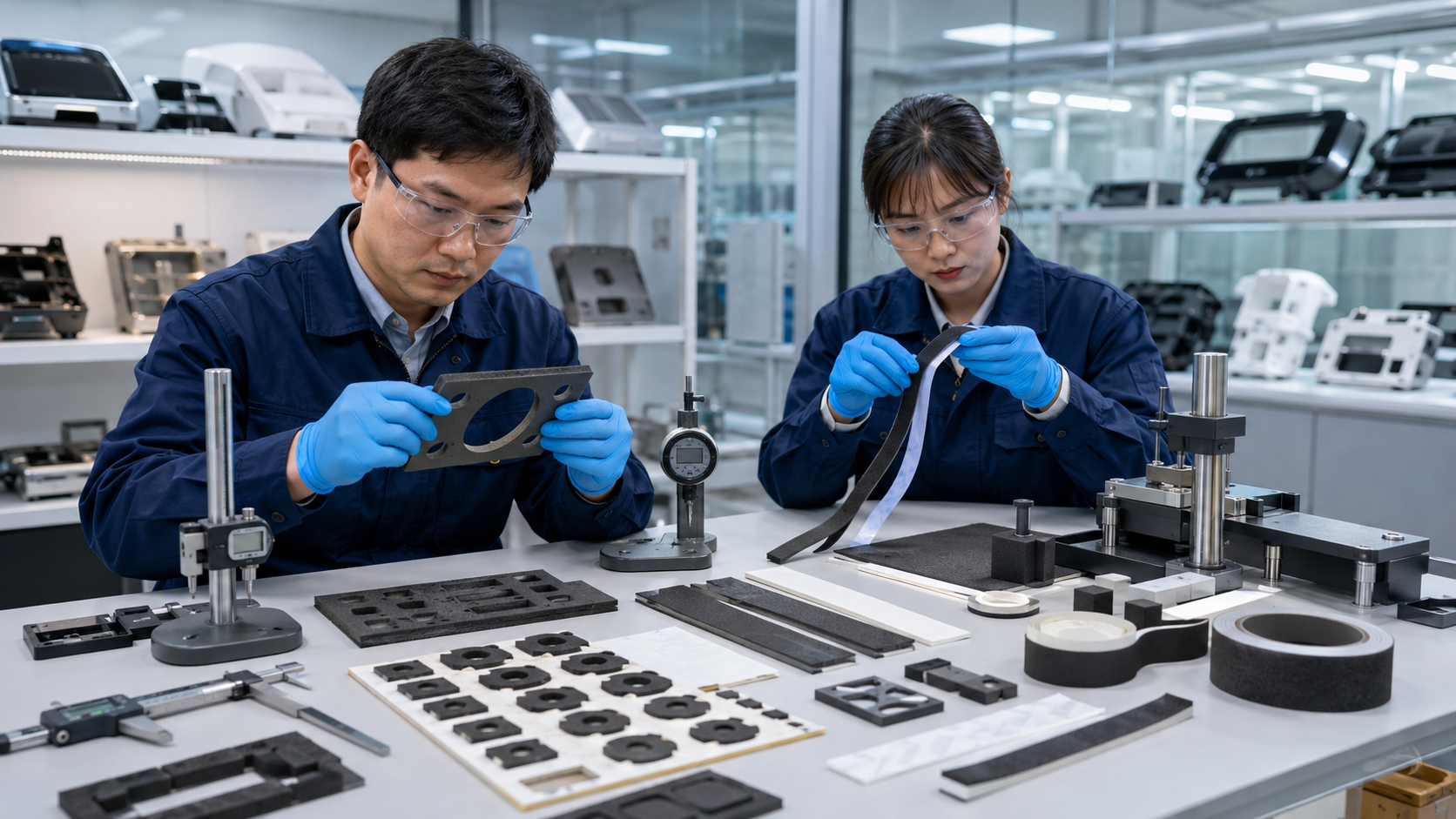
Our goal is to help customers reduce weak bonding, tearing, adhesive overflow, poor sealing, assembly delays, and unstable mass production.
A good foam tape component should be easy to peel, easy to place, stable after compression, and reliable in the final product.
Conclusion
Foam tape works by combining adhesive bonding with foam compression. This makes it useful for sealing, cushioning, spacing, vibration reduction, dust protection, and OEM assembly support. But reliable foam tape performance depends on the correct foam material, adhesive type, thickness, compression, die cut design, liner release, surface condition, and packaging.
At Sanken, we help OEM buyers and engineers convert foam tape into custom die cut components that are easier to assemble, more stable in production, and more reliable in final applications.