
What Is a Die Cut Machine?
Many manufacturers struggle with inconsistent cutting quality, excessive material waste, and slow production speeds. I’ve seen OEM companies lose valuable time and money because their suppliers lacked the right die cutting equipment or process control. Poor cutting accuracy can cause assembly failures, adhesive misalignment, and unstable product performance ([placeholder link]).
A die cut machine is a manufacturing system used to cut, shape, laminate, or convert materials into precise custom components. It uses specially designed dies and controlled pressure to process materials such as foam, rubber, adhesive tapes, films, non-woven fabrics, plastics, and insulation materials. Die cut machines are widely used in automotive, electronics, medical, aerospace, and industrial manufacturing because they provide fast, accurate, and repeatable production ([placeholder link]).
At Sanken, die cutting is not simply about cutting materials. We use advanced die cut machines to create high-performance functional components with tight tolerances and stable quality for OEM customers worldwide.
How Does a Die Cut Machine Work?
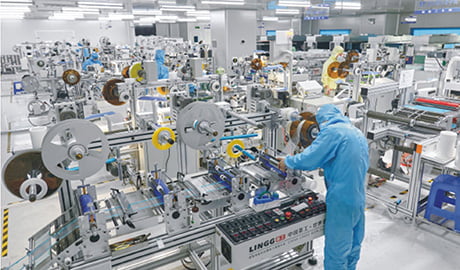
A die cut machine uses a custom-designed die tool to cut or convert material into a specific shape.
The material is placed into the machine, and controlled pressure is applied to achieve precise cutting.
Depending on the application, the process may also include:
- Laminating
- Kiss cutting
- Slitting
- Hole punching
- Embossing
- Multi-layer material bonding
- Waste removal
Modern die cut machines can process highly complex designs with excellent consistency and speed.
What Materials Can a Die Cut Machine Process?
One major advantage of die cutting technology is material versatility.
At Sanken, we process materials such as:
| Material | Common Applications |
|---|---|
| Foam | Cushioning and vibration reduction |
| Rubber | Waterproof sealing and gaskets |
| PET Film | Electrical insulation |
| Double-sided Tape | Bonding applications |
| Non-woven Fabric | Thermal and acoustic insulation |
| Conductive Materials | EMI shielding |
| Silicone | High-temperature sealing |
| Protective Film | Surface protection |
Each material behaves differently during cutting and converting.
That is why selecting the right machine, tooling, and process settings is critical ([placeholder link]).
Types of Die Cut Machines
1. Flatbed Die Cut Machines
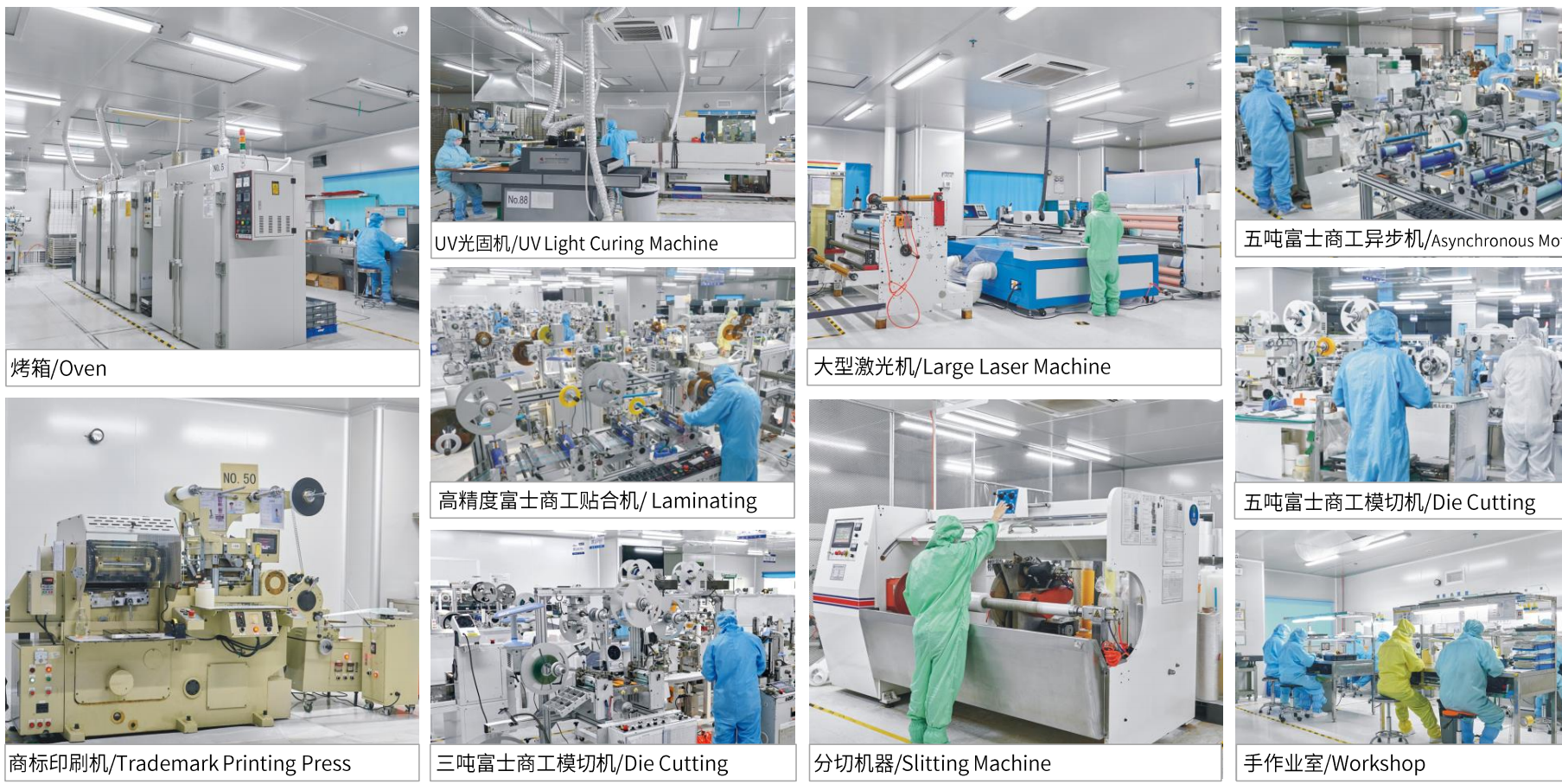
Flatbed systems use vertical pressure to cut materials.
They are commonly used for:
- Thick foam
- Rubber sheets
- Prototype development
- Lower-volume production
Flatbed die cutting offers flexibility for complex or thicker materials.
2. Rotary Die Cut Machines
Rotary systems use cylindrical rollers for continuous cutting.
They are ideal for:
- High-speed production
- Adhesive tapes
- Thin films
- Roll-to-roll converting
- Large-volume OEM manufacturing
Rotary die cut machines improve production efficiency and consistency significantly.
Why Are Die Cut Machines Important?
Precision and Consistency
Modern manufacturing requires extremely tight tolerances.
Poor cutting quality can lead to:
- Assembly gaps
- Adhesive overflow
- Material stretching
- Product failures
- Rework and delays
At Sanken, our precision die cutting systems help reduce these risks before products reach the customer.
Faster Production Speed
Manual cutting is slow and inconsistent.
Die cut machines allow manufacturers to produce thousands of identical components quickly and accurately.
Lower Material Waste
Optimized nesting and process control reduce scrap and improve material utilization.
This lowers production costs for OEM customers.
Multi-Layer Processing
Many modern products require laminated or multi-material assemblies.
Our systems integrate:
- Adhesive lamination
- Foam bonding
- Film converting
- Precision registration
This creates highly functional components in a single process.
Common Problems With Poor Die Cutting
We often help customers solve issues caused by low-quality suppliers, including:
- Rough edges
- Burrs and debris
- Misaligned layers
- Inconsistent adhesive performance
- Material deformation
- Poor dimensional stability
These problems may seem small, but they can stop production lines and increase rejection rates dramatically.
That is why process control matters more than simply owning a machine.
Why OEM Customers Choose Sanken
At Sanken, we combine advanced die cut machines with deep material expertise and strict quality control.
Our capabilities include:
- Precision die cutting
- Material R&D
- Adhesive laminating
- Hot pressing
- Spraying and gluing
- Silk screen printing
- Injection molding
- One-stop material conversion solutions
We support customers from prototype development to high-volume production.
Our manufacturing systems operate under:
- IATF 16949
- ISO 9001
- ISO 14001
This ensures stable quality and reliable performance for automotive, electronics, medical, and industrial OEM applications ([placeholder link]).
How to Choose the Right Die Cut Machine Supplier?
Before selecting a supplier, I always recommend checking:
- Can they maintain tight tolerances consistently?
- Do they understand material behavior during converting?
- Can they support multilayer assemblies?
- Do they provide engineering verification before production?
- Can they scale from prototypes to mass production?
Many suppliers can cut materials.
Very few can solve manufacturing problems before they become production failures.
That difference matters greatly for OEM manufacturers.
Conclusion
A die cut machine is a critical manufacturing system used to convert raw materials into precision functional components. At Sanken, we combine advanced die cutting technology, material expertise, and strict quality control to help OEM customers achieve faster production, lower costs, and more reliable product performance.