
What Is Mineral Fiber Insulation?
Controlling heat, noise, and fire risks is a major challenge in buildings, industrial facilities, transportation systems, and manufacturing equipment. Without proper insulation, energy costs increase, equipment performance declines, and workplace comfort suffers.
Mineral fiber insulation is a thermal and acoustic insulation material made from natural minerals such as basalt rock, slag, glass, or other inorganic materials. It is manufactured into fibers that trap air pockets, reducing heat transfer and absorbing sound. Mineral fiber insulation is widely used in construction, HVAC systems, industrial equipment, automotive applications, and fire protection systems due to its excellent thermal resistance, fire resistance, and sound absorption properties.
Because it combines thermal insulation with acoustic performance, mineral fiber insulation remains one of the most widely used insulation materials worldwide.
Why Is Mineral Fiber Insulation Important?
Manufacturers and builders use mineral fiber insulation to:
- Reduce heat loss
- Improve energy efficiency
- Control noise
- Enhance fire protection
- Improve occupant comfort
- Protect equipment from temperature fluctuations
Its unique fiber structure allows it to perform multiple insulation functions simultaneously.
Theme: Mineral Fiber Insulation Materials
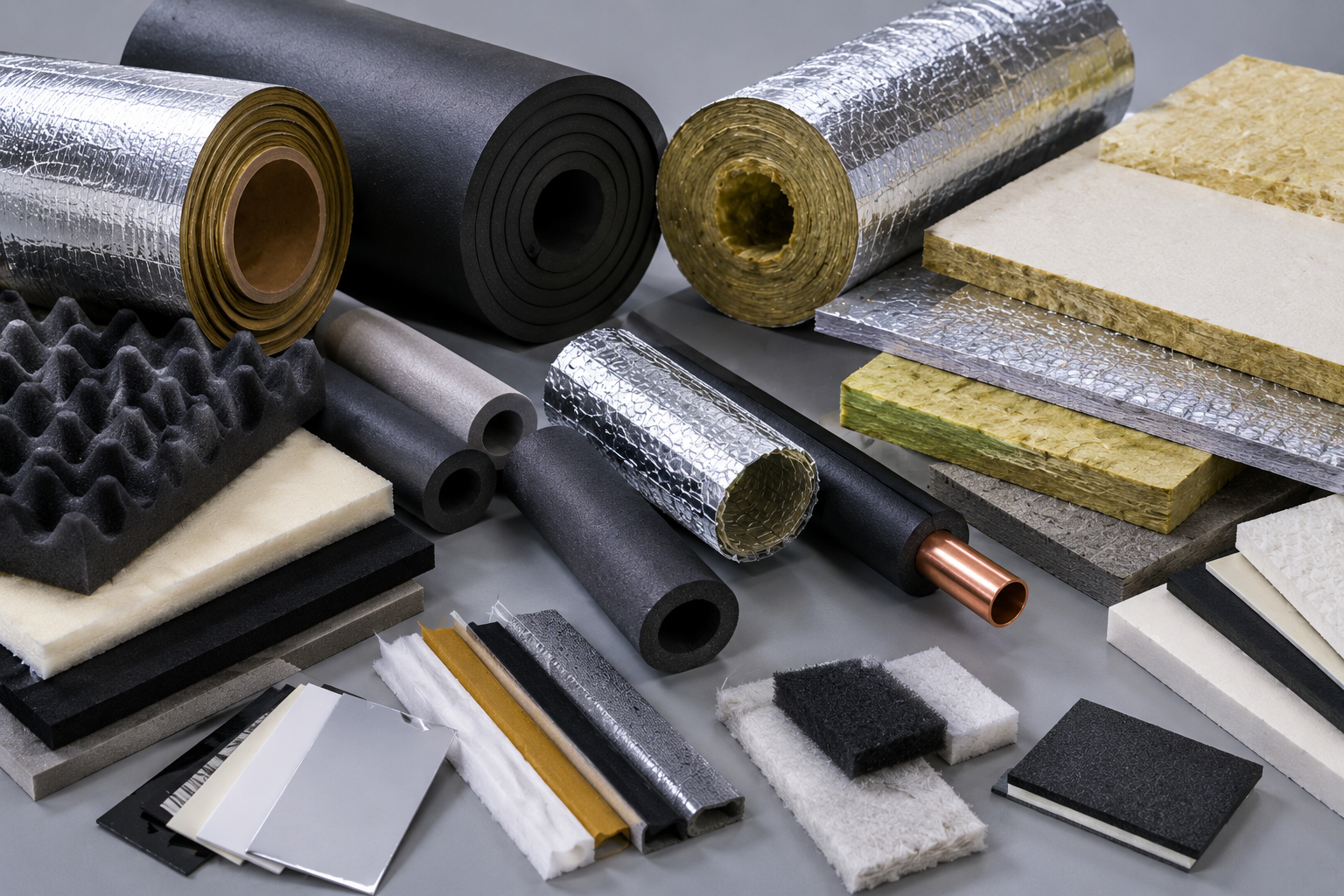
What Is Mineral Fiber Made Of?
Mineral fiber insulation is typically produced from:
- Basalt rock
- Limestone
- Industrial slag
- Recycled glass
- Natural minerals
These raw materials are melted at extremely high temperatures and spun into fine fibers.
The resulting structure contains millions of microscopic air pockets that significantly reduce heat transfer.
Types of Mineral Fiber Insulation
Mineral Wool
Mineral wool is made primarily from basalt rock and industrial slag.
Characteristics:
- Excellent thermal insulation
- Fire resistant
- Strong sound absorption
- Moisture resistant
Common applications:
- Commercial buildings
- Industrial equipment
- HVAC systems
- Fire-rated assemblies
Glass Wool (Fiberglass)
Glass wool is produced from recycled glass and silica sand.
Characteristics:
- Lightweight
- Cost-effective
- Good thermal performance
- Easy installation
Common applications:
- Residential construction
- Ceiling systems
- Air ducts
- Appliance insulation
Ceramic Fiber
Ceramic fiber is designed for extreme temperature environments.
Characteristics:
- Outstanding heat resistance
- Lightweight
- Low thermal conductivity
Common applications:
- Furnaces
- Kilns
- Industrial heating equipment
- Aerospace systems
How Does Mineral Fiber Insulation Work?
Mineral fiber insulation reduces heat transfer through several mechanisms.
Air Entrapment
The fiber network traps air, which is a poor conductor of heat.
This significantly reduces thermal conductivity.
Heat Reflection and Absorption
The fiber structure disrupts heat flow and slows temperature transfer.
Sound Absorption
The porous structure absorbs sound waves and reduces noise transmission.
This makes mineral fiber effective for both thermal and acoustic insulation.
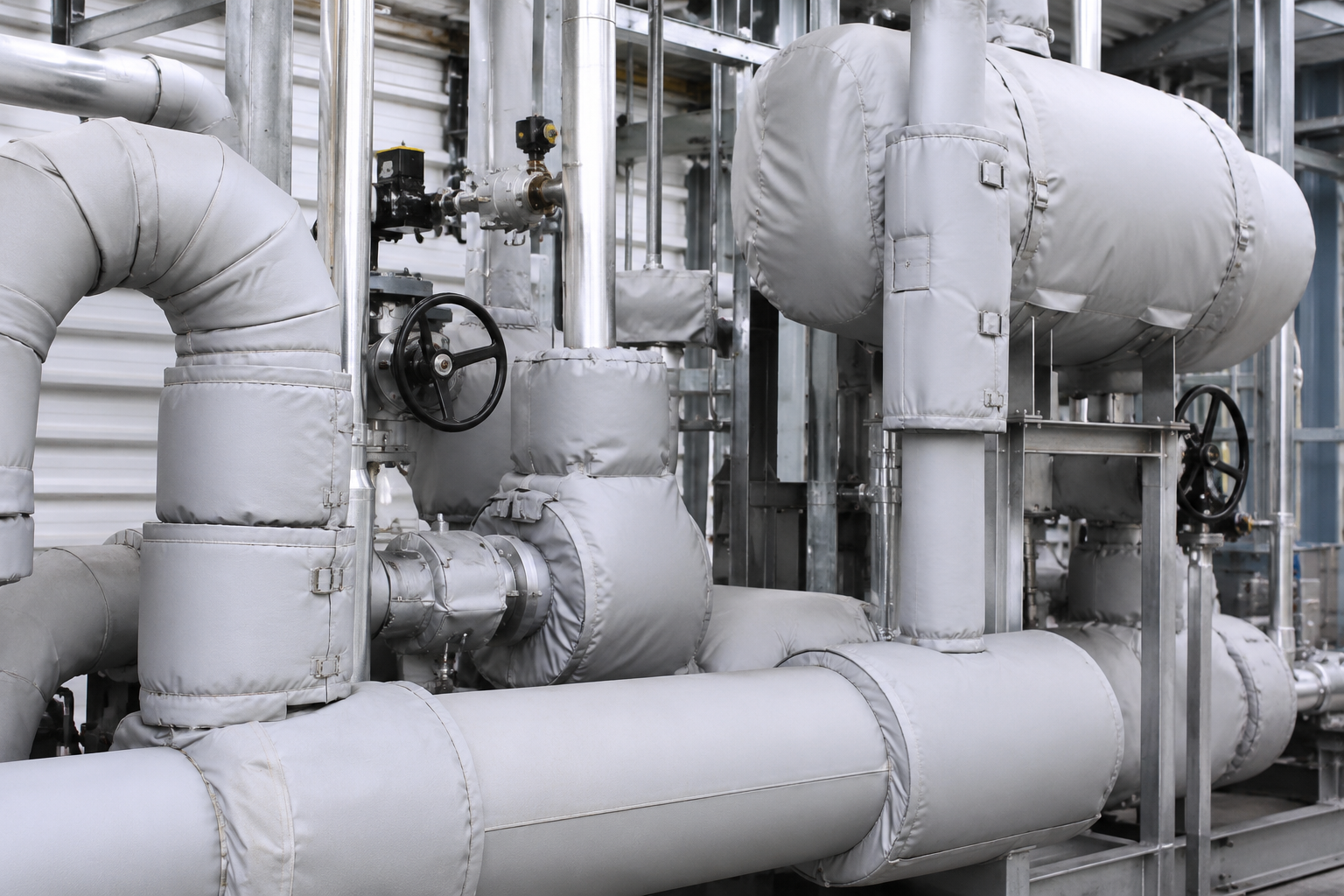
Theme: Industrial Thermal Insulation Systems
Advantages of Mineral Fiber Insulation
Excellent Thermal Performance
Mineral fiber helps maintain stable temperatures and reduce energy consumption.
Fire Resistance
Unlike many organic insulation materials, mineral fiber is non-combustible.
Many products can withstand temperatures above:
- 600°C
- 800°C
- 1000°C
depending on the material type.
Acoustic Insulation
Mineral fiber effectively absorbs sound and vibration.
This is particularly valuable in:
- Buildings
- Automotive applications
- Industrial facilities
Long Service Life
Mineral fiber insulation maintains performance over many years with minimal degradation.
Environmental Benefits
Many mineral fiber products contain recycled materials and support energy-saving initiatives.
Common Applications of Mineral Fiber Insulation
Construction Industry
Used in:
- Walls
- Ceilings
- Roof systems
- Partition walls
HVAC Systems
Used for:
- Air ducts
- Pipe insulation
- Mechanical rooms
Industrial Equipment
Applied to:
- Boilers
- Ovens
- Heat exchangers
- Process equipment
Automotive Industry
Mineral fiber materials are used in:
- Engine insulation
- Acoustic barriers
- NVH control systems
These applications help reduce cabin noise and improve passenger comfort.
Mineral Fiber vs Other Insulation Materials
| Material | Thermal Performance | Fire Resistance | Sound Absorption |
|---|---|---|---|
| Mineral Fiber | Excellent | Excellent | Excellent |
| Fiberglass | Good | Good | Good |
| PUF | Excellent | Moderate | Moderate |
| Rubber Foam | Good | Moderate | Moderate |
| Aerogel | Outstanding | Excellent | Limited |
Mineral fiber often provides the best balance of thermal, acoustic, and fire-resistant properties.
How Sanken Manufacturing Supports Insulation Applications
Dongguan Sanken Electronics Manufacturing Co., Ltd. provides custom insulation solutions for OEM manufacturers worldwide.
Our capabilities include:
- Precision die cutting
- Non-woven material converting
- Thermal insulation assemblies
- Foam converting
- Adhesive laminating
- Rubber sealing products
Key Advantages
- OEM and ODM customization
- ISO 9001 certified quality management
- RoHS and REACH compliant materials
- Domestic and overseas production bases
- Cleanroom precision manufacturing
- Tool development from drawings or samples
We support automotive NVH insulation systems, consumer electronics thermal management solutions, and custom industrial insulation applications.
Theme: Custom OEM Insulation Solutions
Featured Snippet Summary
Mineral fiber insulation is a thermal and acoustic insulation material made from natural minerals such as basalt, slag, or glass. It reduces heat transfer, absorbs sound, and provides excellent fire resistance, making it widely used in buildings, HVAC systems, industrial equipment, and automotive applications.
Conclusion
Mineral fiber insulation is one of the most versatile insulation materials available today. Its combination of thermal performance, sound absorption, fire resistance, and durability makes it suitable for a wide range of applications.
For OEM manufacturers seeking custom thermal insulation solutions, mineral fiber materials can be combined with precision die cutting and converting processes to create high-performance components that improve energy efficiency, safety, and product reliability.