

Why Do Display Film Components Require Clean Room Production?
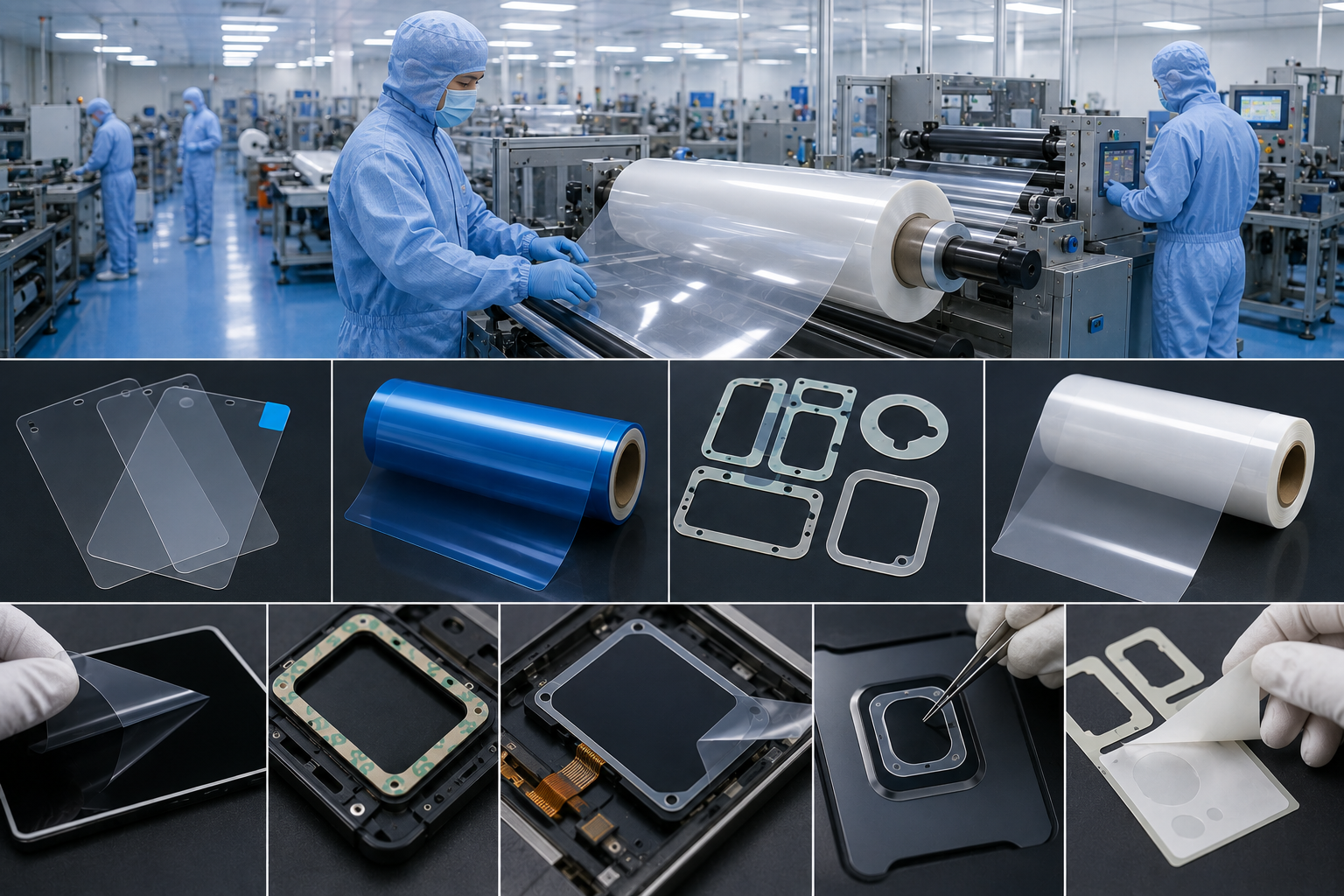
Display film components require clean room production because even tiny particles, fibers, oil marks, static dust, or adhesive contamination can become visible defects after lamination and final screen assembly. In display products, a small speck of dust is not a small problem. It can become a bright spot, black dot, bubble, scratch, pressure mark, or rejected module.
For OEM buyers, the real question is not only “Does the supplier have a clean room?” The better question is: “Can the supplier control contamination from material storage to die cutting, lamination, waste removal, inspection, and packaging?”
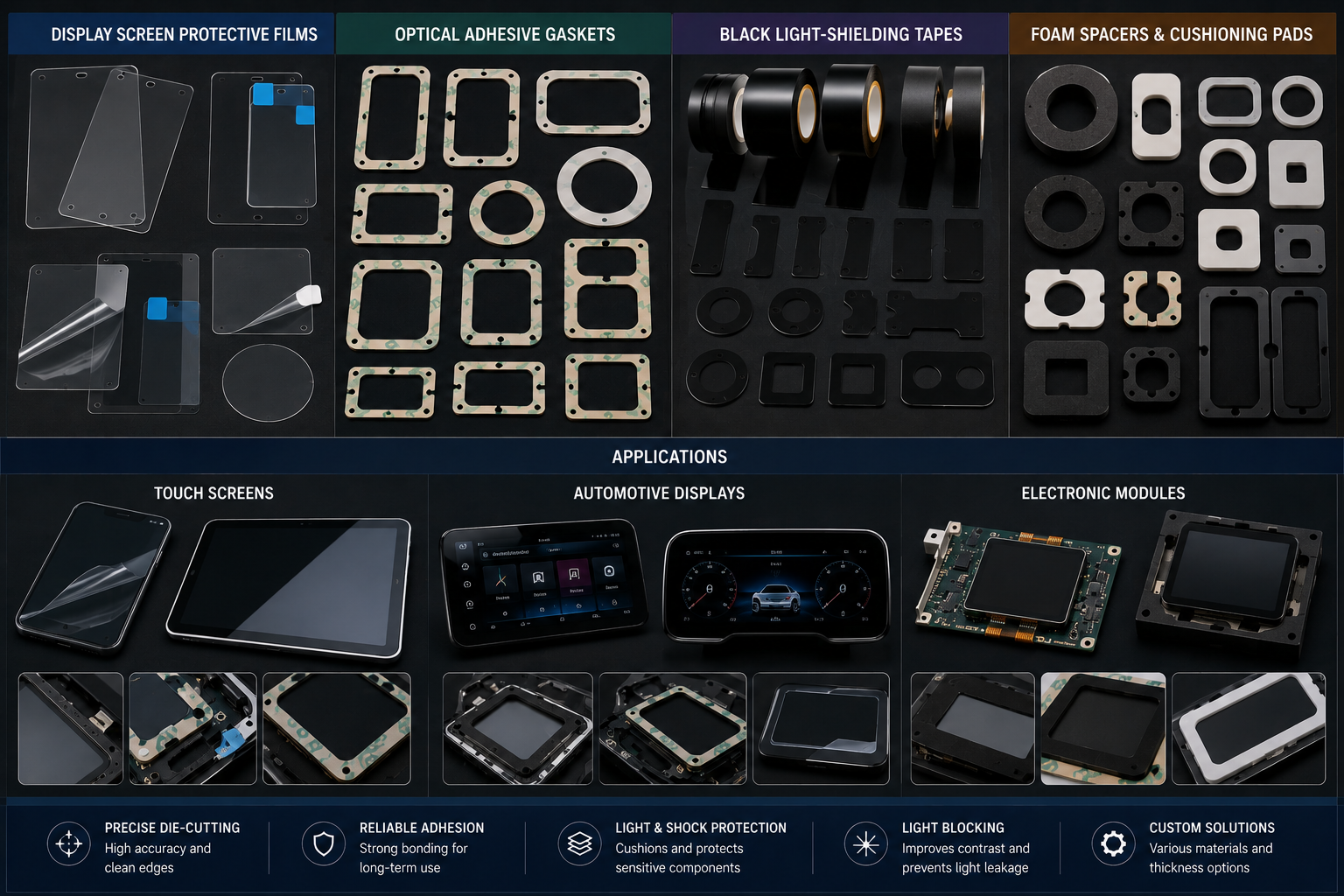
Display film components are often used in touch screens, automotive displays, industrial panels, medical screens, camera modules, wearable displays, and consumer electronics. These parts may include PET protective films, optical adhesive layers, TPU films, black light-shielding tapes, foam spacers, insulation films, release liners, and multilayer display auxiliary materials.
If these components are produced in an uncontrolled environment, the risk does not appear only at the supplier’s factory. It appears later on the customer’s assembly line, where rework becomes expensive and delivery schedules become difficult to protect.
The Real Problem: Dust Becomes a Screen Defect
A display module is a layered structure.
It may include:
- Cover glass
- Optical adhesive
- Protective film
- Touch sensor layer
- Display film
- Spacer film
- Black tape
- Foam gasket
- Insulation film
- Release liner
- Backlight support material
Each layer must stay clean and flat.
If dust enters between layers, it may be trapped permanently after lamination. The defect may not be easy to remove because the particle is sealed inside the assembly.
This can cause:
- Bubbles around the particle
- Visible dots on the display
- Poor optical clarity
- Uneven bonding
- Local pressure marks
- Touch panel defects
- Customer rejection
For display manufacturers, contamination is not just a quality issue. It directly affects yield, cost, and delivery.
Clean Room Production Controls More Than Air
Many buyers think clean room production only means “less dust in the air.”
That is only one part of the answer.
A good clean production system should also control:
| Risk Area | Why It Matters |
|---|---|
| Airborne particles | Prevents dust from landing on film surfaces |
| Static electricity | Reduces dust attraction during peeling and handling |
| Operator handling | Prevents fingerprints, fibers, and oil contamination |
| Material storage | Keeps rolls and sheets clean before converting |
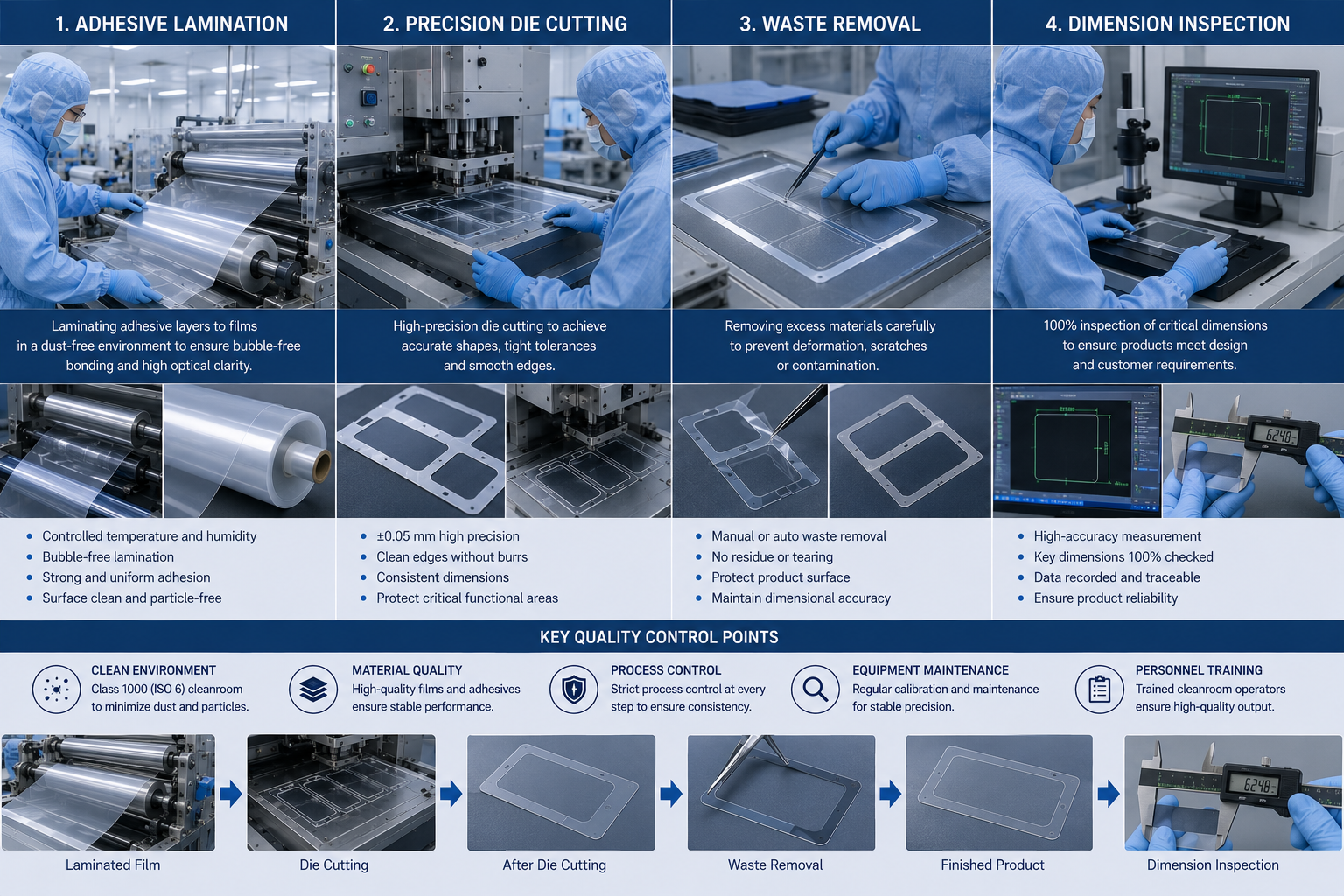
| Die-cutting process | Reduces particles from cutting edges and waste removal |
| Lamination process | Prevents trapped air, dust, and wrinkles |
| Packaging | Protects finished parts before customer assembly |
| Inspection | Detects defects before shipment |
For display film components, cleanliness must be controlled across the full process. If only one step is clean but another step is not, the final part can still fail.
Why Static Electricity Is a Hidden Enemy
Display films easily generate static electricity during unwinding, liner peeling, slitting, lamination, die cutting, and waste stripping.
Static attracts dust.
This is especially risky for:
- PET protective films
- TPU films
- Optical adhesive films
- Release liners
- Black light-shielding tapes
- Thin insulation films
A film may be clean when it enters production, but static can attract particles during processing.
Clean room production often works together with anti-static measures, such as ionized air, anti-static packaging, controlled humidity, and proper grounding.
Without static control, dust can return even when the room looks clean.
Why Adhesive Films Need Clean Processing
Adhesive layers are very sensitive to contamination.
Once dust, fiber, or oil touches the adhesive surface, the problem becomes difficult to fix.
Contaminated adhesive may cause:
- Bubble formation
- Weak bonding
- Edge lifting
- Poor wet-out
- Visible spots
- Delamination after aging
- Assembly rejection
For display assembly, adhesive performance depends on surface cleanliness.
A small particle on the adhesive may create a raised point. During lamination, air may stay around that point and form a visible bubble.
This is why optical adhesive materials and display bonding components should be converted and packed in a controlled environment.
Poor Cleanliness Can Damage Optical Performance
Display film components often affect how light passes through the screen.
Contamination can create:
- Haze
- Light scattering
- Bright spots
- Dark spots
- Reflection defects
- Uneven display appearance
- Reduced transparency
- Visual distortion
This is especially important for automotive displays, medical screens, and high-end consumer electronics, where visual quality must remain stable under different lighting conditions.
A display part may be small, but if it sits in the optical path, it must be treated as a critical component.
Clean Room Production Helps Reduce Bubbles
Bubbles are one of the most common display film problems.
They can be caused by:
- Dust particles
- Uneven adhesive wet-out
- Moisture
- Poor lamination pressure
- Scratched film surfaces
- Damaged release liners
- Edge contamination
- Static dust attraction
Clean room production helps reduce one major cause: contamination.
But bubble prevention also requires correct material structure, lamination pressure, release liner quality, adhesive selection, and die-cutting accuracy.
A clean room is not a magic solution by itself. It must be combined with process control.
Why Edge Quality Matters in Clean Production
During die cutting, material edges can generate debris.
Different materials create different risks:
| Material | Possible Cleanliness Risk |
|---|---|
| PET film | Burrs, fine particles, edge dust |
| TPU film | Stretching, edge deformation |
| Foam spacer | Cell tearing, particles |
| Non-woven layer | Fiber shedding |
| Adhesive tape | Adhesive overflow or residue |
| Release liner | Paper dust or coating transfer |
| Black tape | Edge debris and light-blocking defects |
If edge debris remains on the part, it may enter the display module during assembly.
This is why clean die cutting requires sharp tooling, controlled pressure, smooth waste removal, and proper inspection.
Clean Packaging Is Just as Important as Clean Production
A part can be produced cleanly and still become contaminated during packaging or transport.
Finished display film components should be protected from:
- Dust
- Static
- Moisture
- Scratches
- Liner damage
- Deformation
- Edge contamination
Packaging format should match how the customer uses the parts.
For example, adhesive-backed films may need stable release liners. Small die-cut spacers may need sheet format for easier handling. Optical films may require protective layers and anti-static packaging.
If packaging is poorly designed, the customer may receive parts that look clean but fail during peeling or placement.
What Happens If Display Film Components Are Not Made Cleanly?
Poor cleanliness can create direct production losses.
Common results include:
- Higher inspection workload
- More rejected display modules
- Slower assembly speed
- Extra cleaning steps
- Rework cost
- Delayed shipment
- Customer complaints
- Reduced trust in supplier quality
For many display manufacturers, the biggest problem is that defects appear late.
A film part may pass basic incoming inspection, but after lamination, bonding, aging, or final screen testing, defects become visible.
Late-stage failure is expensive because more materials, labor, and production time have already been invested.
Which Display Film Components Need Clean Room Production?
Clean room production is especially important for parts that contact optical, adhesive, or display surfaces.
These include:
- Optical protective films
- PET display films
- TPU protective films
- Optical adhesive components
- Camera window films
- Display spacer films
- Black light-shielding tapes
- Adhesive-backed foam spacers
- Insulation films near display modules
- Release-liner-based adhesive parts
Some non-optical parts may not need the same clean level. But if the part enters a display module or touches a sensitive surface, cleanliness should be reviewed early.
What Buyers Should Ask Before Choosing a Supplier
Before ordering display film components, buyers should ask:
- What cleanliness level does the part require?
- Does the part contact an optical or adhesive surface?
- Is static control needed during converting?
- What material creates the highest particle risk?
- Does the part require lamination or kiss cutting?
- How is waste removed after die cutting?
- How are parts inspected for particles, scratches, and bubbles?
- How are finished parts packaged?
- Will the parts be used in manual or automated assembly?
- Can the supplier support samples under real assembly conditions?
These questions help buyers avoid choosing a supplier only by price.
For display film components, low cost is not useful if the parts reduce assembly yield.
How Sanken Helps Reduce Display Film Contamination Risk
For display film and optical component projects, Sanken Manufacturing focuses on the risks that affect customer assembly.
The key is not only cutting the right shape. The key is preventing dust, bubbles, edge defects, adhesive problems, and dimensional instability before they reach the customer’s production line.
Sanken can support:
- Optical film converting
- PET and TPU film die cutting
- Protective film processing
- Adhesive lamination
- Kiss cutting
- Foam spacer die cutting
- Black light-shielding material converting
- Insulation film cutting
- Waste stripping control
- Dimensional inspection
- Prototype and mass production support
For buyers, this means fewer hidden risks, fewer late-stage display defects, and more stable assembly performance.
Conclusion
Display film components require clean room production because dust, fibers, static particles, fingerprints, adhesive contamination, and edge debris can directly affect screen performance. These defects may cause bubbles, scratches, light leakage, poor bonding, optical distortion, touch failure, and display rejection.
For OEM buyers, clean room production should not be viewed as an optional upgrade. It is a risk-control step for sensitive display assemblies. The right supplier should control cleanliness across material handling, lamination, die cutting, waste stripping, inspection, and packaging.
When display film components are produced cleanly and consistently, customers can improve assembly yield, reduce rework, and protect final screen quality.