
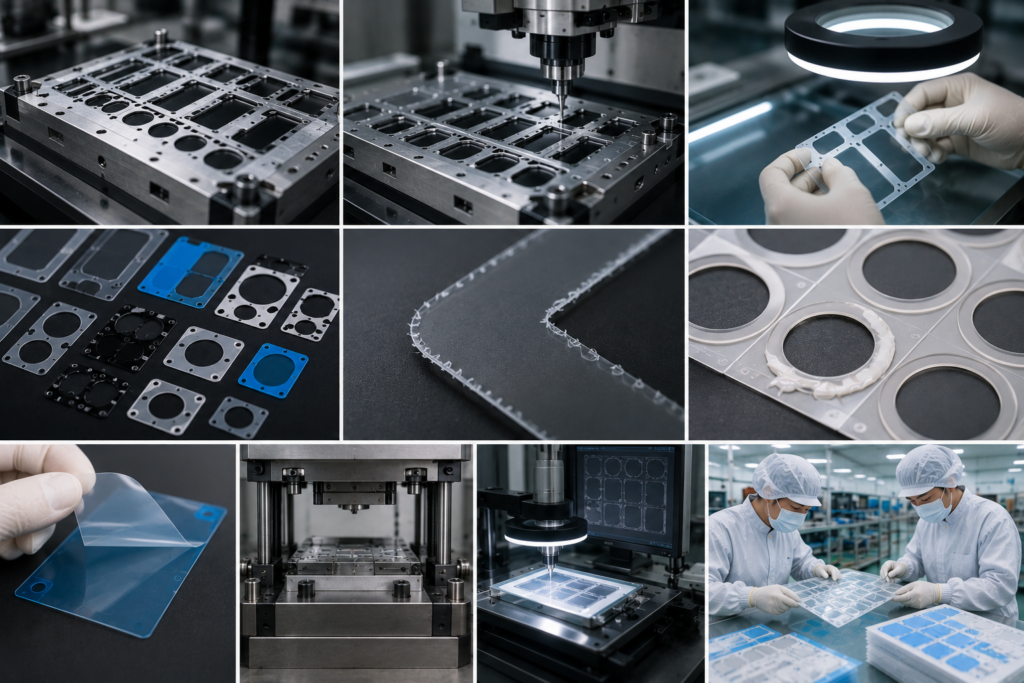
Many manufacturers underestimate how important a die tool is in modern production. I’ve seen OEM projects suffer from poor fitting parts, unstable adhesive performance, rough edges, and excessive material waste simply because the die tool was poorly designed or incorrectly matched to the material. In precision manufacturing, the die tool directly affects product quality, production speed, and long-term reliability .
A die tool is used to cut, shape, punch, form, or convert materials into precise custom components during manufacturing. It is one of the most important tools in die cutting and material converting processes. Die tools are widely used for processing foam, rubber, adhesive tapes, films, plastics, non-woven materials, insulation materials, and metal foils in industries such as automotive, electronics, medical, aerospace, and industrial manufacturing .
At Sanken, we use advanced die tooling systems to help OEM customers achieve tighter tolerances, cleaner cuts, faster production, and more stable product performance.
How Does a Die Tool Work?
A die tool works by applying controlled pressure to a material.
The cutting edge follows a custom-designed shape and converts raw material into a finished functional part.
Depending on the application, the tool may perform:
- Full cutting
- Kiss cutting
- Hole punching
- Embossing
- Slitting
- Laminating
- Multi-layer material converting
Modern die tooling systems can process highly complex shapes repeatedly with excellent consistency.
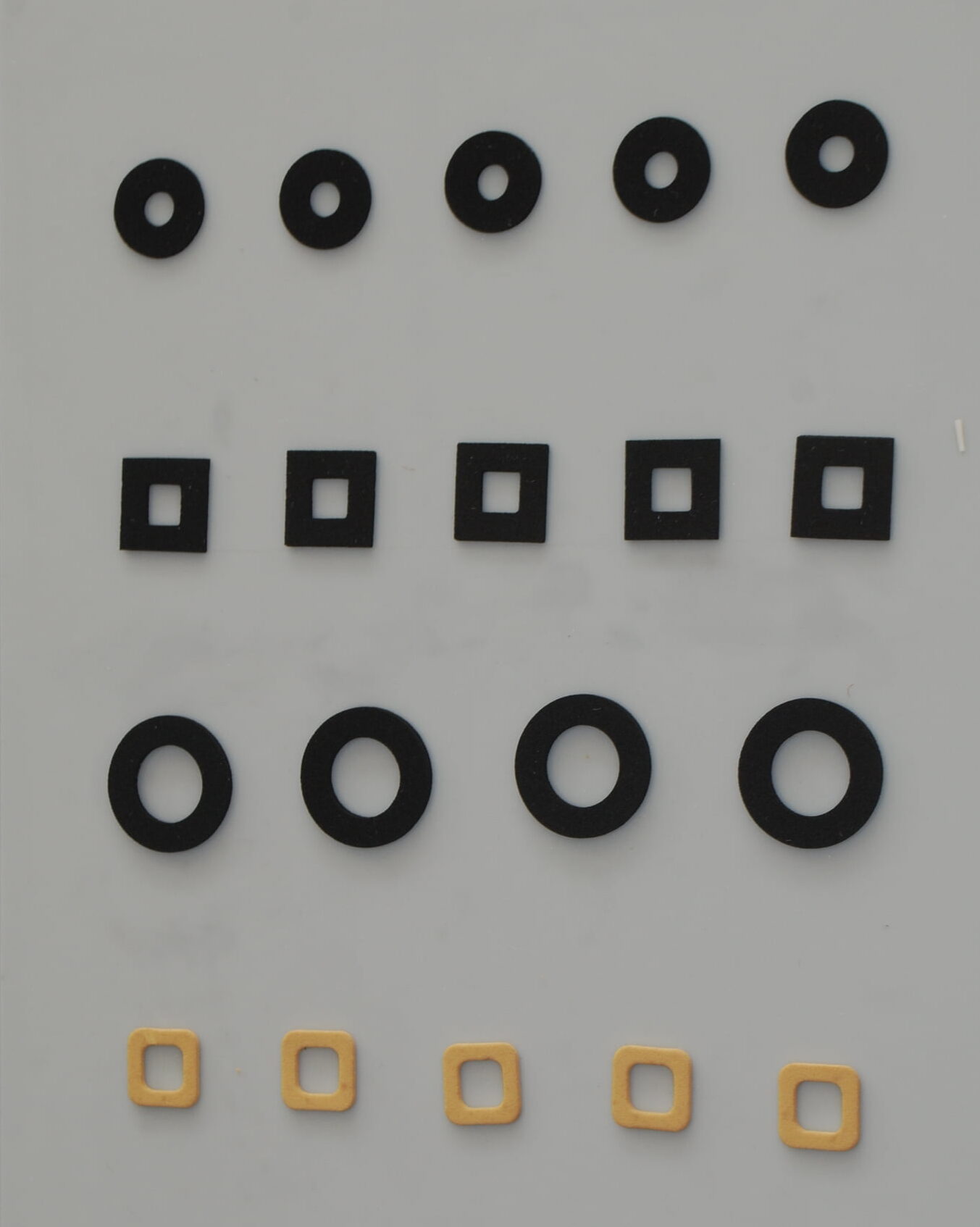
What Materials Can a Die Tool Process?
At Sanken, we process a wide range of industrial materials.
| Material Type | Common Applications |
|---|---|
| Foam | Cushioning and vibration control |
| Rubber | Waterproof sealing and gaskets |
| PET Film | Electrical insulation |
| Double-sided Tape | Bonding applications |
| Non-woven Fabric | Acoustic and thermal insulation |
| Conductive Materials | EMI shielding |
| Silicone | High-temperature sealing |
| Protective Films | Surface protection |
Different materials require different cutting pressures, tooling designs, and process controls.
That is why material expertise matters just as much as the cutting equipment itself.
Why Is Die Tool Precision Important?
Poor die tooling creates major production problems.
We often help OEM customers solve issues such as:
- Rough cutting edges
- Adhesive overflow
- Material stretching
- Layer misalignment
- Burrs and contamination
- Dimensional instability
Even tiny tolerance errors can create assembly failures in automotive or electronics production.
At Sanken, we optimize tooling design and process control to reduce these risks before mass production begins.
Types of Die Tools Used in Manufacturing
1. Flatbed Die Tools
Flatbed dies press vertically onto materials.
They are commonly used for:
- Thick foam
- Rubber sheets
- Short production runs
- Prototype development
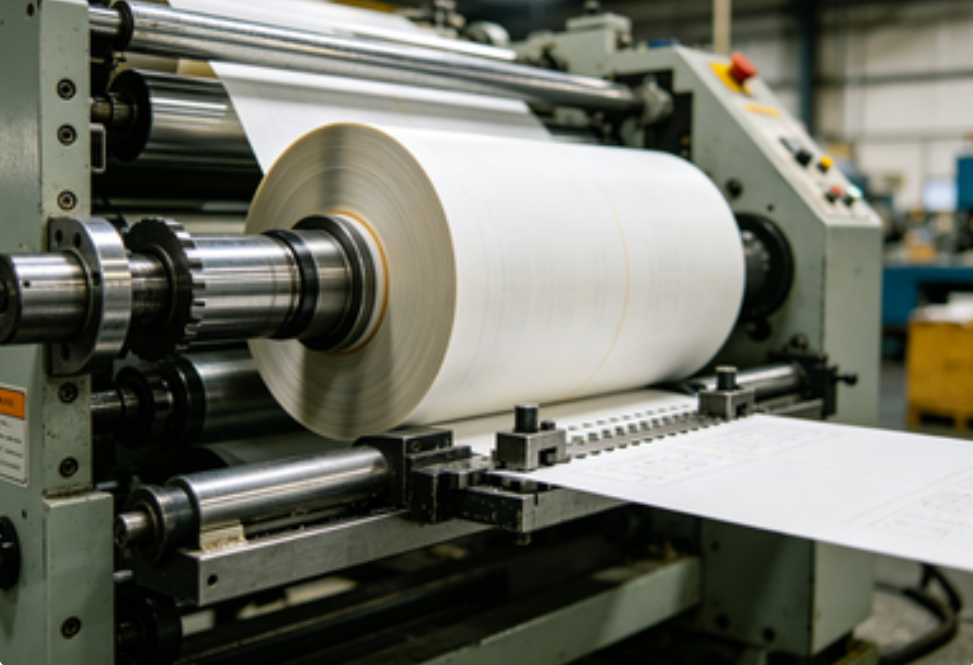
2. Rotary Die Tools
Rotary dies operate continuously using cylindrical rollers.
They are ideal for:
- High-volume production
- Adhesive tapes
- Thin films
- Labels
- Roll-to-roll converting
Rotary die cutting allows faster production speeds and better consistency for large OEM projects .
What Industries Use Die Tools?
Die tools are essential across many industries.
Automotive Industry
- NVH foam parts
- Interior sealing systems
- Thermal insulation materials
- Waterproof gaskets
Electronics Industry
- EMI shielding
- Thermal interface materials
- Electrical insulation films
- Adhesive bonding components
Medical Industry
- Medical adhesive tapes
- Foam cushioning materials
- Disposable device components
Industrial Equipment
- Protective pads
- Vibration reduction materials
- Acoustic insulation components
Every industry has different tolerance requirements and material challenges.
That is why engineering support is critical.
Why OEM Customers Choose Sanken
At Sanken, we are not simply a die cutting factory.
We provide complete material converting solutions including:
- Precision die cutting
- Material R&D
- Adhesive laminating
- Hot pressing
- Spraying and gluing
- Silk screen printing
- Injection molding
- One-stop multi-process manufacturing
We help customers move from prototype development to stable mass production efficiently.
Our production systems are certified under:
- IATF 16949
- ISO 9001
- ISO 14001
This ensures stable quality, consistent tolerances, and reliable large-scale production performance .
How to Choose the Right Die Tool Supplier?
Before selecting a supplier, I always recommend checking:
- Can they design tooling based on material behavior?
- Can they maintain tight tolerances consistently?
- Do they support rapid prototyping and verification?
- Can they integrate multi-layer material converting?
- Do they understand OEM production requirements?
Many suppliers only focus on cutting.
Very few understand how tooling affects final product reliability and assembly performance.
That difference is extremely important for OEM manufacturers.
Conclusion
A die tool is used to cut, shape, and convert industrial materials into precision functional components. At Sanken, we combine advanced die tooling, material expertise, and strict quality control to help OEM customers achieve faster production, lower failure rates, and more reliable product performance.