
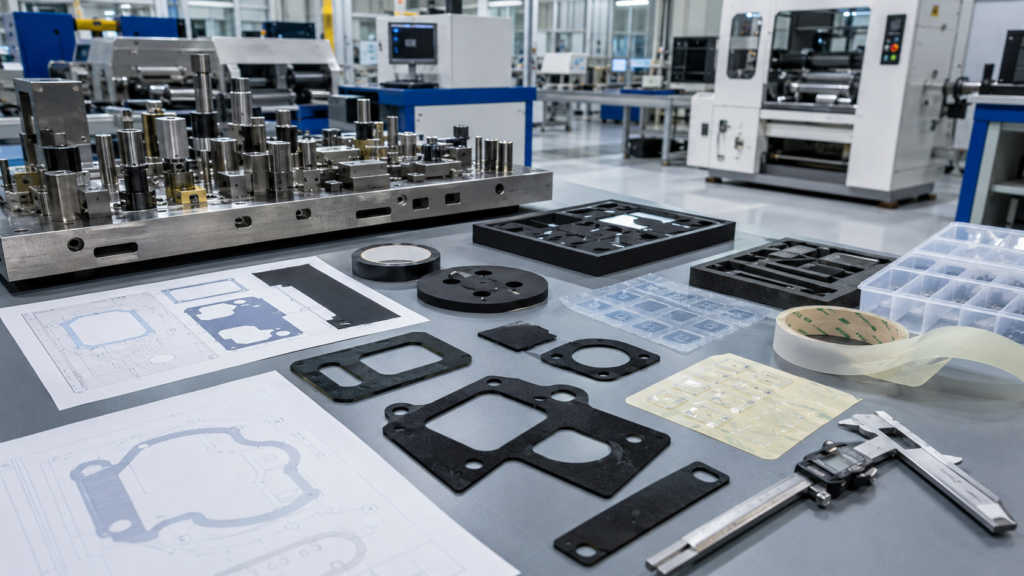
Narrow foam gaskets tear during die cutting when the gasket wall is too thin for the foam structure, cutting pressure, waste removal process, or assembly requirement. I have seen OEM projects where the drawing looked clean, but the foam bridge between holes and edges was too weak to survive production. The problem was not only the blade. It was the design, material, tooling, and process working against each other.
Narrow foam gaskets usually tear because the foam is too soft, the wall width is too small, the blade pressure is too high, the tooling is not optimized, or the waste removal process pulls the gasket apart. At Sanken, we review minimum width, foam density, adhesive backing, cutting direction, hole-to-edge distance, and tolerance before tooling, so the gasket can move from sample to mass production with fewer failures.
A foam gasket does not fail randomly. It usually tells us where the design or process was too weak. The key is to listen before mass production starts.
Why Narrow Foam Gaskets Are Difficult to Die Cut
Foam is flexible.
That is why it works well for sealing, cushioning, and vibration reduction.
But the same flexibility also makes it difficult to die cut into narrow shapes.
When a foam gasket has thin walls, small bridges, narrow ribs, or holes close to the edge, the material has less strength to resist cutting pressure and waste removal force.
During die cutting, the foam may compress under the blade.
After cutting, it may rebound unevenly.
During stripping, the narrow section may stretch or tear.
During packaging or assembly, the gasket may deform again.
This is why a narrow foam gasket needs more than a correct drawing. It needs a manufacturable design.
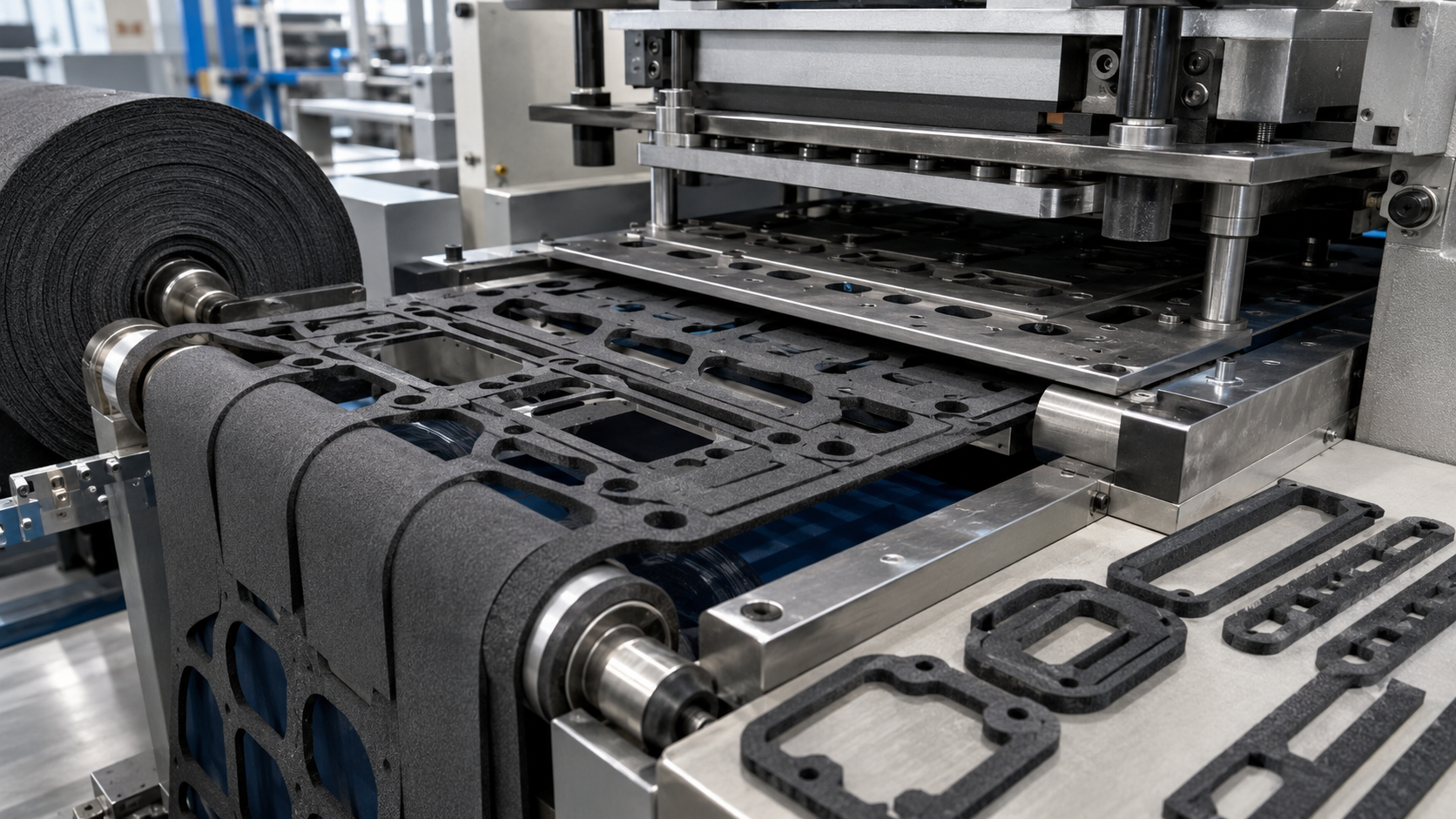
Common Causes of Tearing in Narrow Foam Gaskets
Most tearing problems come from a combination of design and process risks.
| Cause | What Happens | Production Risk |
|---|---|---|
| Wall width is too narrow | Foam bridge has weak strength | Tearing during cutting or stripping |
| Foam is too soft | Material collapses under pressure | Deformation and unstable size |
| Cutting pressure is too high | Foam cells are crushed | Rough edges and weak recovery |
| Tooling is dull or unsuitable | Blade drags the foam | Torn edges and poor appearance |
| Waste removal is too aggressive | Finished part is pulled with waste | Low yield and scrap |
| Hole is too close to edge | Narrow area becomes fragile | Assembly tearing or leakage |
| Adhesive backing is unstable | Liner pulls the foam | Stretching, lifting, or distortion |
For buyers, the important lesson is simple: if the gasket has narrow sections, the supplier must review more than the outer shape.
The supplier must review material behavior, cutting stability, and how the part will be removed from the liner.
How Minimum Width Affects Foam Gasket Strength
Minimum width is one of the most important design factors.
It means the narrowest usable wall, bridge, or sealing area in the gasket.
If the minimum width is too small, the foam may not have enough strength to stay stable during processing.
This is especially risky around:
- Screw holes
- Sensor openings
- Inner windows
- Thin sealing ribs
- Sharp corners
- Narrow bridges
- Long thin strips
- Complex irregular profiles
A narrow gasket wall may pass the first sample if it is handled carefully.
But mass production is different.
Production speed, waste removal force, tool wear, and material batch variation can expose weak areas quickly.
At Sanken, we review minimum width before tooling. If a narrow area is too risky, we may suggest increasing wall width, adding corner radius, changing material density, adjusting adhesive structure, or modifying the cutting process.
Small design changes before tooling can prevent large production losses later.
Why Foam Density and Cell Structure Matter
Not all foam behaves the same way.
Low-density foam may compress easily and tear when cut into narrow walls.
High-density foam may hold shape better but require more cutting force.
Open-cell foam may have weaker edge stability.
Closed-cell foam may provide better sealing and structural support, but it still needs the correct tooling and process.
Common foam materials include:
| Foam Material | Tearing Risk in Narrow Shapes | Typical Concern |
|---|---|---|
| PU foam | Higher risk when very soft | Stretching and compression |
| EVA foam | Medium risk | Edge deformation |
| PE foam | Lower to medium risk | Thickness and rebound control |
| EPDM foam | Medium risk | Sealing wall stability |
| CR foam | Medium risk | Cutting pressure and edge finish |
| Silicone foam | Medium to high risk | Elastic deformation and handling |
The material name alone is not enough.
Engineers should review density, thickness, hardness, compression recovery, and cell structure.
For example, a narrow gasket made from soft PU foam may tear during stripping, while a similar shape made from a firmer closed-cell foam may perform better.
At Sanken, we help OEM buyers choose foam based on the final application, not only price or thickness.
Why Cutting Pressure Can Damage Narrow Foam Gaskets
Cutting pressure must be controlled carefully.
If the pressure is too low, the gasket may not cut cleanly.
If the pressure is too high, the blade can crush the foam structure.
For narrow foam gaskets, excessive pressure can create:
- Flattened edges
- Torn cells
- Uneven rebound
- Size distortion
- Weak sealing walls
- Poor edge quality
This becomes more serious when the gasket has tight holes or thin bridges.
A supplier may try to solve incomplete cutting by increasing pressure.
That may help the cut go through, but it can damage the foam.
The better solution is to optimize tooling sharpness, blade height, cutting support, material backing, and machine settings together.
At Sanken, we do not treat cutting pressure as a simple adjustment. We treat it as part of foam performance control.
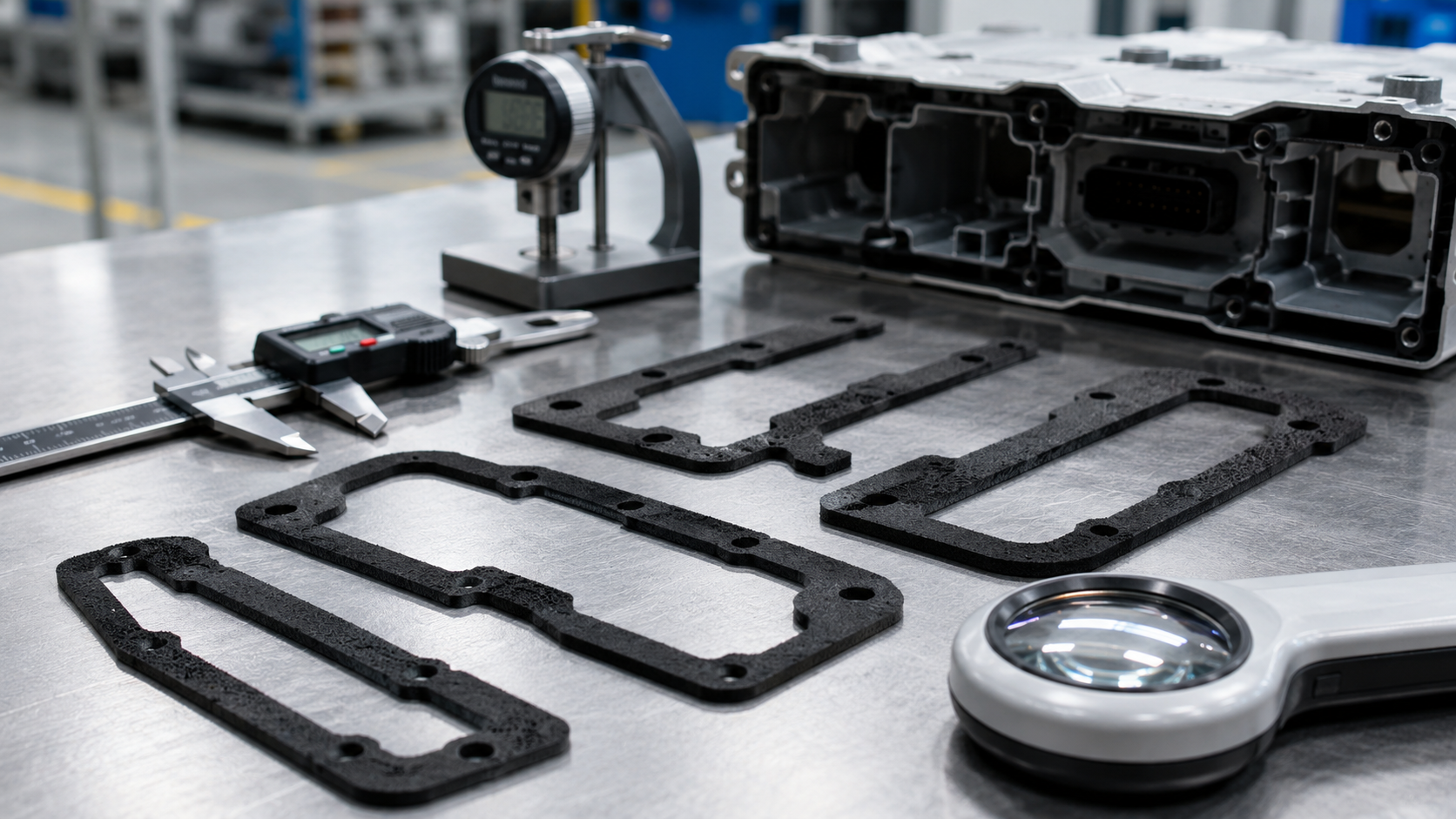
How Waste Removal Causes Tearing
Waste removal is one of the biggest reasons narrow foam gaskets tear.
After the foam is cut, the unwanted material must be removed.
This step may look simple, but it can pull hard on thin gasket sections.
If the waste sticks to the finished part, the gasket may lift, stretch, or tear.
This is common when the design includes:
- Small internal holes
- Long thin gasket walls
- Dense cut patterns
- Narrow foam bridges
- Adhesive-backed structures
- Soft foam materials
A part can be cut successfully and still fail during waste removal.
That is why trial production must check stripping behavior, not only cutting quality.
At Sanken, we review waste removal direction, cut sequence, liner support, adhesive behavior, and part layout. The goal is to keep the finished gasket stable while removing waste cleanly.
Why Adhesive-Backed Foam Gaskets Tear More Easily
Many foam gaskets include adhesive backing.
Adhesive helps positioning during assembly, but it also adds processing risk.
The release liner may pull the foam during peeling.
The adhesive may hold waste too strongly.
The foam may stretch when removed from the liner.
If kiss cutting depth is unstable, the liner may be damaged or difficult to release.
For narrow adhesive-backed foam gaskets, tearing risks include:
- Foam stretching during liner removal
- Adhesive overflow around narrow edges
- Waste sticking to finished parts
- Thin sections lifting during stripping
- Gasket distortion before assembly
- Poor positioning on the final product
This is why adhesive-backed foam gaskets need controlled lamination, liner selection, kiss cutting depth, and packaging format.
At Sanken, we combine foam converting, adhesive lamination, kiss cutting, and die cutting in one process. This helps reduce tearing and deformation before the parts reach the customer’s assembly line.
How Engineers Can Reduce Tearing Risk
Engineers can reduce tearing by improving the design before tooling.
Here is a practical checklist:
| Check Point | What to Review | Why It Matters |
|---|---|---|
| Minimum wall width | Narrowest gasket area | Prevents tearing and weak sealing |
| Hole-to-edge distance | Space around holes | Protects screw areas and alignment |
| Corner design | Sharp vs rounded corners | Reduces stress concentration |
| Foam density | Softness and strength | Controls deformation risk |
| Thickness | Cutting force and compression | Affects edge stability |
| Adhesive structure | Liner and adhesive layer | Prevents stretching and overflow |
| Waste removal path | Stripping direction | Reduces pulling force |
| Critical tolerance | Functional dimensions | Protects sealing and assembly |
| Packaging method | Sheet, roll, tray, liner | Prevents deformation after cutting |
If a supplier does not ask about these details, the project may depend too much on luck.
And luck is not a quality control system.
Why Samples Pass but Production Still Fails
A few hand-made or slow-speed samples may look good.
But mass production creates more stress.
Tooling wears.
Foam batches vary.
Roll tension changes.
Waste removal becomes faster.
Operators handle more parts.
Packaging pressure adds deformation risk.
That is why engineers should not approve a narrow foam gasket only by appearance.
They should check whether the supplier can repeat the result.
A proper trial should confirm:
- Edge quality
- Minimum wall stability
- Hole position
- Thickness consistency
- Waste removal behavior
- Liner release
- Adhesive edge condition
- Assembly fit
- Packaging stability
At Sanken, we focus on whether the gasket can survive the full production and assembly process, not only whether it looks acceptable on a sample table.
How Sanken Helps Prevent Narrow Foam Gasket Tearing
For narrow foam gasket projects, Sanken reviews the risk before mass production begins.
We focus on the points that usually cause tearing: minimum width, foam density, thickness, hole-to-edge distance, cutting pressure, tooling design, adhesive backing, liner release, and waste removal.
If the design is risky, we do not simply cut and hope.
We work with the buyer or engineer to improve manufacturability.
This may include changing foam grade, increasing the narrow wall width, adding radius to corners, adjusting adhesive structure, improving liner support, changing tooling strategy, or refining packaging.
For automotive electronics, appliances, medical devices, industrial enclosures, and battery-related components, this early review can prevent repeated trial failures and unstable mass production.
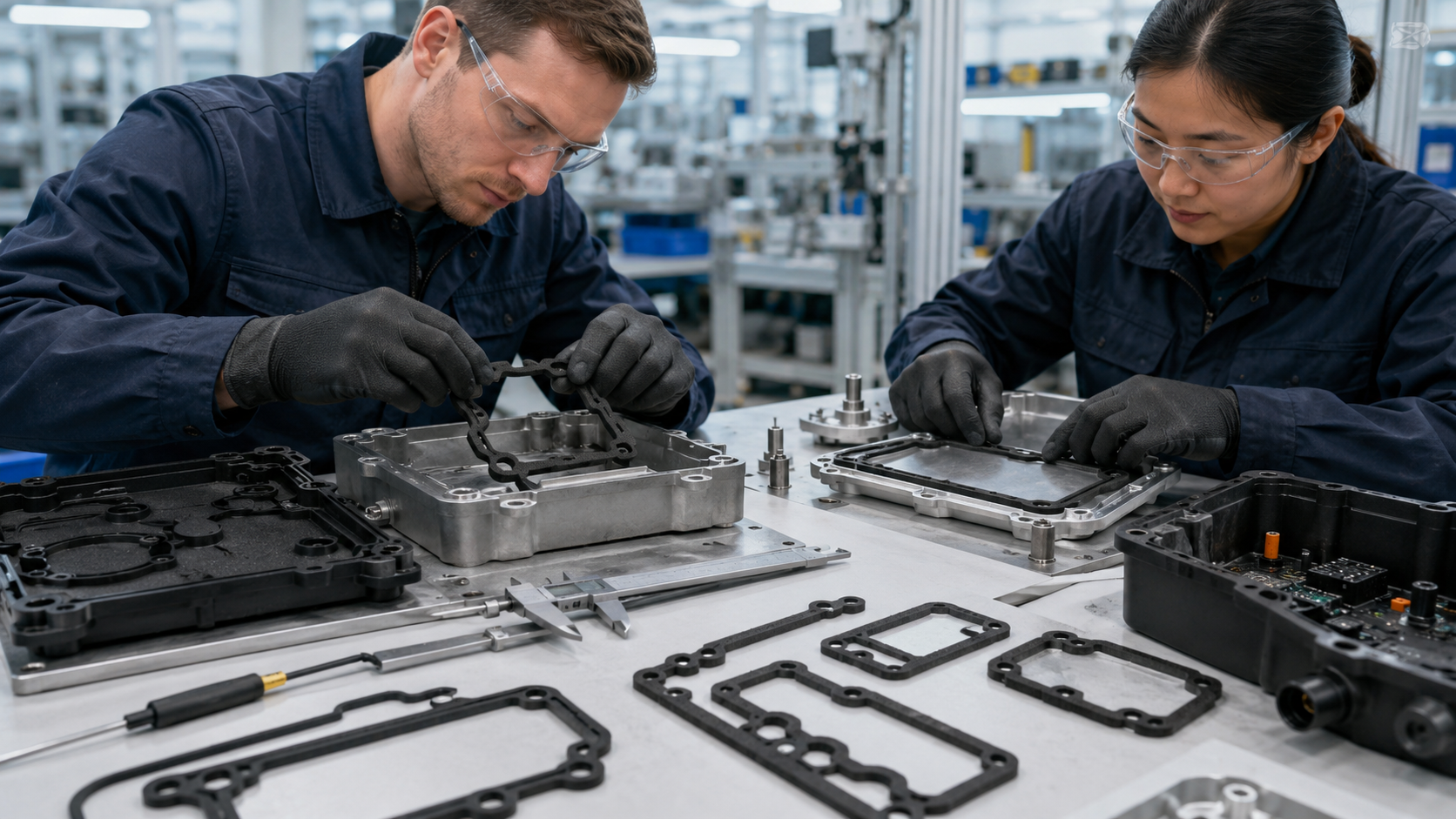
Conclusion
Narrow foam gaskets tear during die cutting because the design, material, tooling, pressure, adhesive structure, or waste removal process is not stable enough for thin gasket features. At Sanken, we help OEM customers review these risks before tooling, so custom foam gaskets can achieve cleaner cutting, better sealing, and more reliable mass production.