
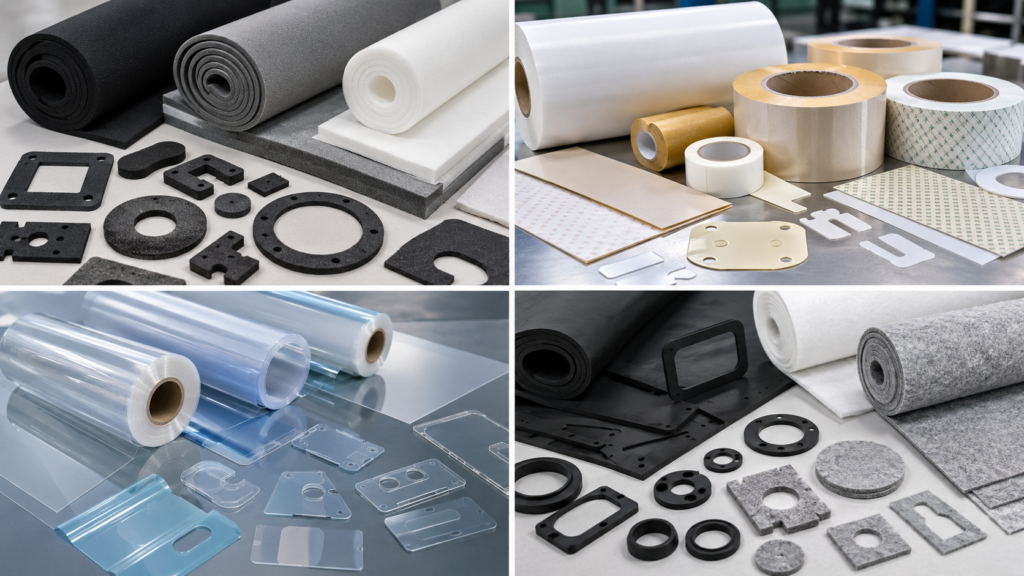
Can EVA Foam Be Die-Cut?
EVA foam is one of the most commonly used materials in automotive, electronics, medical, packaging, and industrial applications. Because it is lightweight, flexible, shock-absorbing, and easy to process, many manufacturers ask whether EVA foam is suitable for precision die cutting.
Yes, EVA foam can be die-cut extremely well. In fact, EVA (Ethylene Vinyl Acetate) foam is one of the most popular materials used in precision die cutting because it offers excellent dimensional stability, clean cutting performance, cushioning properties, and compatibility with adhesive laminating processes.
From automotive NVH components to consumer electronics cushioning pads, EVA foam is widely converted into custom shapes using rotary die cutting, flatbed die cutting, and CNC cutting technologies.
Why Is EVA Foam Suitable for Die Cutting?
EVA foam combines flexibility with structural stability.
Unlike some softer foams that tear or deform during processing, EVA foam provides:
- Clean cut edges
- Consistent thickness
- Good dimensional stability
- Excellent compressibility
- Easy adhesive bonding
These characteristics make it ideal for high-volume precision converting.
Theme: EVA Foam Materials
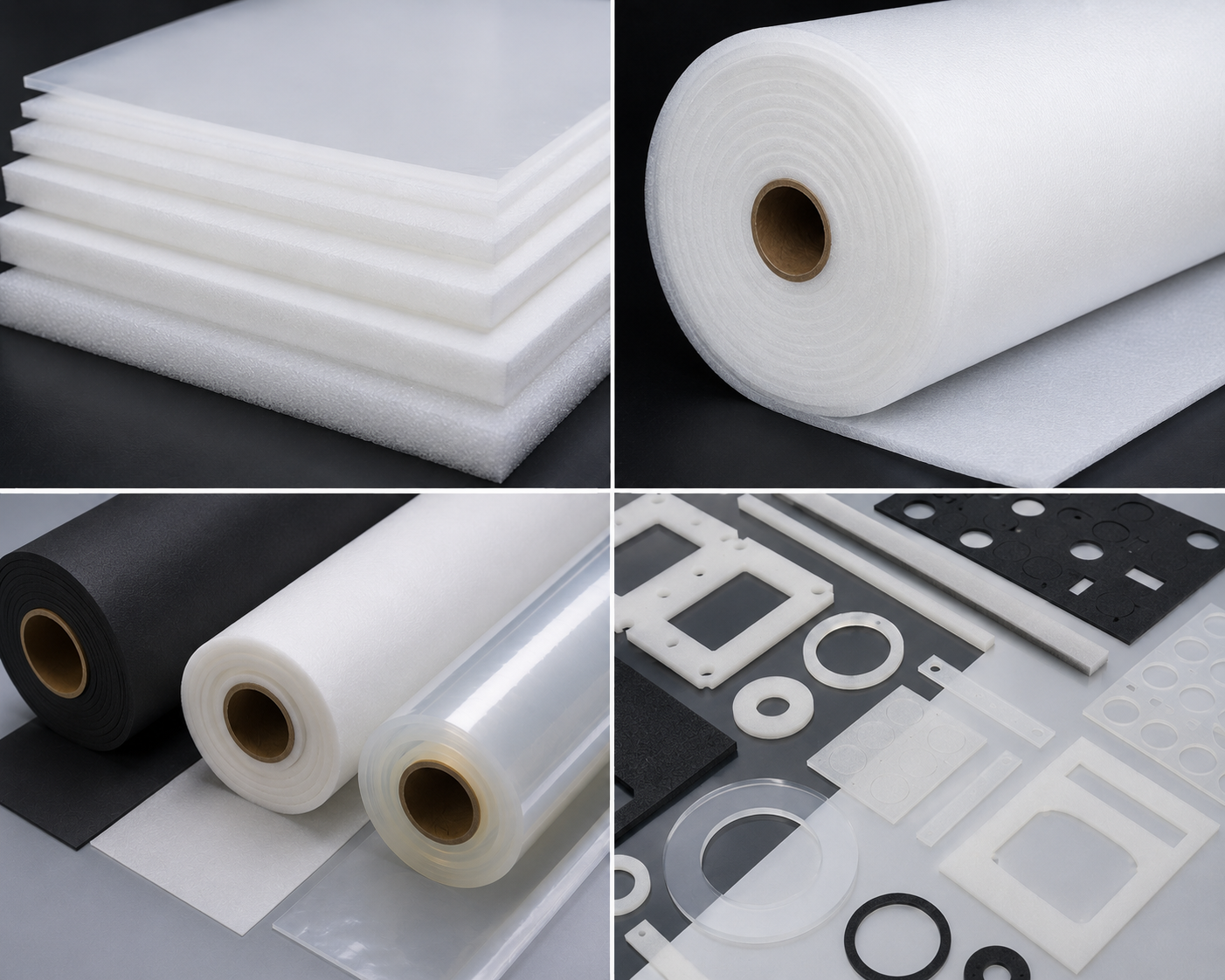
What Is EVA Foam?
EVA stands for Ethylene Vinyl Acetate.
It is a closed-cell foam material produced by combining ethylene and vinyl acetate polymers.
The material offers:
- Lightweight structure
- Water resistance
- Shock absorption
- Thermal insulation
- Chemical resistance
- Long-term durability
Because of these properties, EVA foam is widely used across many industries.
Common EVA Foam Die Cut Parts
| EVA Foam Part Type | Main Function | Typical Application |
|---|---|---|
| EVA foam gaskets | Sealing, spacing and cushioning | Electronics, appliances, automotive interiors |
| Adhesive-backed EVA pads | Fast positioning and bonding | Assembly fixtures, plastic housings, panels |
| EVA packaging inserts | Shock absorption and product protection | Medical devices, tools, electronics, instruments |
| EVA foam liners | Surface protection and cushioning | Cases, trays, displays and packaging |
| Anti-vibration EVA pads | Vibration control and impact absorption | Industrial equipment and automotive parts |
| Custom EVA foam spacers | Gap filling and part separation | OEM assembly and product protection |
How Is EVA Foam Die-Cut?
Several cutting methods can be used depending on volume and design complexity.
Flatbed Die Cutting
Flatbed die cutting uses vertical pressure to cut the foam.
Advantages:
- Suitable for thicker EVA foam
- Excellent for complex shapes
- Cost-effective tooling
Applications:
- Automotive gaskets
- Foam pads
- Protective inserts
Rotary Die Cutting
Rotary die cutting uses cylindrical dies in a continuous roll-to-roll process.
Advantages:
- High production speed
- Excellent repeatability
- Automation-friendly
Applications:
- Adhesive-backed EVA components
- Electronics cushioning pads
- High-volume production parts
CNC Cutting
CNC cutting is often used for:
- Prototypes
- Low-volume production
- Large-format parts
Advantages:
- No tooling required
- Fast design changes
However, CNC cutting is generally slower than die cutting for mass production.
Advantages of Die-Cutting EVA Foam
Clean Edge Quality
EVA foam produces smooth, consistent edges during die cutting.
This improves:
- Product appearance
- Assembly accuracy
- Functional performance
Excellent Cushioning Performance
The foam absorbs impact and vibration effectively.
Applications include:
- Electronics protection
- Packaging inserts
- Automotive components
Easy Adhesive Lamination
EVA foam can be laminated with:
- Double-sided tapes
- PET films
- Protective films
- Release liners
This allows manufacturers to create multi-layer assemblies.
Theme: Precision Die-Cut EVA Foam Components
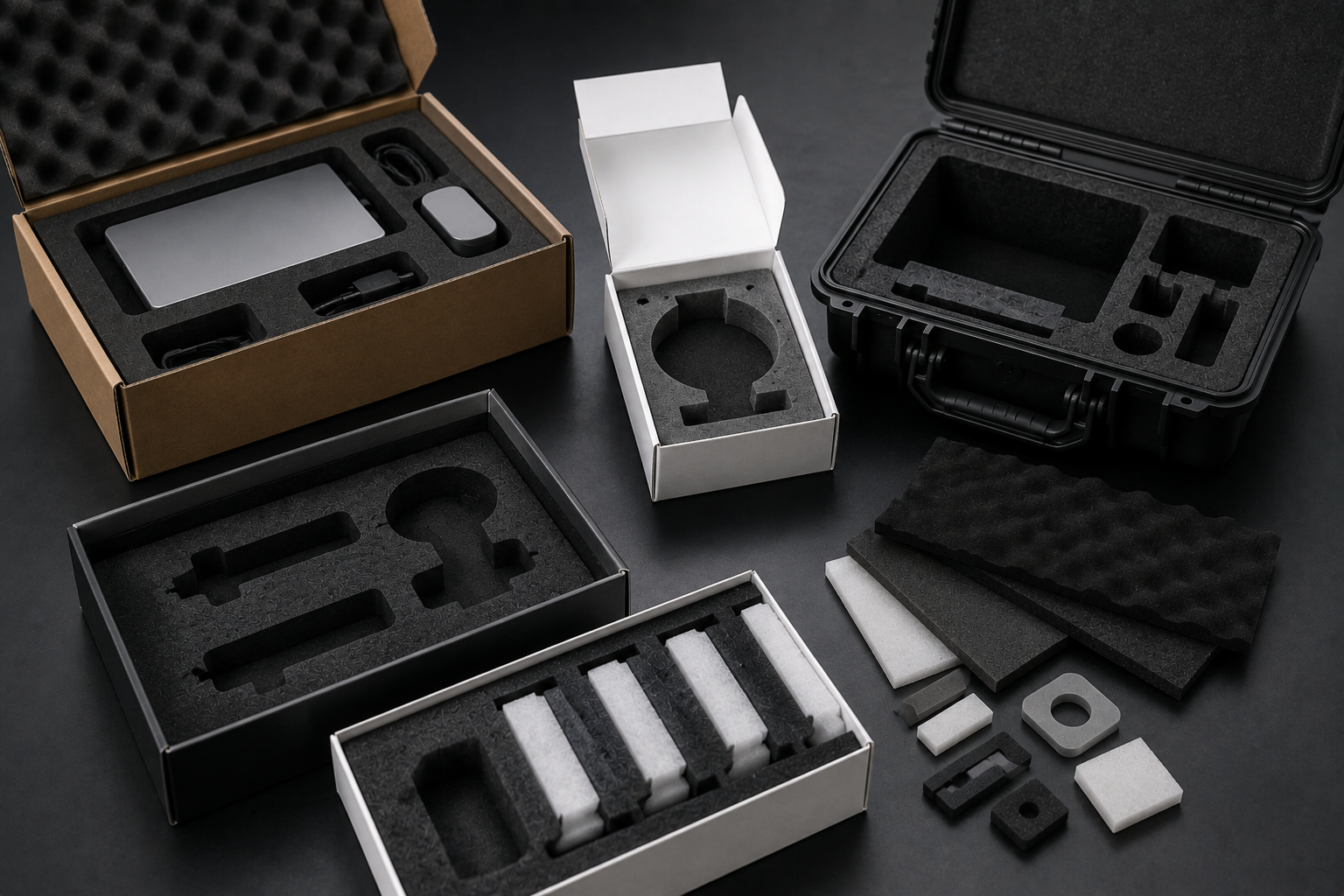
Common Die-Cut EVA Foam Applications
Automotive Industry
EVA foam is used for:
- NVH insulation components
- Anti-rattle pads
- Thermal insulation
- Interior cushioning
Its lightweight structure helps improve vehicle efficiency and passenger comfort.
Consumer Electronics
Applications include:
- Display cushioning
- Battery protection
- Foam gaskets
- Shock-absorbing pads
Precision die-cut EVA components are widely used in smartphones, tablets, and wearable devices.
Industrial Equipment
EVA foam is used for:
- Sealing components
- Protective pads
- Vibration isolation
- Thermal barriers
Packaging
Die-cut EVA foam provides excellent protection for:
- Medical devices
- Electronics
- Precision instruments
- Industrial products
Custom inserts help prevent shipping damage.
Can EVA Foam Be Laminated Before Die Cutting?
Yes.
Many EVA foam products are converted into multi-layer assemblies before die cutting.
Common laminates include:
- Acrylic adhesive tapes
- PET films
- Release liners
- Protective films
- Non-woven materials
Laminating first and die cutting afterward improves assembly efficiency and product consistency.
EVA Foam vs PE Foam for Die Cutting
| Property | EVA Foam | PE Foam |
|---|---|---|
| Softness | Higher | Moderate |
| Cushioning | Excellent | Good |
| Water Resistance | Excellent | Excellent |
| Die-Cutting Performance | Excellent | Excellent |
| Flexibility | Higher | Lower |
| Cost | Slightly Higher | Lower |
Both materials perform well, but EVA foam is often selected when greater flexibility and cushioning are required.
How Sanken Manufacturing Supports EVA Foam Converting
Dongguan Sanken Electronics Manufacturing Co., Ltd. specializes in precision foam converting solutions for OEM manufacturers worldwide.
Our capabilities include:
- Precision die cutting
- EVA foam converting
- PE foam converting
- Adhesive laminating
- PET film processing
- Non-woven material converting
- Rubber sealing products
Key Advantages
- OEM and ODM customization
- ISO 9001 certified quality management
- RoHS and REACH compliant materials
- Domestic and overseas production bases
- Cleanroom precision manufacturing
- Tool development from drawings or samples
We support automotive NVH insulation systems, consumer electronics die-cut materials, wearable devices, and industrial sealing applications.
Conclusion
EVA foam is highly suitable for precision die cutting and remains one of the most versatile foam materials available. Its combination of cushioning, durability, flexibility, and easy processing makes it ideal for custom OEM components.
Whether used in automotive NVH insulation, consumer electronics, packaging protection, or industrial sealing systems, die-cut EVA foam offers reliable performance and efficient manufacturing solutions.****