

Can self-adhesive die-cut foam strips eliminate abnormal noise from car sunroof gaps?
If you have ever driven at highway speed and heard a faint “whistling” or “buzzing” from the roof, you already understand how small gaps can become big problems.
At Sanken Manufacturing, we work with automotive OEMs and Tier suppliers on sealing, NVH, and precision die-cut foam solutions every day.
And this is one of the most common questions we get from engineers:
Can a simple self-adhesive die-cut foam strip really solve sunroof gap noise?
The answer is yes—but only if it is engineered correctly.
Self-adhesive die-cut foam strips can significantly reduce or eliminate abnormal noise from car sunroof gaps by sealing micro air leaks, dampening vibration, and stabilizing airflow around the sealing interface. However, success depends on foam density, compression set behavior, adhesive system, and precision die-cut geometry. In automotive NVH engineering, these strips are not “simple foam parts”—they are tuned acoustic and mechanical control components. At Sanken, we design them as system-level solutions that integrate material science, adhesive performance, and dimensional accuracy to achieve long-term noise suppression under real driving conditions.
Noise in sunroof systems is never caused by one factor.
It is usually a combination of:
- Micro air leakage
- Panel vibration
- Uneven gap compression
- Material aging and shrinkage
- High-speed aerodynamic turbulence
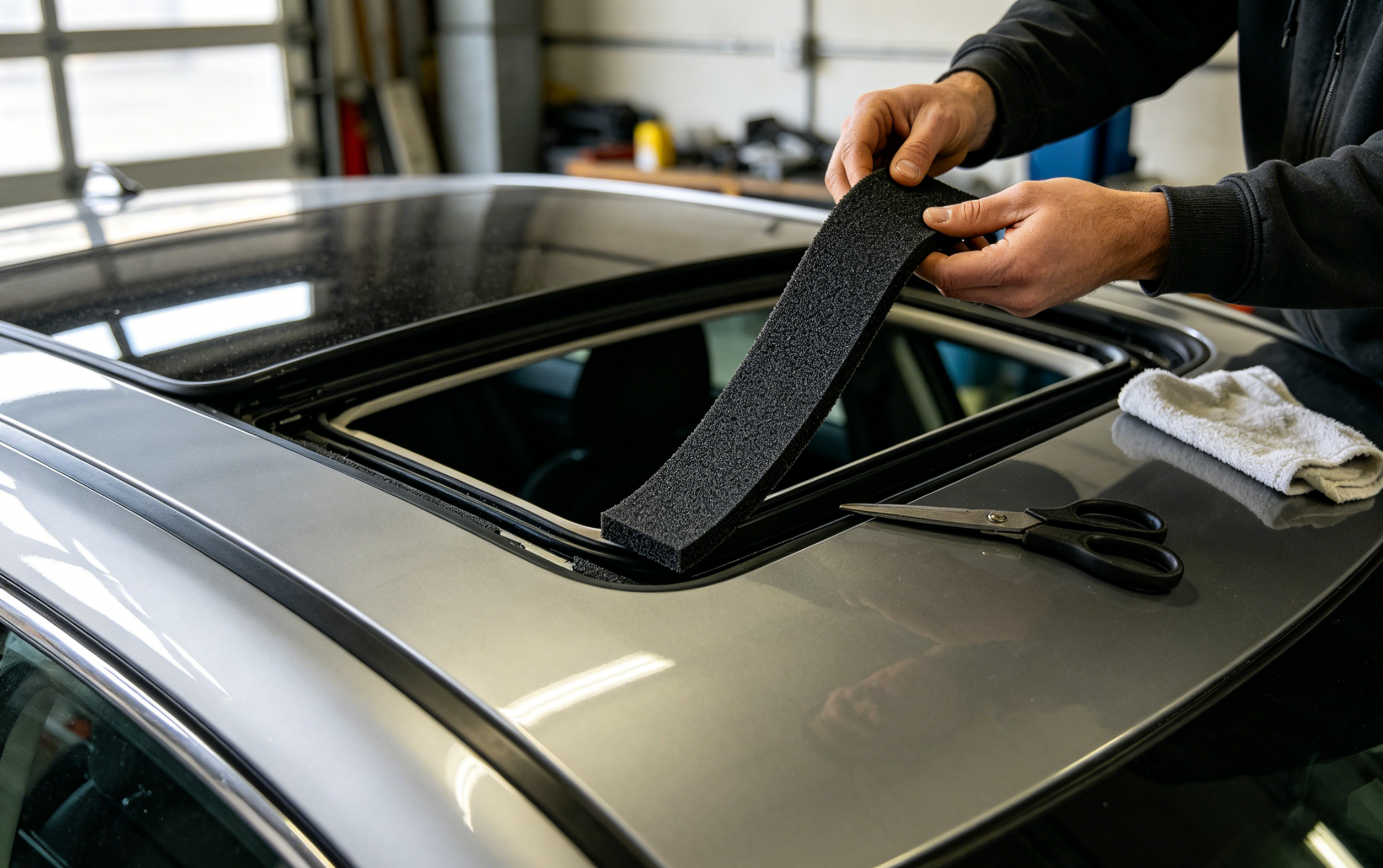
Why do sunroof gaps create abnormal noise in the first place?
A sunroof system is not perfectly sealed by design.
It must:
- Open and close repeatedly
- Maintain drainage paths
- Allow thermal expansion
- Fit within complex body tolerances
Reference insight: https://www.sae.org/automotive-engineering/
This creates unavoidable micro gaps.
At low speed, these gaps are silent.
At high speed, they become airflow channels.
That is where noise begins:
- Whistling (high-frequency air leakage)
- Buzzing (panel vibration resonance)
- Rattling (loose tolerance movement)
How do self-adhesive die-cut foam strips solve this problem?
The solution is not to “block everything.”
It is to control airflow and vibration behavior.
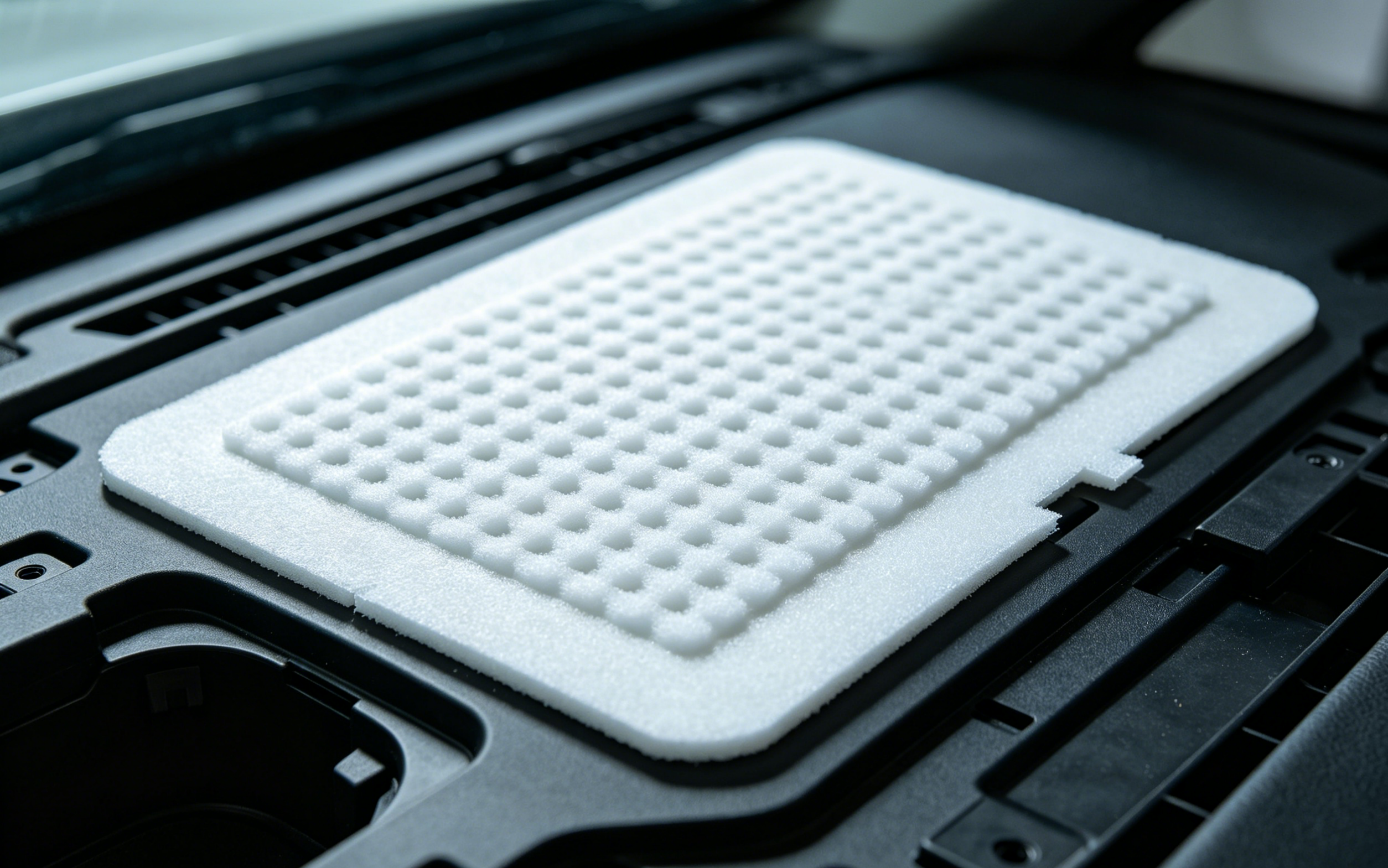
A self-adhesive die-cut foam strip works through three mechanisms:
1. Gap sealing
Foam compresses into micro gaps, blocking air leakage paths.
2. Vibration damping
Elastic structure absorbs high-frequency vibration energy.
3. Surface stabilization
Reduces relative movement between contacting surfaces.
Reference concept: https://www.3m.com/3M/en_US/industrial-adhesives-tapes-us/
At Sanken Manufacturing, we often design these strips with controlled compression ratios to match specific sunroof geometries.
Because too soft = no sealing
Too hard = no damping
Balance is everything.
Why foam material properties matter more than shape
Many buyers think geometry is the key.
In reality, material behavior dominates performance.
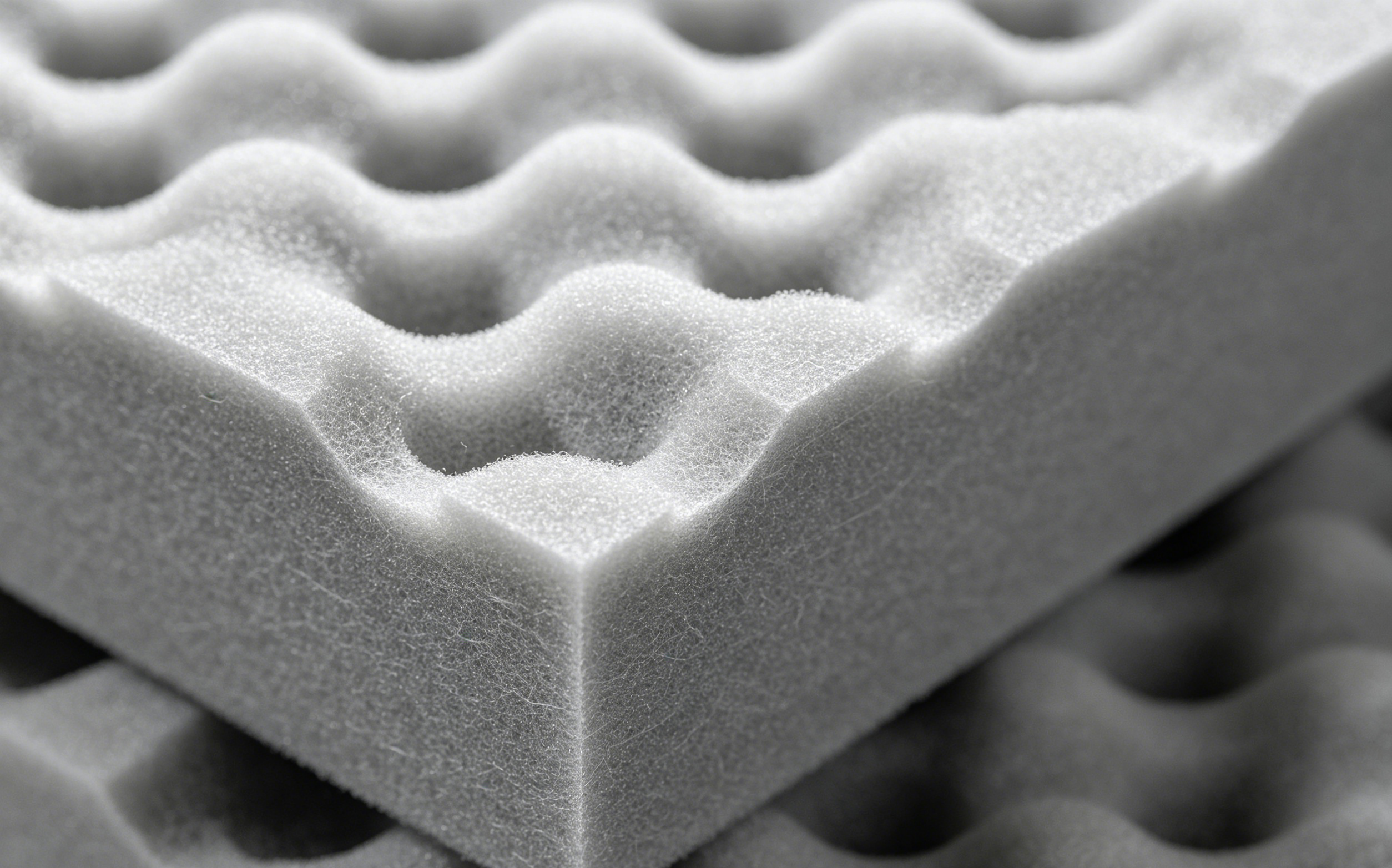
Critical factors include:
Compression set
How much permanent deformation remains after long-term compression.
Density
Affects both sealing ability and acoustic damping.
Recovery rate
How fast the foam returns after load release.
Temperature stability
Important for outdoor automotive environments.
Reference data: https://www.sciencedirect.com/topics/engineering/polyurethane-foam
At Sanken, we match foam type with:
- Vehicle class
- Climate conditions
- Sunroof design tolerance
Because NVH performance is not universal—it is application-specific.
Why OEM engineers still prefer foam strip solutions
Because they are:
- Lightweight
- Cost-efficient
- Easy to integrate
- Adaptable to existing designs
Compared to structural redesign, foam strips offer:
- Faster implementation
- Lower tooling cost
- Flexible tuning options
At Sanken Manufacturing, we often use them as:
- First-stage NVH optimization
- Gap compensation layers
- Retrofit noise correction solutions
When foam strips are NOT enough
There are limits.
Foam strips cannot fully solve:
- Severe structural misalignment
- Broken mounting systems
- Excessive panel deformation
- Poor body-in-white tolerances
In these cases, the root cause must be corrected first.
Otherwise, foam becomes a temporary patch, not a solution.
How we design NVH foam solutions at Sanken
We do not start with foam.
We start with the problem:
- Where is the air entering?
- What frequency is the noise?
- Is it vibration or airflow-driven?
- What is the compression environment?
Then we design:
- Foam density and structure
- Adhesive system selection
- Die-cut geometry
- Compression control strategy
- Assembly integration method
Because in automotive NVH, success is system-level.
Not material-level.
Conclusion
Self-adhesive die-cut foam strips can effectively eliminate or significantly reduce sunroof gap noise—but only when engineered correctly.
In automotive NVH systems, success is not about adding material.
It is about controlling air, vibration, and compression behavior as one system.
At Sanken Manufacturing, we design these solutions not as simple foam parts, but as precision-engineered noise control components built for real driving conditions.