

How Long Do Automotive Die-Cut Felts Retain Acoustic Performance? The Real Lifespan Behind “Quiet Cabin” Materials
When customers step into a new car, the silence feels permanent.
Doors close softly. Road noise is muted. Vibrations feel controlled.
But engineers know a different truth:
That silence is not permanent—it is engineered, and it ages.
At Sanken (Dongguan Sanken Electronics Co., Ltd.), we often get a very practical question from automotive clients:
“How long will die-cut acoustic felt actually keep working?”
The honest answer is: it depends.
But the more important answer is: it depends on how well the system was designed—not just the material itself.
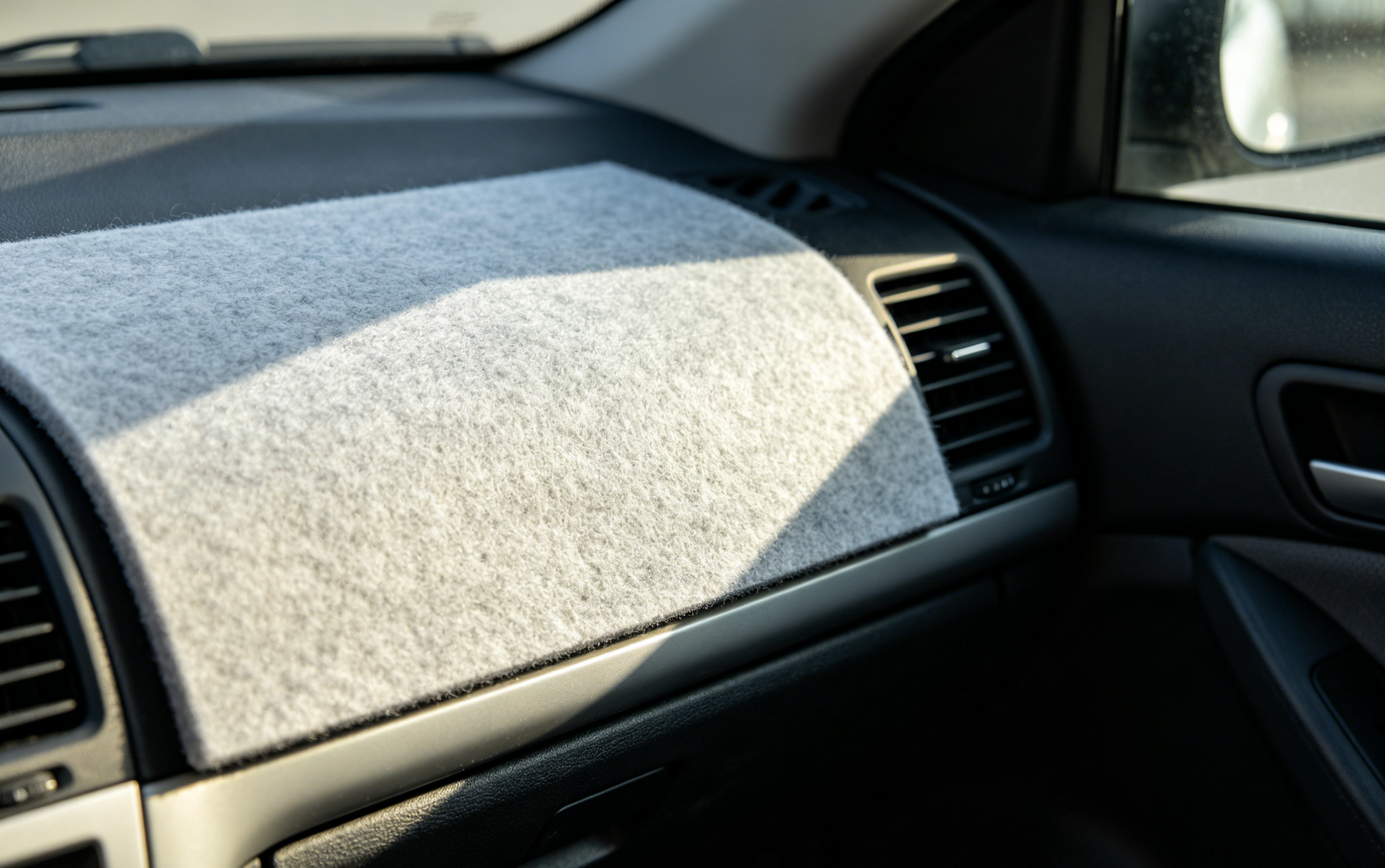
What does “acoustic performance retention” actually mean?
Acoustic performance retention refers to how well a material maintains its ability to:
- absorb sound waves
- damp vibration
- reduce resonance
- stabilize interior noise levels
Over time, automotive die-cut felts are exposed to:
- heat cycling
- vibration fatigue
- humidity changes
- compression load
- material aging of surrounding parts
So even if the felt itself looks unchanged, its internal fiber structure may slowly lose efficiency.
In other words:
It is not about appearance.
It is about energy behavior.
What is the typical lifespan of automotive die-cut acoustic felts?
In real automotive applications, high-quality needle-punched or engineered non-woven acoustic felts typically maintain functional performance for:
8 to 15 years under normal automotive operating conditions
However, this range is not fixed.
It varies based on:
- material density
- fiber structure stability
- compression ratio in assembly
- adhesive system used
- installation location in the vehicle
- thermal exposure level
For example:
- Door panels → moderate aging stress
- Floor systems → high vibration exposure
- Dashboard areas → high thermal stress
- Engine-adjacent zones → extreme aging environment
Each zone affects lifespan differently.
Why do acoustic felts lose performance over time?
Acoustic felts don’t “break” suddenly.
They degrade gradually through micro-changes such as:
1. Fiber structure relaxation
Over time, fibers may lose entanglement strength, reducing sound absorption efficiency.
2. Compression set deformation
Constant pressure causes thickness reduction, changing acoustic impedance behavior.
3. Adhesive aging (if laminated)
Bonding layers may weaken, causing partial separation or micro-gaps.
4. Thermal fatigue
Repeated heating and cooling cycles alter material stiffness.
5. Moisture absorption effects
Humidity can slightly modify fiber density and damping characteristics.
These changes are subtle individually—but impactful collectively.
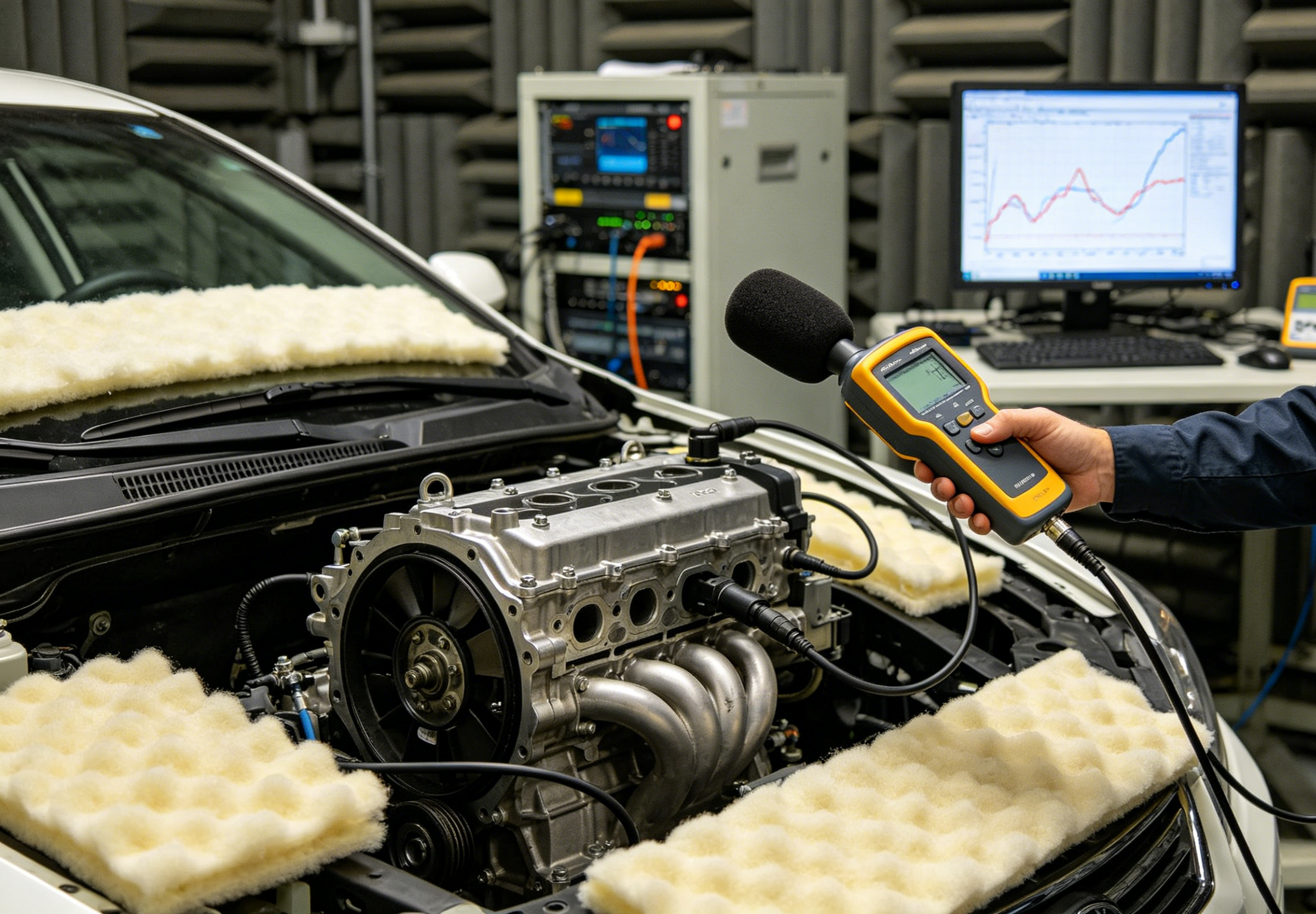
What determines whether acoustic performance lasts 5 years or 15 years?
The biggest factor is not the felt alone.
It is the system design around it.
At Sanken, we analyze acoustic durability through four layers:
1. Material architecture
- fiber type selection
- density control
- compression recovery capability
2. Die-cut geometry
- stress distribution design
- edge stability
- installation fit accuracy
3. Adhesive integration
- long-term bonding stability
- thermal resistance
- creep resistance
4. Installation environment
- heat exposure zone
- vibration intensity
- structural constraints
A well-designed system can significantly extend acoustic stability beyond standard expectations.
Where do acoustic felts degrade fastest in vehicles?
Not all vehicle zones age equally.
The most challenging areas include:
- dashboard behind infotainment systems
- door impact zones with repeated mechanical stress
- trunk cavities with resonance amplification
- floor sections exposed to road vibration
- EV battery surrounding insulation layers
These areas combine:
- heat + vibration + compression
which accelerates performance loss.
How OEMs evaluate long-term acoustic stability
Automotive manufacturers do not rely on visual inspection.
They simulate aging using:
Thermal aging tests
High-temperature exposure for hundreds to thousands of hours.
Thermal cycling
Repeated hot/cold transitions to simulate seasonal changes.
Vibration fatigue tests
Mechanical shaking to simulate road conditions.
Compression set evaluation
Measuring thickness recovery after long-term load.
Acoustic performance re-testing
Comparing sound absorption before and after aging.
Only materials that maintain stable performance across these tests are approved for mass production.
Why some acoustic felts outperform others in real vehicles
Two materials may look identical on paper.
But behave very differently in practice.
The difference usually comes from:
- fiber entanglement uniformity
- manufacturing consistency
- lamination quality
- die-cut precision
- batch-to-batch stability
At Sanken, we focus heavily on controlling these hidden variables because they directly influence long-term acoustic behavior.
A small inconsistency during production can become a noticeable noise issue years later.
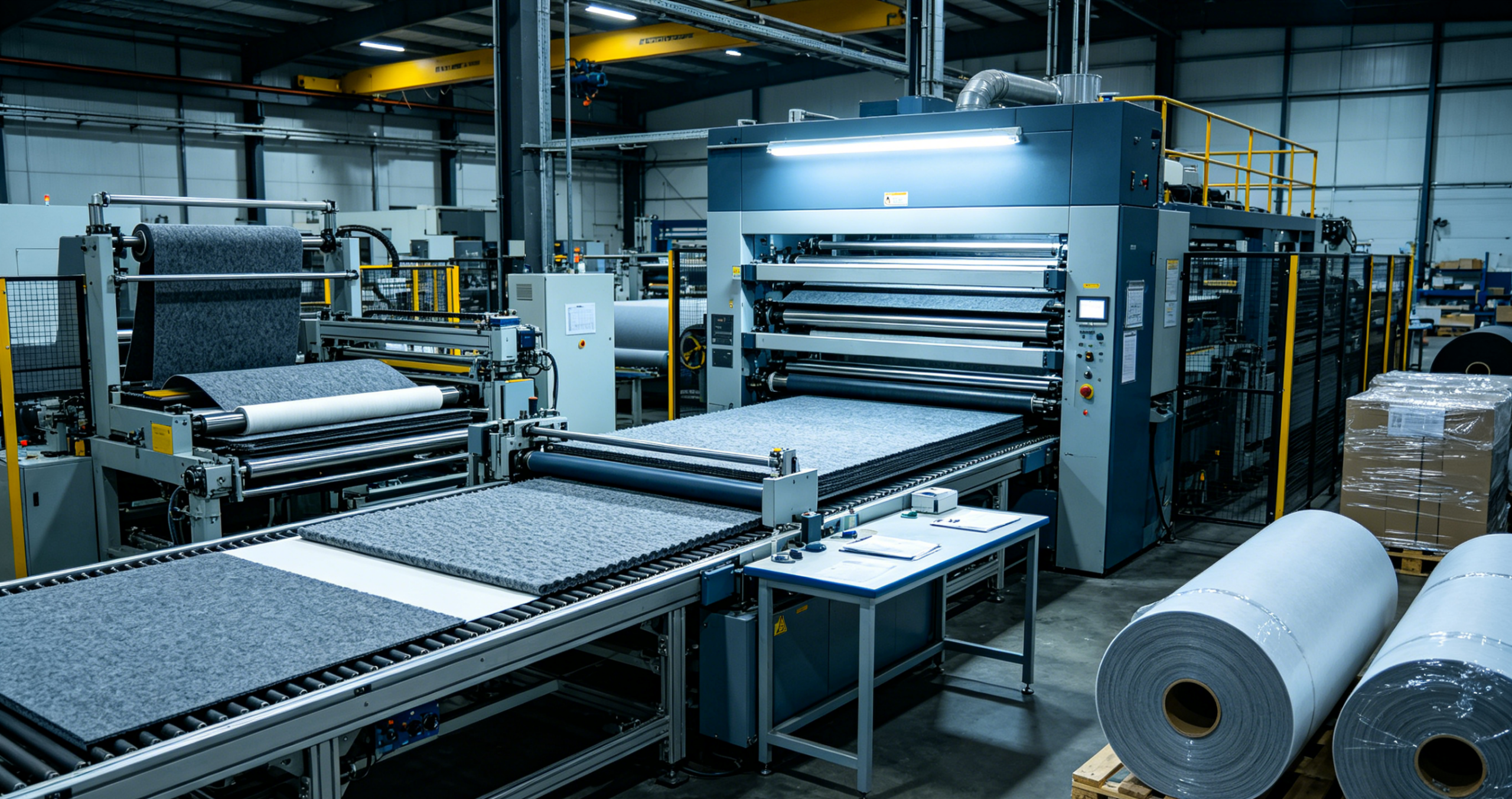
How Sanken supports long-life acoustic solutions
We approach acoustic felt systems not as standalone materials, but as functional vehicle components.
Our capability includes:
- precision die-cut acoustic felt processing
- multi-layer lamination with adhesive systems
- foam and non-woven integration
- compression-controlled forming
- automotive-grade process consistency
This allows us to design solutions that maintain:
- stable sound absorption
- long-term vibration damping
- reliable assembly fit
- consistent performance across production batches
The goal is simple:
Not just silence at delivery.
But silence that lasts.
Conclusion
Automotive die-cut acoustic felts do not fail suddenly—they evolve gradually over years of stress and environmental exposure.
In well-designed systems, acoustic performance can remain stable for 8 to 15 years or more.
At Sanken, we focus on designing not just materials, but long-term acoustic stability systems that ensure vehicles remain quiet, comfortable, and consistent throughout their lifecycle.