

Does Mass Production Decrease Product Quality?
Mass production often gets blamed for “lower quality products.”
I hear this concern a lot from OEM buyers in automotive, electronics, and medical industries.
At Sanken Manufacturing, we work with high-volume programs every day.
And I can tell you this: mass production itself is not the enemy of quality.
The real issue is whether the production system is designed for scale—or forced into it.
Mass production does not inherently decrease product quality. In fact, when properly engineered, it improves consistency, repeatability, and defect control. The real risk comes from poorly controlled processes, unstable materials, or weak tooling design. At Sanken, we see quality failures not because volume is high, but because upstream engineering was not optimized for high-volume stability. When production systems are designed correctly—from material selection to mold design, from die-cutting precision to process validation—mass production actually becomes the most reliable way to achieve uniform quality across millions of parts.
In other words, scale is not the problem.
Control is.
A well-designed process at 10,000 units behaves better at 1,000,000 units.
A weak process breaks under pressure.
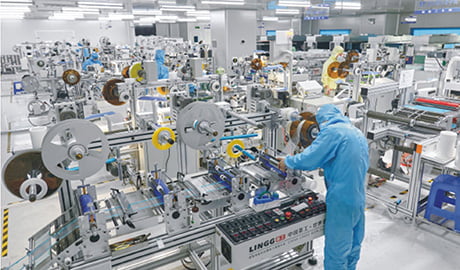
Why do people associate mass production with lower quality?
The assumption comes from visible failures.
When products are made at scale, defects also scale visually:
- One small deviation becomes thousands of defective parts
- One unstable material batch affects an entire production run
- One tooling issue creates long-term consistency problems
But the root cause is rarely “mass production.”
It is lack of process control.
Reference insight: https://www.iso.org/iso-9001-quality-management.html
At Sanken, we treat quality as a system, not a final inspection step.
Does scaling increase variation in manufacturing?
It can—if the process is not stable.
Variation usually comes from:
- Material inconsistency
- Tooling wear over time
- Temperature fluctuations
- Operator-dependent processes
- Poor process documentation
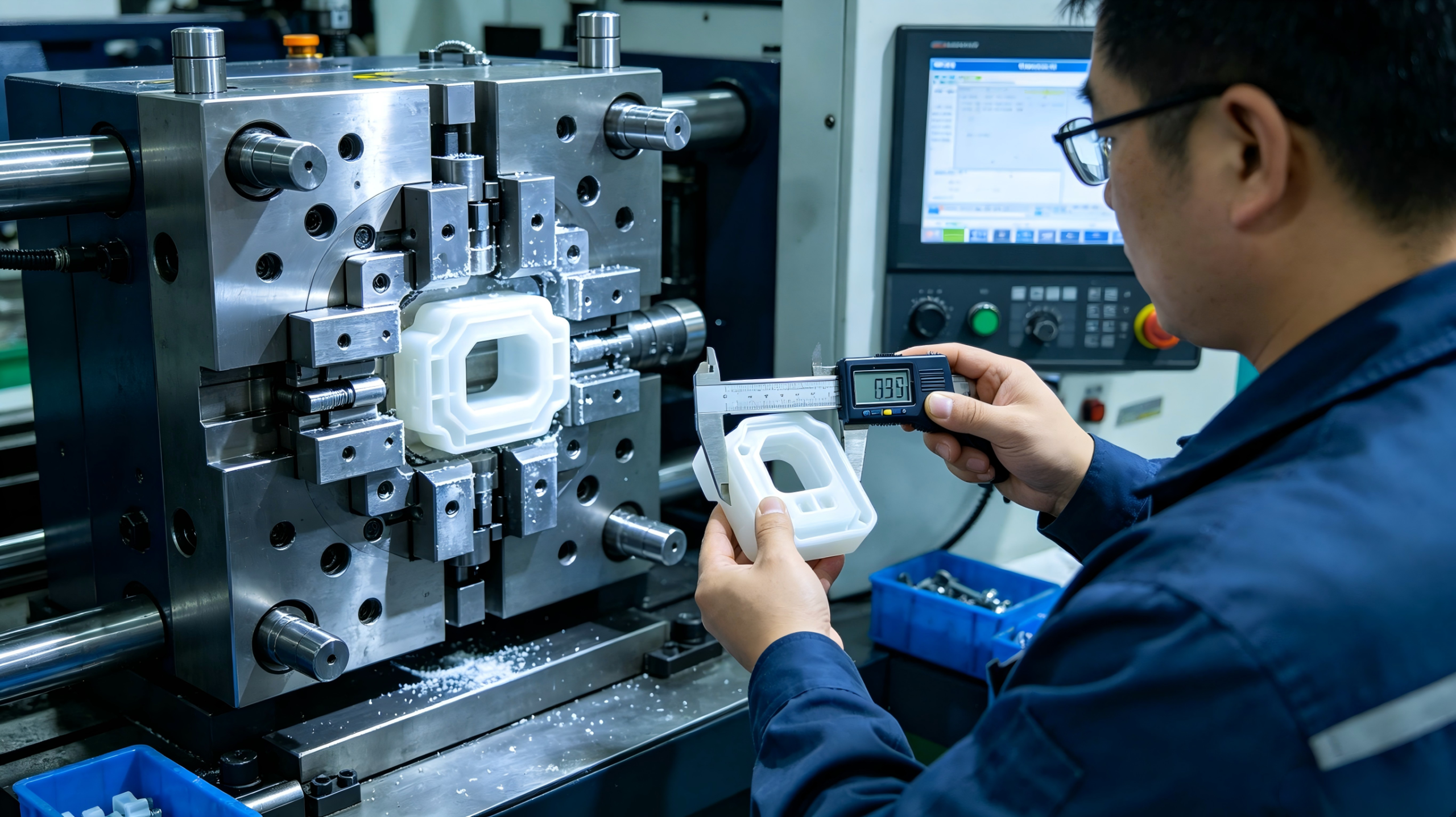
In high-volume production, small deviations become amplified.
That is why OEM industries invest heavily in:
- SPC (Statistical Process Control)
- Automated inspection systems
- Stable tooling platforms
- Controlled material sourcing
Reference data: https://www.sciencedirect.com/topics/engineering/statistical-process-control
At scale, control is everything.
Why can mass production actually improve quality?
This is the part many people miss.
Mass production forces discipline.
Once a process is scaled, manufacturers must:
- Lock material specifications
- Standardize tooling conditions
- Automate repeatable steps
- Reduce human variability
This reduces randomness.
In small-scale production, variation is often tolerated.
In large-scale production, it becomes unacceptable.
That pressure improves engineering maturity.
How does tooling influence quality in mass production?
Tooling is the foundation of consistency.
At Sanken, especially in precision die-cutting and molding programs, we often see this pattern:
- Good tooling = stable output over millions of cycles
- Weak tooling = early degradation and defect drift
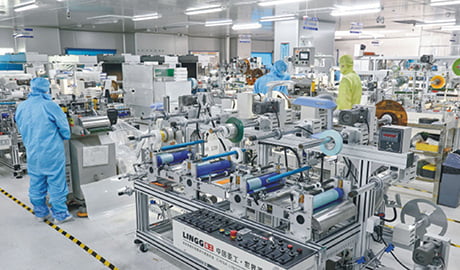
For injection molding and die-cut parts, tooling determines:
- Dimensional accuracy
- Edge quality
- Material flow behavior
- Long-term stability
If the tool is unstable, scaling only multiplies the problem.
Why do some factories fail when scaling up?
Scaling exposes hidden weaknesses.
Common failure points include:
- Material batch variation
- Uncontrolled curing or bonding processes
- Lack of preventive maintenance
- Inconsistent operator training
- Weak quality feedback loops
At low volume, these issues stay hidden.
At high volume, they become expensive fast.
That is why many OEMs experience “quality drop” when scaling suppliers—not because of volume itself, but because systems were never designed for it.
How we manage quality in high-volume production at Sanken
We design for stability from the beginning.
Our approach includes:
- Material selection aligned with application stress
- Precision die-cutting with controlled tolerances
- Injection molding with validated process windows
- Multi-stage inspection during production
- One-stop process integration to reduce handoff errors
Because every transfer point adds risk.
The fewer the transitions, the more stable the quality.
Why one-stop manufacturing improves consistency
When materials, processing, and assembly are fragmented across suppliers:
- Communication errors increase
- Specification drift happens
- Responsibility becomes unclear
At Sanken, integrating processes like:
- die-cutting
- lamination
- molding
- assembly
reduces those risks significantly.
Less fragmentation = fewer defects.
Conclusion
Mass production does not reduce product quality.
Poor process design does.
When engineering, materials, and tooling are properly controlled, mass production becomes the most reliable way to achieve consistent, scalable, and repeatable quality.