
How Die Cut EMI Shielding Materials Help Protect Electronics
As electronic devices become smaller, faster, and more connected, electromagnetic interference (EMI) has become a growing challenge for manufacturers. Smartphones, wearable devices, automotive electronics, medical equipment, and industrial control systems all contain sensitive electronic circuits that can be affected by unwanted electromagnetic signals.
Die-cut EMI shielding materials help protect electronics by blocking, absorbing, or redirecting electromagnetic interference before it can disrupt sensitive components. By converting conductive shielding materials into precise custom shapes, manufacturers can create highly effective EMI barriers that improve signal integrity, reduce electrical noise, and enhance overall device reliability.
Without proper EMI shielding, electronic products may suffer from performance degradation, communication errors, regulatory compliance issues, or even complete system failure.
What Is EMI?
EMI stands for Electromagnetic Interference.
It occurs when electromagnetic energy generated by one device interferes with the operation of another device.
Common EMI sources include:
- Wireless communication modules
- Power supplies
- Motors
- Displays
- Processors
- Battery systems
- RF transmitters
As electronic circuits become more densely packed, EMI control becomes increasingly important.
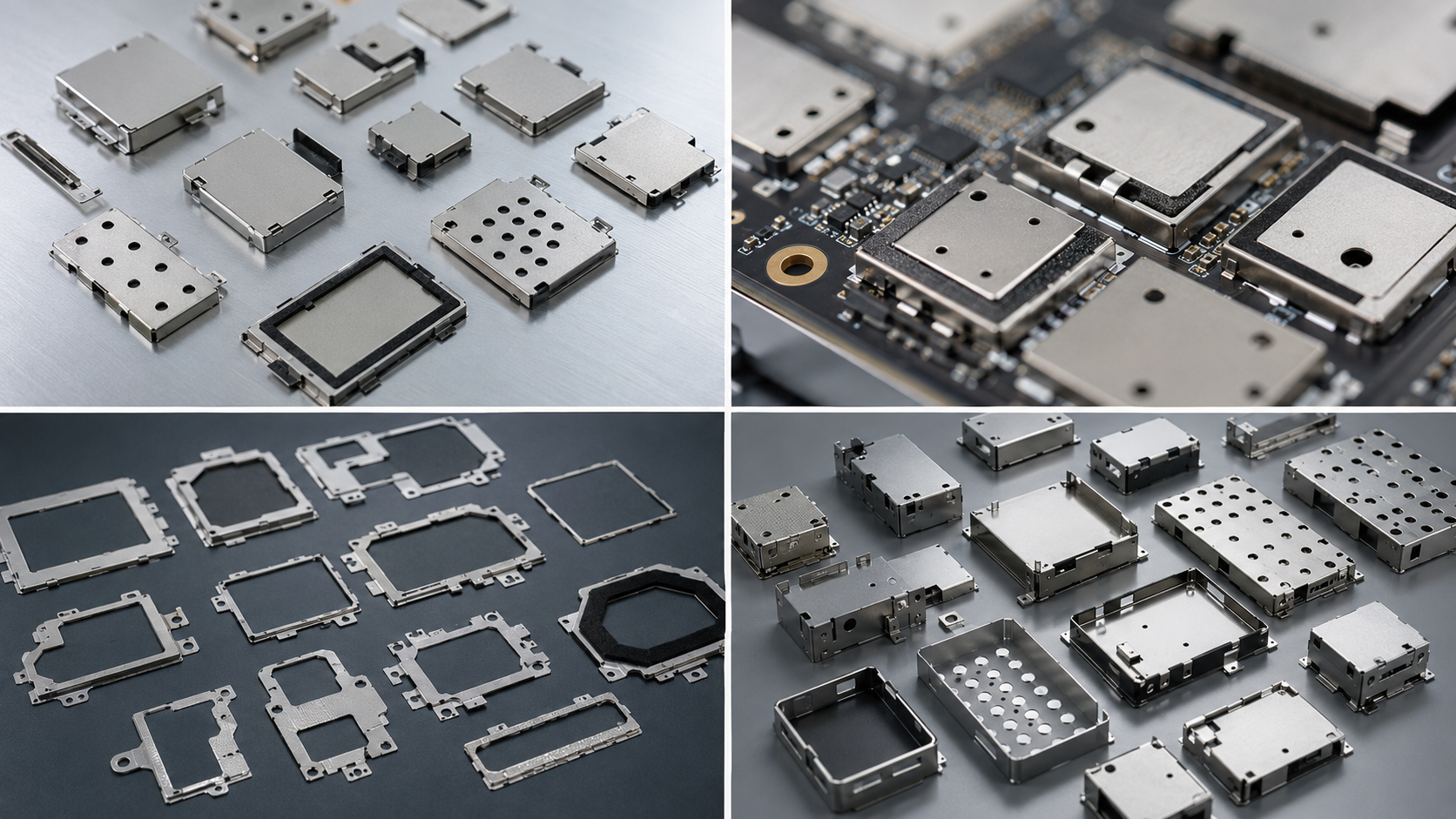
Theme: EMI Shielding Components for Electronics
Why EMI Protection Matters
Poor EMI control can cause:
- Signal distortion
- Data transmission errors
- Reduced wireless performance
- Sensor malfunctions
- Audio noise
- Display interference
- Device instability
In critical applications such as automotive safety systems or medical devices, EMI issues can create serious reliability concerns.
Manufacturers therefore integrate shielding solutions directly into product designs.
What Are Die-Cut EMI Shielding Materials?
Die-cut EMI shielding materials are conductive materials converted into precise shapes using die-cutting technology.
Common materials include:
- Conductive foam
- Conductive fabric over foam
- Copper foil
- Aluminum foil
- Conductive adhesive tapes
- Nickel-plated fabrics
- Conductive non-woven materials
- Graphite films
These materials are cut into custom shapes that fit precisely within electronic assemblies.
How EMI Shielding Works
EMI shielding works by creating a conductive barrier around sensitive components.
The shielding material can:
Reflect Electromagnetic Energy
Conductive surfaces redirect interference away from critical circuits.
Absorb Electromagnetic Energy
Some shielding materials convert electromagnetic energy into small amounts of heat.
Provide Grounding Paths
Shielding materials can safely direct unwanted electrical energy to ground.
The effectiveness depends on material conductivity, thickness, grounding design, and assembly quality.
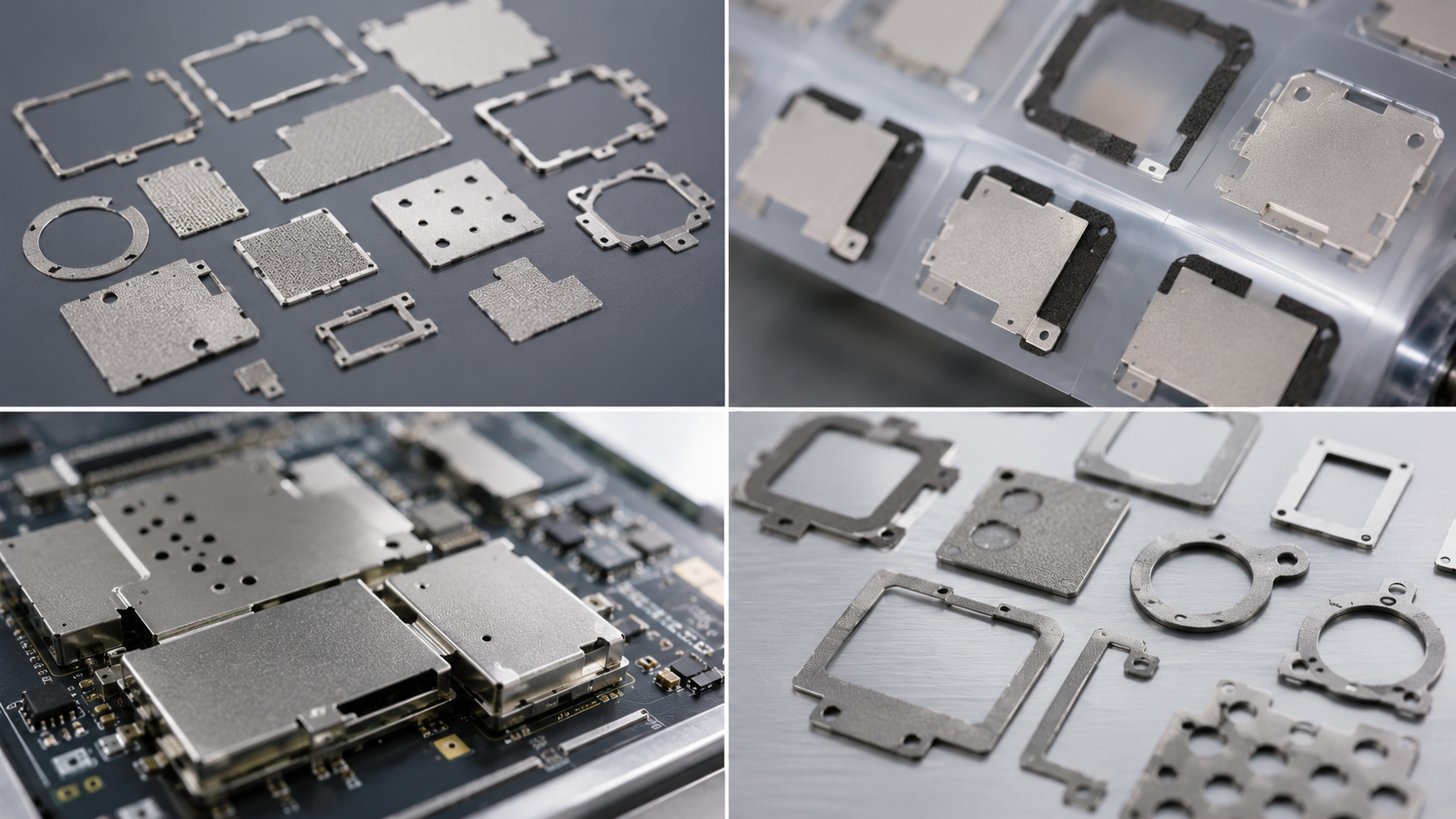
Theme: Precision Die-Cut EMI Shielding Materials
Common Types of Die-Cut EMI Shielding Materials
Conductive Fabric Over Foam
One of the most widely used EMI solutions.
Advantages:
- Excellent shielding effectiveness
- Compression recovery
- Lightweight construction
Applications:
- Electronic housings
- Display assemblies
- Communication devices
Conductive Foam
Conductive particles are incorporated into foam materials.
Advantages:
- Flexible
- Lightweight
- Easy assembly
Applications:
- Device enclosures
- Battery compartments
- Automotive electronics
Copper Foil Shielding
Copper provides excellent electrical conductivity.
Advantages:
- High shielding performance
- Excellent grounding properties
Applications:
- RF devices
- Communication systems
- Consumer electronics
Aluminum Foil Shielding
Aluminum offers a balance of performance and cost.
Advantages:
- Lightweight
- Corrosion resistant
- Cost-effective
Applications:
- Display modules
- Electronic housings
- Industrial electronics
Why Die Cutting Is Important for EMI Materials
EMI materials rarely work as simple sheets.
Modern products require:
- Precise openings
- Complex contours
- Mounting holes
- Adhesive-backed assemblies
Die cutting enables:
- Tight dimensional control
- Consistent quality
- High-volume production
- Easy assembly
Without precision converting, shielding performance may be compromised.
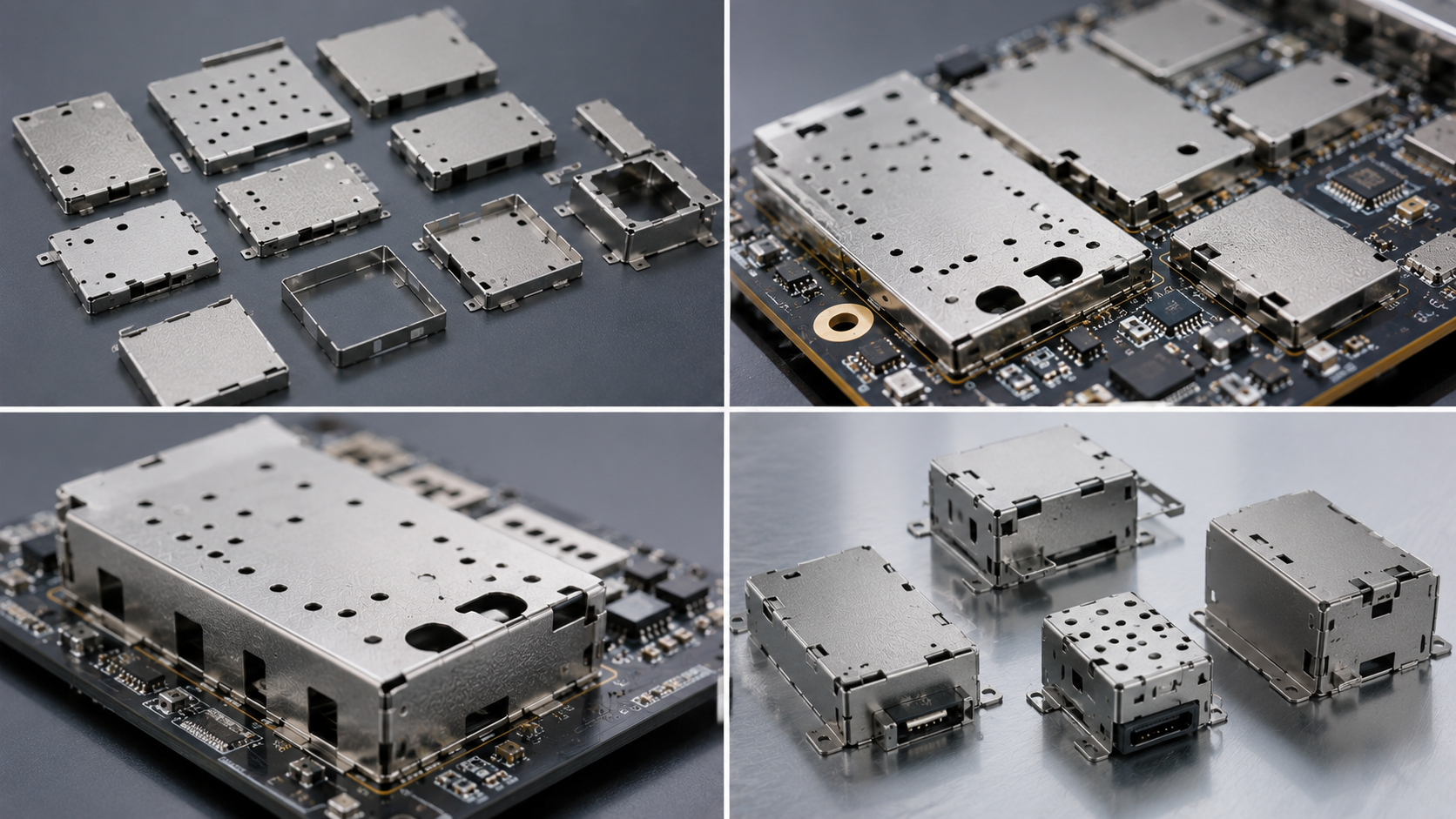
Theme: Precision Electronic Shielding Assembly
Applications of Die-Cut EMI Shielding Components
Consumer Electronics
Used in:
- Smartphones
- Tablets
- Laptops
- Smart watches
EMI shielding helps maintain wireless communication and signal integrity.
Automotive Electronics
Applications include:
- Infotainment systems
- Battery management systems
- Radar modules
- Sensors
Electric vehicles require increasingly sophisticated EMI protection.
Medical Devices
Used for:
- Monitoring equipment
- Diagnostic systems
- Wearable medical devices
Reliable signal performance is critical for patient safety.
Industrial Equipment
Applications include:
- Control systems
- Communication modules
- Automation equipment
EMI shielding improves system stability and reliability.
Key Design Considerations
Successful EMI shielding requires attention to:
Material Conductivity
Higher conductivity generally improves shielding effectiveness.
Compression Performance
Foam-based materials must maintain contact pressure over time.
Grounding Design
Poor grounding can significantly reduce shielding performance.
Environmental Durability
Materials must withstand:
- Temperature changes
- Humidity
- Mechanical stress
Proper validation testing is essential.
How Sanken Manufacturing Supports EMI Shielding Applications
Dongguan Sanken Electronics Manufacturing Co., Ltd. specializes in precision die-cut components and advanced material converting solutions for OEM manufacturers worldwide.
Our capabilities include:
- Precision die cutting
- EMI shielding material converting
- Conductive foam processing
- Conductive fabric laminating
- Adhesive assembly
- PET film converting
- Cleanroom production
Key Advantages
- OEM and ODM customization
- ISO 9001 certified quality management
- RoHS and REACH compliant materials
- Domestic and overseas production bases
- Cleanroom precision manufacturing
- Tool development from drawings or samples
We support consumer electronics, automotive electronics, wearable devices, industrial equipment, and medical product applications.
Featured Snippet Summary
Die-cut EMI shielding materials protect electronics by blocking, absorbing, and redirecting electromagnetic interference. Common materials include conductive foam, conductive fabric, copper foil, aluminum foil, and conductive tapes. Precision die cutting allows these materials to fit complex electronic assemblies while maintaining effective EMI protection.
Conclusion
As electronic devices become more compact and powerful, EMI protection is increasingly important. Die-cut EMI shielding materials provide reliable solutions for controlling electromagnetic interference while supporting efficient assembly and product miniaturization.
By combining advanced conductive materials with precision die-cutting technology, manufacturers can improve signal integrity, reduce electrical noise, and enhance the long-term reliability of modern electronic products.