
How Die Cut Masking Materials Help Improve Painting and Coating Processes
Painting and coating processes require precision. A small amount of overspray, coating contamination, or paint buildup in the wrong area can lead to product defects, assembly problems, rework, and increased production costs. Whether manufacturing automotive components, electronic housings, medical devices, or industrial equipment, controlling where paint or coating is applied is essential.
Die cut masking materials help improve painting and coating processes by protecting critical surfaces, creating precise paint boundaries, reducing overspray, improving coating consistency, and increasing production efficiency. By converting masking materials into custom shapes, manufacturers can achieve repeatable results while reducing labor and quality issues.
For OEM manufacturers, custom die-cut masking solutions often provide a simple way to improve coating quality without changing the production process.
What Are Die Cut Masking Materials?
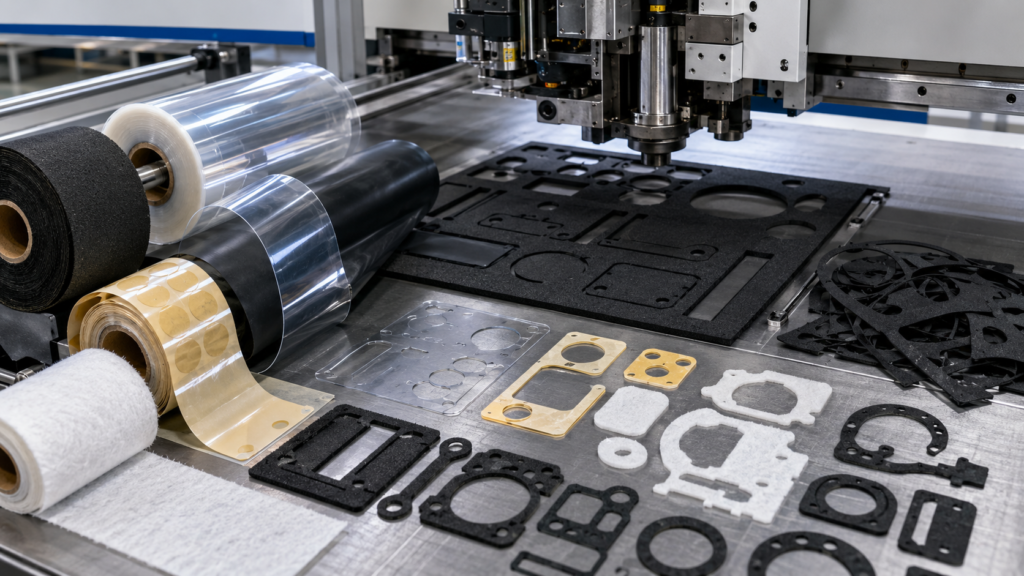
Die cut masking materials are protective materials converted into custom shapes that temporarily cover selected areas during painting, coating, plating, anodizing, powder coating, or surface treatment processes.
Common masking materials include:
- Polyester masking tape
- Polyimide masking tape
- Paper masking materials
- Silicone masking films
- Vinyl masking films
- High-temperature masking tapes
- Rubber masking components
After the process is completed, the masking material is removed, leaving protected areas clean and unaffected.
Theme: Precision Die Cut Masking Materials
Why Traditional Masking Creates Problems
Many manufacturers still rely on manual masking methods.
Common challenges include:
- Inconsistent placement
- Uneven masking edges
- Excess labor costs
- Operator variation
- Slow production speed
Manual masking often produces inconsistent results between batches.
This becomes increasingly problematic for:
- High-volume production
- Tight tolerance requirements
- Cosmetic products
- Automated manufacturing
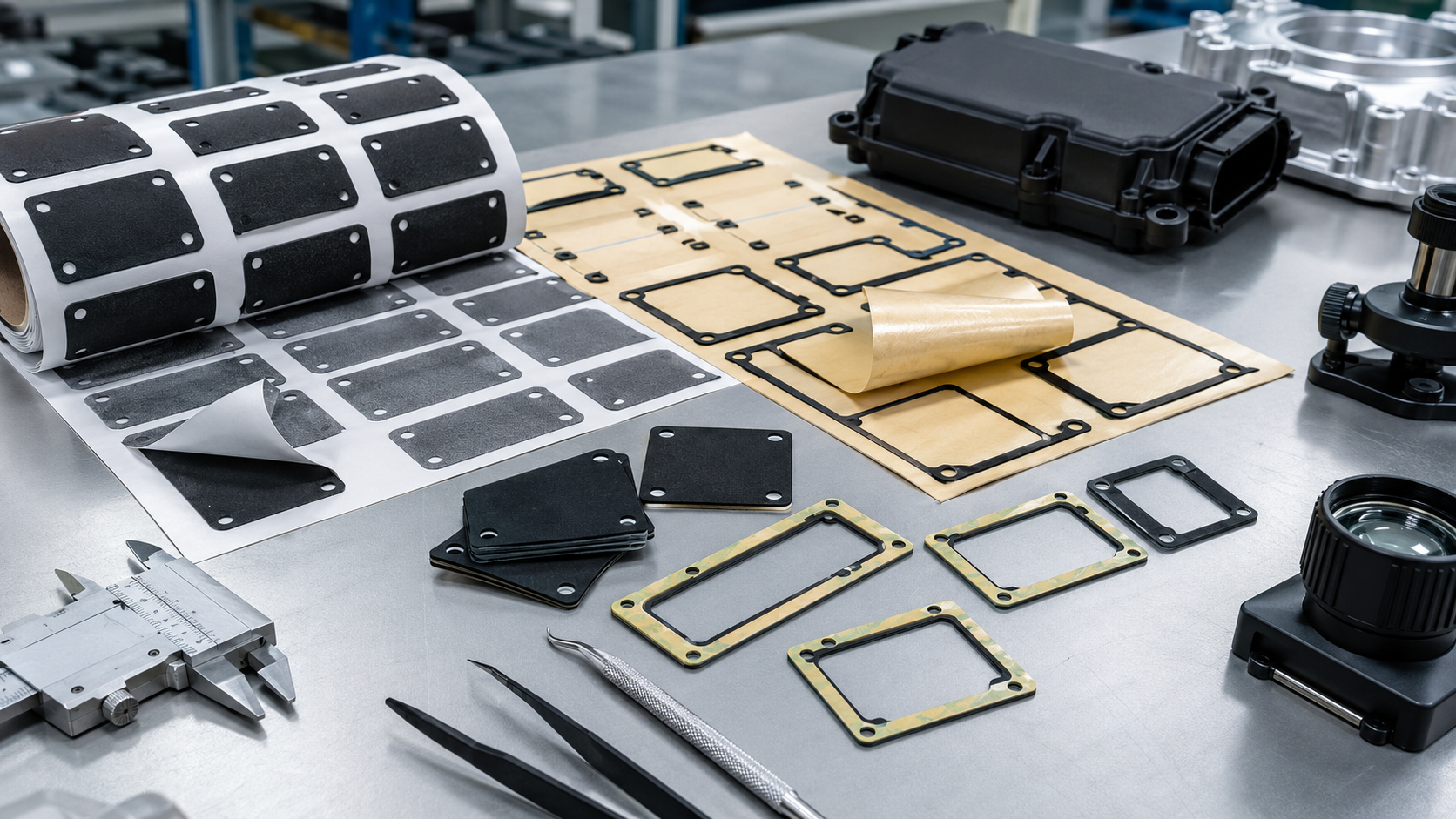
Custom die-cut masking eliminates many of these variables.
How Die Cut Masking Improves Paint Accuracy
One of the primary benefits of die-cut masking is precision.
Custom masking components can be designed to fit:
- Holes
- Threads
- Connectors
- Mounting surfaces
- Electrical contacts
- Optical areas
This allows paint and coatings to be applied only where required.
Benefits include:
- Cleaner paint lines
- Reduced overspray
- Better appearance
- Improved dimensional control
For decorative and functional coatings, edge quality is critical.
Protecting Critical Functional Surfaces
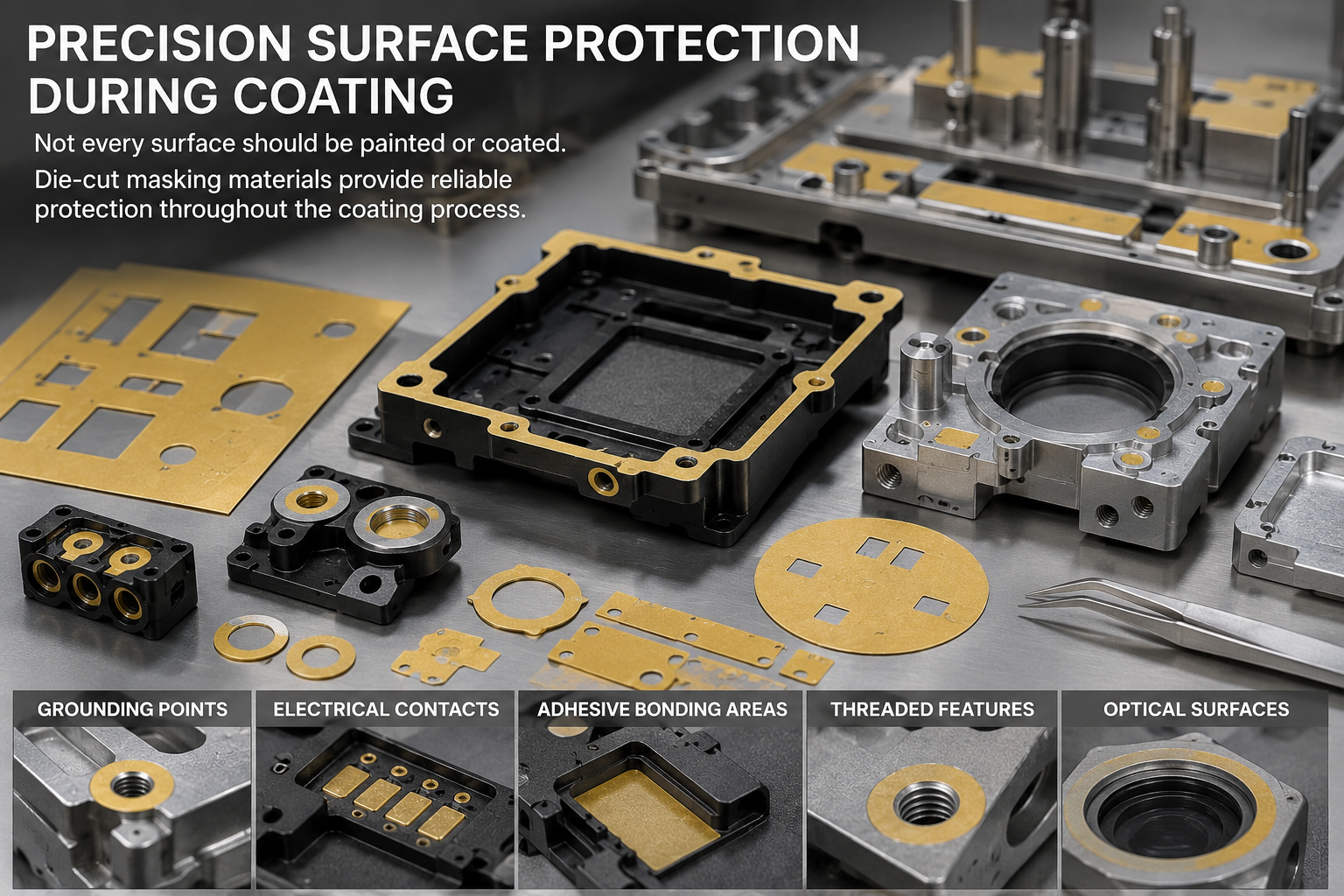
Not every surface should be painted or coated.
Examples include:
- Grounding points
- Electrical contacts
- Adhesive bonding areas
- Threaded features
- Optical surfaces
Coating these areas may cause:
- Assembly failures
- Electrical problems
- Bonding issues
- Performance degradation
Die-cut masking materials provide reliable protection throughout the coating process.
Theme: Precision Surface Protection During Coating
Improving Powder Coating Processes
Powder coating requires masking materials that can withstand elevated temperatures.
Custom die-cut masking solutions help protect:
- Mounting holes
- Sealing surfaces
- Threaded openings
- Precision-machined areas
Benefits include:
- Reduced rework
- Cleaner finished parts
- Faster production
High-temperature masking materials are commonly used for these applications.
Supporting Electronics Manufacturing
Many electronic components require selective coating or painting.
Applications include:
- Display housings
- Battery enclosures
- Sensor assemblies
- Consumer electronics
Die-cut masking materials help protect:
- Connectors
- Contact pads
- Optical windows
- Adhesive bonding areas
This improves product reliability and assembly performance.
Improving Automotive Coating Quality
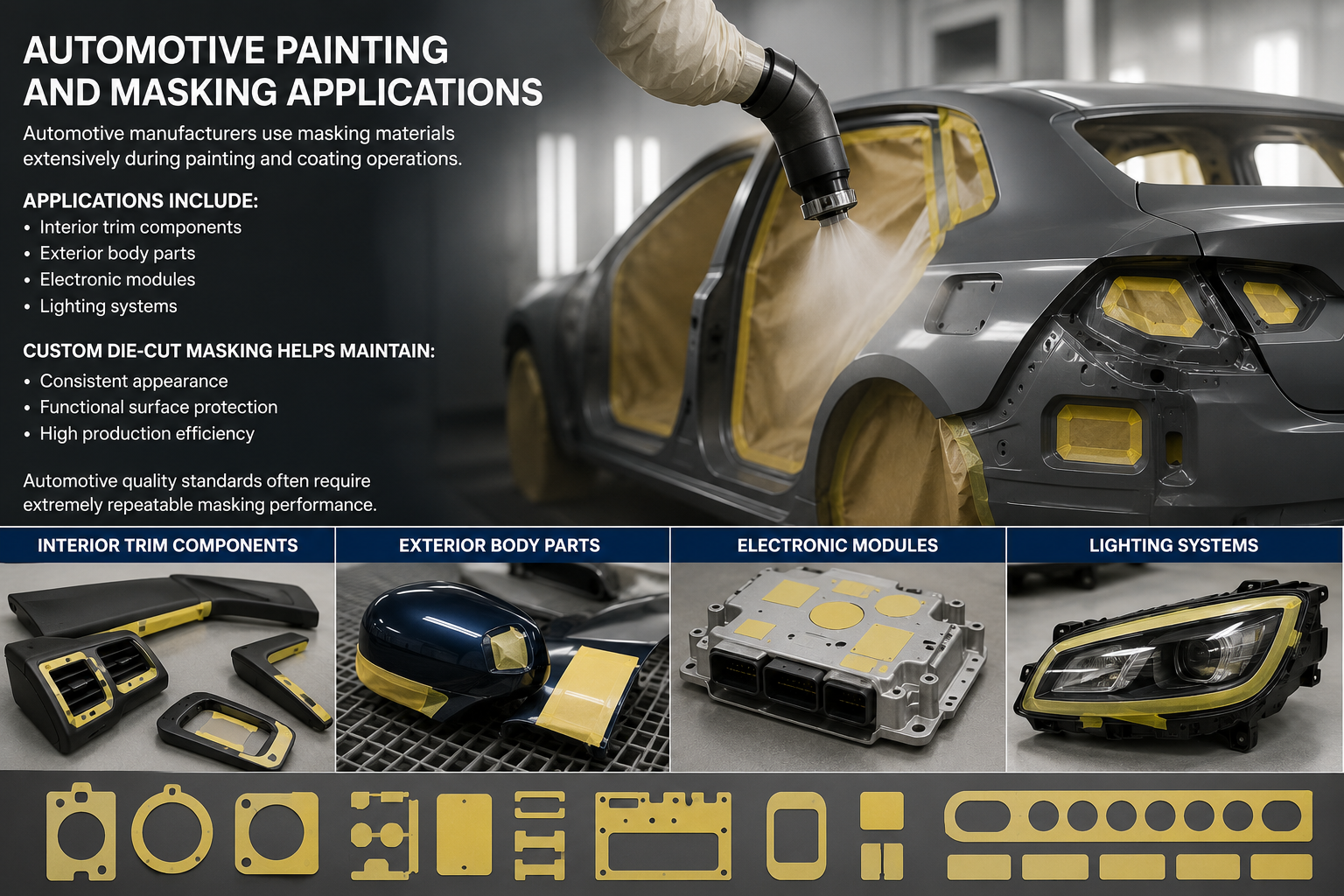
Automotive manufacturers use masking materials extensively during painting and coating operations.
Applications include:
- Interior trim components
- Exterior body parts
- Electronic modules
- Lighting systems
Custom die-cut masking helps maintain:
- Consistent appearance
- Functional surface protection
- High production efficiency
Automotive quality standards often require extremely repeatable masking performance.
Theme: Automotive Painting and Masking Applications
Reducing Production Costs
Although masking materials add a component cost, they often reduce overall manufacturing expenses.
Savings come from:
Less Rework
Fewer coating defects require correction.
Faster Processing
Operators spend less time applying masking manually.
Improved Consistency
Repeatable masking improves yield.
Reduced Scrap
Proper protection prevents costly part rejection.
For high-volume production, these benefits can significantly outweigh masking material costs.
Common Materials Used for Die Cut Masking
Polyester Film
Advantages:
- High temperature resistance
- Clean removal
- Excellent dimensional stability
Applications:
- Powder coating
- Electronics
- Industrial painting
Polyimide Film
Advantages:
- Extremely high temperature resistance
- Excellent chemical resistance
Applications:
- Electronics manufacturing
- PCB protection
Silicone-Based Masking Materials
Advantages:
- Easy removal
- Heat resistance
- Reusable options
Applications:
- Powder coating
- Industrial finishing
Paper Masking Materials
Advantages:
- Cost-effective
- Easy processing
Applications:
- General painting operations
Why Precision Die Cutting Matters
Masking performance depends heavily on accuracy.
Poorly cut masking materials may cause:
- Paint bleed
- Misalignment
- Surface exposure
- Difficult removal
Precision die cutting ensures:
- Clean edges
- Accurate positioning
- Consistent dimensions
- Reliable protection
This becomes especially important for automated coating operations.
How Sanken Manufacturing Supports Masking Applications
Dongguan Sanken Electronics Manufacturing Co., Ltd. specializes in custom die-cut masking solutions and precision material converting.
Our capabilities include:
- Precision die cutting
- Polyester film converting
- Polyimide tape processing
- Adhesive laminating
- Custom masking solutions
- Optical film converting
- Cleanroom precision manufacturing
Key Advantages
- OEM and ODM customization
- ISO 9001 certified quality management
- RoHS and REACH compliant materials
- Domestic and overseas production bases
- Cleanroom production capabilities
- Tool development from drawings or samples
We support automotive, consumer electronics, industrial equipment, optical products, and precision coating applications.
Featured Snippet Summary
Die-cut masking materials improve painting and coating processes by protecting critical surfaces, reducing overspray, improving edge definition, increasing consistency, and reducing labor costs. Common masking materials include polyester films, polyimide tapes, silicone masking materials, and paper masking products converted into precise custom shapes.
Conclusion
Painting and coating quality often depends on controlling exactly where materials are applied. Custom die-cut masking solutions provide accurate, repeatable protection for critical surfaces while improving production efficiency and reducing defects.
By combining advanced masking materials with precision die-cutting technology, manufacturers can achieve cleaner coatings, better product quality, lower production costs, and more reliable manufacturing results.