
How Do You Restore an Old Rubber Gasket?
Rubber gaskets are designed to provide sealing, cushioning, vibration damping, and environmental protection. However, over time, exposure to heat, UV light, oxygen, oils, moisture, and mechanical stress can cause rubber gaskets to harden, shrink, crack, or lose elasticity.
Old rubber gaskets can sometimes be partially restored by cleaning, conditioning, and rehydrating the rubber surface. However, if the gasket has become brittle, cracked, permanently compressed, or chemically degraded, replacement is usually the safest and most reliable solution. Restoration can improve flexibility temporarily, but it cannot fully reverse aging or restore original material properties.
Understanding what caused the gasket to deteriorate helps determine whether restoration is practical or if replacement is necessary.
Why Do Rubber Gaskets Deteriorate?
Rubber naturally ages over time.
Common causes include:
- UV exposure
- Heat aging
- Ozone exposure
- Oil contamination
- Chemical attack
- Compression set
- Oxidation
As the material ages, it may lose elasticity and sealing performance.
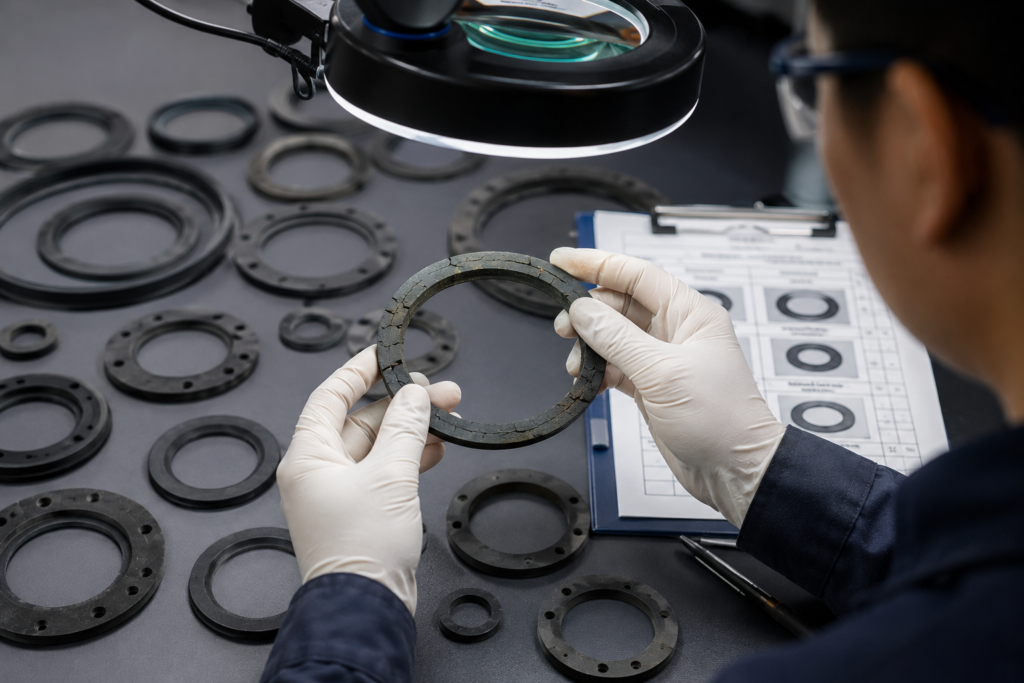
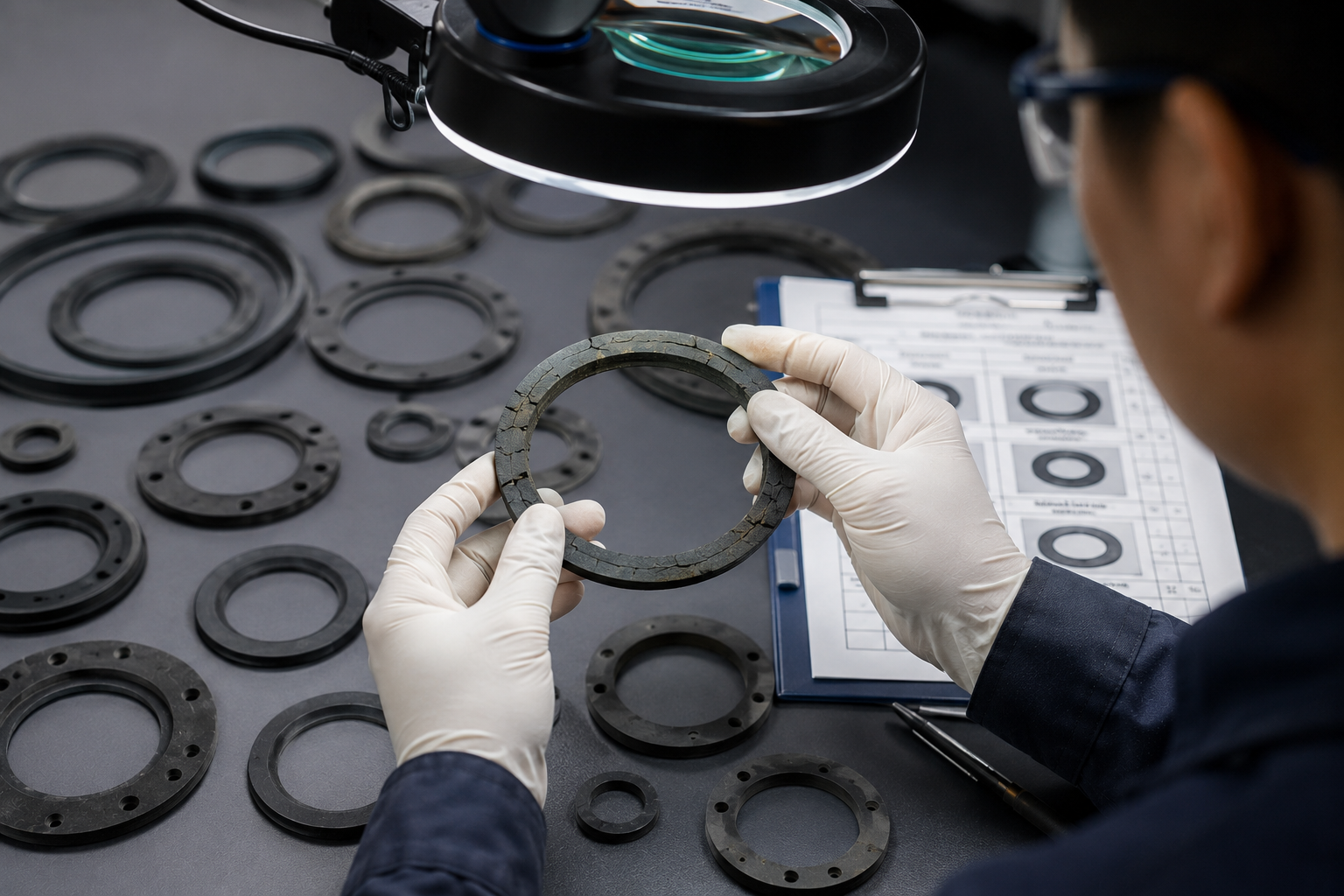
Theme: Aged Rubber Gasket Inspection
Step 1: Inspect the Gasket
Before attempting restoration, inspect the gasket carefully.
Signs of a Restorable Gasket
- Slight hardening
- Minor surface dryness
- Moderate loss of flexibility
- No visible cracks
Signs Replacement Is Needed
- Deep cracking
- Severe shrinkage
- Missing sections
- Permanent deformation
- Excessive brittleness
If the gasket breaks when bent, restoration is unlikely to succeed.
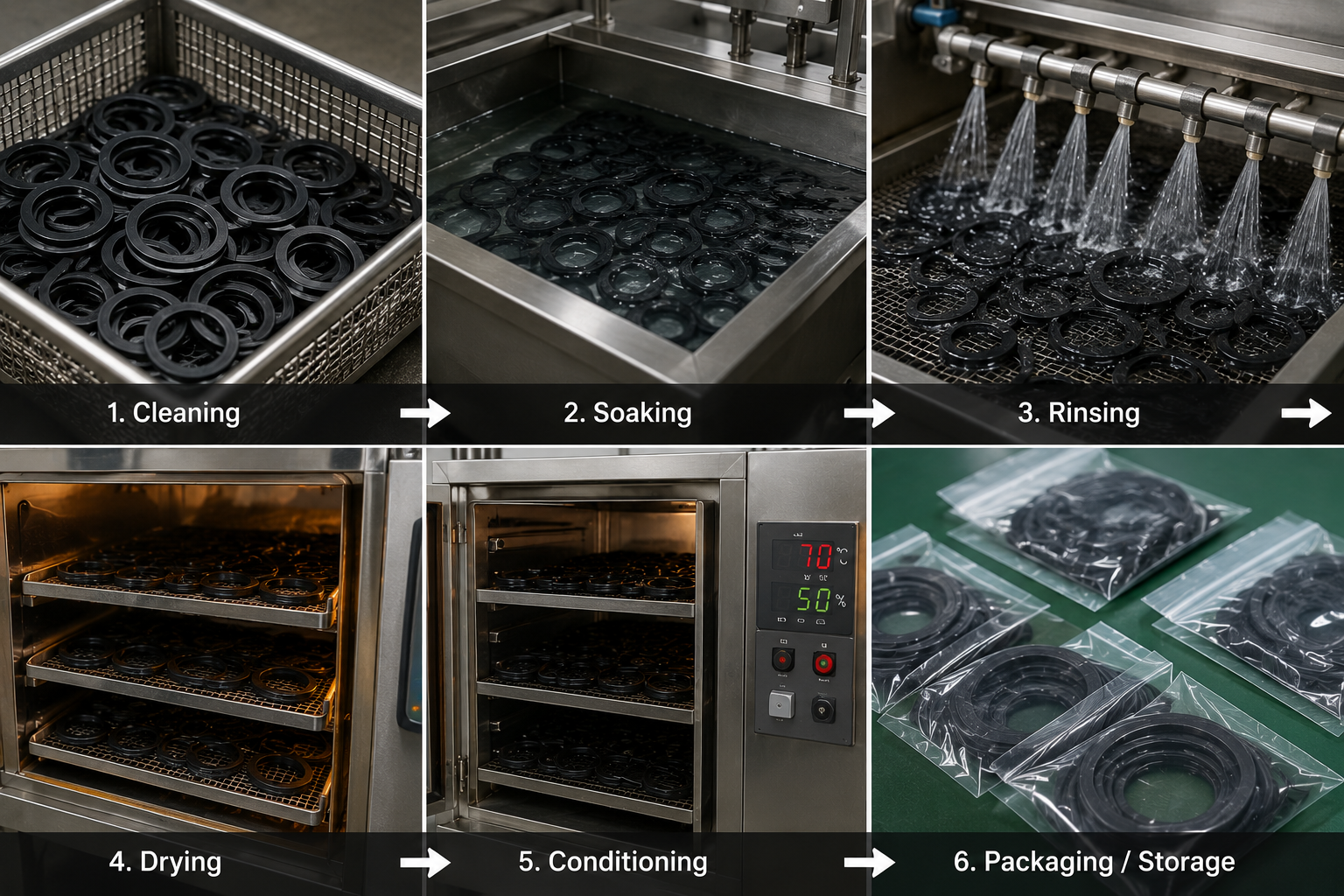
Step 2: Clean the Gasket
Dirt, oil, and oxidation can accelerate deterioration.
Use:
- Mild soap
- Warm water
- Soft cloth
- Soft brush
Avoid:
- Harsh solvents
- Acetone
- Strong degreasers
These chemicals may damage the rubber further.
After cleaning, allow the gasket to dry completely.
Step 3: Apply a Rubber Conditioner
Conditioners can help restore some flexibility.
Common products include:
- Silicone-based rubber conditioners
- Rubber rejuvenators
- Specialized gasket conditioners
These products help:
- Reduce surface dryness
- Improve flexibility
- Protect against further aging
Apply according to the manufacturer's instructions.
Step 4: Allow the Rubber to Absorb the Conditioner
After application:
- Let the gasket rest for several hours
- Wipe away excess material
- Repeat if necessary
Older rubber may require multiple treatments.
Theme: Rubber Gasket Conditioning Process
Step 5: Evaluate Flexibility
After conditioning:
Check whether the gasket:
- Bends without cracking
- Returns to shape
- Maintains surface integrity
If flexibility improves significantly, the gasket may remain usable for low-risk applications.
However, restoration rarely returns rubber to its original performance level.
Can Heat Restore Rubber?
Some people attempt to soften old rubber using heat.
This may temporarily increase flexibility but often provides only short-term improvement.
Excessive heat can actually accelerate aging.
For this reason, controlled conditioning is generally safer than heating.
Can Oil Restore Rubber?
Certain oils may temporarily soften some rubber compounds.
However, many oils can:
- Cause swelling
- Alter dimensions
- Reduce sealing performance
Using random household oils is generally not recommended.
Specialized rubber conditioning products are a better choice.
When Should a Rubber Gasket Be Replaced?
Replacement is recommended when:
- Cracks are visible
- Compression set is severe
- Leakage occurs
- Material becomes brittle
- Critical sealing performance is required
In industrial, automotive, medical, and electronic applications, replacement is often more reliable than restoration.
How Modern Rubber Gaskets Improve Durability
Modern gasket materials offer improved aging resistance.
Common materials include:
EPDM
Excellent resistance to:
- UV exposure
- Weathering
- Ozone
Silicone Rubber
Excellent resistance to:
- Heat
- UV
- Environmental aging
Nitrile Rubber (NBR)
Excellent resistance to:
- Oils
- Fuels
- Lubricants
Selecting the correct material significantly extends service life.
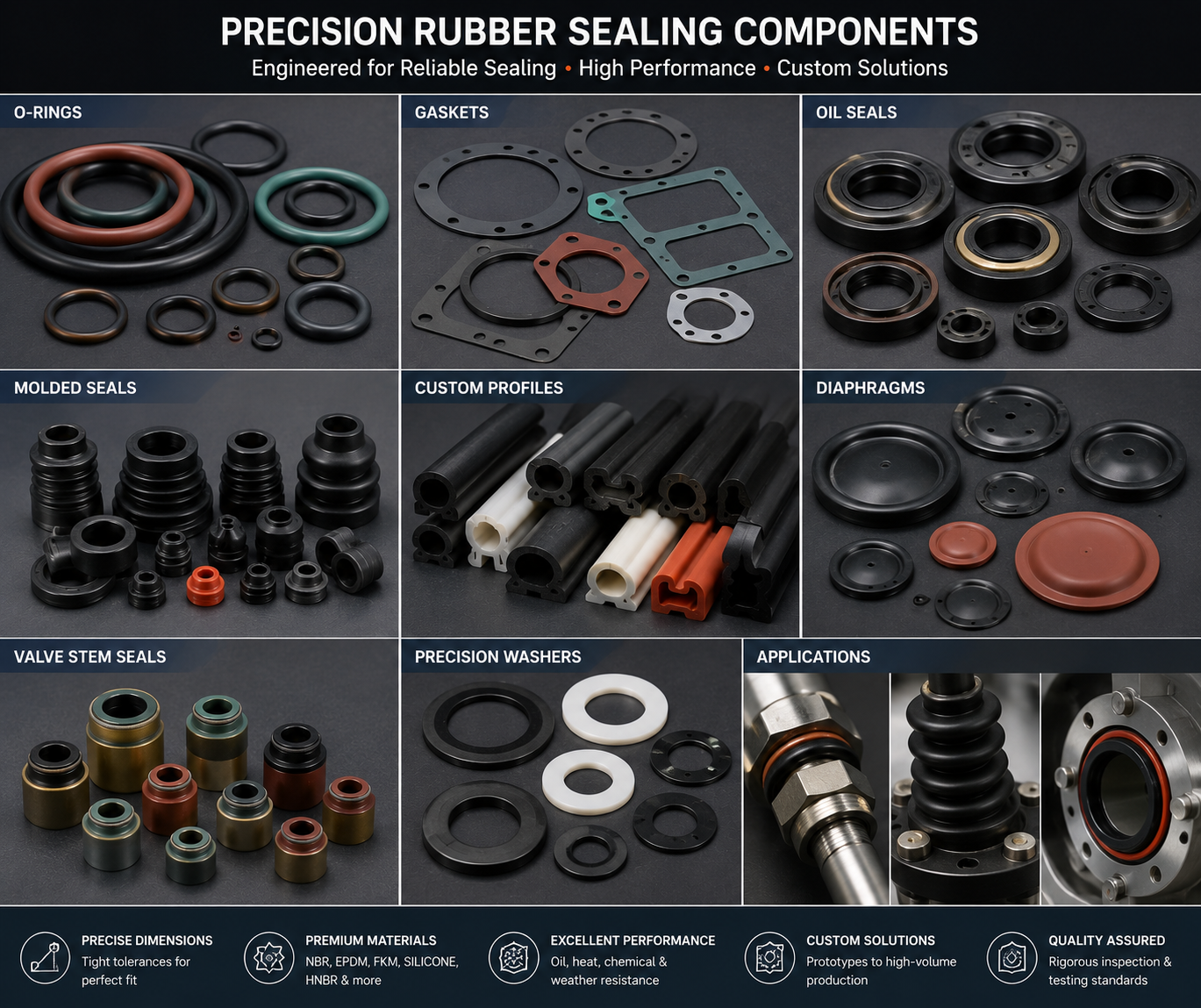
Theme: Precision Rubber Sealing Components
How Sanken Manufacturing Supports Custom Rubber Gasket Solutions
Dongguan Sanken Electronics Manufacturing Co., Ltd. specializes in custom rubber sealing products and precision converting solutions for OEM manufacturers worldwide.
Our capabilities include:
- Custom rubber gasket manufacturing
- Silicone gasket production
- EPDM sealing components
- Precision die cutting
- Foam gasket converting
- Adhesive assembly
- Injection molding
Key Advantages
- OEM and ODM customization
- ISO 9001 certified quality management
- RoHS and REACH compliant materials
- Domestic and overseas production bases
- Cleanroom precision manufacturing
- Tool development from drawings or samples
We support automotive sealing systems, consumer electronics, industrial equipment, and custom OEM applications.
Featured Snippet Summary
Old rubber gaskets can sometimes be restored by cleaning and applying rubber conditioners to improve flexibility and reduce surface dryness. However, if the gasket is cracked, brittle, permanently compressed, or chemically degraded, replacement is usually the most reliable solution.
Conclusion
Restoring an old rubber gasket may help extend its usable life when aging is limited to surface dryness or moderate hardening. Cleaning and conditioning can improve flexibility temporarily, but they cannot fully reverse rubber degradation.
For critical sealing applications, replacing the gasket with a properly engineered material such as EPDM, silicone, or nitrile rubber is often the safest and most cost-effective long-term solution.