
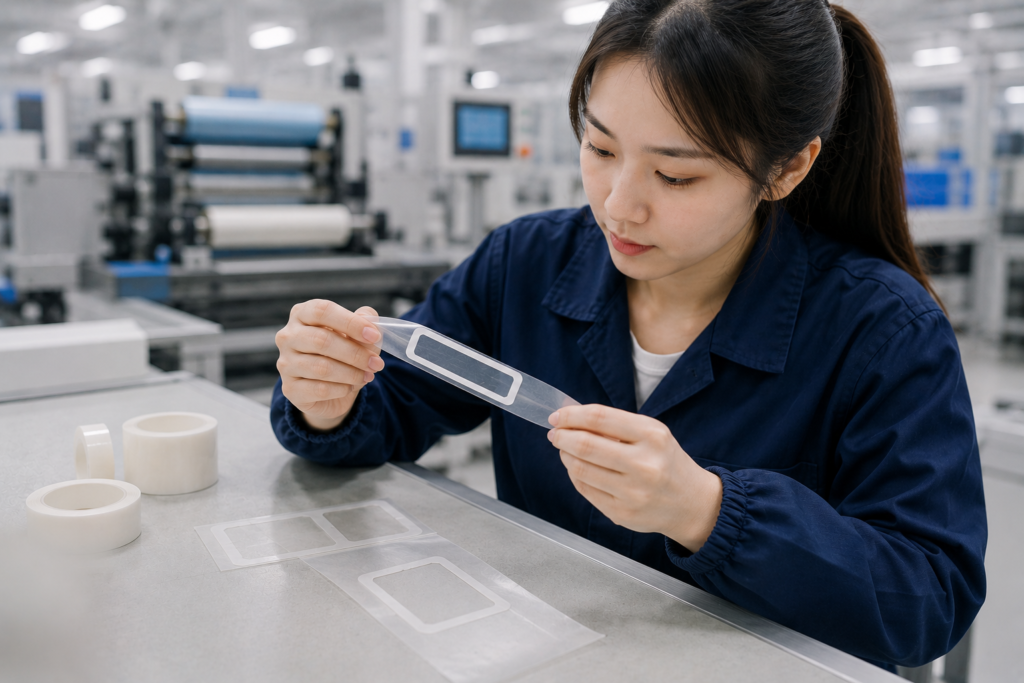
3M tape works by using a pressure-sensitive adhesive that develops close contact with a compatible surface when pressure is applied.
The adhesive conforms to microscopic irregularities in the substrate, increasing the effective contact area. Depending on the tape, surface and application conditions, the bond may continue to develop after the initial application.
However, “3M tape” does not describe one material or one adhesive system. The term covers adhesive transfer tapes, carrier-based double-sided tapes, foam tapes, acrylic foam tapes, PET-backed tapes and other constructions.
A tape that bonds reliably to clean stainless steel or glass may behave differently on textured plastic, polypropylene, coated metal, foam or rubber. Performance can also change when roll tape is converted into a narrow frame, small pad or multilayer die-cut component.
Understanding how pressure-sensitive adhesive works is therefore only the first step. OEM engineers must also review the tape construction, substrate, application pressure, temperature, part geometry, release liner and assembly method.
How Does Pressure-Sensitive Adhesive Create a Bond?
Many industrial 3M tapes use pressure-sensitive adhesive, commonly called PSA.
Unlike a liquid adhesive, a PSA normally does not need to be mixed or dispensed at the assembly station. It is supplied as a controlled adhesive layer on a carrier, foam core or release liner.
The bonding process can be understood in three stages.
1. Initial contact
The adhesive first touches the substrate.
At this stage, the visible contact area may appear complete, but microscopic gaps can still remain between the adhesive and the surface.
2. Wet-out
Applied pressure helps the adhesive conform to small surface irregularities.
Better wet-out increases adhesive-to-surface contact. If pressure is uneven, corners and narrow sections may not contact the substrate sufficiently.
3. Bond development
Depending on the selected tape, substrate and environmental conditions, adhesive contact may continue to develop after application.
Time, temperature and assembly stress can affect this process. The rate of bond development should be confirmed from the technical information for the selected tape grade rather than treated as identical for every 3M tape.
3M Tape Is Not One Tape Construction
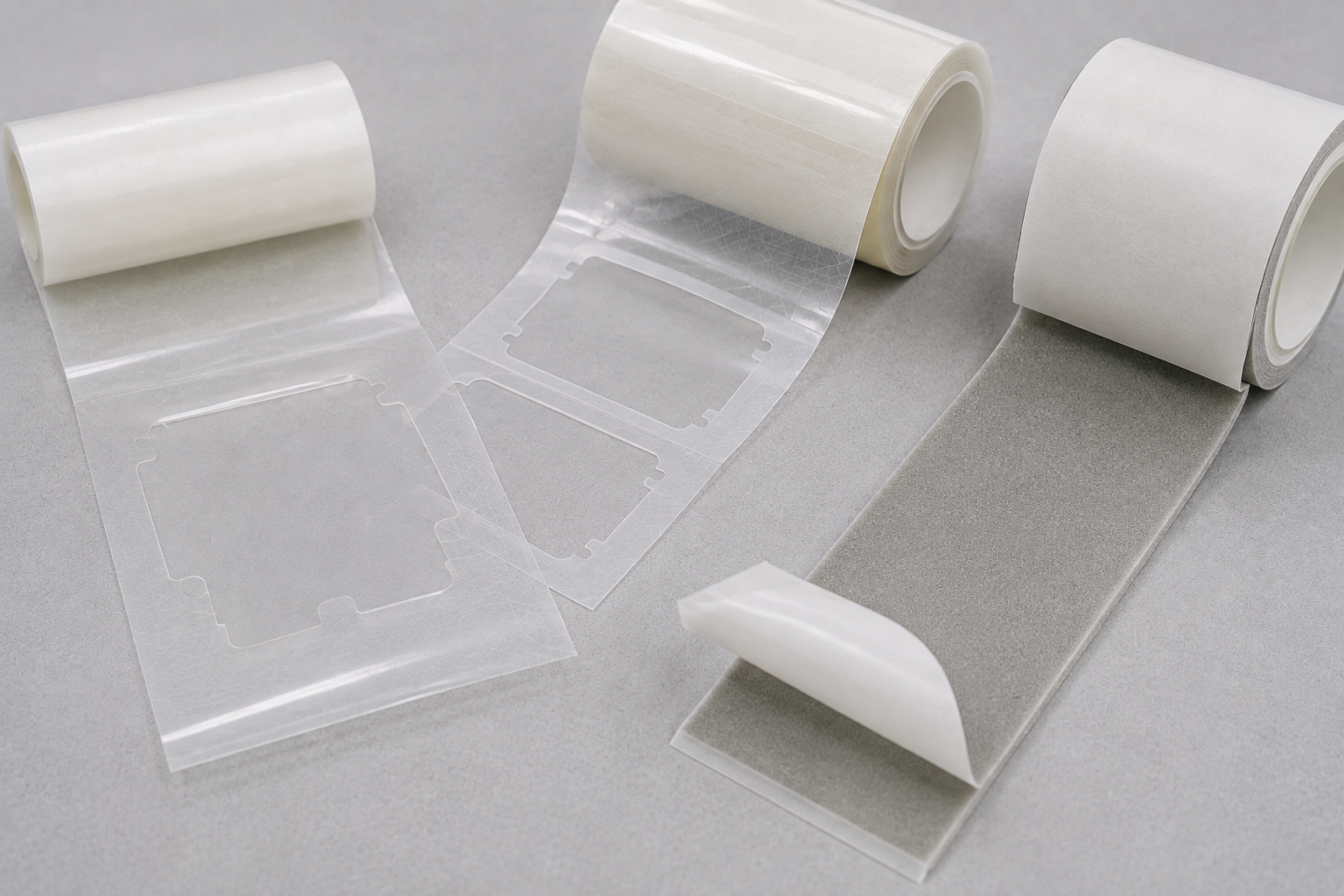
Different tape constructions are designed for different bonding and converting requirements.
| Tape construction | Basic structure | Important die-cut consideration |
|---|---|---|
| Adhesive transfer tape | Adhesive layer without a permanent carrier | Handling, liner release and waste removal |
| Double-sided carrier tape | Adhesive coated on both sides of film, tissue or another carrier | Registration and dimensional stability |
| Foam tape | Compressible foam carrier with adhesive surfaces | Thickness, compression and edge deformation |
| Acrylic foam or VHB tape | Viscoelastic acrylic foam construction | Stress distribution, conformability and application pressure |
| PET-backed adhesive tape | Thin PET carrier with adhesive | Narrow frames, positioning and dimensional control |
| Removable tape | Adhesive designed for controlled removal | Residue, aging and removal conditions |
Adhesive transfer tape can provide a very thin bonding layer because it does not contain a permanent carrier. However, the unsupported adhesive can be more sensitive to handling, liner selection and waste removal.
Carrier-based double-sided tape provides greater dimensional support. Foam and acrylic foam tapes can compensate for selected surface variation or distribute stress, but their thickness and compressibility introduce different die-cutting challenges.
For a broader explanation of carrier structures and liner-supported components, see how double-sided tape works for die-cut OEM parts.
Why Does Substrate Surface Energy Matter?
Adhesive must spread sufficiently across the bonding surface to create useful contact.
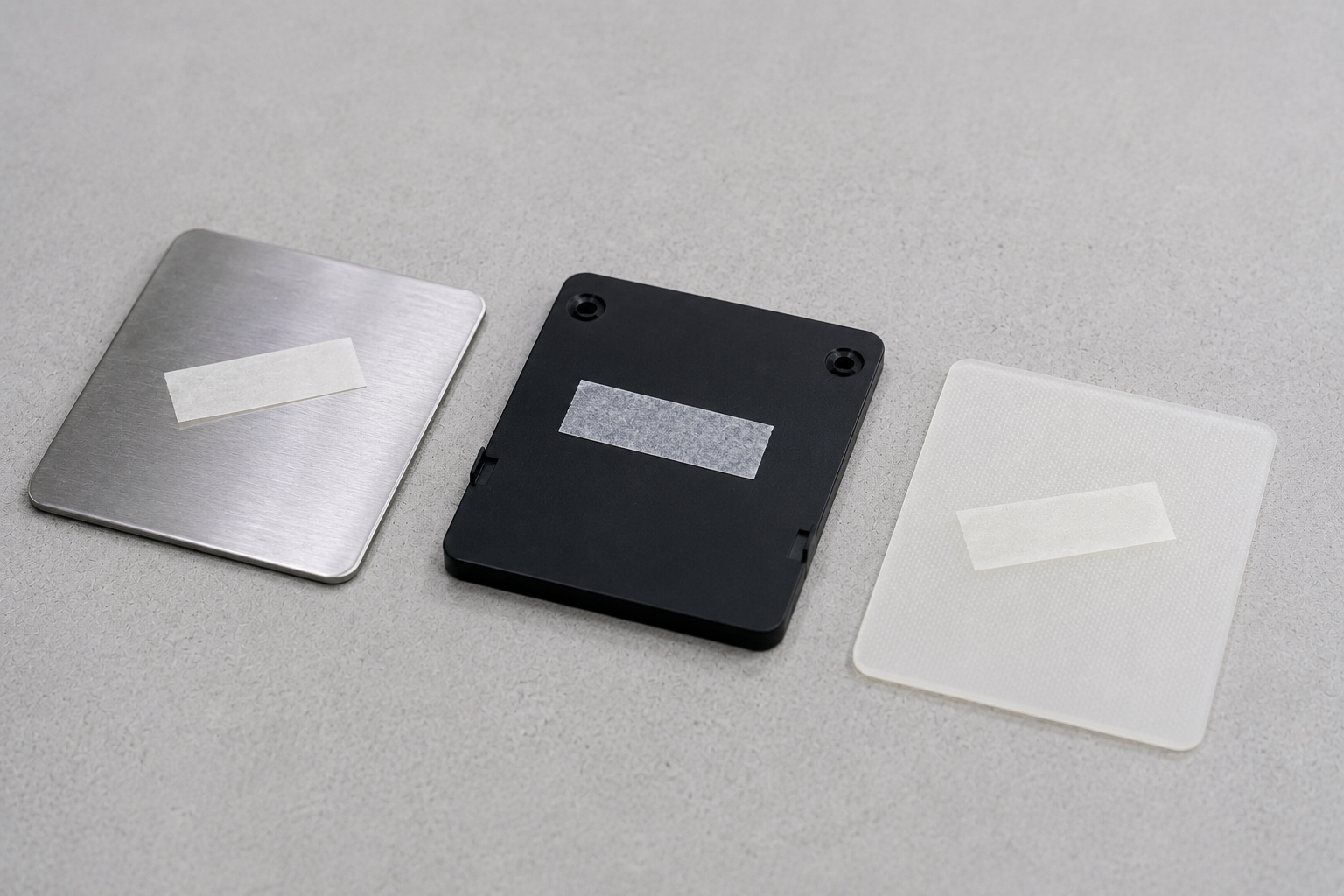
High-surface-energy materials, such as many clean metals and glass surfaces, generally allow adhesives to wet out more readily. Some plastics, coatings and textured surfaces can be more difficult to bond.
Lower-surface-energy materials may include selected grades of:
- Polypropylene
- Polyethylene
- Powder-coated surfaces
- Textured plastics
- Rubber or silicone-based materials
This does not mean that every low-surface-energy material is impossible to bond. It means the adhesive must be selected and tested for the actual substrate.
A recognized brand name alone does not confirm compatibility. Engineers should provide the exact first and second bonding surfaces, including coatings, paint systems and textures.
Why Surface Preparation Affects Tape Performance
Dust, oil, moisture, release agents and loose particles can prevent adhesive from contacting the intended substrate.
A surface may look clean while still carrying contamination from molding, machining, handling or packaging.
Depending on the substrate and approved assembly procedure, preparation may include:
- Removing visible dust and loose particles
- Cleaning oil or processing residue
- Allowing the surface to dry fully
- Avoiding contact with the cleaned bonding area
- Confirming whether a primer or surface treatment is required
- Controlling the time between cleaning and tape application
The cleaning method must be compatible with the substrate. Solvents, primers or abrasion should not be introduced without confirming that they will not damage the surface or violate the applicable process specification.
For optical and display components, surface preparation and particle control may be especially important because contamination can affect both adhesive bonding and visual quality. These considerations should be reviewed together with the requirements of the optical assembly application.
How Do Pressure, Temperature and Time Affect Bonding?
Pressure helps the adhesive make closer contact with the substrate.
Uneven pressure can leave poorly bonded corners or narrow sections. This is particularly important for frames, rings and irregular die-cut shapes because a small unpressed area may become the starting point for edge lifting.
Application temperature also affects adhesive behavior. If the tape or substrate is too cold during installation, the adhesive may be too firm to wet out the surface effectively.
After application, bond development may continue over time. However, no single pressure, temperature or waiting period applies to every 3M tape.
The correct values depend on:
- Tape grade
- Adhesive chemistry
- Substrate
- Surface energy
- Tape thickness
- Assembly pressure
- Working environment
- Applied stress
Engineers should use the technical data for the exact tape grade and validate the bond on actual production substrates.
Why Does Die-Cut Tape Behave Differently From Roll Tape?
A tape may perform well as a continuous strip but create additional challenges after being converted into a custom shape.
Typical die-cut adhesive components include:
- Narrow bonding frames
- Mounting pads
- Adhesive-backed PET parts
- Foam tape gaskets
- Rings and irregular profiles
- Kiss-cut parts supplied on release liners
- Multilayer film, foam and adhesive components
Converting introduces variables that do not appear when tape is simply cut from a roll:
- Cutting depth
- Minimum wall width
- Adhesive movement at the edge
- Release-liner compatibility
- Waste-removal direction
- Part spacing
- Material tension
- Layer registration
- Sheet or roll delivery format
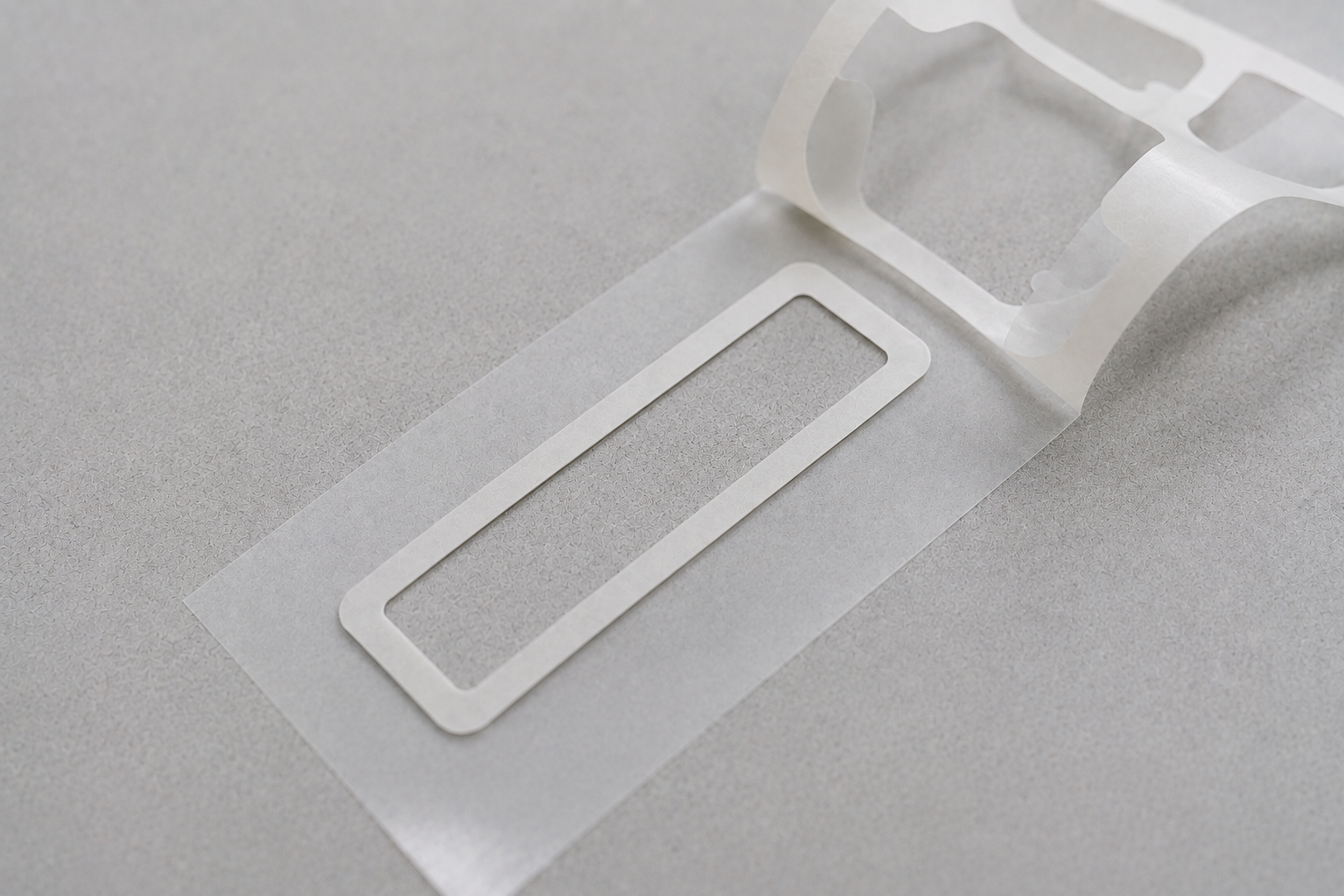
For kiss-cut parts, the tool must cut through the tape construction while leaving the release liner sufficiently intact.
If the cutting depth is too shallow, the component may not separate cleanly. If it is too deep, the liner may weaken or tear during peeling, roll handling or automated feeding.
Narrow frames can also stretch or lift during waste removal. These risks should be reviewed during the precision die-cutting process using the actual tape construction and part geometry.
Common Problems in Die-Cut Adhesive Parts
Tape-bonding problems do not always originate from the adhesive itself.
| Problem | Possible cause | What should be checked |
|---|---|---|
| Edge lifting | Poor wet-out, contamination or restoring stress | Surface preparation, pressure and part geometry |
| Weak initial bond | Low application temperature or unsuitable adhesive | Tape grade, substrate and application conditions |
| Adhesive bleed | Soft adhesive, heat exposure or converting pressure | Adhesive grade, storage and cutting conditions |
| Part shifting | Stress applied before sufficient bond development | Dwell time, positioning and fixture design |
| Difficult peeling | Unsuitable liner release or kiss-cut depth | Liner grade and cutting control |
| Narrow frame deformation | Weak geometry or aggressive waste removal | Wall width, spacing and stripping direction |
| Liner tearing | Excessive die penetration | Tool condition and kiss-cut depth |
| Residue after removal | Unsuitable removable adhesive or aging condition | Adhesive type and service environment |
The observed failure should be connected to its physical cause before changing the tape grade.
For example, changing to a stronger adhesive may not solve edge lifting caused by insufficient application pressure or excessive restoring stress from the part geometry.
What Should Engineers Confirm Before Selecting the Tape?
Before tape selection or die-cut sampling, confirm:
- Exact tape brand and grade, if already specified
- First and second bonding substrates
- Surface coating and texture
- Operating temperature
- Humidity or chemical exposure
- Required permanent or removable bonding
- Available bonding width
- Tape thickness limitation
- Drawing and critical dimensions
- Application pressure and assembly method
- Required release-liner type
- Sheet, roll or individual-part delivery
- Expected annual volume
- Required aging or environmental validation
If the customer has already approved a specific tape grade, the converter should not replace it without authorization and validation.
For a custom project, buyers can review the information required for an adhesive tape die-cut part quotation.
How Sanken Supports Customer-Specified Tape Converting
When a project specifies 3M or another industrial adhesive tape, Sanken reviews how the material will be converted into a production-ready component.
Depending on the part construction, the process may include:
- Material lamination
- Precision die cutting
- Kiss cutting
- PET-backed adhesive converting
- Foam tape converting
- Release-liner configuration
- Waste-matrix removal
- Prototype sampling
- Dimensional inspection
- Sheet or roll delivery
The selected tape should be reviewed together with the part geometry, substrate, environment and assembly process.
Our role is to convert the customer-specified or project-approved material into a stable component—not to assume that one tape works for every substrate or application.
Examples of relevant material and component forms are available on our custom die-cut parts page.
Conclusion
3M pressure-sensitive tape works by developing close contact with a compatible surface under applied pressure.
Bonding performance depends on more than the tape brand. The tape construction, adhesive chemistry, substrate surface energy, cleanliness, temperature, pressure, time and service environment must all be considered.
When the tape is converted into a custom die-cut component, cutting depth, adhesive-edge condition, liner release, waste removal, part geometry and delivery format also affect production reliability.
The correct approach is to confirm the exact tape grade against the actual substrates and then validate the converted part under representative assembly and environmental conditions.
3M and VHB are trademarks of 3M Company. References in this article are provided for general technical information. Material selection should be confirmed using the applicable manufacturer technical data and actual application testing.
Related Articles
- How Double-Sided Tape Works for Die-Cut OEM Parts
- How to Choose the Right Pressure-Sensitive Adhesive Tape for Die-Cut Parts
- What Information Should You Provide for a Custom Adhesive Tape Die-Cut Part Quotation?
- How Precision Die-Cut Adhesive Tapes Improve Camera Module Assembly Reliability
- How to Choose Adhesive-Backed Foam Gaskets for OEM Assembly