
What Is Insulation? What Are Its Types?
Heat loss, electrical leakage, excessive noise, and vibration can reduce product performance, increase energy consumption, and shorten equipment life. To solve these problems, manufacturers use insulation materials that control the transfer of heat, electricity, sound, or vibration.
Insulation is a material or system designed to reduce the transfer of heat, electricity, sound, or vibration between two areas. Depending on the application, insulation can improve energy efficiency, enhance safety, reduce noise, protect sensitive components, and increase product reliability. Common types of insulation include thermal insulation, electrical insulation, acoustic insulation, and vibration insulation.
From automotive and consumer electronics to industrial equipment and buildings, insulation plays a critical role in modern manufacturing.
Why Is Insulation Important?
Insulation helps:
- Reduce energy loss
- Maintain stable temperatures
- Prevent electrical short circuits
- Improve product safety
- Reduce noise levels
- Minimize vibration
- Extend equipment lifespan
Without proper insulation, systems become less efficient and more prone to failure.
Theme: Industrial Insulation Materials
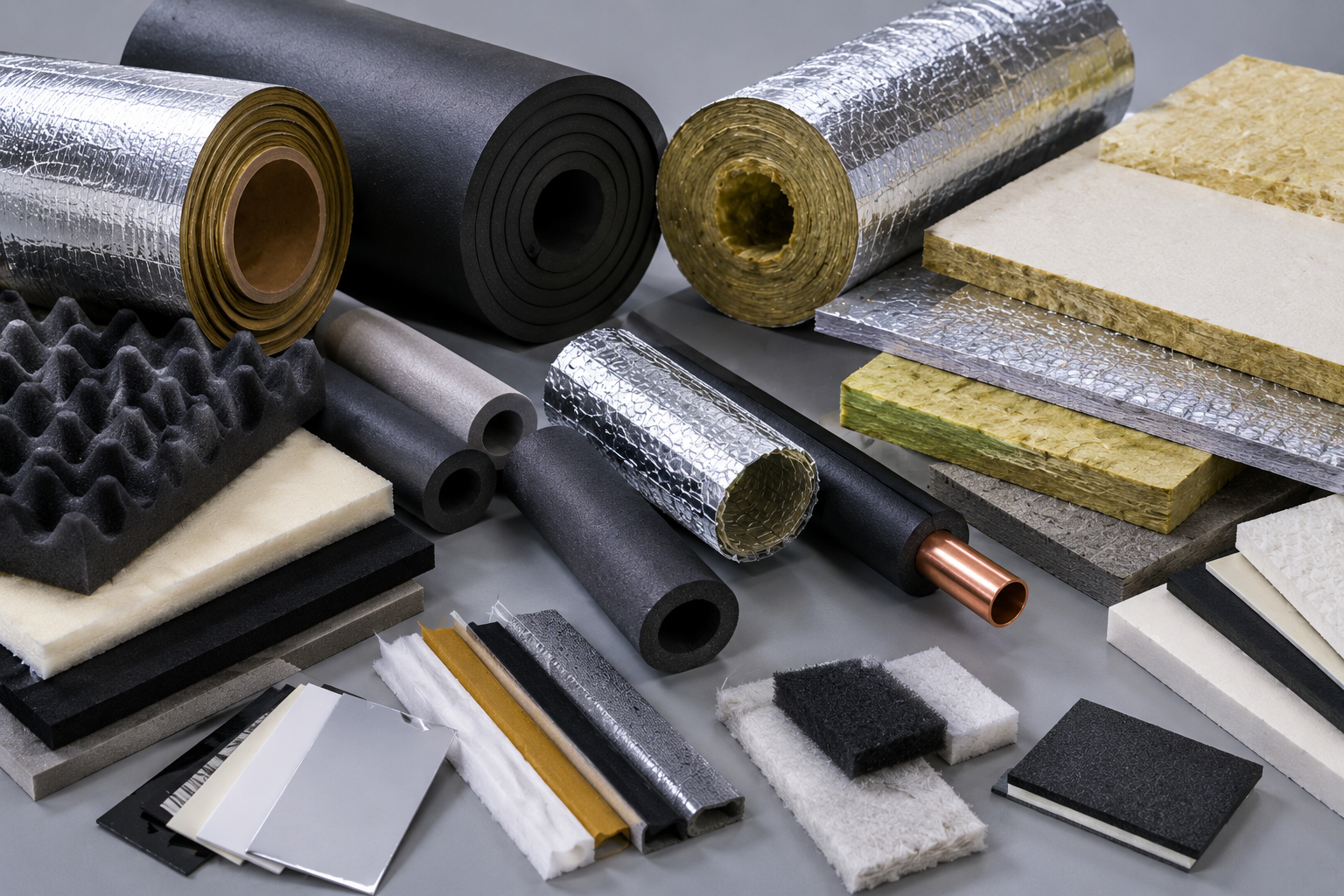
Type 1: Thermal Insulation
Thermal insulation reduces the transfer of heat between surfaces or environments.
Purpose
- Maintain temperature
- Improve energy efficiency
- Protect heat-sensitive components
Common Materials
- Polyethylene (PE) foam
- Polyurethane foam (PUF)
- Fiberglass
- Mineral wool
- Silicone foam
- Aerogel
- Ceramic fiber
Applications
- Building insulation
- Refrigeration systems
- Automotive thermal management
- Consumer electronics
Thermal insulation is one of the most common forms of insulation used worldwide.
Type 2: Electrical Insulation
Electrical insulation prevents electric current from flowing where it is not intended.
Purpose
- Prevent short circuits
- Protect users from electric shock
- Improve equipment safety
Common Materials
- PET film
- Polyimide (PI) film
- Silicone rubber
- Ceramics
- Fiberglass
- Electrical paper
Applications
- Batteries
- Motors
- Transformers
- Consumer electronics
- Electrical equipment
Modern electronic devices rely heavily on electrical insulation materials.
Type 3: Acoustic Insulation
Acoustic insulation reduces noise transmission and absorbs sound waves.
Purpose
- Improve comfort
- Reduce noise pollution
- Enhance acoustic performance
Common Materials
- Non-woven felt
- Mineral wool
- Polyester fiber
- Acoustic foam
Applications
- Automotive NVH systems
- Buildings
- Home appliances
- Industrial machinery
Acoustic insulation is increasingly important in electric vehicles and smart devices.
Theme: Precision Electronic Insulation Components
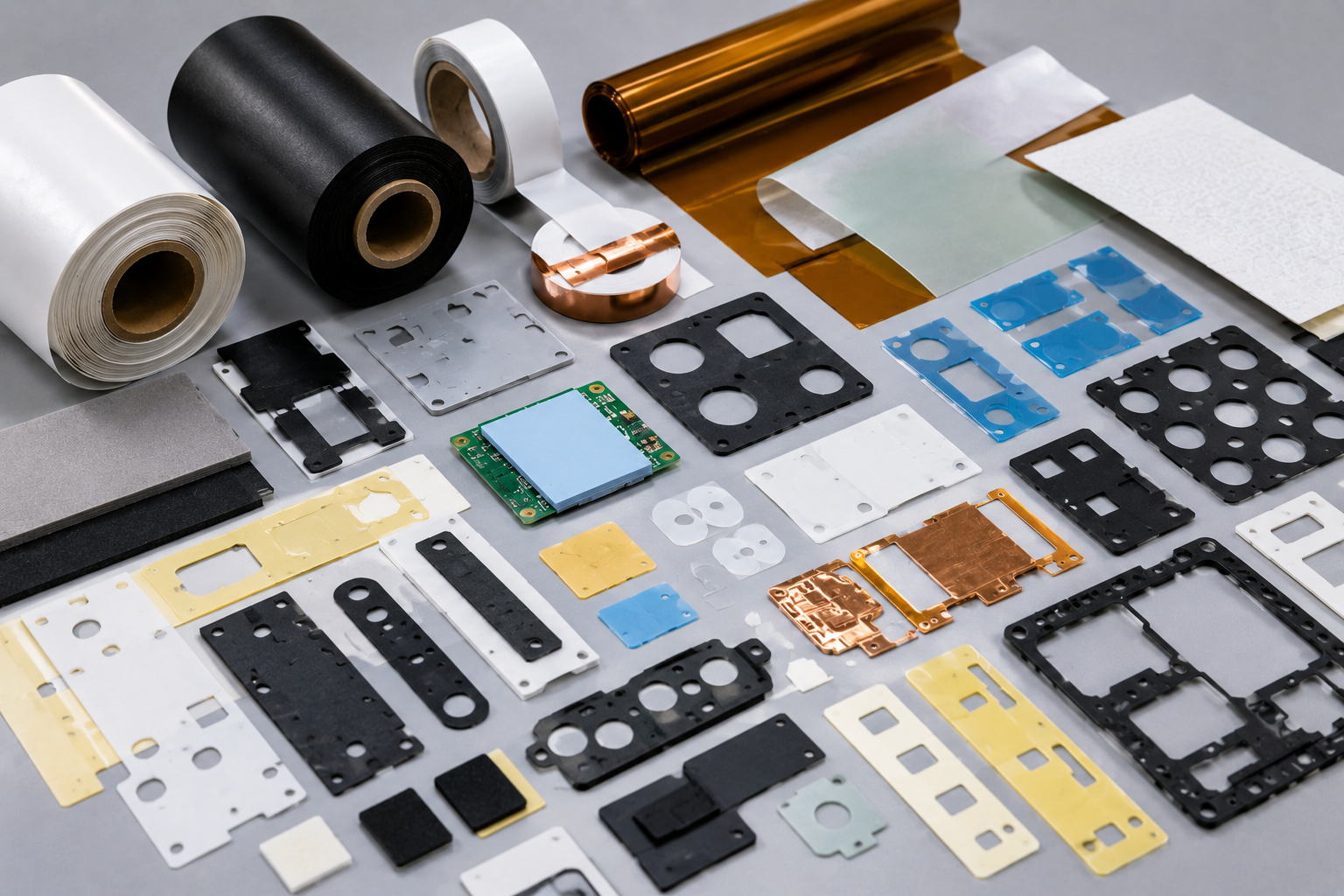
Type 4: Vibration Insulation
Vibration insulation minimizes the transfer of mechanical vibration between components.
Purpose
- Reduce noise
- Protect equipment
- Improve durability
Common Materials
- EPDM foam
- Silicone foam
- Rubber
- Elastomers
Applications
- Automotive systems
- Industrial machinery
- Electronic devices
- Home appliances
Proper vibration control improves product performance and user experience.
Common Insulation Materials and Their Functions
| Material | Thermal | Electrical | Acoustic | Vibration |
|---|---|---|---|---|
| PE Foam | Excellent | Good | Good | Good |
| PU Foam | Excellent | Good | Good | Good |
| Mineral Wool | Excellent | Good | Excellent | Moderate |
| Fiberglass | Excellent | Excellent | Good | Low |
| PET Film | Moderate | Excellent | Low | Low |
| Silicone Foam | Good | Excellent | Moderate | Excellent |
| Non-Woven Felt | Good | Moderate | Excellent | Good |
| Rubber | Moderate | Good | Good | Excellent |
| Ceramic | Excellent | Excellent | Low | Low |
| Aerogel | Outstanding | Good | Moderate | Low |
Many engineered products use multiple insulation materials simultaneously.
Insulation in Automotive Applications
Modern vehicles use insulation for:
- NVH noise reduction
- Thermal management
- Battery protection
- Interior comfort
Common materials include:
- Needle-punched felt
- PE foam
- EPDM foam
- Non-woven insulation components
These materials help improve driving comfort and energy efficiency.
Insulation in Consumer Electronics
Electronic devices require insulation to:
- Prevent short circuits
- Control heat
- Protect components
- Reduce vibration
Common materials include:
- PET insulation film
- Polyimide film
- Foam gaskets
- Silicone components
Precision die-cut insulation materials are widely used in smartphones, tablets, and wearable devices.
How Sanken Manufacturing Supports Insulation Applications
Dongguan Sanken Electronics Manufacturing Co., Ltd. provides custom insulation solutions for OEM manufacturers worldwide.
Our capabilities include:
- Precision die cutting
- Foam converting
- Non-woven material processing
- Adhesive laminating
- Thermal insulation assemblies
- Rubber sealing products
- Injection molding
Key Advantages
- OEM and ODM customization
- ISO 9001 certified quality management
- RoHS and REACH compliant materials
- Domestic and overseas production bases
- Cleanroom precision manufacturing
- Tool development from drawings or samples
We specialize in automotive NVH insulation components, consumer electronics die-cut materials, and custom sealing solutions.
Theme: Custom OEM Insulation Solutions
Featured Snippet Summary
Insulation is a material or system that reduces the transfer of heat, electricity, sound, or vibration. The main types of insulation are thermal insulation, electrical insulation, acoustic insulation, and vibration insulation. Common insulation materials include foam, fiberglass, mineral wool, PET film, silicone foam, non-woven felt, rubber, and aerogel.
Conclusion
Insulation is essential for improving safety, efficiency, comfort, and reliability across industries. Whether the goal is to reduce heat transfer, prevent electrical leakage, absorb noise, or control vibration, selecting the right insulation material is critical.
By combining advanced materials with precision converting technologies, manufacturers can create customized insulation solutions that meet the performance requirements of automotive, consumer electronics, industrial equipment, and many other applications.