
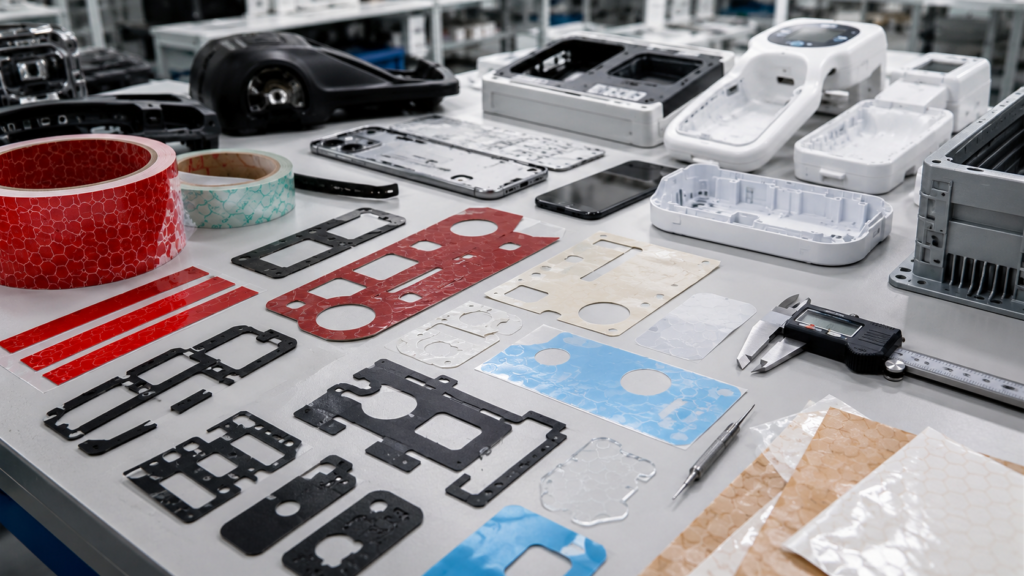
Double-sided tape works by using adhesive on both sides of a carrier, film, foam, tissue, or transfer adhesive layer to bond two surfaces together. For OEM engineers and buyers, the real question is not only how double-sided tape sticks. The more important question is whether the tape structure, adhesive type, thickness, liner, die-cut shape, and assembly process can support reliable bonding in mass production.
At Sanken, we help OEM customers convert double-sided tape, foam tape, PET film, rubber, non-woven felt, and adhesive-backed materials into custom die cut components for automotive electronics, consumer electronics, medical devices, appliances, and industrial equipment. A small adhesive part may look simple, but if it fails during peeling, positioning, bonding, or aging, it can create assembly delays and quality problems.
Why This Topic Matters for OEM Manufacturing
Double-sided tape is widely used in OEM assembly because it can replace liquid glue, screws, clips, or welding in many applications. It allows cleaner bonding, faster installation, lighter product design, and more flexible assembly.
In automotive electronics, double-sided tape can hold foam gaskets, insulation films, anti-rattle pads, sensor parts, and housing components.
In consumer electronics, it can bond displays, speakers, batteries, cameras, protective films, and small internal parts.
In medical devices, adhesive-backed components may support pads, films, seals, and disposable parts.
In industrial equipment and appliances, double-sided tape can help with sealing, cushioning, mounting, spacing, and surface protection.
However, double-sided tape does not work well automatically. It depends on surface condition, adhesive chemistry, pressure, contact area, temperature, time, material compatibility, and die-cut design.
This is why OEM buyers should treat double-sided tape as an engineered bonding component, not just a sticky material.
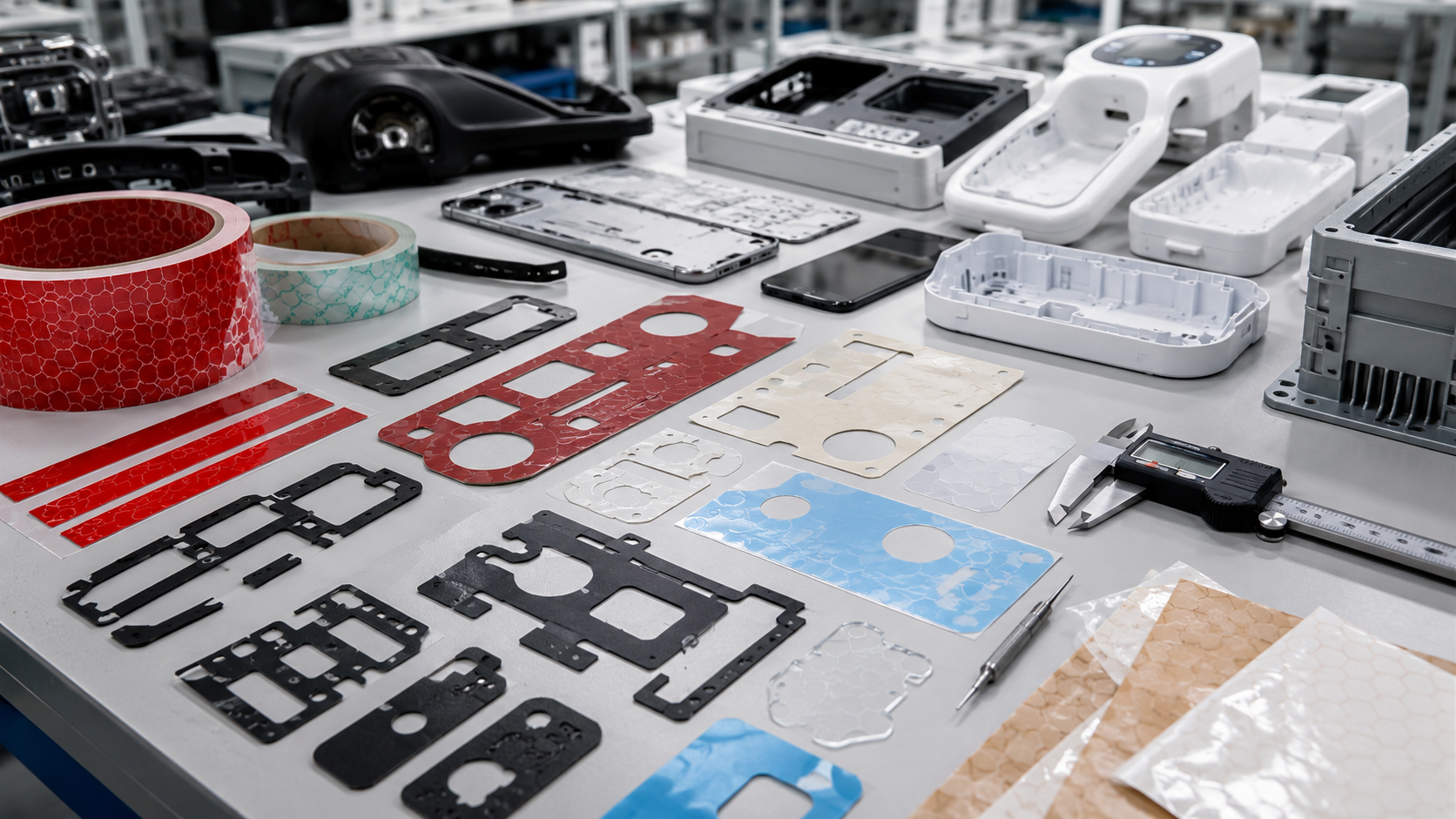
How Double-Sided Tape Bonds Two Surfaces
Most double-sided tapes use pressure-sensitive adhesive. This means the adhesive bonds when pressure is applied to bring the tape into close contact with the surface.
The bonding process usually depends on three factors.
First, the adhesive must wet the surface. This means it must flow into small surface details and create contact. Smooth, clean, and suitable surfaces usually bond better.
Second, enough pressure must be applied. Without pressure, the adhesive may only touch part of the surface, leaving weak bonding areas.
Third, the adhesive needs time to build strength. Some tapes reach useful strength quickly, while others continue to build bond strength over hours.
A tape may feel sticky when touched, but real bonding performance is different from finger tack. OEM applications require stable peel strength, shear resistance, temperature resistance, and aging performance.
Main Structures of Double-Sided Tape
Double-sided tape can be built in different ways. The structure affects strength, flexibility, thickness, and die-cutting behavior.
| Tape Structure | Description | Common OEM Use |
|---|---|---|
| Tissue tape | Thin tissue carrier with adhesive on both sides | General bonding and light assembly |
| PET carrier tape | PET film carrier with adhesive on both sides | Electronics, insulation, precision assembly |
| Foam tape | Foam carrier with adhesive on both sides | Sealing, cushioning, gap filling |
| Transfer adhesive | Adhesive without a carrier | Thin bonding and lamination |
| Non-woven tape | Soft fiber carrier with adhesive | Flexible bonding and cushioning |
| VHB-style foam tape | Thick acrylic foam adhesive structure | Strong bonding and mounting |
A thin PET carrier tape may provide better dimensional stability. A foam tape may fill gaps and absorb vibration. A transfer adhesive may be useful when the bonding layer must be very thin. A thicker foam tape may help bond uneven surfaces, but it may require more careful die cutting and liner control.
The right tape structure depends on the final application.
Common Problems and Production Risks
Double-sided tape failures often happen because the tape is selected only by thickness or price. In real production, bonding performance depends on the full structure and assembly process.
| Problem | Common Cause | OEM Risk |
|---|---|---|
| Weak bonding | Wrong adhesive for the surface | Part lifting or falling off |
| Adhesive overflow | Soft adhesive or high cutting pressure | Contamination and poor appearance |
| Difficult peeling | Wrong liner or kiss cutting depth | Slow assembly and damaged parts |
| Tape stretching | Thin or soft material | Poor positioning |
| Edge lifting | Low pressure or dirty surface | Long-term bonding failure |
| Die cut deformation | Narrow shape or poor waste removal | Low yield |
| Poor temperature resistance | Wrong adhesive grade | Failure after heat exposure |
| Batch inconsistency | Weak lamination or cutting control | Unstable production quality |
For example, an adhesive-backed foam gasket may fail if the tape bonds poorly to a plastic housing. A PET adhesive film may shift if the liner release is unstable. A narrow tape strip may stretch during peeling if the die-cut design is too weak.
This is why double-sided tape should be tested in the real assembly condition whenever possible.
What Buyers or Engineers Should Check First
Before selecting or ordering double-sided tape parts, engineers should confirm the application requirements.
| Checklist Item | What to Confirm | Why It Matters |
|---|---|---|
| Bonding surface | Plastic, metal, glass, rubber, coating, painted surface | Determines adhesive selection |
| Tape function | Bonding, sealing, cushioning, spacing, insulation | Guides tape structure |
| Thickness limit | Available assembly gap | Controls fit and pressure |
| Adhesive type | Acrylic, rubber-based, silicone, transfer adhesive | Affects bonding and aging |
| Carrier type | PET, foam, tissue, non-woven, no carrier | Affects stability and flexibility |
| Liner type | Paper liner, film liner, easy-release liner | Affects peeling and assembly |
| Die cut shape | Holes, slots, narrow strips, tabs | Affects waste removal and handling |
| Application environment | Heat, humidity, vibration, chemicals, compression | Confirms long-term performance |
| Assembly process | Manual, fixture, automated, roll-fed | Defines delivery format |
| Testing method | Peel, shear, aging, compression, fit test | Verifies real performance |
The tape should match the surface and the process.
A strong adhesive is not always the best choice. If it is too aggressive, the liner may be hard to peel. If it is too soft, adhesive overflow may appear during die cutting. If it is too thick, the part may not fit the assembly gap.
Why Surface Preparation Matters
Double-sided tape needs clean surface contact.
Dust, oil, release agents, moisture, loose coating, or surface texture can reduce bonding strength. Some plastics also have low surface energy, which makes bonding more difficult.
Engineers should check whether the tape is applied to metal, ABS, PC, PP, PE, rubber, glass, painted parts, coated parts, or textured surfaces.
Low surface energy plastics may require a different adhesive. Rough surfaces may need thicker foam tape. High-temperature areas may need heat-resistant adhesive. Medical or skin-contact applications may need specific adhesive review.
For OEM buyers, the bonding surface should be shared with the supplier before sampling. Without this information, the supplier may choose a tape that looks right but fails in real assembly.
Die Cutting Double-Sided Tape Into Custom Components
Double-sided tape is often die cut into custom shapes to improve assembly efficiency.
Common die cut tape parts include:
- Adhesive mounting pads
- Foam tape gaskets
- PET carrier adhesive parts
- Display bonding tapes
- Battery insulation adhesive films
- Medical adhesive pads
- Sensor bonding parts
- Protective film tabs
- Industrial sealing strips
Die cutting allows the tape to match holes, edges, windows, slots, tabs, and product geometry.
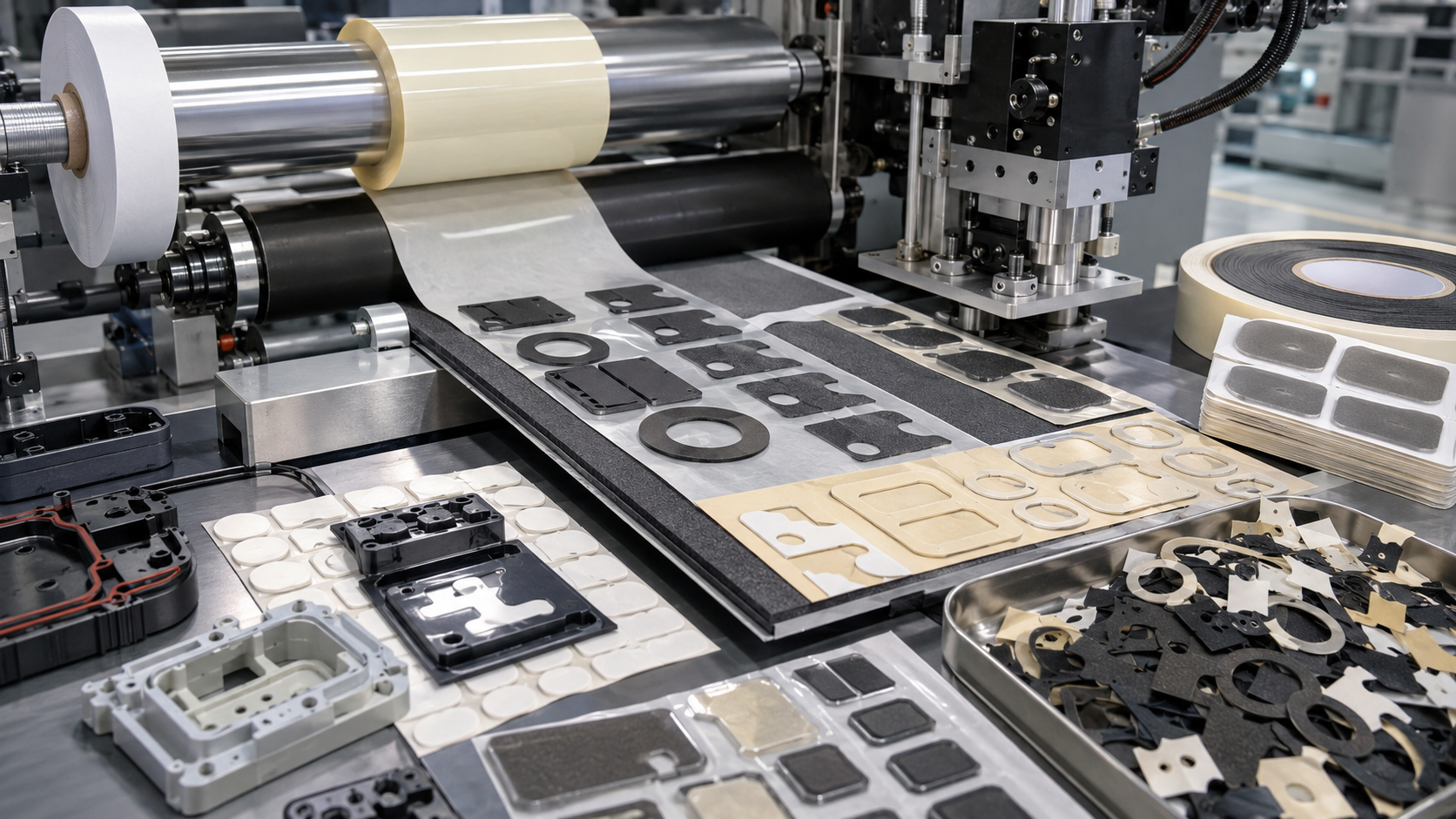
For adhesive-backed parts, kiss cutting is very important. The blade cuts the tape material but does not cut through the release liner. This allows the finished parts to stay on the liner and be peeled during assembly.
If the kiss cut is too shallow, the part may not release cleanly.
If the kiss cut is too deep, the liner may tear.
Waste removal also matters. Small holes, narrow strips, soft adhesive, and complex shapes can make stripping difficult. A part may cut successfully but deform during waste removal.
At Sanken, we review tape structure, liner release, adhesive flow, cutting pressure, part spacing, and delivery format before mass production.
Material and Process Considerations
Different double-sided tapes require different converting methods.
Thin PET carrier tapes need accurate cutting, clean holes, and stable dimensions. They are often used in electronics, displays, battery components, and precision assemblies.
Foam tapes need attention to compression, density, thickness, adhesive bonding, and edge stability. They are useful for sealing, cushioning, and gap filling.
Transfer adhesives require careful liner control because there is no carrier to support the adhesive layer.
Thick bonding tapes may need controlled cutting pressure and strong waste removal planning.
Medical or clean application tapes may need cleaner handling, stable release, and controlled packaging.
A professional supplier should not only cut the tape shape. The supplier should understand how the tape will be peeled, placed, pressed, and used.
How Sanken Helps Reduce Risk Before Mass Production
Sanken Manufacturing Co., Ltd. supports OEM customers with precision die cutting, adhesive lamination, foam and rubber components, PET insulation films, non-woven felt parts, sealing gaskets, automotive electronics components, and custom industrial parts.
For double-sided tape projects, we review the base material, adhesive type, carrier structure, liner release, bonding surface, die cut shape, tolerance, kiss cutting depth, waste removal, and packaging format.
For automotive electronics, we help develop adhesive-backed foam gaskets, insulation films, anti-rattle pads, and sealing parts.
For consumer electronics, we support PET carrier tapes, display bonding tapes, protective film tabs, and small adhesive components.
For medical and industrial applications, we focus on clean edges, reliable liner release, stable adhesive position, and assembly-friendly delivery.
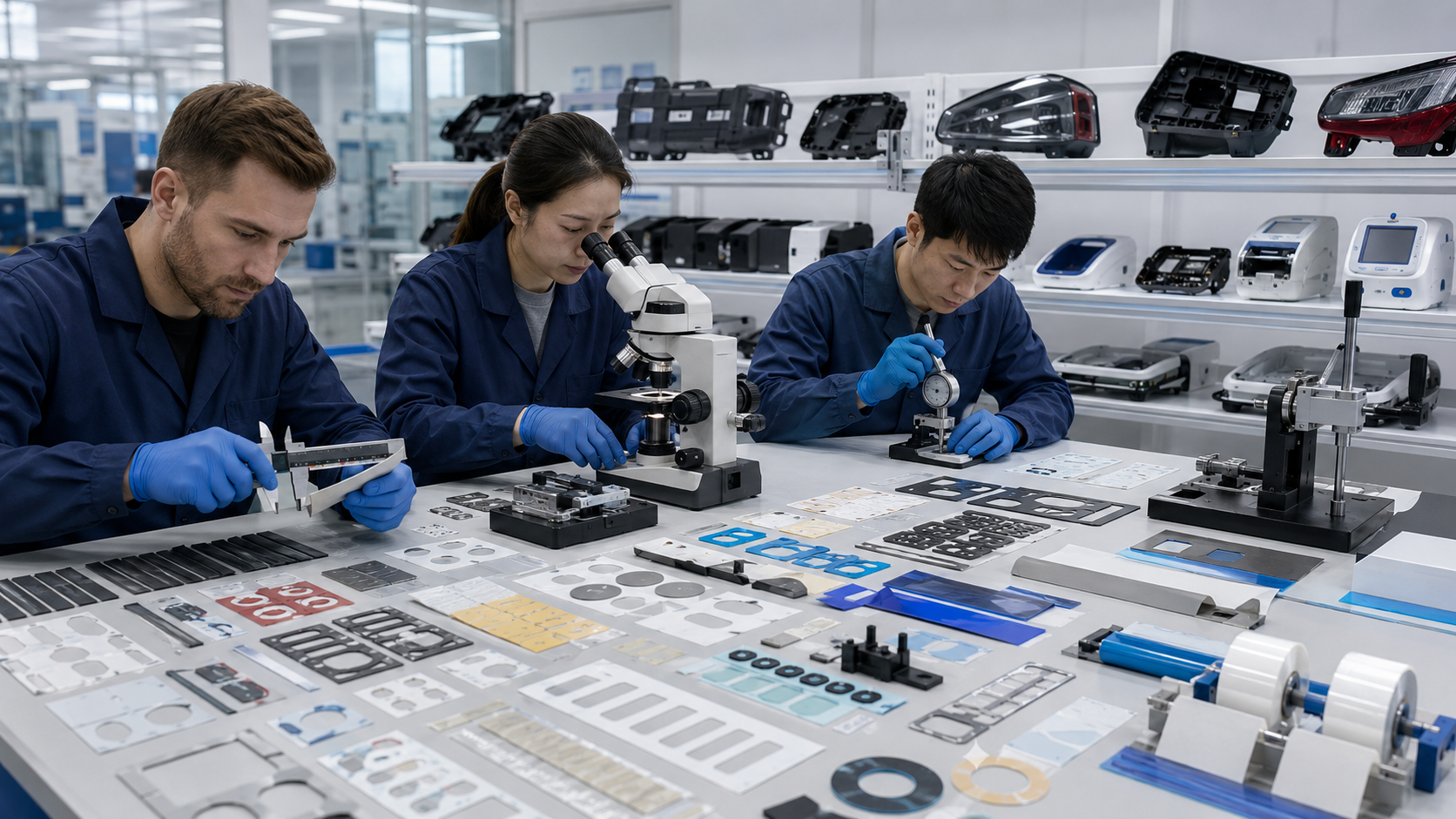
Our goal is to reduce adhesive overflow, peeling problems, weak bonding, part deformation, repeated samples, and unstable batch quality.
A good double-sided tape part should be easy to peel, easy to place, stable after bonding, and reliable in the final product.
Conclusion
Double-sided tape works by creating adhesive contact between two surfaces, but reliable OEM bonding depends on much more than stickiness. Surface condition, adhesive type, carrier structure, liner release, die cut design, pressure, temperature, and assembly method all affect performance.
At Sanken, we help OEM buyers and engineers convert double-sided tape into custom die cut components that are easier to assemble, more stable in production, and more reliable in final use.