
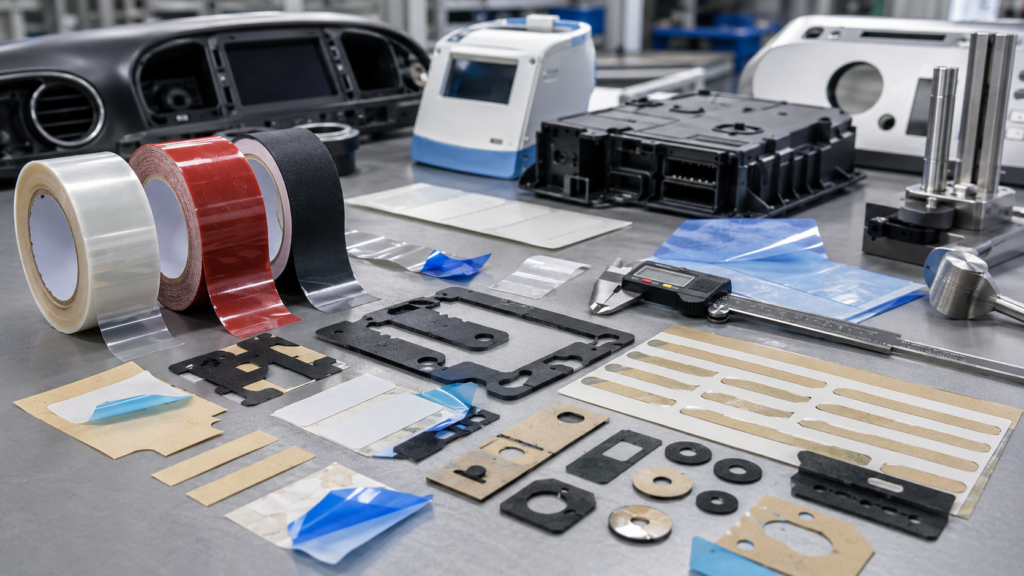
Pressure-sensitive adhesive tape works by bonding to a surface when pressure is applied, without the need for heat, water, solvent, or curing during normal assembly. For OEM engineers and buyers, the real question is not only why the tape feels sticky. The more important question is whether the adhesive, carrier, liner, die-cut shape, surface condition, and assembly process can create stable bonding in mass production.
At Sanken, we help OEM customers convert pressure-sensitive adhesive tape, foam tape, PET film, rubber, non-woven felt, and adhesive-backed materials into custom die cut components for automotive electronics, consumer electronics, medical devices, appliances, battery modules, and industrial equipment.
Why This Topic Matters for OEM Manufacturing
Pressure-sensitive adhesive tape, often called PSA tape, is widely used in OEM assembly because it can simplify production. It can replace liquid glue, screws, clips, or mechanical fasteners in many applications.
PSA tape can be used for:
- Bonding
- Sealing
- Insulation
- Cushioning
- Mounting
- Surface protection
- Spacing
- Vibration reduction
- Assembly positioning
In automotive electronics, PSA tape may be used for foam gaskets, anti-rattle pads, insulation films, sealing strips, and sensor assembly parts.
In consumer electronics, it may be used for displays, batteries, speakers, camera modules, protective films, and internal bonding components.
In medical and industrial devices, PSA tape can support clean assembly, stable positioning, protective layers, and disposable component structures.
However, PSA tape does not work well only because it is sticky. It works when the adhesive can make close contact with the bonding surface, resist the application environment, and stay stable after cutting, peeling, pressing, and long-term use.
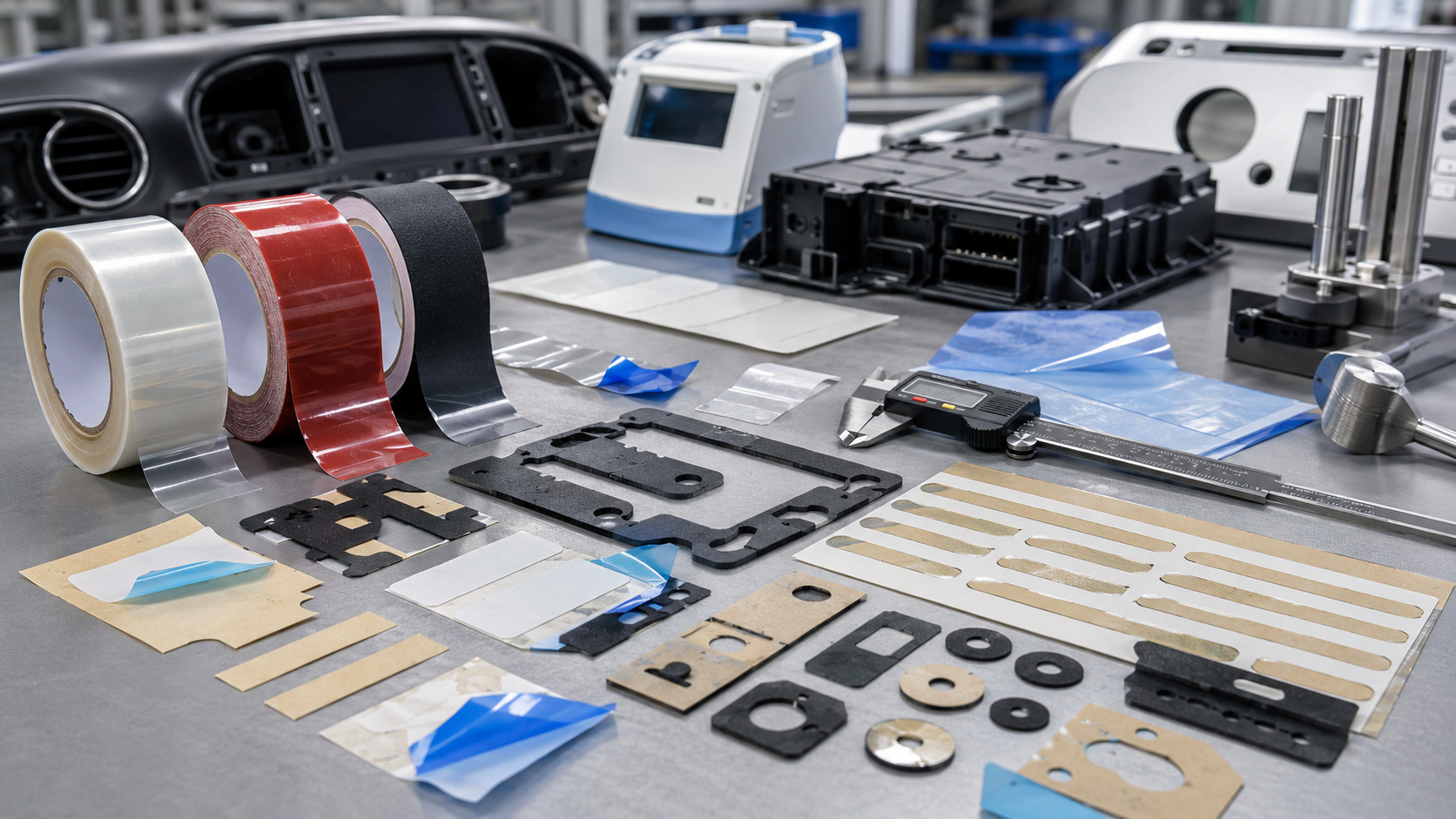
How Pressure-Sensitive Adhesive Tape Bonds
Pressure-sensitive adhesive tape bonds through surface contact.
When the tape is pressed onto a surface, the adhesive flows slightly into the microscopic texture of the surface. This process is often called wet-out. Better wet-out usually creates better contact and stronger bonding.
The tape does not need heat or curing in most applications, but pressure is important. Without enough pressure, the adhesive may only touch part of the surface. This creates weak bonding areas and may cause edge lifting, peeling, or shifting.
Bonding also depends on time. Some PSA tapes reach handling strength quickly, but the bond may continue to build after application. This is why testing immediately after application may not always show final bond strength.
A good PSA bond depends on several factors:
- Adhesive chemistry
- Surface cleanliness
- Surface energy
- Application pressure
- Contact area
- Temperature
- Dwell time
- Tape thickness
- Carrier material
- Final application environment
For OEM projects, these details should be reviewed before sampling.
Common PSA Tape Structures
Pressure-sensitive adhesive tape can be built in different ways. Each structure has different bonding, handling, and die-cutting characteristics.
| PSA Tape Structure | Description | Common OEM Use |
|---|---|---|
| Single-sided tape | Adhesive on one side with carrier | Protection, masking, insulation |
| Double-sided tape | Adhesive on both sides of a carrier | Bonding and mounting |
| Transfer adhesive | Adhesive layer without carrier | Thin bonding and lamination |
| Foam tape | Foam carrier with adhesive | Sealing, cushioning, gap filling |
| PET carrier tape | PET film carrier with adhesive | Electronics and precision assembly |
| Non-woven tape | Soft fiber carrier with adhesive | Flexible bonding and cushioning |
| Protective film tape | Film with removable adhesive | Surface protection |
A PET carrier tape may provide better dimensional stability. A foam PSA tape may fill gaps and absorb vibration. A transfer adhesive may be useful when the bonding layer must be very thin. A protective film tape may be designed for temporary protection rather than permanent bonding.
The right structure depends on the function of the part.
Common Problems and Production Risks
PSA tape problems often appear during assembly or after the product is already in use. Many failures come from wrong adhesive selection, poor surface contact, unstable die cutting, or unsuitable liner release.
| Problem | Common Cause | OEM Risk |
|---|---|---|
| Weak bonding | Wrong adhesive for the surface | Part lifting or falling off |
| Edge lifting | Poor pressure, sharp corners, or surface contamination | Rework and long-term failure |
| Adhesive overflow | Soft adhesive or excessive cutting pressure | Contamination and poor appearance |
| Difficult liner release | Wrong liner or kiss cutting depth | Slow assembly and damaged parts |
| Tape stretching | Thin or soft carrier material | Poor positioning |
| Poor shear resistance | Adhesive not suitable for load | Component movement |
| Poor heat resistance | Wrong adhesive grade | Failure after aging |
| Batch inconsistency | Weak converting process control | Unstable mass production |
A PSA tape sample may look clean on the release liner, but the real test happens when the operator peels, places, presses, and uses it in the final product.
If the part stretches during peeling, the hole position may shift.
If the liner release is too tight, assembly speed drops.
If adhesive overflows at the edge, nearby components may be contaminated.
If the adhesive does not match the bonding surface, the part may lift after installation.
What Buyers or Engineers Should Check First
Before ordering PSA tape or custom die cut PSA components, engineers should define the application conditions clearly.
| Checklist Item | What to Confirm | Why It Matters |
|---|---|---|
| Bonding surface | Plastic, metal, glass, rubber, coating, paint | Determines adhesive compatibility |
| Surface condition | Smooth, rough, oily, textured, low surface energy | Affects adhesive wet-out |
| Tape function | Bonding, sealing, insulation, protection, cushioning | Guides tape structure |
| Adhesive type | Acrylic, rubber-based, silicone, specialty PSA | Controls bonding and aging |
| Carrier material | PET, foam, tissue, non-woven, no carrier | Affects stability and flexibility |
| Thickness | Available gap and assembly requirement | Controls fit and pressure |
| Liner type | Paper, film, easy-release, tight-release | Affects peeling and assembly |
| Die cut design | Holes, slots, tabs, narrow strips, corners | Affects lifting and waste removal |
| Environment | Heat, humidity, vibration, chemicals, compression | Confirms long-term reliability |
| Testing method | Peel, shear, aging, liner release, fit test | Verifies real performance |
A strong adhesive is not always the best choice.
If the adhesive is too aggressive, it may be difficult to release from the liner. If it is too soft, it may overflow during die cutting. If it is not matched to the bonding surface, it may fail even when the tape looks correct.
Surface Energy and Cleanliness Matter
Surface condition is one of the biggest reasons PSA tape fails.
Dust, oil, moisture, release agents, fingerprints, and particles can reduce bonding strength. Some plastics are also more difficult to bond because they have low surface energy.
Materials such as PP and PE often need special adhesive selection. Painted surfaces, powder-coated metals, rubber parts, and textured plastics may also need additional review.
A tape that bonds well to stainless steel may not bond well to PP plastic.
A tape that works on smooth ABS may lift from a rough coated surface.
This is why buyers should tell the supplier the real bonding surface before sampling. Without this information, the supplier may choose a tape that looks suitable but fails during real assembly.
How Die Cutting Affects PSA Tape Performance
PSA tape is often die cut into custom shapes for OEM assembly.
These shapes may include:
- Bonding pads
- Foam tape gaskets
- PET adhesive films
- Protective film tabs
- Medical adhesive pads
- Display bonding tapes
- Battery insulation adhesive parts
- Sensor bonding components
- Industrial sealing strips
Die cutting improves assembly efficiency because the part is already shaped for the final product. Operators can peel and apply the component directly.
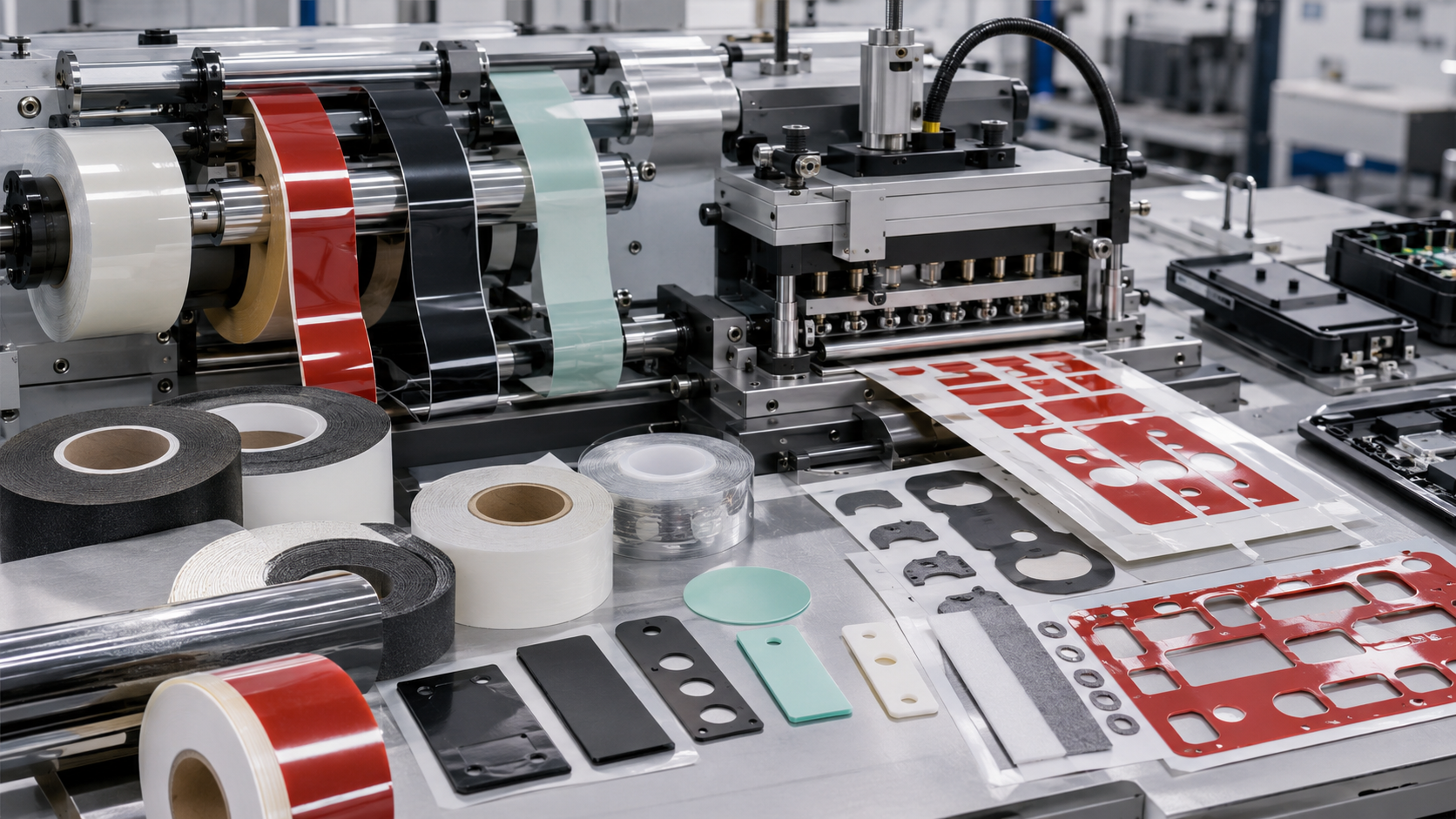
For PSA tape components, kiss cutting is often required. The blade cuts the tape and adhesive layer without cutting through the release liner. This allows the finished part to stay on the liner until assembly.
If the kiss cut is too shallow, the part may not release cleanly.
If the kiss cut is too deep, the liner may tear.
Waste removal is also important. Small holes, narrow strips, soft adhesive, and complex shapes can deform during stripping. A part may be cut correctly but damaged during waste removal.
At Sanken, we review adhesive flow, carrier stability, liner release, cutting depth, part spacing, and waste removal before mass production.
Material and Process Considerations
Different PSA tapes require different converting methods.
Acrylic PSA tapes often provide good aging resistance and are widely used in automotive, electronics, and industrial applications.
Rubber-based PSA tapes may provide strong initial tack, but the application environment should be reviewed carefully.
Silicone PSA tapes may be used for silicone surfaces or high-temperature applications.
Foam PSA tapes are useful for gap filling, sealing, cushioning, and vibration reduction.
PET carrier PSA tapes provide dimensional stability for precision electronic components.
Transfer adhesives are thin and flexible but require careful liner and handling control.
The process must match the adhesive structure.
Soft adhesive may require lower cutting pressure.
Thin films may require tension control.
Foam tapes may require compression and waste removal review.
Medical or clean applications may require more careful handling and packaging.
A reliable supplier should not only cut the shape. The supplier should understand how the adhesive part will be peeled, placed, pressed, bonded, aged, and inspected.
How Sanken Helps Reduce Risk Before Mass Production
Sanken Manufacturing Co., Ltd. supports OEM customers with precision die cutting, material converting, adhesive lamination, foam and rubber components, PET insulation films, non-woven felt parts, sealing gaskets, automotive electronics components, and custom industrial parts.
For PSA tape projects, we review adhesive type, carrier structure, bonding surface, liner release, die cut shape, tolerance, kiss cutting depth, waste removal, packaging, and final assembly method.
For automotive electronics, we help develop adhesive-backed foam gaskets, anti-rattle pads, PET insulation films, sealing strips, and sensor bonding components.
For consumer electronics and battery applications, we support protective films, display bonding tapes, adhesive spacers, PET adhesive films, and insulation parts.
For medical, appliance, and industrial applications, we focus on clean cutting, stable liner release, controlled adhesive position, and assembly-friendly delivery formats.
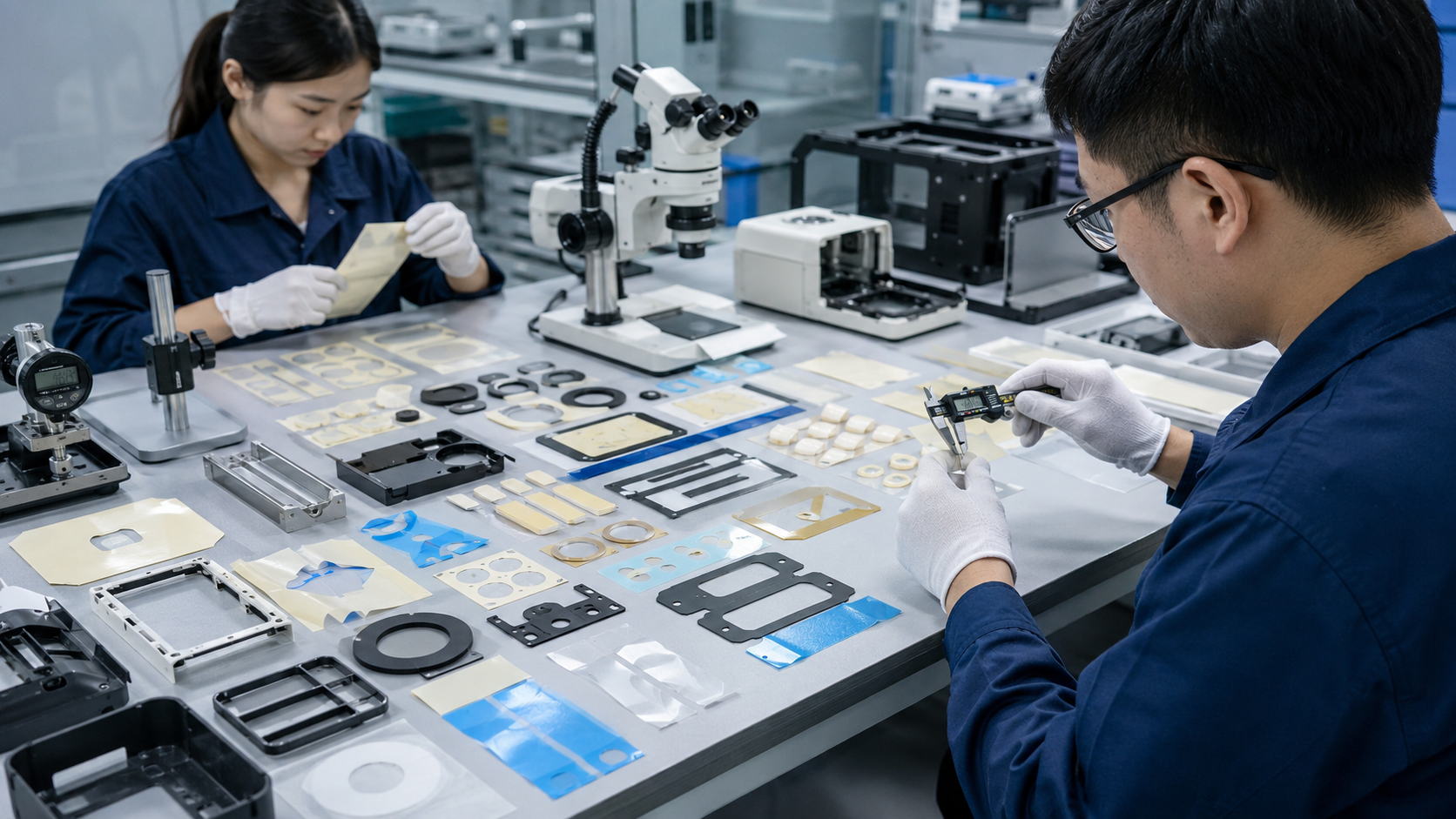
Our goal is to help customers reduce weak bonding, adhesive lifting, overflow, liner damage, peeling problems, repeated samples, and unstable mass production.
A good PSA tape component should be easy to peel, easy to place, stable after pressure, and reliable in the final product.
Conclusion
Pressure-sensitive adhesive tape works through pressure, surface contact, adhesive wet-out, and material compatibility. It can support bonding, sealing, insulation, protection, cushioning, and OEM assembly efficiency, but reliable performance depends on more than stickiness.
At Sanken, we help OEM buyers and engineers convert PSA tape into custom die cut components with controlled adhesive structure, liner release, cutting depth, tolerance, waste removal, and packaging for stable mass production.