
How to Choose an Automotive Die Cutting Partner? The Supplier Decision That Quietly Determines Vehicle Quality
A customer once told me something that perfectly explains today’s automotive supply chain pressure.
“We spent months selecting premium materials. But in the end, our biggest production problem came from the converting supplier.”
That happens far more often than most OEM buyers expect.
In automotive manufacturing, a die-cut component may look small and inexpensive, but its impact can be enormous. One unstable foam seal. One inconsistent adhesive laminate. One poorly controlled acoustic pad. These seemingly minor parts can trigger wind noise complaints, vibration issues, water leakage, assembly instability, delayed launches, and costly warranty claims.
Choosing the right automotive die cutting partner is critical because modern vehicles rely heavily on precision-converted materials for NVH control, thermal management, sealing, lightweight structures, electrical insulation, and assembly stability. A strong manufacturing partner does far more than cut materials — they help OEM customers improve production consistency, reduce engineering risk, accelerate development, and maintain long-term vehicle quality.
At Sanken, we understand this deeply because automotive die cutting today is no longer a simple manufacturing process. It has become a highly integrated engineering system combining material science, tooling optimization, laminating technology, process control, and scalable production management.
Why Automotive Die Cutting Became So Important
Years ago, die-cut materials played more of a supporting role.
Today, they directly affect:
- Cabin quietness
- Thermal efficiency
- EV battery safety
- Interior fit and finish
- Structural vibration control
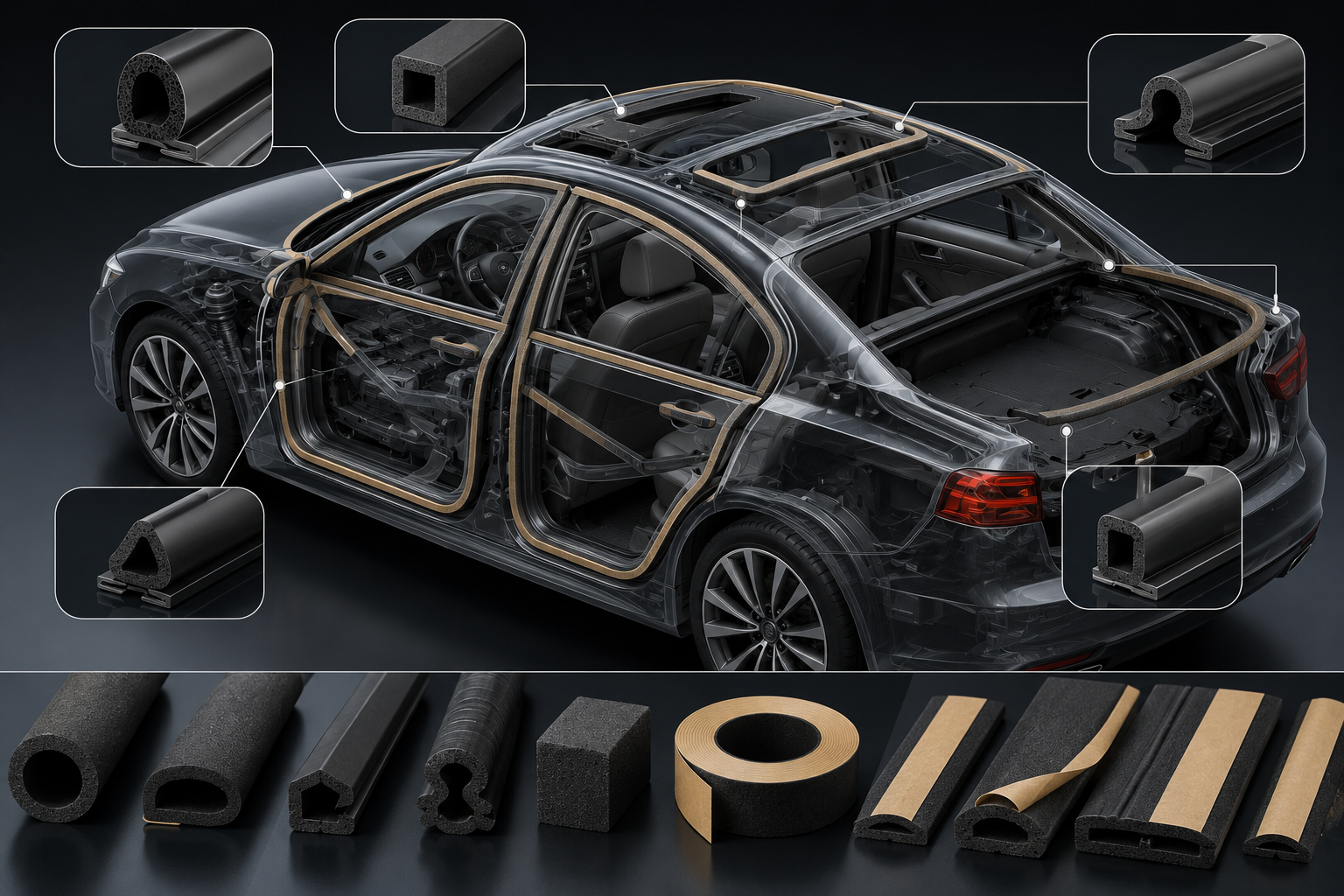
- Waterproof sealing performance
Modern vehicles now contain hundreds of precision-converted components.
Especially in:
- Electric vehicles
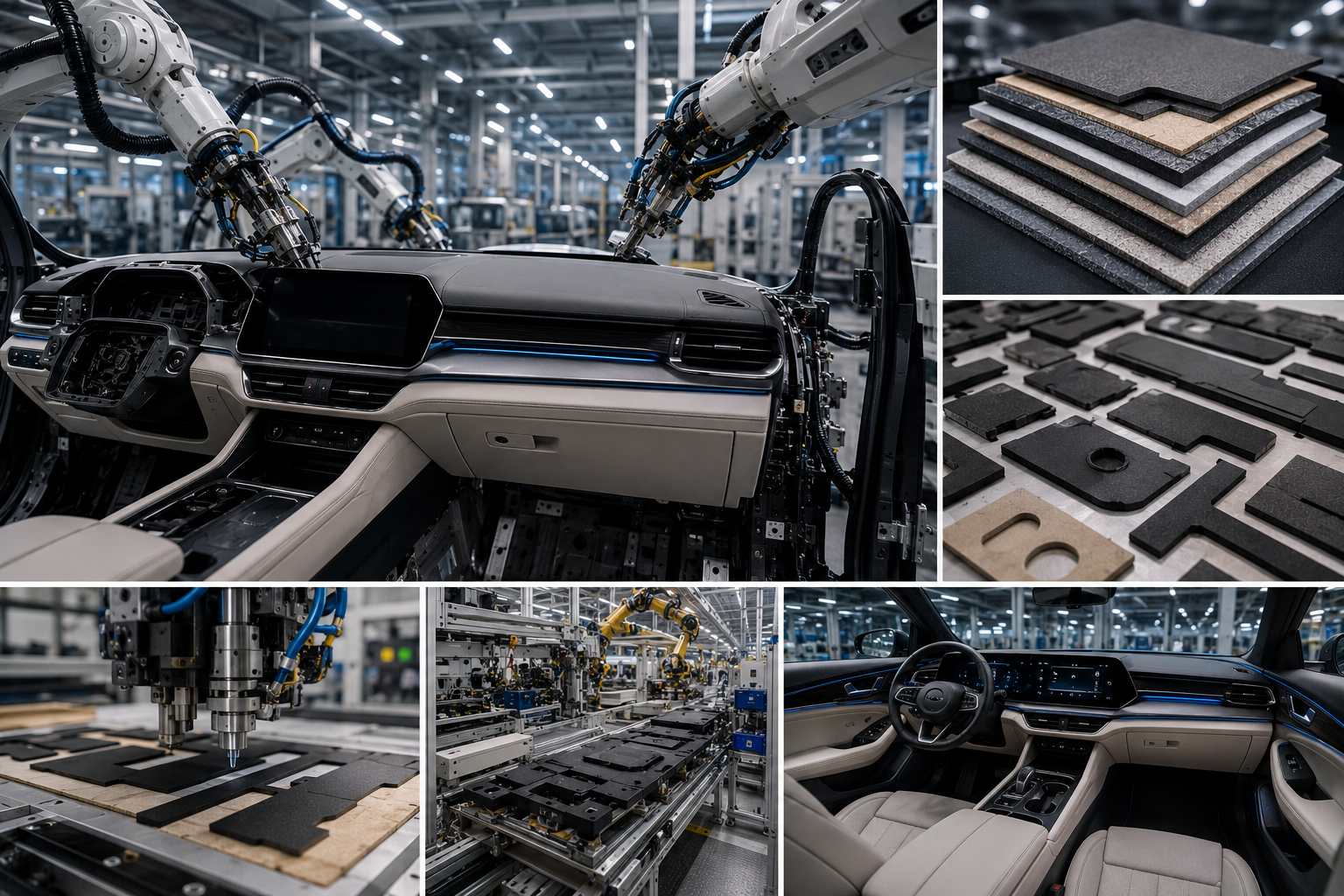
- Smart cockpit systems
- Advanced interior architectures
- Lightweight vehicle platforms
This dramatically increased supplier expectations.
Automotive buyers no longer need “material cutters.”
They need engineering-capable manufacturing partners.
The Biggest Mistake Buyers Make
Many companies still choose suppliers mainly based on price.
That approach becomes extremely dangerous in automotive manufacturing.
Low-cost suppliers often struggle with:
- Material consistency
- Tooling precision
- Production repeatability
- Traceability systems
- Process stability
Initially, everything may look acceptable.
Then mass production starts.
Suddenly problems appear:
- Foam deformation
- Adhesive lifting
- Edge burrs
- Dimensional drift
- Assembly variation
At that point, fixing the issue becomes extremely expensive.
Why Engineering Support Matters More Than Machines
Many factories own advanced equipment.
That alone means very little.
The real question is:
Can the supplier solve manufacturing problems before they happen?
At Sanken, we help customers evaluate:
- Material compatibility
- Compression behavior
- Adhesive durability
- Thermal cycling performance
- Acoustic absorption characteristics
- Long-term aging stability
This early-stage engineering analysis helps customers reduce future production risk significantly.
Why Material Expertise Is Critical
Automotive materials behave differently under real vehicle conditions.
Two foam materials may appear nearly identical visually.
But during long-term usage, their performance may differ dramatically.
Poor material selection may cause:
- Compression collapse
- Wind noise
- Water leakage
- Interior rattling
- Structural instability
At Sanken, we help customers optimize materials based on actual vehicle operating environments rather than appearance alone.
Why Process Integration Creates Huge Advantages
One major problem automotive buyers face is fragmented supply chains.
Different suppliers handle:
- Foam materials
- Adhesive laminating
- Die cutting
- Hot pressing
- Injection molding
This often creates:
- Communication delays
- Quality inconsistency
- Longer development cycles
- Increased project complexity
At Sanken, we integrate:
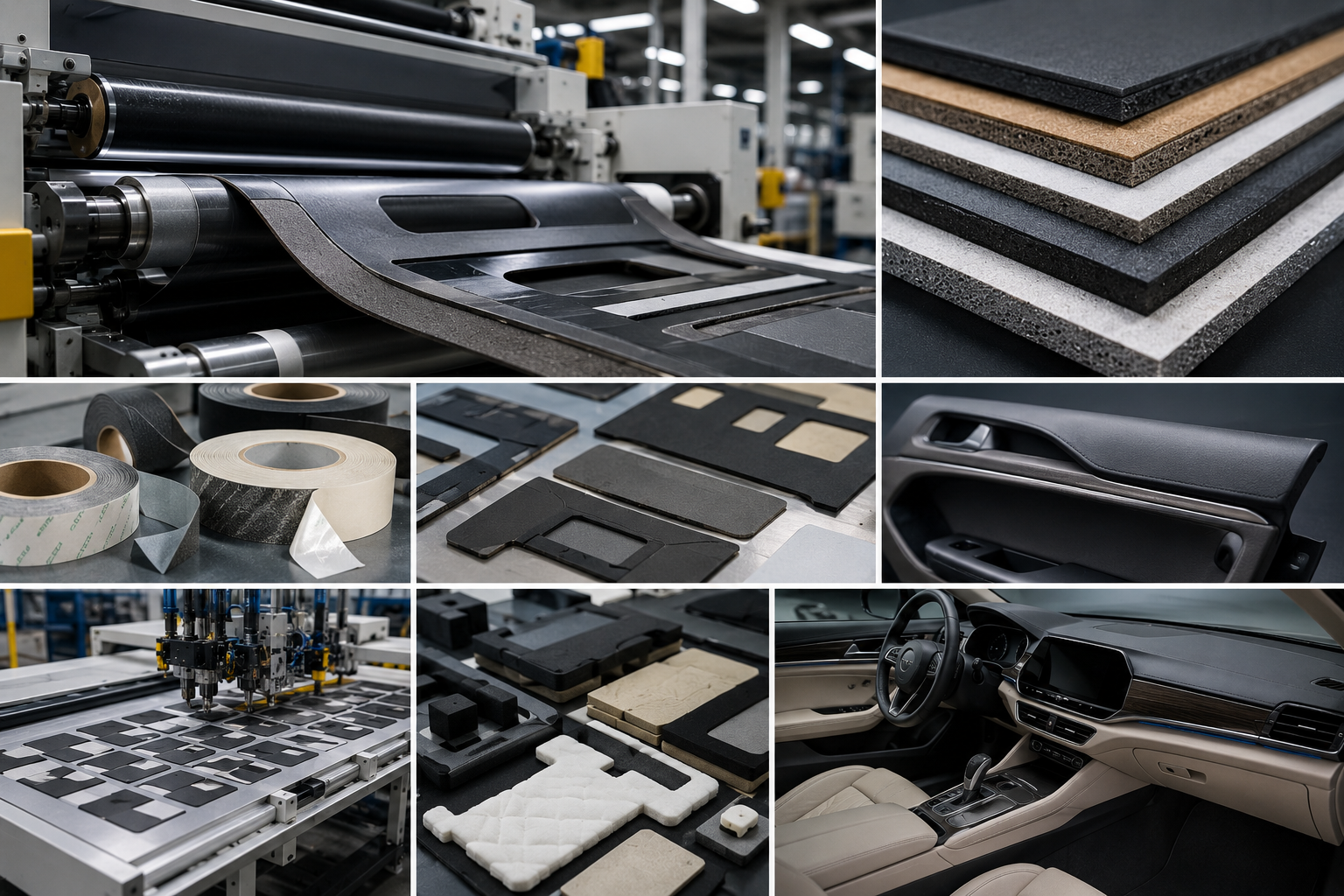
- Precision die cutting
- Material converting
- Adhesive laminating
- Hot pressing
- Spraying and gluing
- Silk screen printing
- Injection molding support
This one-stop manufacturing capability helps customers simplify project management while improving production consistency.
Why Automotive NVH Depends on Die Cutting Quality
Many drivers judge vehicle quality based on cabin comfort.
Even small die-cut defects can create:
- Wind turbulence
- Panel vibration
- Structural resonance
- Squeaking noises
Especially in EVs, where engine noise no longer masks imperfections.
At Sanken, we support automotive NVH optimization through precision foam converting and acoustic material engineering designed for stable long-term vehicle performance.
Why Tooling Capability Should Never Be Ignored
Tooling quality directly affects:
- Edge cleanliness
- Dimensional accuracy
- Production speed
- Material stability
- Repeatability
Poor tooling design often creates unstable mass production even when materials are high quality.
At Sanken, tooling optimization plays a critical role in maintaining large-scale production consistency.
Because in automotive manufacturing, repeatability matters more than beautiful prototypes.
Why Automotive Buyers Must Evaluate Scalability
A supplier may produce excellent samples.
But can they maintain quality across millions of parts?
This is where many suppliers fail.
Mass production introduces challenges such as:
- Material batch variation
- Tool wear
- Machine calibration drift
- Adhesive flow changes
- Environmental fluctuations
At Sanken, we focus heavily on scalable process control because automotive OEMs require stable long-term manufacturing performance.
Why Certifications Matter
Automotive manufacturing demands strict quality systems.
Professional buyers should evaluate whether suppliers operate under internationally recognized standards.
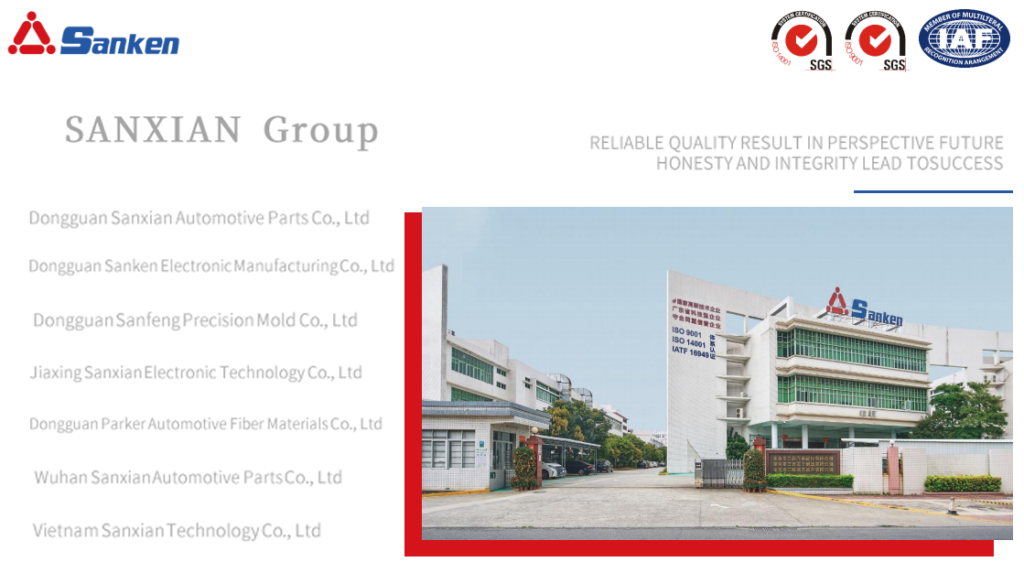
At Sanken, our systems operate under:
- IATF 16949
- ISO 9001
- ISO 14001
These systems help ensure:
- Traceability
- Stable quality management
- Continuous improvement
- Controlled production environments
For automotive customers, this greatly reduces supply chain risk.
Why Fast Communication Matters More Than Buyers Realize
Automotive development cycles move incredibly fast today.
OEM customers often require:
- Rapid prototyping
- Immediate engineering feedback
- Fast tooling revisions
- Quick production adjustments
Slow supplier communication creates expensive delays.
At Sanken, we prioritize engineering responsiveness because manufacturing speed today is no longer just about machines — it is about decision-making efficiency.
Why EV Programs Changed Supplier Expectations Completely
Electric vehicles introduced new material challenges such as:
- Thermal runaway protection
- Lightweight acoustic systems
- High-performance insulation
- Advanced adhesive assemblies
This increased demand for suppliers capable of integrating multiple manufacturing processes under one system.
At Sanken, we support EV-related applications through advanced die cutting and material converting solutions designed for next-generation automotive platforms.
What Should Automotive Buyers Really Look For?
The best automotive die cutting partners offer more than manufacturing capacity.
They provide:
- Engineering expertise
- Material optimization
- Stable process control
- Integrated manufacturing capability
- Long-term production consistency
- Fast technical support
At Sanken, we believe the goal is not simply to manufacture parts.
The goal is helping customers launch better vehicles with lower production risk and stronger long-term quality performance.
Conclusion
Choosing the right automotive die cutting partner directly affects vehicle quality, production stability, NVH performance, and long-term manufacturing success. Modern automotive suppliers must provide far more than cutting capability — they must offer engineering support, material expertise, scalable production systems, and integrated manufacturing solutions. At Sanken, we help automotive OEM customers solve these challenges through precision die cutting, advanced material converting, and one-stop manufacturing support designed for modern vehicle production.