
Automotive CNC Machining & Die Cutting? How Precision Manufacturing Defines Modern Vehicle Performance
Automotive manufacturing today is no longer about making parts separately. It is about making systems that fit together perfectly under pressure, vibration, heat, and time.
Two technologies sit at the center of this reality: CNC machining and die cutting.
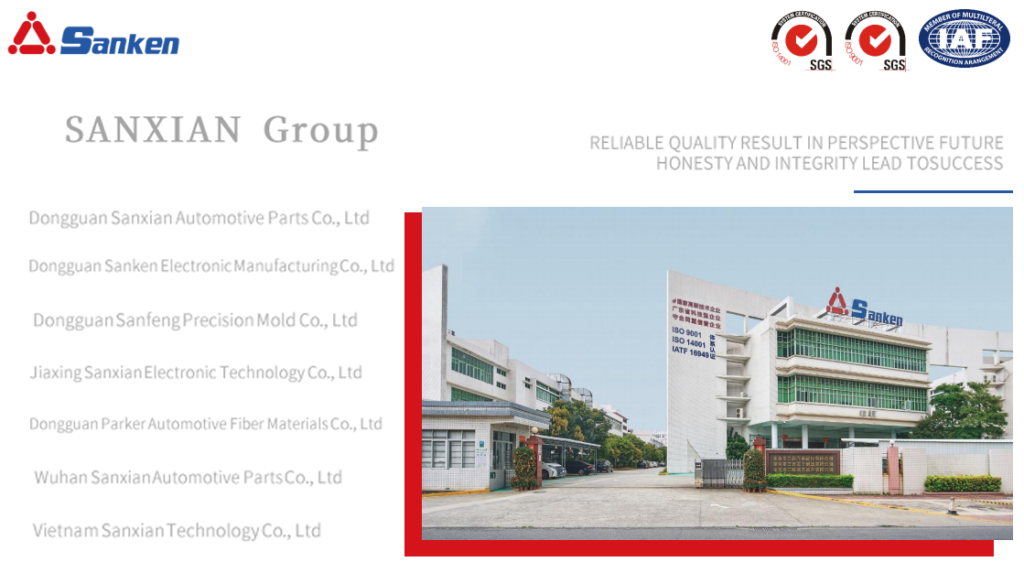
At Sanken (Dongguan Sanken Electronics Co., Ltd.), I often describe them as two different languages of the same goal—precision.
One shapes metal. The other shapes functional materials. Together, they decide whether a vehicle feels solid, quiet, and reliable—or noisy, loose, and inconsistent.
What is CNC machining in automotive manufacturing?
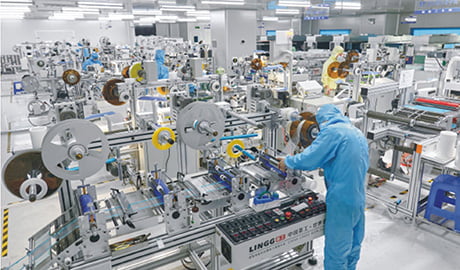
CNC machining (Computer Numerical Control machining) is a process where metal or rigid materials are precisely cut, milled, drilled, or shaped using computer-controlled tools.
In automotive applications, CNC machining is used to produce:
- engine brackets
- transmission components
- structural supports
- battery housing parts (EV systems)
- precision fixtures and molds
The key advantage is extreme dimensional accuracy.
Machines follow digital instructions down to microns, ensuring every part is identical across mass production.
That repeatability is critical because automotive assemblies cannot tolerate variation.
Even a small deviation can affect alignment, stress distribution, or long-term durability.
What is die cutting in automotive manufacturing?
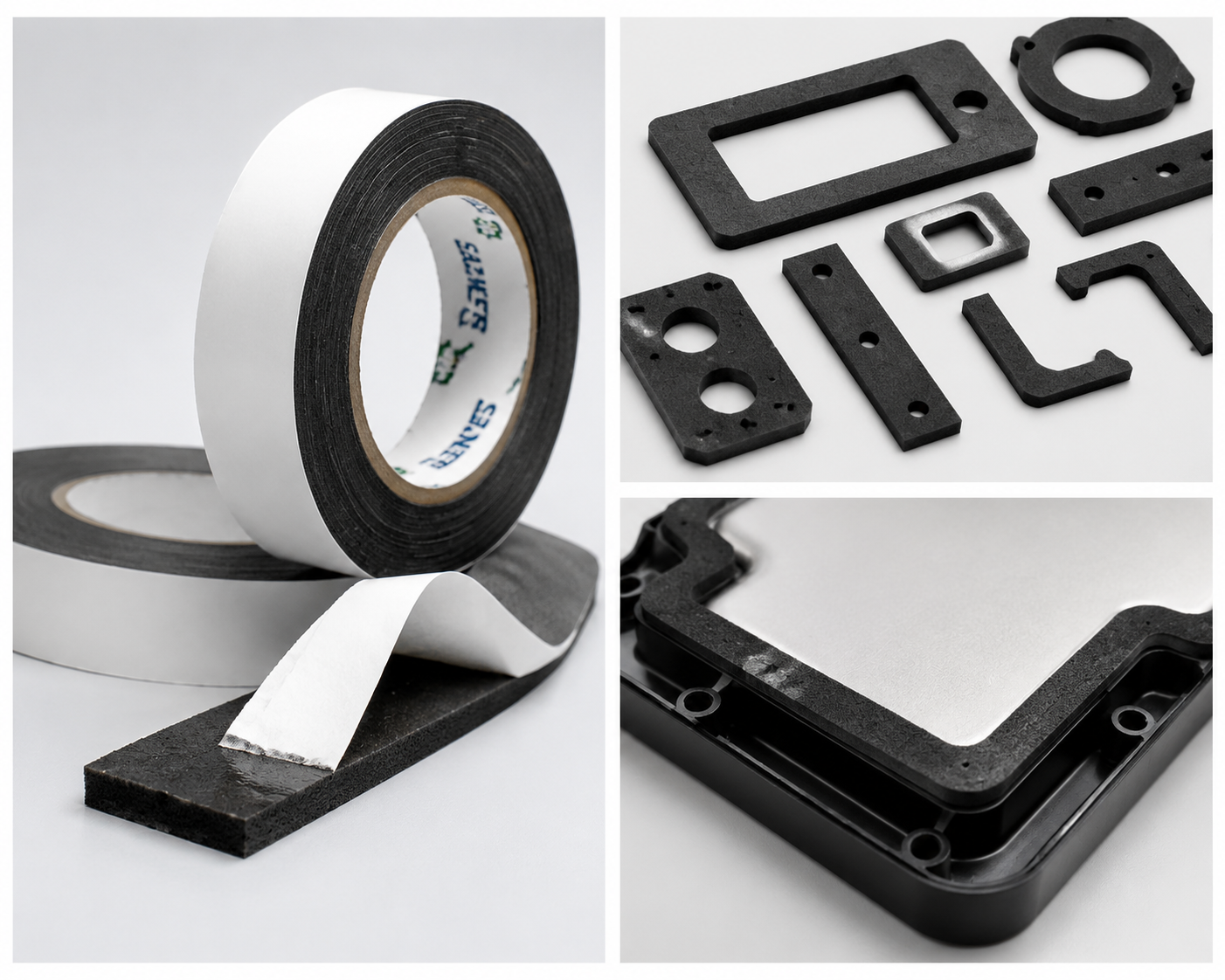
Die cutting is the process of converting flexible or semi-rigid materials into precise shapes using custom-designed tooling.
Instead of metal cutting, it focuses on materials such as:
- foam
- rubber
- non-woven felt
- adhesive tapes
- insulation films
- composite laminates
These materials are essential for:
- sealing
- vibration damping
- noise reduction
- thermal insulation
- electrical isolation
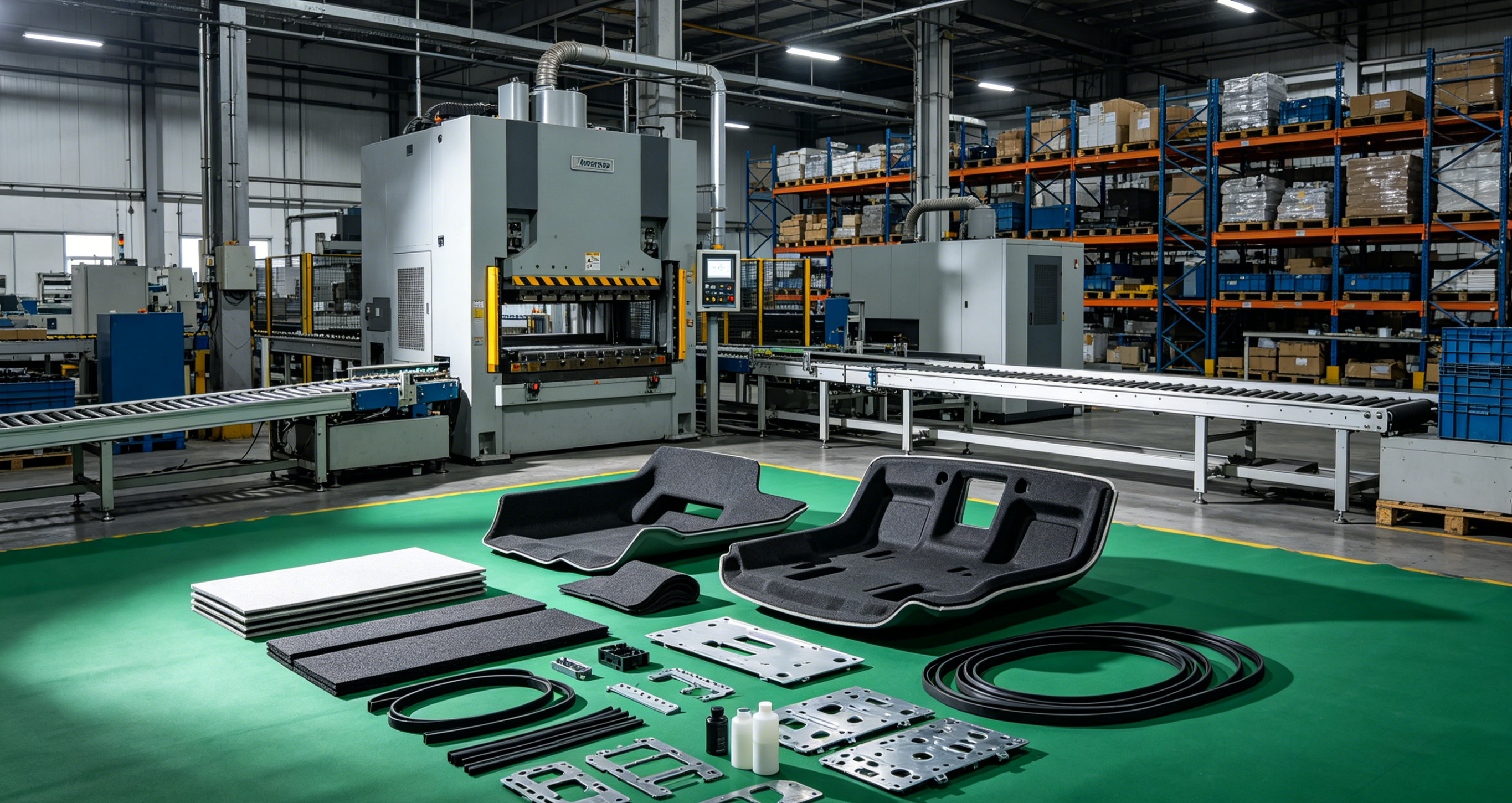
If CNC machining builds the skeleton of a vehicle, die cutting builds its comfort system.
Why are CNC machining and die cutting both essential in modern vehicles?
Because modern vehicles are hybrid systems of hard structure and soft function.
CNC machining handles:
- load-bearing structures
- mechanical precision parts
- rigid alignment systems
Die cutting handles:
- acoustic control
- sealing interfaces
- vibration isolation
- thermal and electrical protection
They solve different problems—but must work together perfectly.
For example:
A CNC-machined battery housing must align perfectly with die-cut insulation pads inside EV systems.
If either side is off, performance suffers.
Where do CNC machining and die cutting intersect?
In real automotive production, these two processes constantly interact.
A few examples:
- CNC-machined frames require die-cut gaskets for sealing
- electronic housings need die-cut EMI shielding layers
- interior panels rely on die-cut damping materials
- precision brackets interface with insulation pads
This means design teams must think in combined tolerances, not isolated parts.
At Sanken, we often support customers by ensuring die-cut components match the mechanical precision of CNC parts.
Because a perfect metal part with a poorly matched soft component still creates failure.
Why precision matters more than strength
In automotive engineering, strength is not the only metric.
Fit is just as important.
A CNC-machined part may be perfectly strong.
But if a die-cut insulation layer:
- compresses unevenly
- shifts during assembly
- or loses shape under heat
Then the entire system becomes unstable.
This is why modern engineering focuses on:
- dimensional consistency
- compression behavior
- material stability under stress
- assembly repeatability
Precision is not just manufacturing quality.
It is system reliability.
How Sanken integrates die cutting into automotive systems
At Sanken, we don’t treat die cutting as a standalone process.
We treat it as part of a full functional engineering chain.
Our capabilities include:
- precision die cutting
- multi-layer lamination
- adhesive converting
- foam and felt processing
- rubber and film shaping
- assembly-ready component delivery
This allows us to match CNC-level precision expectations from automotive OEMs.
We ensure:
- tight tolerance control
- consistent batch performance
- stable material behavior
- repeatable assembly results
Because in automotive production, consistency is more valuable than complexity.
CNC machining vs die cutting: what is the real difference?
They are often compared, but they are not competitors.
| Aspect | CNC Machining | Die Cutting |
|---|---|---|
| Material type | Metal, rigid materials | Soft & flexible materials |
| Process type | Subtractive cutting | Tool-based shaping |
| Function | Structural precision | Functional integration |
| Key role | Load-bearing parts | Sealing, damping, insulation |
Together, they complete the vehicle system.
One builds structure.
The other builds experience.
Why OEMs care about both processes equally
Modern automotive OEMs are no longer just asking:
- “Is the part strong?”
They are asking:
- “Will the system remain stable after 5 years of vibration, heat, and assembly stress?”
That requires both:
- CNC precision for structural integrity
- die-cut accuracy for functional stability
A failure in either area leads to:
- noise issues
- assembly rework
- warranty claims
- customer dissatisfaction
So both processes are now deeply interconnected in supply chain decisions.
What challenges do automotive manufacturers face today?
The biggest challenges are not machining speed or cutting capability.
They are:
- tighter tolerances across mixed materials
- increasing EV complexity
- reduced installation space
- higher NVH expectations
- multi-layer system integration
- supply chain consolidation pressure
This is why integrated suppliers like Sanken are becoming more important.
Because OEMs don’t just need parts.
They need systems that work together.
Conclusion
CNC machining and die cutting are two foundational technologies in automotive manufacturing.
One defines structure.
The other defines function.
Together, they determine how a vehicle performs, feels, and lasts.
At Sanken, we bridge these two worlds by delivering precision die-cut solutions that integrate seamlessly into CNC-machined automotive systems—ensuring stability, consistency, and long-term performance.