
How to Ensure the Accuracy of Complex Shape Film Die Cutting?
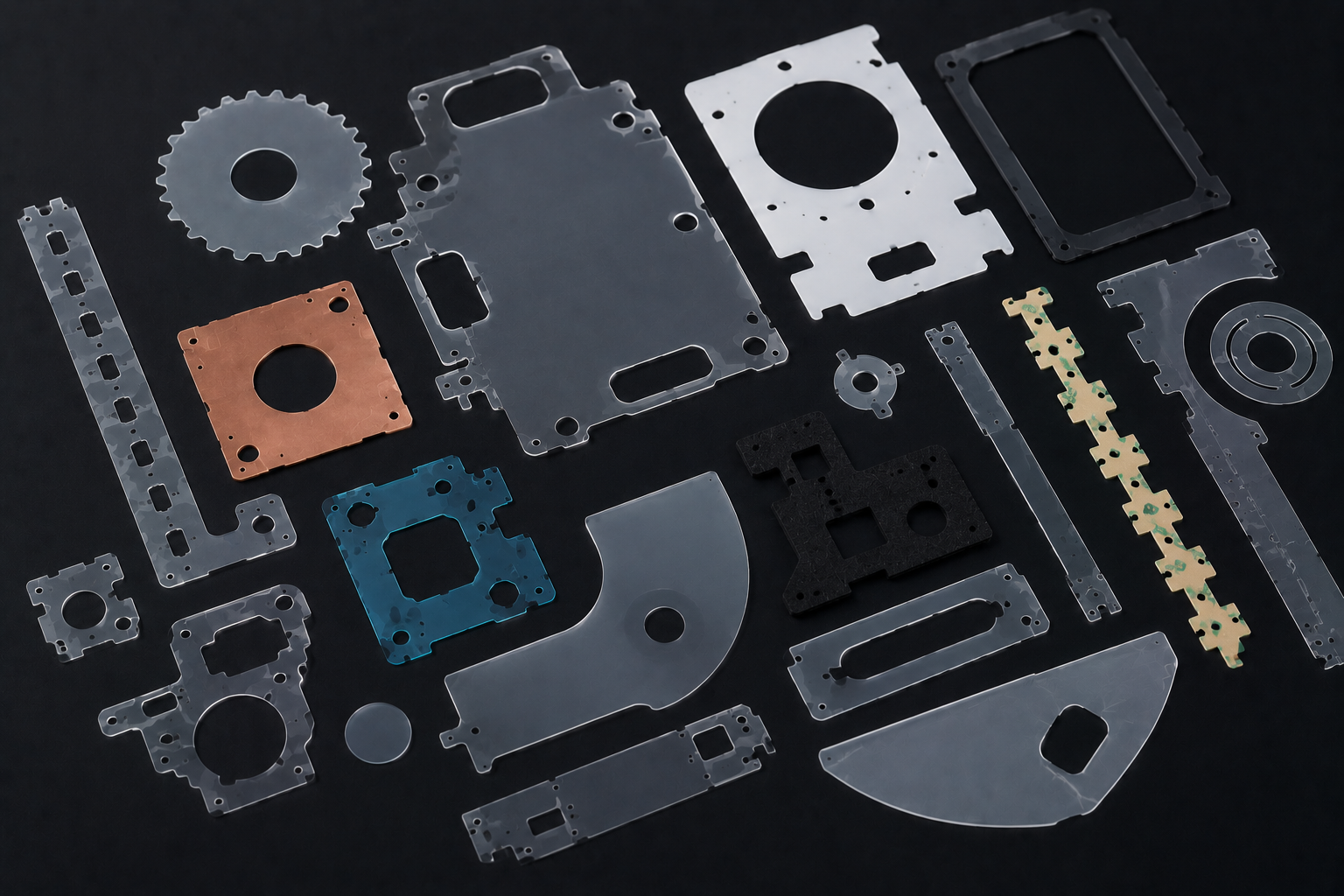
As consumer electronics, automotive displays, medical devices, and industrial equipment continue to evolve, film die-cut components are becoming increasingly sophisticated.
Simple rectangular shapes are rapidly being replaced by highly engineered parts featuring intricate contours, micro-openings, narrow bridges, alignment windows, and multi-layer structures.
While these designs improve product performance and functionality, they also create significant manufacturing challenges.
For many OEMs, the biggest concern is simple:
How can complex film components be produced consistently and accurately at scale?
The answer lies in a combination of material expertise, precision tooling, process control, inspection technology, and manufacturing experience.
At Sanken, we often find that achieving micron-level accuracy is not the result of a single machine. It is the result of controlling every step of the converting process.
Why Accuracy Matters in Complex Film Die Cutting
Modern film components are often responsible for critical functions such as:
- Electrical insulation
- Optical alignment
- Display protection
- EMI shielding
- Thermal management
- Component positioning
Even minor dimensional errors can lead to:
- Assembly failures
- Misaligned displays
- Adhesive leakage
- Reduced product reliability
- Cosmetic defects
As products become smaller and more integrated, dimensional accuracy becomes increasingly important.
For many applications, a tolerance deviation of less than 0.1 mm can determine whether a component succeeds or fails.
Understand Material Behavior Before Production
Many dimensional issues originate from the material itself rather than the cutting process.
Different film materials react differently to:
- Temperature changes
- Humidity variations
- Mechanical tension
- Lamination processes
Common Film Characteristics
| Material | Key Consideration |
|---|---|
| PET Film | Excellent dimensional stability |
| Polycarbonate Film | More sensitive to thermal expansion |
| Optical Film | Requires contamination control |
| Protective Film | Sensitive to static electricity |
| Adhesive Film | Liner stability affects accuracy |
Understanding material behavior allows engineers to predict and compensate for potential dimensional changes before production begins.
Design Components With Manufacturing In Mind
Many complex designs look perfect on CAD software but become difficult to manufacture consistently.
Design for Manufacturability (DFM) helps optimize component geometry before tooling is produced.
Key considerations include:
- Minimum hole diameters
- Internal corner radii
- Material bridge widths
- Distance between cut features
- Adhesive placement zones
Small design adjustments often improve yield and accuracy without affecting product performance.
The earlier these optimizations occur, the lower the overall project risk.
Use High-Precision Tooling
Tooling quality directly affects dimensional accuracy.
For complex film components, tooling must maintain:
- Precise cutting geometry
- Uniform cutting pressure
- Sharp cutting edges
- Long-term dimensional stability
Poor tooling can create:
- Burr formation
- Edge deformation
- Inconsistent dimensions
- Material tearing
High-precision tooling ensures that intricate shapes remain consistent throughout the production cycle.
Maintain Accurate Registration Control
Registration is one of the most critical factors in complex shape die cutting.
This becomes especially important when processing:
- Printed films
- Optical films
- Adhesive laminates
- Multi-layer constructions
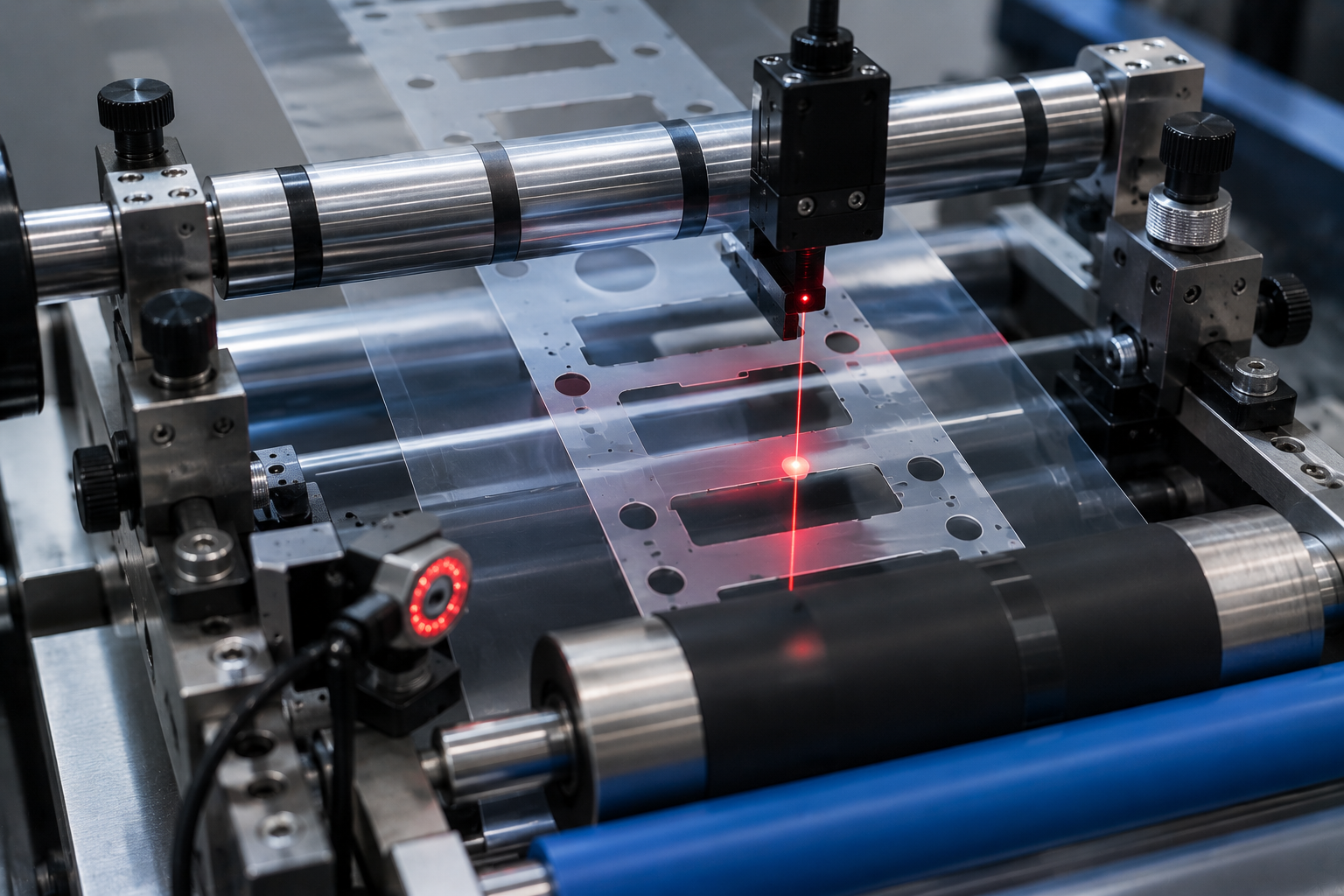
Modern converting systems often utilize:
- Vision cameras
- Optical sensors
- Registration marks
- Automatic correction systems
These technologies continuously monitor material position and make real-time adjustments during production.
Accurate registration ensures that every cut feature aligns exactly where it should.
Control Material Tension Throughout Production
Film materials are inherently flexible.
If tension is not controlled properly, materials may:
- Stretch
- Shrink
- Wrinkle
- Drift during processing
Even slight movement can affect dimensional accuracy.
Professional converting systems use closed-loop tension control to maintain:
- Stable material feeding
- Consistent positioning
- Uniform material handling
For ultra-thin films and optical materials, tension management becomes even more important.
Optimize Lamination Before Die Cutting
Many modern film components consist of multiple layers.
Examples include:
- Film + adhesive
- Film + foam
- Film + EMI shielding
- Film + insulation layer
If layers shift during lamination, die-cut accuracy can be compromised before cutting even begins.
Proper lamination control helps ensure:
- Layer alignment
- Thickness consistency
- Dimensional stability
- Reliable bonding
A stable laminate creates a solid foundation for precision converting.
Control Environmental Conditions
Environmental factors can influence film dimensions.
Temperature fluctuations may cause:
- Material expansion
- Material contraction
- Registration drift
Humidity changes may affect:
- Adhesive behavior
- Material flatness
- Static generation
For this reason, many precision converting operations maintain controlled production environments.
Stable conditions support consistent manufacturing results.
Minimize Static Electricity
Static electricity is often overlooked during film converting.
However, it can create several accuracy-related issues.
Static charges may:
- Attract dust particles
- Shift lightweight films
- Affect registration stability
- Increase contamination risk
To minimize these problems, manufacturers often use:
- Ionizing bars
- Anti-static rollers
- ESD-safe workstations
- Controlled humidity systems
This is especially important for optical films and electronic applications.
Implement Automated Vision Inspection
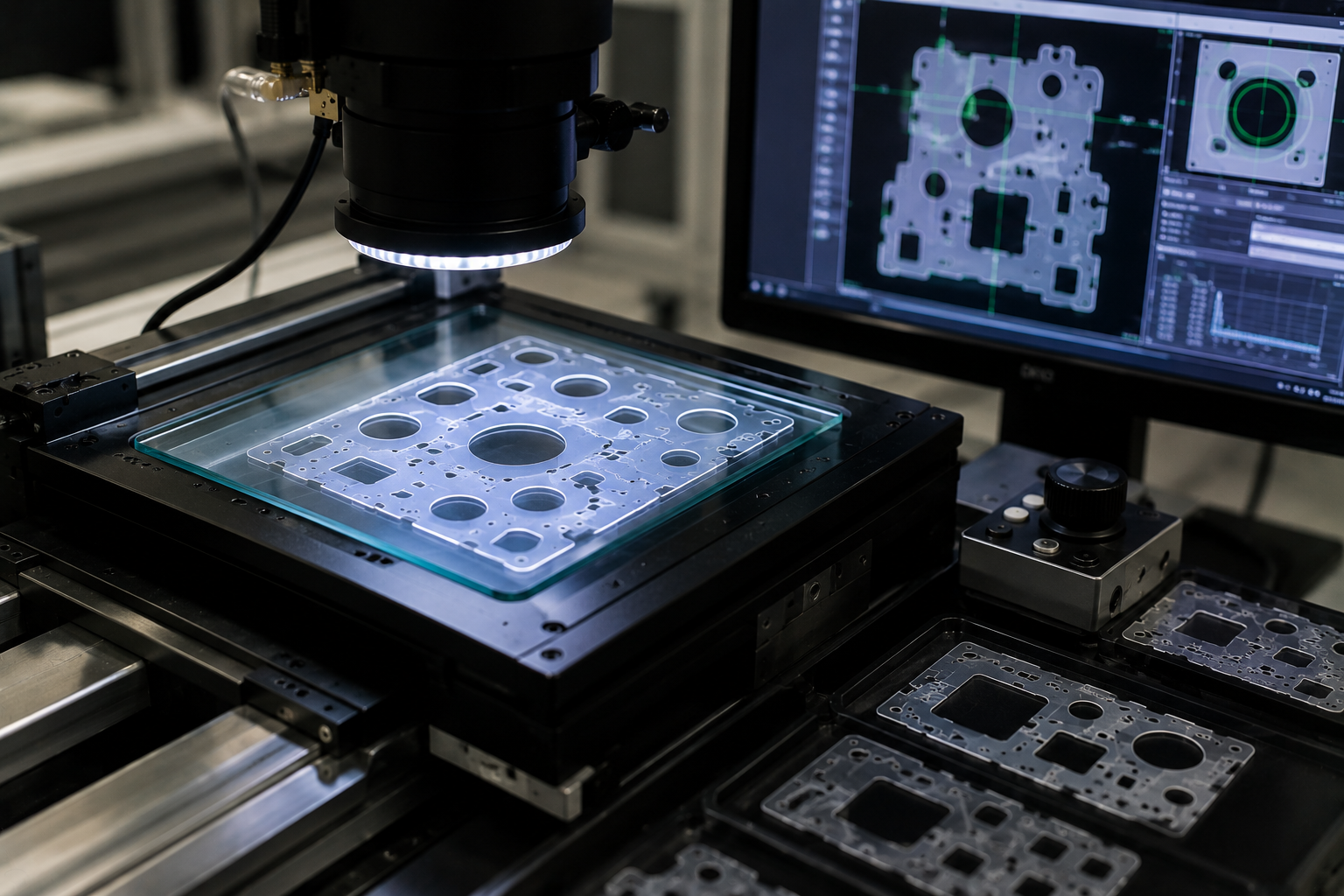
Manual inspection becomes increasingly difficult as component complexity grows.
Automated vision systems can verify:
- Hole positions
- Cutout dimensions
- Edge quality
- Registration accuracy
- Missing features
Advantages include:
- Faster inspection
- Improved consistency
- Reduced human error
- Better traceability
Many high-volume OEM programs now require automated inspection as part of their quality control process.
Monitor Critical Dimensions Continuously
Maintaining accuracy requires ongoing process monitoring.
Statistical Process Control (SPC) helps manufacturers track:
- Feature dimensions
- Process capability
- Production trends
- Equipment performance
Rather than waiting for defects to occur, SPC allows teams to identify potential issues before they affect production.
This proactive approach improves long-term consistency.
Validate Through Prototype Development
Complex geometries should always be validated before mass production.
Prototype programs allow engineers to verify:
- Component fit
- Functional performance
- Material behavior
- Manufacturing feasibility
Prototype evaluation often reveals challenges that cannot be identified through CAD drawings alone.
Addressing these issues early reduces risk and shortens development timelines.
Why Manufacturing Experience Matters
Advanced equipment alone cannot guarantee accuracy.
Experienced converters understand how different variables interact, including:
- Material properties
- Tool design
- Tension control
- Lamination behavior
- Environmental conditions
This knowledge helps engineers make informed process adjustments that improve both accuracy and yield.
As part complexity increases, process expertise often becomes the most valuable resource.
How Sanken Ensures Accuracy in Complex Film Die Cutting
At Sanken, we support customers with precision converting solutions for highly demanding applications.
Our capabilities include:
- Precision film die cutting
- Optical film converting
- Multi-layer lamination
- Kiss cutting
- Vision inspection systems
- Clean room manufacturing
- Rapid prototyping
- High-volume production
By combining advanced converting equipment with extensive material expertise, we help customers achieve the tight tolerances required in today's electronics, automotive, medical, and industrial markets.
Whether a project involves a simple insulating film or a highly complex multi-layer assembly, our focus remains the same: delivering consistent, repeatable accuracy from prototype to mass production.
Conclusion
Ensuring the accuracy of complex shape film die cutting requires much more than a precision cutting machine.
Material understanding, tooling quality, registration control, tension management, environmental stability, inspection technology, and engineering expertise all contribute to the final result.
As product designs continue becoming more sophisticated, manufacturers that prioritize process control and precision converting will be better positioned to deliver reliable, high-quality components.
At Sanken, we help OEMs transform complex film designs into production-ready components with the accuracy, consistency, and reliability required by modern manufacturing.