
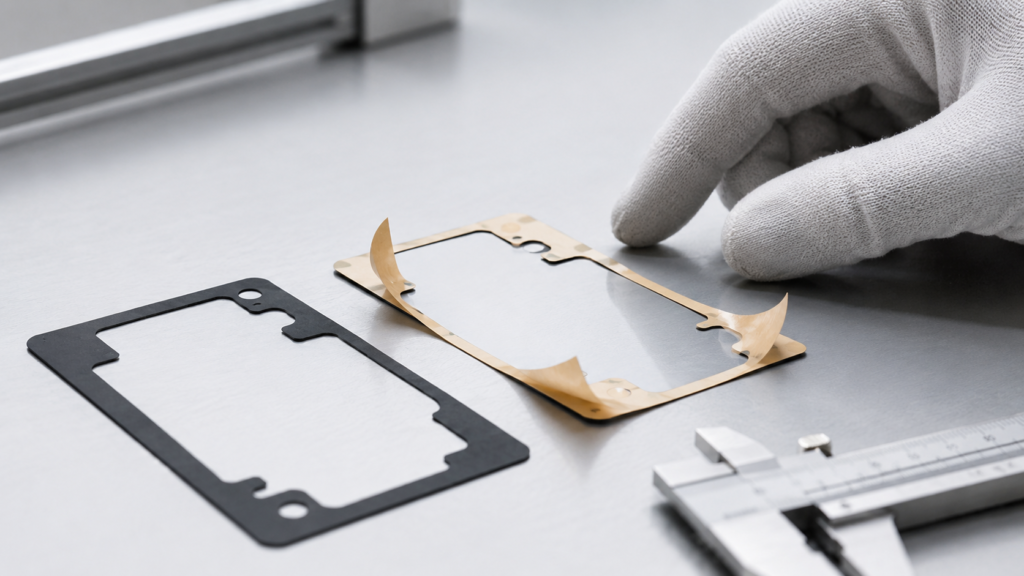
A die-cut part may pass inspection immediately after production but begin curling hours or days later. Foam gaskets lift from release liners, PET film components warp during storage, and adhesive-backed parts become difficult to assemble. For OEM manufacturers, curling can lead to increased scrap, assembly delays, automation failures, and customer complaints.
Die-cut parts typically curl after production because of material stress imbalance, adhesive shrinkage, liner mismatch, improper lamination conditions, environmental changes, or poor material selection. Preventing curl requires controlling material construction, lamination tension, die-cutting parameters, storage conditions, and product design from the beginning of the converting process.
In industries such as automotive, consumer electronics, medical devices, and wearable technology, controlling curl is critical for maintaining consistent product quality and assembly performance.
Why Do Die Cut Parts Curl?
Curling occurs when one side of a material contracts or expands differently than the opposite side.
Common causes include:
- Adhesive shrinkage
- Release liner stress
- Lamination tension
- Material memory
- Temperature fluctuations
- Humidity changes
- Thickness imbalance
The thinner the construction, the more visible the curl becomes.
Theme: Precision Die Cutting Production
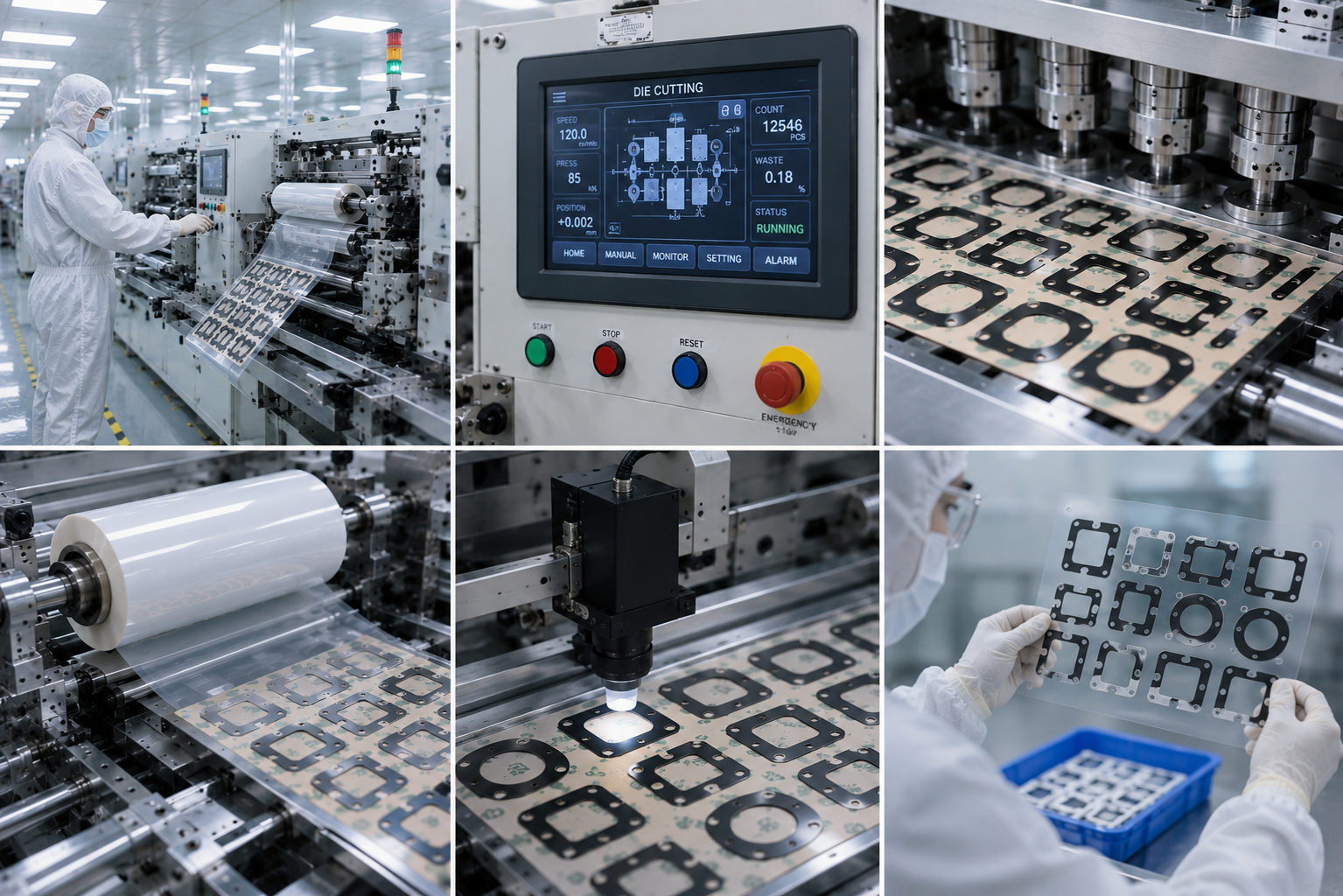
Common Causes of Die Cut Part Curling and Prevention Methods
| Curling Cause | Typical Symptom | Prevention Method |
|---|---|---|
| Adhesive shrinkage | Edges lift from liner after storage | Use dimensionally stable adhesive and aging tests |
| Unbalanced laminate structure | Part bends toward one material side | Balance material thickness and stiffness |
| Excessive lamination tension | Roll memory, sheet warping or delayed curl | Control web tension and roller pressure |
| Release liner mismatch | Adhesive-backed parts curl or peel poorly | Match liner stability and release force |
| Temperature and humidity changes | Parts curl during storage or transport | Use controlled storage and environmental validation |
| Poor cutting conditions | Edge stress or distorted parts | Control cut depth, tooling sharpness and pressure |
Cause 1: Adhesive Shrinkage
Pressure-sensitive adhesives naturally undergo slight dimensional changes after lamination.
Over time, adhesive shrinkage can pull against the carrier material and create curl.
Commonly affected products include:
- PET film assemblies
- Protective films
- Foam tape components
- Optical film structures
Prevention Methods
- Select dimensionally stable adhesives
- Allow material stabilization before die cutting
- Conduct aging tests before production release
Adhesive performance should be validated under actual storage conditions.
Cause 2: Unbalanced Material Construction
Multi-layer laminates often contain materials with different physical properties.
Examples:
| Layer | Behavior |
|---|---|
| PET Film | Stable |
| Foam | Compressible |
| Non-Woven Fabric | Stretchable |
| Rubber | Elastic |
When these materials are combined improperly, internal stresses develop.
Prevention Methods
- Use balanced laminate structures
- Match material thicknesses where possible
- Evaluate dimensional stability during development
Balanced constructions significantly reduce curl risk.
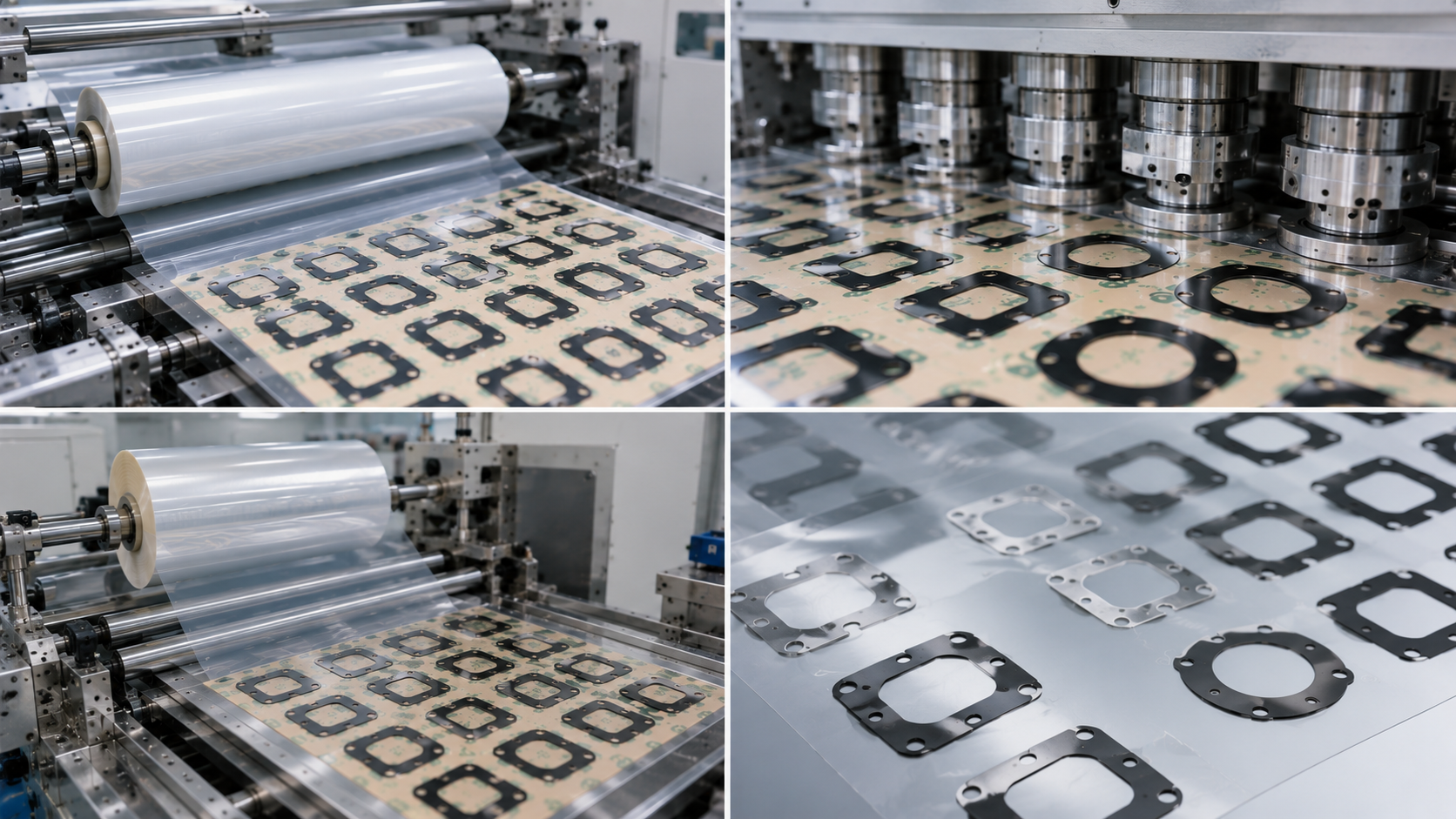
Cause 3: Excessive Lamination Tension
Many curl problems originate during lamination.
Excessive web tension can stretch materials temporarily.
After processing, the material attempts to return to its original dimensions, creating curl.
Symptoms
- Edge lifting
- Roll memory
- Sheet warping
Prevention Methods
- Maintain consistent web tension
- Monitor unwind and rewind systems
- Optimize roller pressure
Theme: Precision Lamination Process
Cause 4: Release Liner Mismatch
The release liner contributes significantly to dimensional stability.
Potential problems include:
- Excessive liner tension
- Poor liner flatness
- Different expansion rates between liner and face material
Paper liners are especially sensitive to environmental conditions.
Prevention Methods
- Use dimensionally stable liners
- Match release characteristics to adhesive properties
- Validate liner performance during environmental testing
Proper liner selection is often overlooked during product development.
Cause 5: Environmental Changes
Temperature and humidity can significantly affect die-cut materials.
High Temperatures
May cause:
- Adhesive movement
- Material relaxation
- Increased curling
Humidity Changes
May affect:
- Paper liners
- Non-woven materials
- Adhesive behavior
Prevention Methods
- Store materials in controlled environments
- Allow materials to acclimate before processing
- Validate products under expected operating conditions
Environmental stability is particularly important for precision electronic components.
Cause 6: Poor Die-Cutting Conditions
Although curl usually originates before cutting, die-cutting parameters can worsen the problem.
Over-Cutting
May introduce:
- Edge stress
- Material distortion
- Reduced dimensional stability
Inconsistent Kiss-Cutting
May create uneven liner release forces.
Prevention Methods
- Maintain sharp tooling
- Monitor cut depth
- Control kiss-cut accuracy
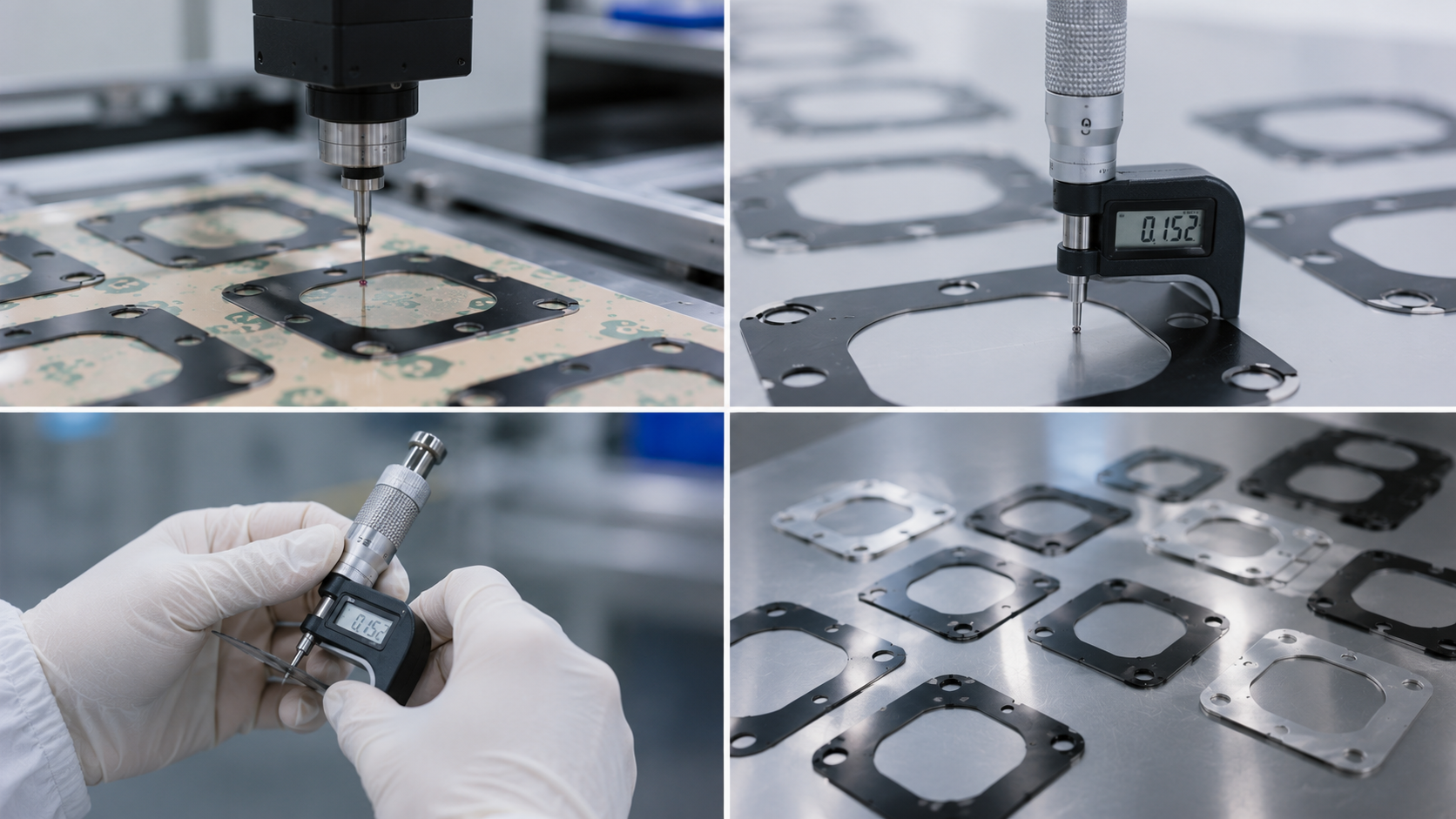
Theme: Die Cut Depth Inspection
Design Strategies to Reduce Curl
Good product design helps prevent future problems.
Increase Material Thickness
Thicker constructions generally resist curl better.
Minimize Large Unsupported Areas
Thin unsupported sections tend to deform more easily.
Optimize Adhesive Coverage
In some applications, partial adhesive patterns can reduce internal stresses.
Add Structural Layers
PET films or reinforcement layers can improve dimensional stability.
Design improvements often eliminate curl without changing materials.
Storage Best Practices
Even perfectly manufactured parts can curl if stored incorrectly.
Recommended practices:
- Store materials flat when possible
- Avoid excessive stacking pressure
- Maintain stable temperature and humidity
- Protect materials from direct sunlight
- Follow supplier storage recommendations
Proper storage helps preserve dimensional stability throughout the supply chain.
Quality Control Methods
Manufacturers should monitor:
- Flatness
- Curl radius
- Dimensional stability
- Adhesive performance
- Environmental aging behavior
Testing should occur:
- Immediately after production
- After 24 hours
- After 72 hours
- After environmental conditioning
This helps identify delayed curling issues before shipment.
How Sanken Manufacturing Prevents Curling
Sanken Manufacturing Co., Ltd. supports OEM customers with precision die cutting, material converting, lamination, adhesive backing, liner selection, inspection and mass production control.
We help reduce die cut part curling through:
- Material compatibility analysis
- Balanced laminate structure review
- Adhesive and release liner selection
- Precision lamination tension control
- Optimized kiss-cut and through-cut parameters
- Flatness and dimensional stability inspection
- Environmental aging and storage validation
These controls are especially important for PET insulation films, optical protective films, foam gaskets, adhesive tape components, automotive NVH parts, battery insulation materials and multilayer converted parts.
Featured Snippet Summary
Die-cut parts curl after production primarily because of adhesive shrinkage, material stress imbalance, liner mismatch, excessive lamination tension, environmental changes, or poor process control. Preventing curl requires balanced laminate design, proper tension management, stable storage conditions, and comprehensive validation testing.
Conclusion
Curling is a common quality issue in precision die cutting, especially for adhesive-backed parts, PET films, foam gaskets, rubber pads, non-woven felt parts and multilayer converted materials. Although parts may look flat immediately after production, curling can appear later during storage, transport or assembly.
For OEM buyers, curl prevention should start before mass production. Material balance, adhesive shrinkage, liner stability, lamination tension, die cutting depth, storage conditions and delivery format all affect final flatness.
Sanken supports custom die cut parts with material selection, lamination, precision die cutting, adhesive converting, liner control, inspection and mass production validation. If your project requires flat, stable and assembly-ready die cut components, Sanken can help reduce curling risk from development to production.