
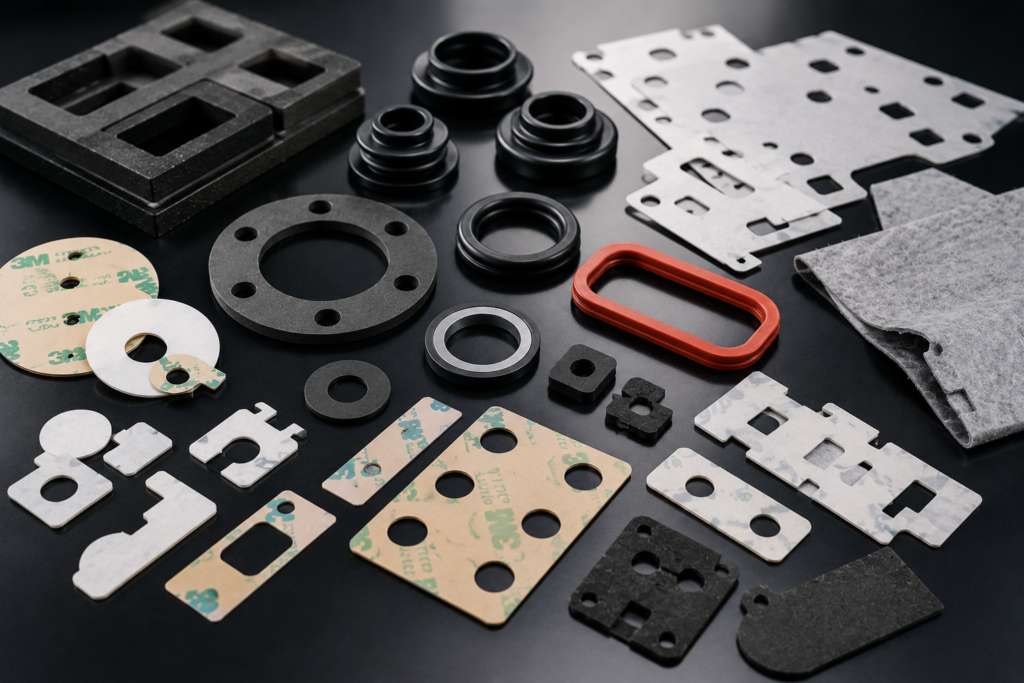
What Is the Meaning of Die Cutting in OEM Manufacturing?
Many OEM buyers hear the term “die cutting” but are not always sure what it really means. Some think it is only a simple cutting method. Others think it is mainly used for paper, labels, or packaging. That misunderstanding can lead to poor supplier choices, wrong material selection, and expensive production mistakes ([die cutting meaning reference](placeholder link)).
Die cutting means using a custom-made die tool to cut, shape, or convert materials into precise parts with repeatable accuracy. In modern manufacturing, die cutting is used far beyond paper products. It is widely used for foam, rubber, adhesive tapes, films, non-woven fabric, insulation materials, EMI shielding materials, and many other functional components. At Sanken, we use die cutting to help OEM customers create reliable parts for sealing, bonding, cushioning, insulation, thermal protection, and vibration control.
To put it simply, die cutting turns flat materials into useful industrial parts. The shape may look simple, but the performance behind it is not simple at all.
What Does Die Cutting Mean in Manufacturing?
In manufacturing, die cutting means using a shaped tool called a die to cut material into a required design.
The die works like a precision template.
When the machine applies pressure, the die cuts the material into the correct shape.
This process can be used for:
- Full cutting
- Kiss cutting
- Slitting
- Hole punching
- Scoring
- Laminating
- Multi-layer converting
For industrial customers, die cutting is not only about appearance.
It is about whether the part can perform properly inside the final product.
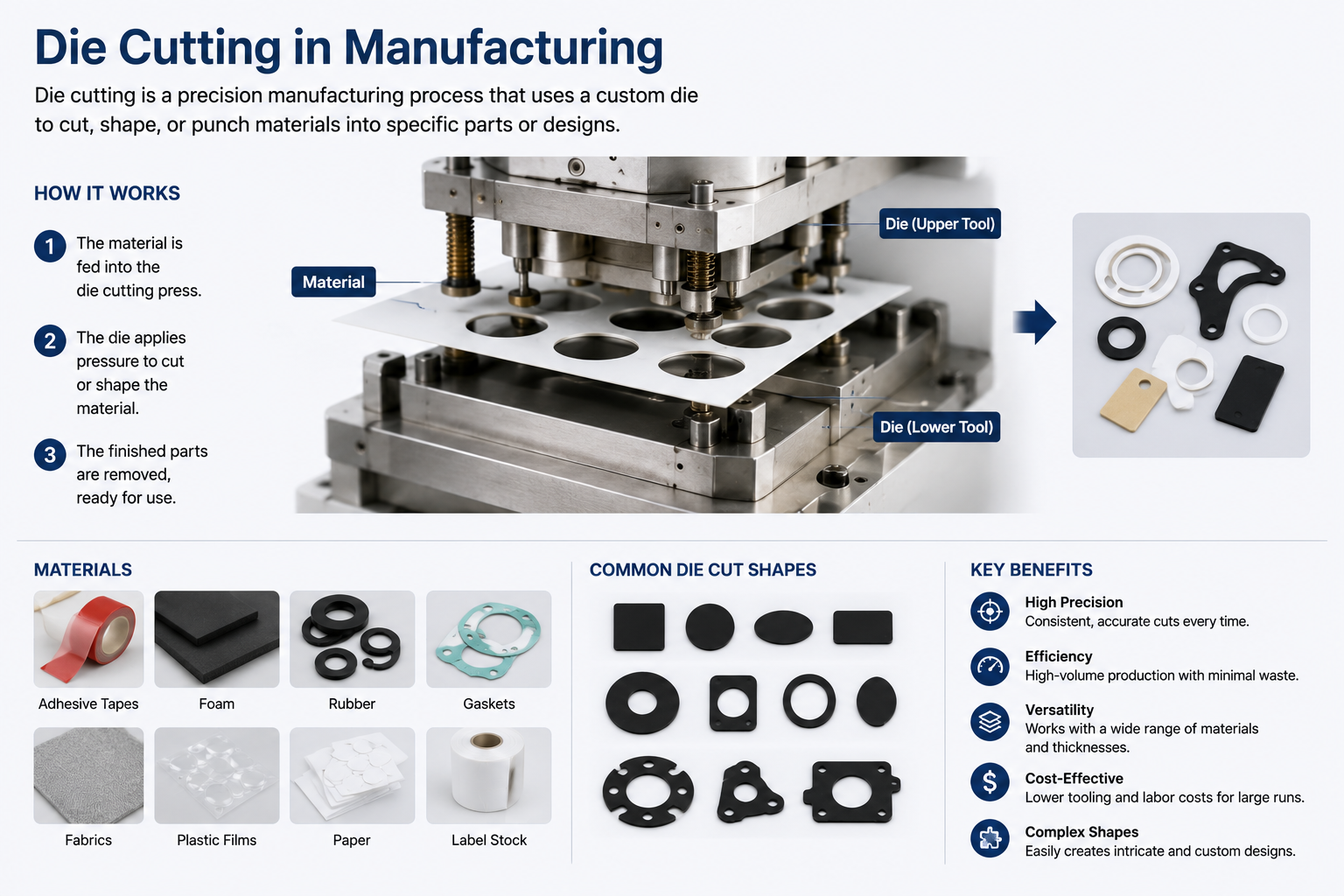
What Materials Can Be Die Cut?
Many materials can be die cut.
At Sanken, we regularly process:
| Material | Common Use |
|---|---|
| Foam | Cushioning, sealing, vibration reduction |
| Rubber | Waterproof gaskets and seals |
| Double-sided tape | Bonding and mounting |
| PET film | Electrical insulation |
| Non-woven fabric | Acoustic and thermal insulation |
| Conductive materials | EMI shielding |
| Silicone | Heat-resistant sealing |
| Protective film | Surface protection |
Each material behaves differently.
Foam may compress.
Film may stretch.
Adhesive may overflow.
Rubber may create burrs.
That is why the meaning of die cutting in OEM manufacturing is not just “cutting.” It is controlled material conversion.
Why Is Die Cutting Important?
Die cutting is important because modern products need parts that are consistent, clean, and easy to assemble.
Manual cutting cannot support large-scale production reliably.
Die cutting helps manufacturers achieve:
- Better dimensional accuracy
- Faster production speed
- Lower material waste
- Cleaner edges
- Stable assembly quality
- Repeatable mass production
For example, a small die cut foam gasket may decide whether an automotive part seals properly.
A thin PET insulation film may prevent electrical failure inside electronics.
A die cut adhesive tape may determine whether a component stays fixed during long-term use.
Small parts often carry big responsibility. They just do not brag about it.
What Is the Difference Between Die Cutting and Regular Cutting?
Regular cutting is usually slower and less consistent.
Die cutting is designed for repeatability.
| Regular Cutting | Die Cutting |
|---|---|
| Often manual or semi-manual | Tool-based and repeatable |
| Lower consistency | Higher consistency |
| Slower for mass production | Faster for high-volume production |
| Harder to control tolerance | Better tolerance control |
| More suitable for simple jobs | Suitable for precision components |
For OEM production, repeatability matters more than one perfect sample.
A supplier must be able to produce the same part again and again.
That is where precision die cutting becomes valuable.
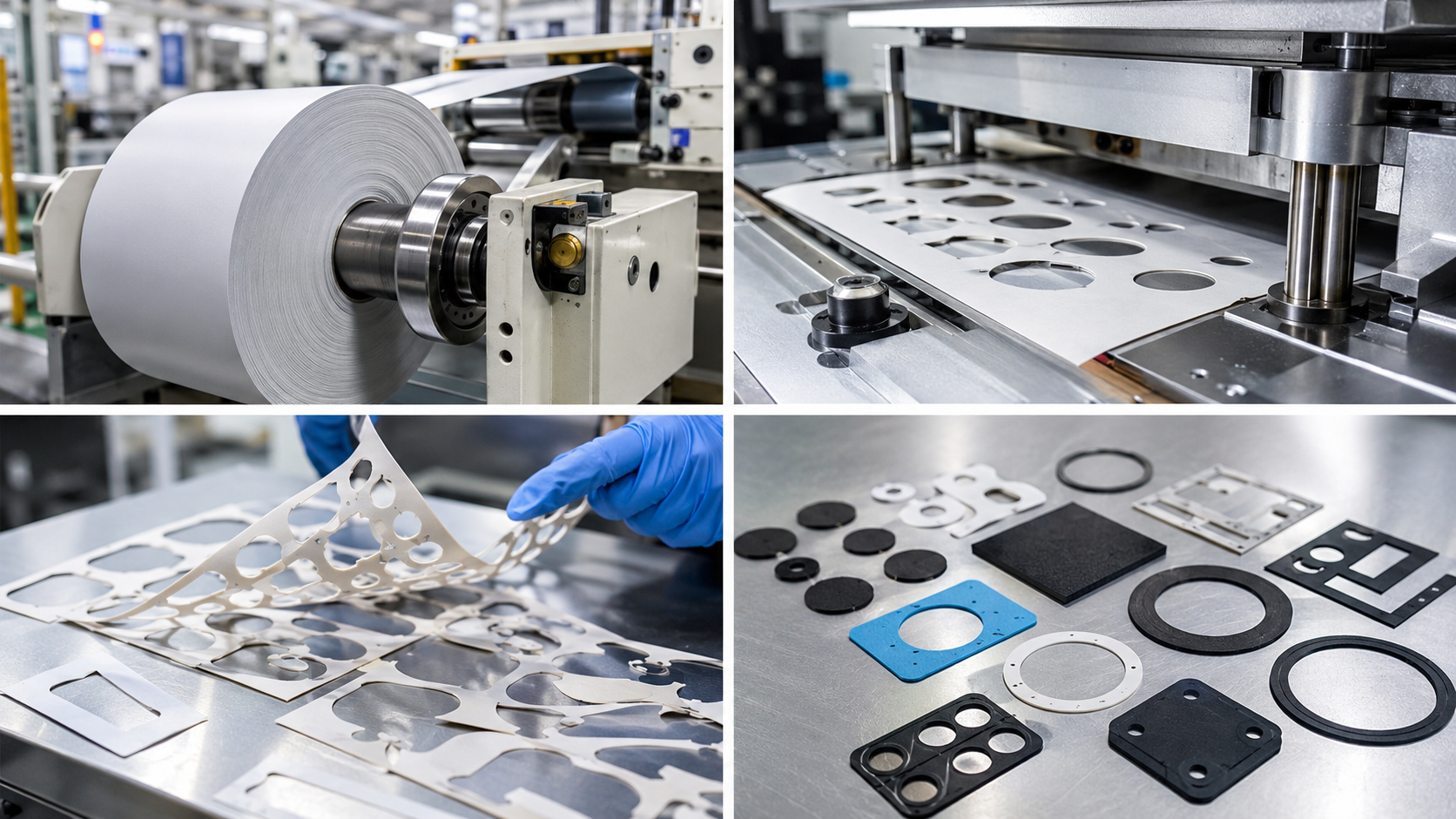
What Are Die Cut Parts Used For?
Die cut parts are used in many industries.
Automotive
Automotive applications include:
- NVH foam parts
- Waterproof sealing gaskets
- Battery insulation pads
- Interior cushioning components
- Thermal insulation materials
Electronics
Electronics applications include:
- EMI shielding
- PET insulation films
- Display adhesive layers
- Sensor foam gaskets
- Protective films
Medical
Medical applications include:
- Medical adhesive tapes
- Foam pads
- Disposable device components
- Protective layers
Industrial Products
Industrial applications include:
- Vibration reduction pads
- Dustproof seals
- Acoustic insulation
- Heat-resistant components
At Sanken, we focus on B2B custom die cut parts for these demanding applications.
What Problems Can Poor Die Cutting Cause?
Poor die cutting causes problems that may not appear immediately.
They usually appear during assembly or after product testing.
Common issues include:
- Rough edges
- Adhesive overflow
- Burrs
- Dimensional drift
- Hole misalignment
- Layer separation
- Foam dust contamination
- Poor sealing performance
This is why choosing a manufacturer is important.
A low-cost supplier may cut the shape.
But a professional supplier controls the performance.
At Sanken, we care about the final use of the part, not only the drawing.
Why Is Sanken Different From Basic Die Cutting Suppliers?
Many suppliers can cut materials.
Fewer suppliers understand how material, adhesive, tooling, and quality control work together.
At Sanken, we combine:
- Precision die cutting
- Material converting
- Adhesive laminating
- Kiss cutting
- Hot pressing
- Spraying and gluing
- Silk screen printing
- Injection molding support
We also support customers from sample development to mass production.
Our production systems follow quality management standards such as ISO 9001, ISO 14001, and IATF 16949 where applicable ([quality certification reference](placeholder link)).
This helps OEM customers reduce supplier risk and avoid repeated trial-and-error.
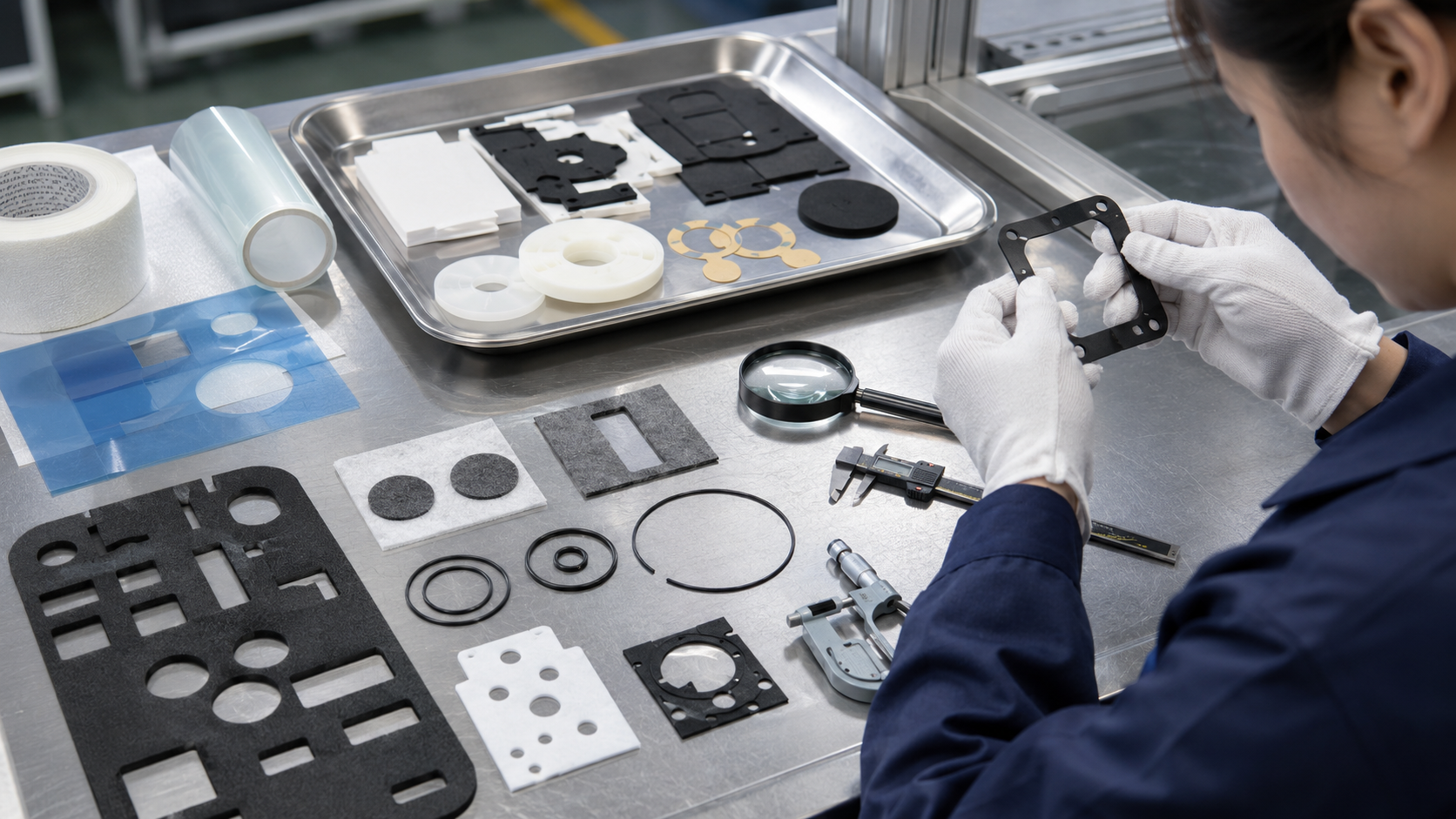
How Should Buyers Understand Die Cutting Before Sourcing?
Before sourcing die cut parts, I recommend buyers clarify these points:
- What material will be used?
- What function must the part perform?
- What tolerance is required?
- Does the part need adhesive backing?
- Will it face heat, humidity, vibration, or compression?
- Does it require cleanroom or high-cleanliness processing?
- Will it be used in automotive, electronics, medical, or industrial products?
These answers help the manufacturer choose the right process.
Without this information, quoting is easy.
Producing reliable parts is not.
Conclusion
Die cutting means using a die tool to convert materials into precise, repeatable parts. In OEM manufacturing, it is not just cutting. It is material engineering, process control, and quality verification. At Sanken, we help customers turn foam, rubber, tape, film, and non-woven materials into reliable functional components.