
What Are Examples of Insulating Materials?
Heat, electricity, moisture, vibration, and noise can all affect product performance. Without proper insulation materials, manufacturers may face overheating, energy loss, electrical failures, condensation issues, excessive noise, or shortened product life. Choosing the right insulating material is therefore critical in industries such as automotive, consumer electronics, construction, medical devices, and industrial equipment.
Insulating materials are substances that resist the transfer of heat, electricity, sound, or moisture. Common examples include foam, fiberglass, mineral wool, rubber, plastic films, ceramics, silicone, non-woven fabrics, and aerogel. Each material offers unique properties depending on the application and performance requirements.
This guide explains the most common insulating materials and where they are used.
Why Insulating Materials Matter
Insulation helps manufacturers:
- Reduce heat transfer
- Improve energy efficiency
- Prevent electrical leakage
- Reduce vibration and noise
- Protect sensitive components
- Improve product reliability
The best insulation material depends on the environment, temperature range, mechanical requirements, and installation method.
Theme: Industrial Insulation Materials
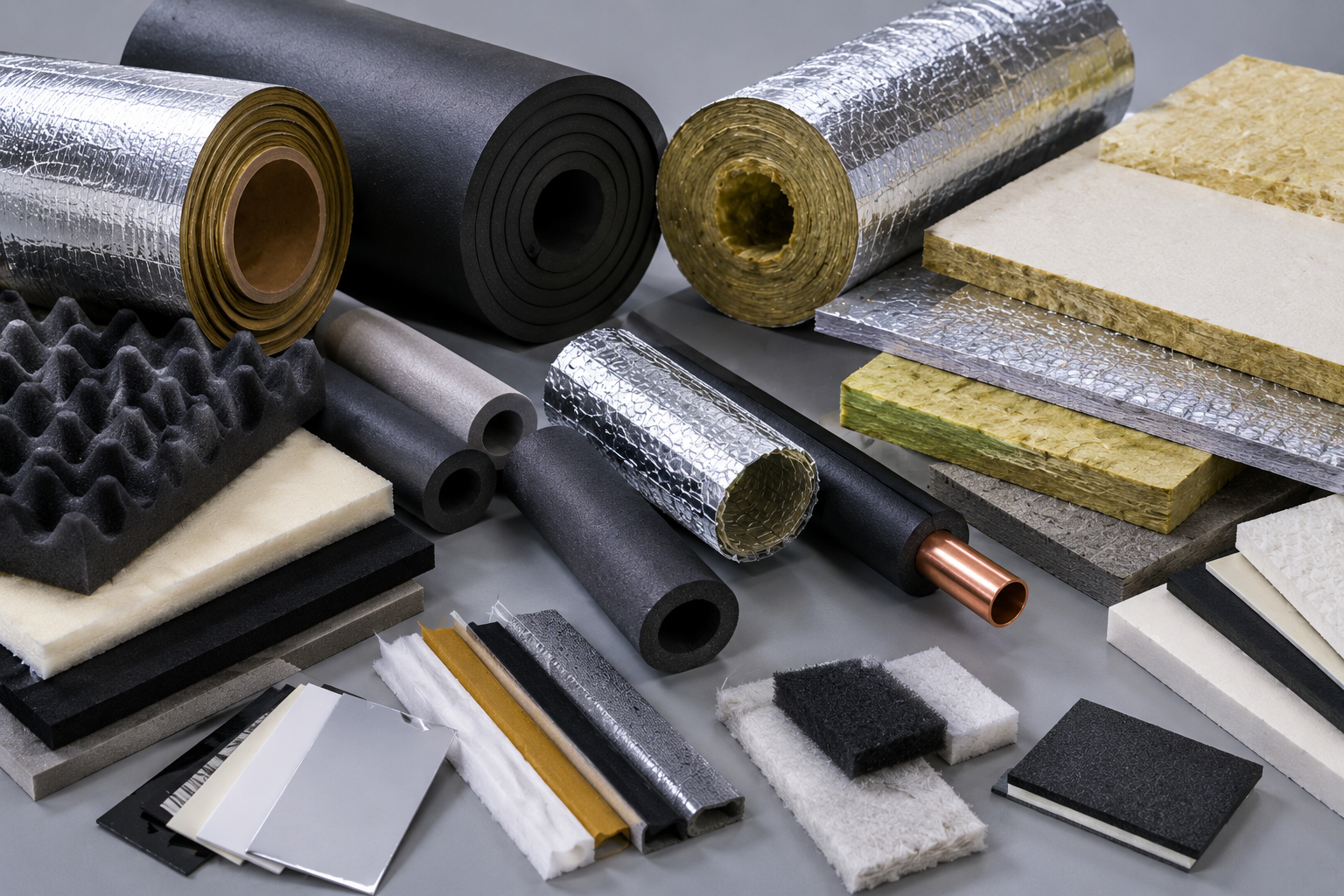
1. Foam Insulation Materials
Foam is one of the most widely used insulation materials because it is lightweight, versatile, and easy to process.
Common types include:
- EVA foam
- PE foam
- PU foam
- EPDM foam
- Silicone foam
Advantages
- Lightweight
- Good thermal insulation
- Vibration damping
- Easy die cutting and laminating
Applications
- Automotive NVH components
- Electronics cushioning
- Thermal insulation pads
- Appliance insulation
Closed-cell foam is especially effective because trapped air reduces heat transfer.
2. Fiberglass Insulation
Fiberglass consists of extremely fine glass fibers that trap air pockets.
Advantages
- Excellent thermal resistance
- Fire resistance
- Cost-effective
- Lightweight
Applications
- Building insulation
- HVAC systems
- Industrial equipment
- Thermal barriers
Fiberglass remains one of the most commonly used building insulation materials worldwide.
3. Mineral Wool (Rock Wool)
Mineral wool is manufactured from natural rock or slag materials.
Advantages
- High-temperature resistance
- Excellent fire performance
- Good sound absorption
- Durable construction
Applications
- Commercial buildings
- Industrial facilities
- Fire protection systems
- Acoustic insulation
Mineral wool performs particularly well in high-temperature environments.
4. Rubber Insulation Materials
Rubber-based insulation combines thermal resistance with flexibility.
Common materials include:
- EPDM rubber
- NBR rubber
- Silicone rubber
Advantages
- Flexible
- Moisture resistant
- Durable
- Excellent sealing properties
Applications
- HVAC insulation
- Pipe insulation
- Automotive sealing
- Industrial equipment
Rubber materials are often selected when both insulation and sealing are required.
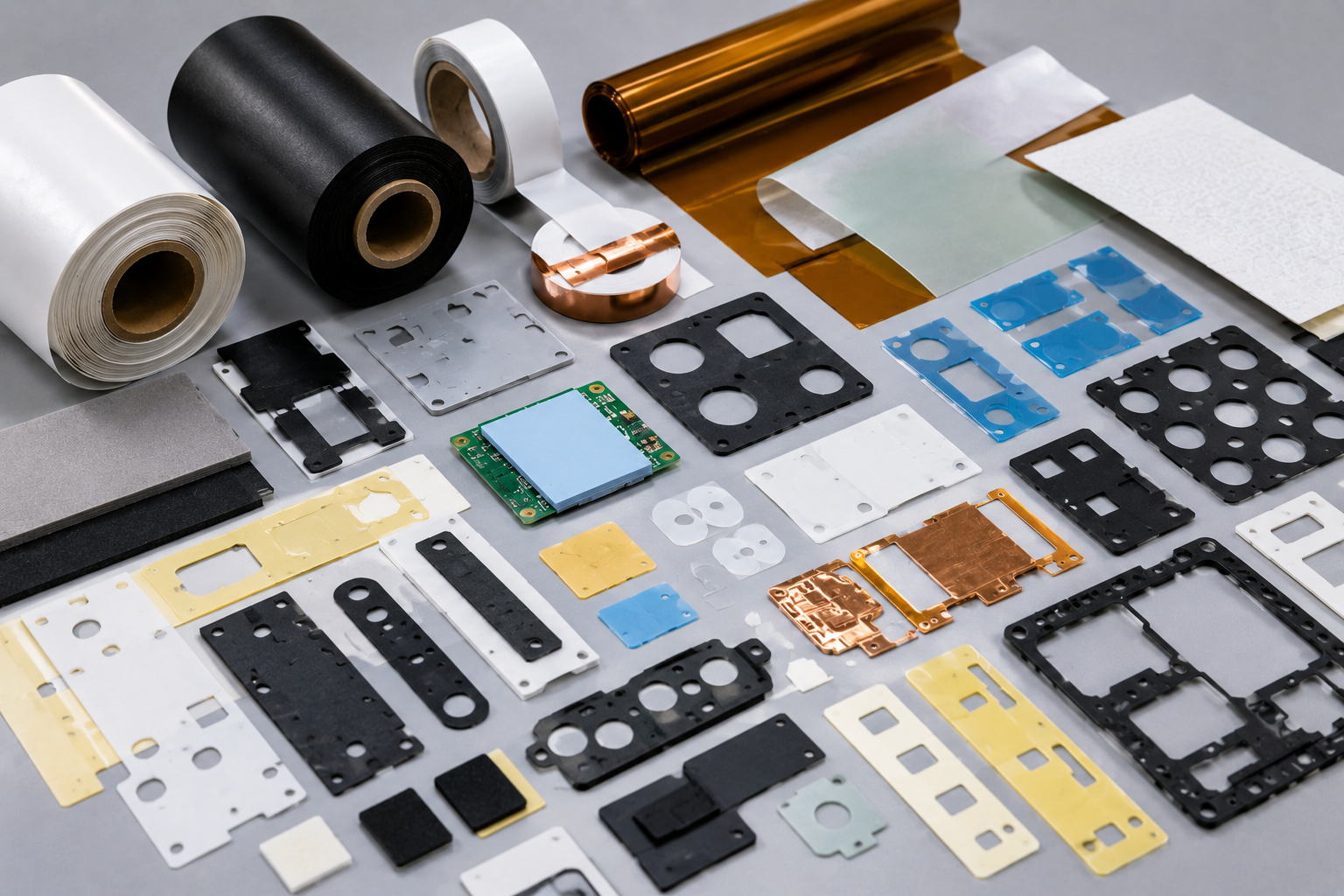
5. Plastic Film Insulation
Thin plastic films are widely used in electrical and electronic insulation.
Common examples include:
- PET film
- Polyimide (PI) film
- Polycarbonate film
- Polypropylene film
Advantages
- Excellent electrical insulation
- Thin profile
- Lightweight
- Easy to laminate
Applications
- Consumer electronics
- Batteries
- Circuit protection
- Wearable devices
Theme: Precision Electronic Insulation Components
6. Non-Woven Insulation Materials
Non-woven materials are increasingly used for thermal and acoustic insulation.
Advantages
- Lightweight
- Sound absorption
- Thermal insulation
- Easy forming and die cutting
Applications
- Automotive NVH systems
- Interior trim components
- Appliance insulation
- Industrial equipment
Needle-punched felt and polyester non-woven materials are common examples.
7. Ceramic Insulation Materials
Ceramic materials offer exceptional high-temperature performance.
Advantages
- Extremely heat resistant
- Excellent thermal stability
- Long service life
Applications
- Furnaces
- Aerospace systems
- Industrial heating equipment
Ceramic insulation is often selected when temperatures exceed the limits of traditional materials.
8. Aerogel Insulation
Aerogel is considered one of the most advanced insulation materials available.
Advantages
- Extremely low thermal conductivity
- Ultra-lightweight
- Thin profile
- Superior thermal performance
Applications
- Aerospace
- Electronics
- Industrial insulation
- High-performance thermal management
Although more expensive, aerogel provides outstanding insulation efficiency.
Which Insulating Material Is Best?
There is no single material that is best for every application.
| Material | Primary Advantage |
|---|---|
| Foam | Lightweight thermal insulation |
| Fiberglass | Cost-effective heat insulation |
| Mineral Wool | Fire and heat resistance |
| Rubber | Insulation plus sealing |
| Plastic Films | Electrical insulation |
| Non-Woven Felt | Acoustic and thermal insulation |
| Ceramic | High-temperature protection |
| Aerogel | Maximum thermal performance |
The optimal choice depends on application requirements.
How Sanken Manufacturing Supports Insulation Applications
Dongguan Sanken Electronics Manufacturing Co., Ltd. provides custom insulation solutions for OEM manufacturers worldwide.
Our capabilities include:
- Precision die cutting
- Foam converting
- Non-woven material processing
- Adhesive lamination
- Rubber component manufacturing
- Thermal insulation assemblies
Key Advantages
- OEM and ODM customization
- ISO 9001 certified quality management
- RoHS and REACH compliant materials
- Domestic and overseas production bases
- Cleanroom precision manufacturing
- Tool development from drawings or samples
We support automotive NVH insulation, consumer electronics thermal management, and custom sealing applications.
Theme: Custom OEM Insulation Solutions
Featured Snippet Summary
Examples of insulating materials include foam, fiberglass, mineral wool, rubber, plastic films, non-woven fabrics, ceramics, and aerogel. These materials help reduce heat transfer, electrical conductivity, noise, and vibration in automotive, electronics, construction, and industrial applications.
Conclusion
Insulating materials play a vital role in protecting products from heat, electricity, noise, and environmental influences. Common examples include foam, fiberglass, mineral wool, rubber, plastic films, non-woven fabrics, ceramic materials, and aerogel.
Selecting the right insulation material improves product performance, reliability, energy efficiency, and manufacturing success. For OEM applications, working with an experienced manufacturing partner helps ensure the best material choice and conversion process for long-term performance.