
What Equipment Is Needed for Die Cutting?
Many buyers assume die cutting only requires a cutting machine and a metal die. That is one of the biggest misconceptions in precision converting manufacturing. I’ve seen OEM projects fail because suppliers focused only on cutting equipment while ignoring material handling, laminating accuracy, inspection systems, and process stability. In reality, high-quality die cutting depends on an entire manufacturing system working together ([placeholder link]).
Modern die cutting requires a combination of cutting machines, tooling systems, laminating equipment, inspection devices, tension control systems, and material converting technologies. The exact equipment depends on the material type, tolerance requirements, production volume, and final application. Industries such as automotive, electronics, medical, and industrial manufacturing all require different levels of precision and process integration ([placeholder link]).
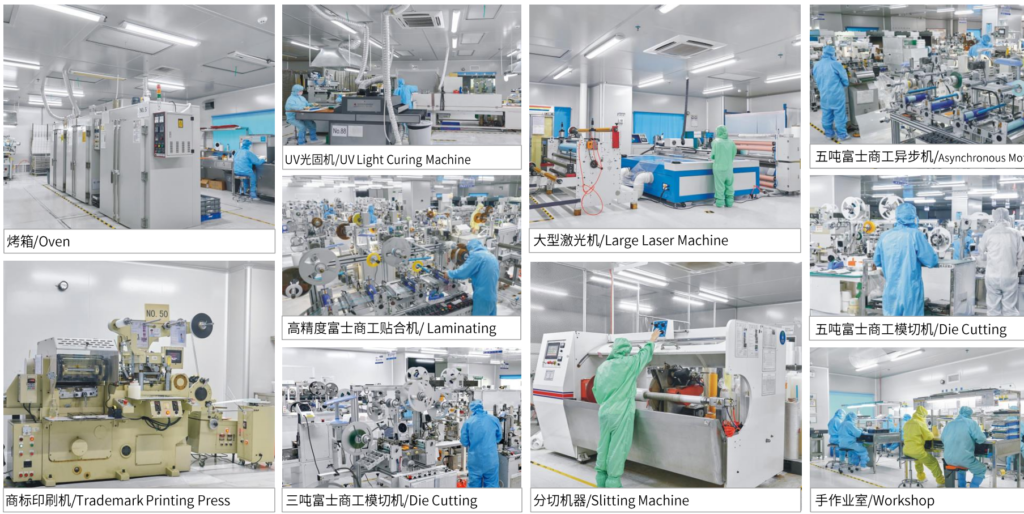
At Sanken, we use a complete die cutting production system rather than relying on a single machine. That allows us to deliver stable quality, tighter tolerances, and reliable large-scale OEM production.
1. Die Cutting Machines
The core equipment is, of course, the die cutting machine itself.
There are several major types:
| Machine Type | Best For |
|---|---|
| Flatbed Die Cutting Machine | Thick foam and rubber |
| Rotary Die Cutting Machine | High-speed roll materials |
| Laser Die Cutting System | Complex precision cutting |
| Hydraulic Press Die Cutter | Heavy-duty industrial applications |
Each machine has advantages depending on material thickness, speed, and accuracy requirements.
For example, rotary die cutting is ideal for large-volume adhesive tape production, while flatbed systems work better for thicker foam materials.
2. Die Tooling Systems
The die tool itself is equally important.
Without precision tooling, even expensive machines produce poor-quality parts.
Common tooling includes:
- Steel rule dies
- Rotary dies
- Precision engraved dies
- Magnetic cylinders
- Flexible dies
The tooling controls:
- Cutting pressure
- Shape accuracy
- Edge quality
- Material deformation
- Production consistency
At Sanken, we optimize tooling design based on both material behavior and OEM assembly requirements.
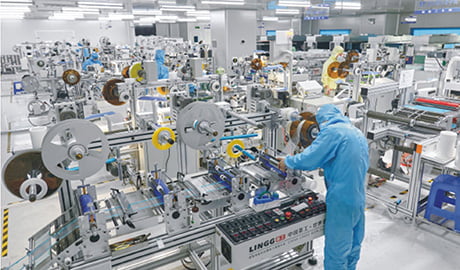
3. Laminating Equipment
Most modern die cut parts are multilayer structures.
This means laminating equipment is critical.
Laminating systems combine:
- Foam
- Adhesives
- Films
- Conductive materials
- Protective liners
Poor laminating causes:
- Air bubbles
- Wrinkles
- Adhesive contamination
- Misalignment
That is why precision tension control is extremely important during material converting ([placeholder link]).
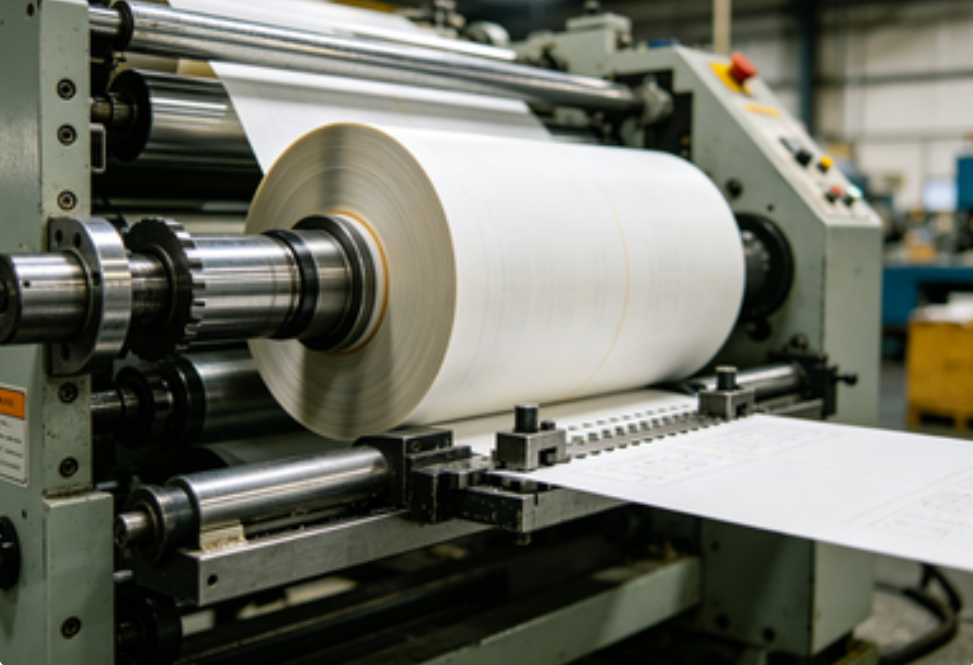
4. Slitting and Rewinding Machines
Before die cutting begins, raw materials often need preparation.
Slitting machines cut large material rolls into smaller widths.
Rewinding systems maintain proper roll tension and alignment.
Without stable tension control, materials may stretch or shift during production.
This becomes especially problematic with:
- Thin PET films
- Conductive materials
- Optical films
- Double-sided tapes
5. Inspection and Measurement Equipment
This is where many suppliers fall behind.
Producing parts is easy.
Maintaining stable quality across millions of components is difficult.
At Sanken, we use inspection systems to verify:
- Dimensions
- Hole positions
- Edge quality
- Adhesive placement
- Surface cleanliness
- Lamination stability
Common inspection equipment includes:
- Vision inspection systems
- Digital measuring devices
- Thickness gauges
- Adhesion testing equipment
- Optical alignment systems
These systems help reduce production defects before products reach OEM assembly lines.

6. Material Handling Systems
Many converting problems actually begin during material handling.
Modern production often requires:
- Roll feeding systems
- Automatic alignment systems
- Static elimination systems
- Waste removal systems
- Conveyor automation
Without proper handling systems, materials may:
- Shift
- Stretch
- Warp
- Collect contamination
That directly affects die cutting accuracy.
7. Environmental Control Equipment
This is becoming increasingly important.
Electronics and medical customers now require cleaner converting environments.
Many advanced die cutting operations include:
- Dust control systems
- Cleanroom production
- Temperature stabilization
- Humidity control
These controls improve adhesive stability and reduce contamination risks.
Why Equipment Alone Does Not Guarantee Quality
One mistake many buyers make is assuming expensive equipment automatically means high quality.
It does not.
The real difference comes from:
- Engineering experience
- Material knowledge
- Process integration
- Tooling optimization
- Operator expertise
- Quality management systems
I’ve seen factories with advanced machines still produce unstable products because they lacked process control knowledge.
Why OEM Customers Choose Sanken
At Sanken, we combine advanced equipment with deep material converting expertise.
Our capabilities include:
- Precision die cutting
- Rotary converting
- Adhesive laminating
- Hot pressing
- Spraying and gluing
- Silk screen printing
- Injection molding
- One-stop manufacturing integration
Our facilities operate under:
- IATF 16949
- ISO 9001
- ISO 14001
This allows us to support automotive, electronics, medical, and industrial OEM projects with stable large-scale production quality ([placeholder link]).
How Smart Buyers Evaluate Die Cutting Manufacturers
Experienced OEM buyers usually ask:
- Can the supplier maintain stable tolerances at scale?
- Do they control the entire converting process?
- Can they support multilayer assemblies?
- Do they understand material behavior?
- Can they optimize production efficiency before mass production?
Those questions matter far more than simply asking what machines a factory owns.
Conclusion
Die cutting requires far more than a cutting machine. Modern die cutting depends on integrated equipment systems including tooling, laminating, inspection, slitting, tension control, and environmental management. At Sanken, we combine advanced equipment and deep process expertise to help OEM customers achieve stable quality, lower production risks, and more reliable large-scale manufacturing.