

How Are Cutter Dies Made for Scrapbooking?
Many people think scrapbook cutter dies are simple metal shapes made overnight. They are not. I’ve seen low-quality craft dies create uneven cuts, torn paper, poor embossing, and frustrating alignment issues. Behind every clean scrapbook design is a surprisingly precise manufacturing process that combines tooling engineering, material selection, and precision processing ([placeholder link]).
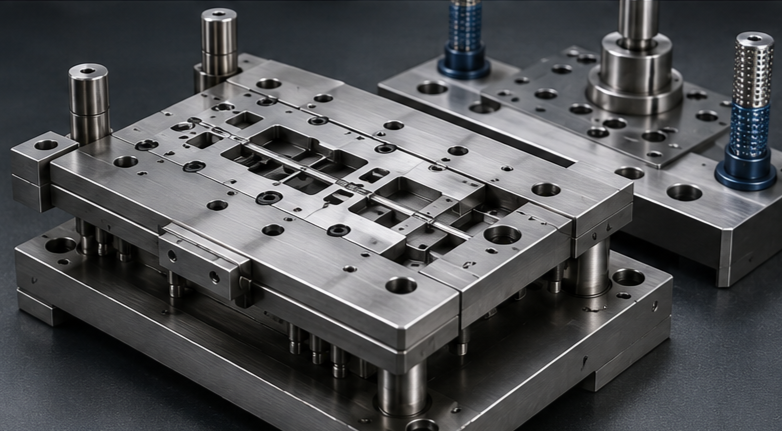
Scrapbooking cutter dies are typically made by shaping hardened steel blades into custom patterns and mounting them onto a base to create precise cutting tools for paper crafting applications. Modern craft dies are manufactured using precision tooling equipment, laser processing, CNC machining, chemical etching, and heat treatment technologies. Although scrapbook dies are smaller and lighter than industrial die cutting tools, the manufacturing principles are very similar to those used in automotive and electronics precision converting industries ([placeholder link]).
At Sanken, we specialize in precision die cutting manufacturing, and the same engineering logic used in industrial die cutting also applies to high-quality scrapbook cutter die production.
It All Starts With the Design
Every scrapbook cutter die begins as a digital design.
Designers create patterns using CAD software.
The design must consider:
- Cutting paths
- Blade spacing
- Material thickness
- Pressure distribution
- Paper release performance
Complex scrapbook patterns may include:
- Floral shapes
- Decorative borders
- Lettering
- Embossing details
- Layered craft designs
Poor design causes tearing, incomplete cuts, and weak blade stability later during production.
Choosing the Right Die Material
The die itself is usually made from hardened steel.
Why?
Because the blade must remain sharp after repeated cutting cycles.
Common die materials include:
| Material | Purpose |
|---|---|
| Carbon steel | Standard craft dies |
| Hardened steel | Long-life cutting edges |
| Stainless steel | Corrosion resistance |
| Flexible steel | Thin intricate patterns |
The material selection directly affects:
- Blade durability
- Cutting precision
- Edge sharpness
- Production lifespan

How the Cutting Blade Is Formed
This is where the real craftsmanship begins.
For traditional steel-rule dies, manufacturers bend thin steel blades into the required pattern manually or using automated bending equipment.
The blade is then inserted into a wooden or composite base.
For more advanced craft dies, manufacturers may use:
- Laser cutting
- Chemical etching
- CNC machining
- Precision stamping
These technologies allow highly detailed and intricate scrapbook designs.
Modern thin metal dies used in home crafting machines are often chemically etched for extremely fine detail accuracy ([placeholder link]).
Why Precision Matters Even in Scrapbooking
Many people underestimate the precision requirements for scrapbook dies.
Even tiny deviations can cause:
- Paper tearing
- Misaligned cuts
- Incomplete patterns
- Poor embossing quality
This becomes especially challenging with:
- Intricate decorative shapes
- Ultra-thin paper materials
- Multi-layer craft designs
At Sanken, precision tooling principles are central to everything we manufacture, whether for industrial applications or precision decorative converting.
Heat Treatment Improves Durability
After shaping, many dies undergo heat treatment.
This process strengthens the steel and improves wear resistance.
Without proper heat treatment, blades may:
- Dull quickly
- Warp under pressure
- Lose cutting accuracy
Heat treatment is critical for maintaining long-term production consistency.
Surface Finishing and Coating
Some scrapbook dies receive additional finishing treatments such as:
- Polishing
- Anti-rust coating
- Protective plating
These treatments improve:
- Blade smoothness
- Corrosion resistance
- Paper release performance
A smoother surface creates cleaner cuts and reduces paper sticking problems.

How Scrapbook Dies Are Tested
Before mass production, quality manufacturers test the dies repeatedly.
Testing verifies:
- Cutting accuracy
- Blade pressure consistency
- Edge quality
- Material compatibility
- Durability performance
Poor-quality dies often fail during repeated use because the blade alignment was never properly verified.
This is one major difference between low-cost suppliers and professional tooling manufacturers.
What Makes Premium Scrapbook Dies Better?
High-end scrapbook dies usually offer:
- Cleaner cuts
- Sharper details
- Longer lifespan
- Better embossing quality
- Improved paper release
The difference often comes from:
- Better steel quality
- More accurate tooling
- Precision manufacturing
- Better heat treatment
- Stronger process control
Many buyers focus only on appearance.
Experienced manufacturers focus on how the die performs after thousands of cutting cycles.
Why Precision Manufacturing Experience Matters
Although scrapbooking is a creative industry, the manufacturing principles behind quality dies are highly technical.
At Sanken, our precision die cutting experience includes:
- Tooling optimization
- Precision converting
- Material engineering
- Quality verification systems
- Tight tolerance control
These same engineering standards are what separate professional die manufacturing from low-cost imitation production.
Conclusion
Scrapbooking cutter dies are made through a precise manufacturing process involving design engineering, steel forming, heat treatment, precision tooling, and quality verification. At Sanken, we understand that even decorative die cutting requires tight tolerances, material expertise, and advanced manufacturing control to achieve clean, reliable cutting performance.