
Which Is Better, a Rotary or a Flatbed Die Cutting?
Many OEM buyers ask me this question when starting a new project. The truth is, there is no universal “best” option. I’ve seen companies choose rotary die cutting because it looked faster, only to discover later that their thick foam materials could not maintain stable tolerances. I’ve also seen manufacturers use flatbed die cutting for high-volume tape production and lose huge amounts of efficiency. The wrong process selection can quietly increase scrap rates, assembly problems, and production costs ([placeholder link]).
Rotary die cutting is generally better for high-speed, high-volume production of thin flexible materials, while flatbed die cutting is better for thicker materials, tighter compression control, and lower-volume or complex applications. The ideal solution depends on the material structure, tolerance requirements, production scale, and final product application. In modern OEM manufacturing, choosing the correct die cutting method is often just as important as selecting the right material ([placeholder link]).
At Sanken, we help customers evaluate both processes from an engineering and manufacturability perspective instead of simply recommending the faster or cheaper option.
What Is Rotary Die Cutting?
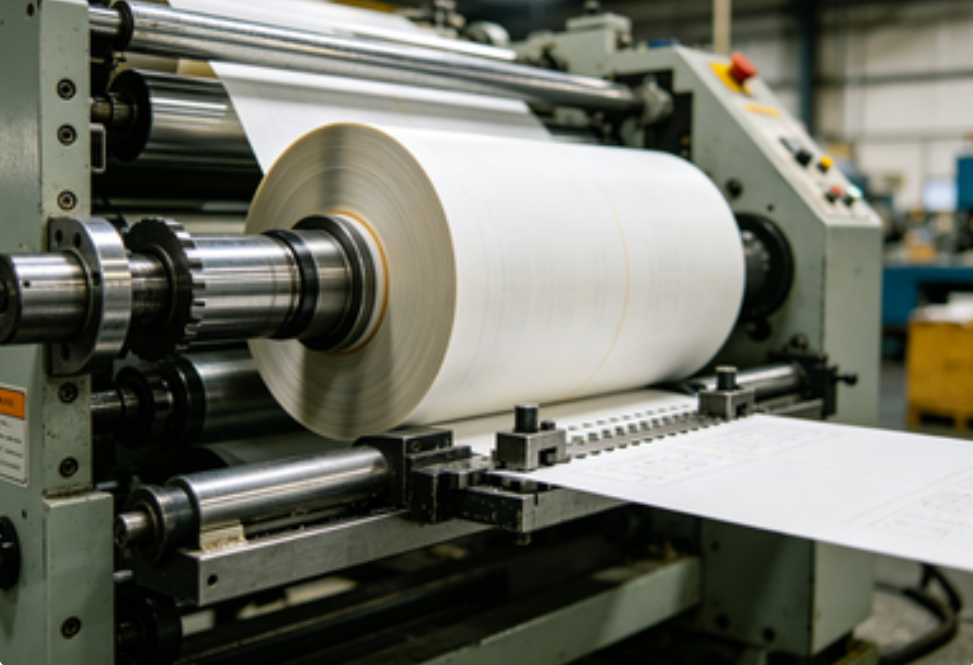
Rotary die cutting uses cylindrical dies mounted on rotating rollers.
The material moves continuously through the machine during production.
This process is extremely fast and highly efficient for roll-based materials.
Rotary die cutting is commonly used for:
- Adhesive tapes
- PET films
- Labels
- EMI shielding materials
- Thin foam laminations
- Medical tapes
Because the process is continuous, rotary systems are ideal for large-volume OEM manufacturing.
What Is Flatbed Die Cutting?
Flatbed die cutting uses vertical pressure to stamp materials into shape.
The machine presses downward onto the material sheet during each cutting cycle.
This process offers stronger cutting force and better support for thicker materials.
Flatbed die cutting is commonly used for:
- Thick foam
- Rubber sheets
- Thermal insulation materials
- Heavy gaskets
- Multi-layer assemblies
- Rigid industrial materials
Although slower than rotary systems, flatbed cutting often provides better stability for difficult materials.
Rotary vs Flatbed: The Real Differences
Here is how the two processes compare in real manufacturing environments:
| Feature | Rotary Die Cutting | Flatbed Die Cutting |
|---|---|---|
| Production Speed | Very High | Medium |
| Best Material Type | Thin flexible rolls | Thick materials |
| Tooling Style | Cylindrical die | Flat die |
| Initial Tooling Cost | Higher | Lower |
| Precision Stability | Excellent for roll materials | Excellent for thick materials |
| Ideal Production Volume | Large-scale mass production | Small to medium production |
| Material Thickness Capability | Limited | Strong |
| Setup Flexibility | Lower | Higher |
The best process depends entirely on the project requirements.
Why Rotary Die Cutting Is Popular in Electronics
Electronics manufacturing often requires:
- High-speed production
- Thin material converting
- Tight adhesive registration
- Roll-to-roll processing
Rotary die cutting performs extremely well in these environments.
At Sanken, we frequently use rotary systems for:
- EMI shielding
- Thermal interface materials
- Adhesive tapes
- Protective films
- Precision multilayer laminations
The continuous process improves efficiency and reduces material waste ([placeholder link]).
Why Flatbed Die Cutting Is Still Extremely Important
Some buyers mistakenly believe flatbed systems are outdated.
That is completely wrong.
Flatbed die cutting remains critical for applications requiring:
- Higher compression force
- Thick foam processing
- Large gasket structures
- Complex multilayer assemblies
Rotary systems struggle with some heavy industrial materials.
Flatbed equipment often provides better edge quality and material stability for these applications.
The Biggest Mistake Buyers Make
The most common mistake is selecting equipment based only on speed.
Speed means nothing if the parts fail during assembly.
At Sanken, we first evaluate:
- Material behavior
- Compression recovery
- Adhesive flow
- Tolerance requirements
- Final assembly conditions
- Production scalability
Sometimes rotary is the better choice.
Sometimes flatbed produces far more stable long-term results.
Good engineering decisions always outperform simple machine comparisons.
Why Material Thickness Changes Everything
This is one of the most important factors.
Thin materials usually run efficiently on rotary systems.
But thick materials behave differently under pressure.
For example:
| Material Thickness | Recommended Process |
|---|---|
| Ultra-thin films | Rotary |
| Standard adhesive tapes | Rotary |
| Thick foam | Flatbed |
| Heavy rubber sheets | Flatbed |
| Multi-layer thermal insulation | Flatbed |
Incorrect process selection often causes:
- Material stretching
- Edge deformation
- Adhesive overflow
- Poor dimensional consistency
That is why experienced die cutting manufacturers always evaluate material mechanics carefully.
Why OEM Customers Choose Sanken
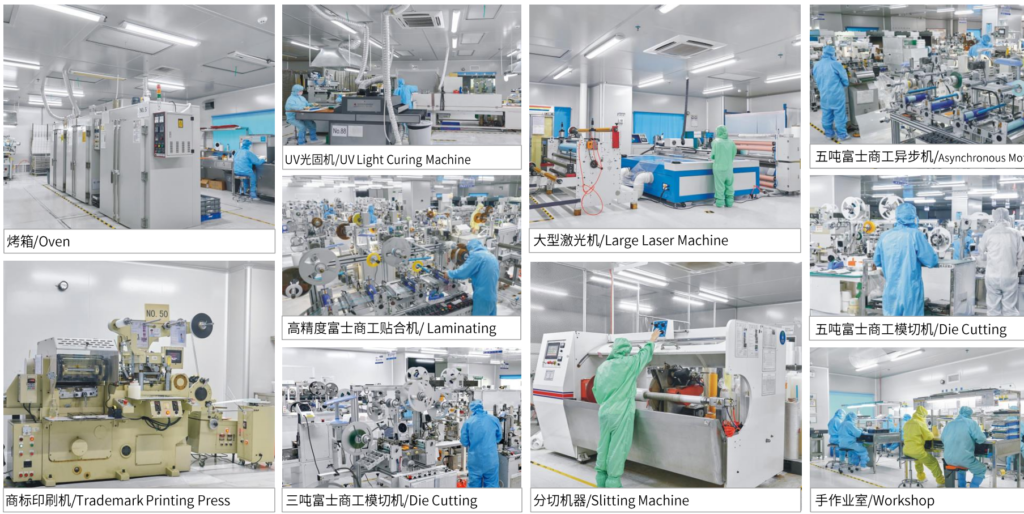
At Sanken, we combine both rotary and flatbed die cutting capabilities with advanced material converting expertise.
Our capabilities include:
- Precision die cutting
- Rotary converting
- Flatbed cutting
- Adhesive laminating
- Hot pressing
- Spraying and gluing
- Silk screen printing
- One-stop material conversion solutions
We help OEM customers optimize manufacturability before mass production begins.
Our facilities operate under:
- IATF 16949
- ISO 9001
- ISO 14001
This allows us to maintain stable quality for automotive, electronics, medical, and industrial manufacturing projects ([placeholder link]).
How Smart Buyers Choose Between Rotary and Flatbed
Before selecting a process, experienced buyers usually ask:
- What material thickness is involved?
- Does the project require roll-to-roll production?
- How important is production speed?
- Are tight tolerances required on thick materials?
- Will multilayer laminating be involved?
The answers usually determine the best manufacturing method very quickly.
Conclusion
Rotary die cutting is generally better for high-speed thin-material production, while flatbed die cutting performs better for thicker and more complex material structures. At Sanken, we help OEM customers choose the right die cutting process based on material behavior, production efficiency, and long-term manufacturing stability rather than simply comparing machine speeds.