
What Is a Die Cutting Machine Used For?
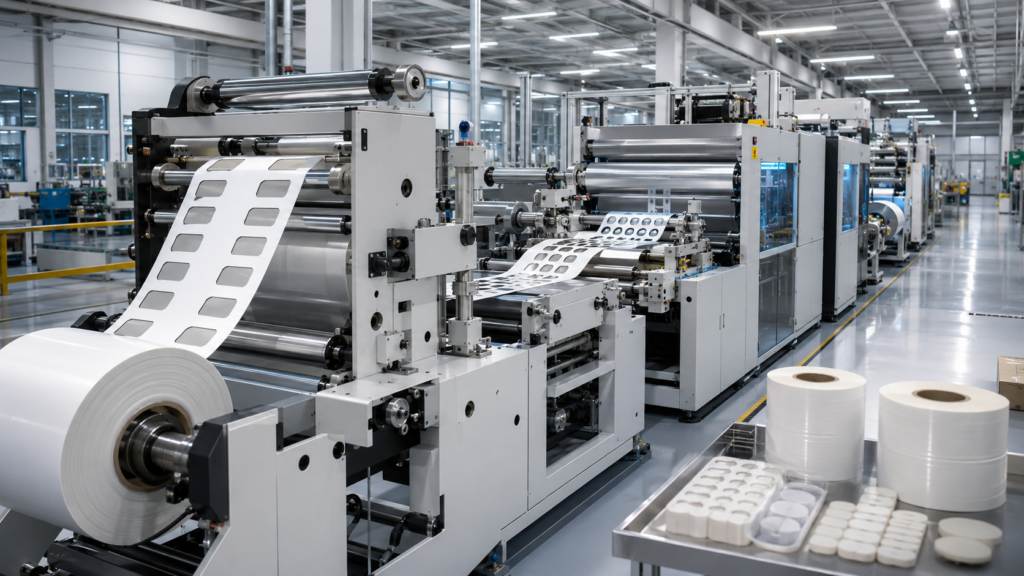
Many manufacturers think a die cutting machine is only used to cut simple shapes from materials. That is outdated thinking. In modern OEM manufacturing, die cutting machines are critical production systems used to create high-performance functional components with precise tolerances, multilayer structures, and stable assembly performance. I’ve seen companies struggle with product failures simply because their supplier treated die cutting as a basic cutting process instead of a precision engineering solution ([placeholder link]).
A die cutting machine is used to convert raw materials into precision custom parts for sealing, insulation, bonding, cushioning, EMI shielding, thermal management, waterproofing, and vibration reduction applications. These machines process materials such as foam, rubber, adhesive tapes, films, silicone, non-woven fabrics, and conductive materials for industries including automotive, electronics, medical, aerospace, and industrial manufacturing ([placeholder link]).
At Sanken, we use advanced die cutting systems to help OEM customers improve product reliability, reduce assembly problems, and simplify manufacturing processes.
Die Cutting Machines Are Used to Create Precision Functional Parts
Modern products require highly accurate components.
A die cutting machine helps manufacturers produce identical parts repeatedly with stable precision.
These parts may include:
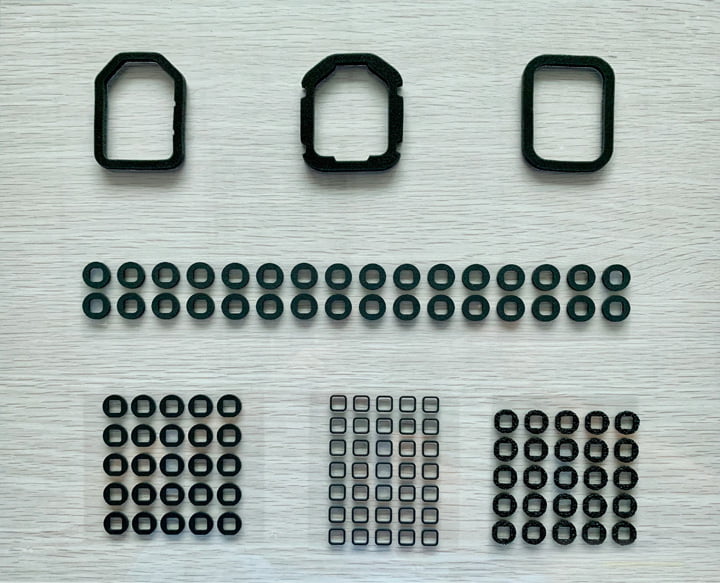
- Foam gaskets
- Adhesive pads
- Waterproof seals
- Thermal insulation layers
- EMI shielding components
- Protective films
- Vibration dampers
Even though many die cut parts look simple, they often play critical roles inside the final product.
For example, a small sealing gasket may determine whether an automotive battery system passes waterproof testing or fails completely.
One Main Use Is Material Converting
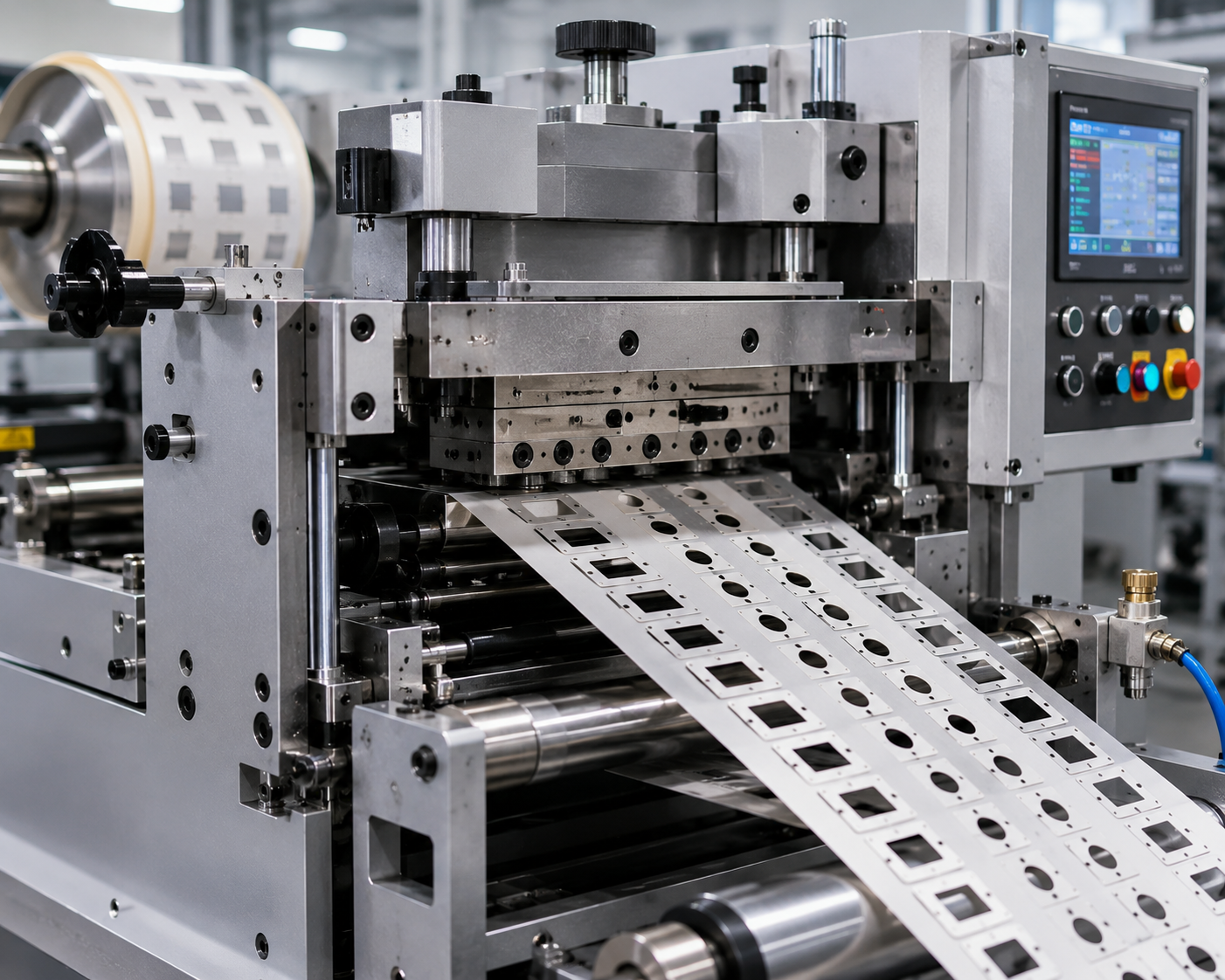
Modern die cutting is no longer only about cutting.
Today’s OEM products often require multilayer converting structures.
A die cutting machine may process:
| Material | Common Function |
|---|---|
| Foam | Cushioning and sealing |
| Rubber | Waterproof protection |
| PET film | Electrical insulation |
| Adhesive tape | Bonding |
| Conductive material | EMI shielding |
| Non-woven fabric | Acoustic insulation |
| Silicone | Heat resistance |
These materials are often laminated together into highly engineered assemblies.
That is why converting expertise is now just as important as cutting accuracy.
Die Cutting Machines Are Widely Used in Automotive Manufacturing
Automotive manufacturing is one of the largest die cutting industries.
Applications include:
- NVH foam parts
- Battery insulation
- Waterproof sealing systems
- Thermal management materials
- Interior cushioning components
Automotive OEMs require extremely stable quality because even small dimensional deviations can affect assembly performance.
At Sanken, we support automotive customers with precision converting systems designed for high-volume production stability.
Electronics Industry Relies Heavily on Die Cutting
Modern electronics contain many die cut components.
Examples include:
- EMI shielding materials
- Thermal conductive pads
- Precision adhesive films
- Display protection layers
- Electrical insulation materials
Electronics applications usually require:
- Tight tolerances
- Clean processing
- Thin material handling
- Precision alignment
This is where advanced die cutting equipment and process control become critical.
Medical Manufacturers Also Use Die Cutting Machines
Medical applications require highly controlled manufacturing environments.
Die cutting machines are used to produce:
- Medical adhesive tapes
- Disposable device components
- Foam cushioning materials
- Wearable medical parts
Medical manufacturing often requires:
- Clean production
- Stable adhesive performance
- Biocompatible material handling
That is why process verification and inspection systems are extremely important.
Why OEM Buyers Care About Die Cutting Quality
Many buyers initially focus only on pricing.
But poor die cutting quality creates serious downstream problems such as:
- Adhesive overflow
- Rough edges
- Material stretching
- Tolerance drift
- Assembly failures
- Increased rejection rates
The cheapest supplier often becomes the most expensive problem later.
At Sanken, we focus on reducing the customer’s total manufacturing risk rather than simply lowering the unit price.
Modern Die Cutting Machines Improve Production Efficiency
Another major use of die cutting machines is improving manufacturing efficiency.
Advanced systems allow:
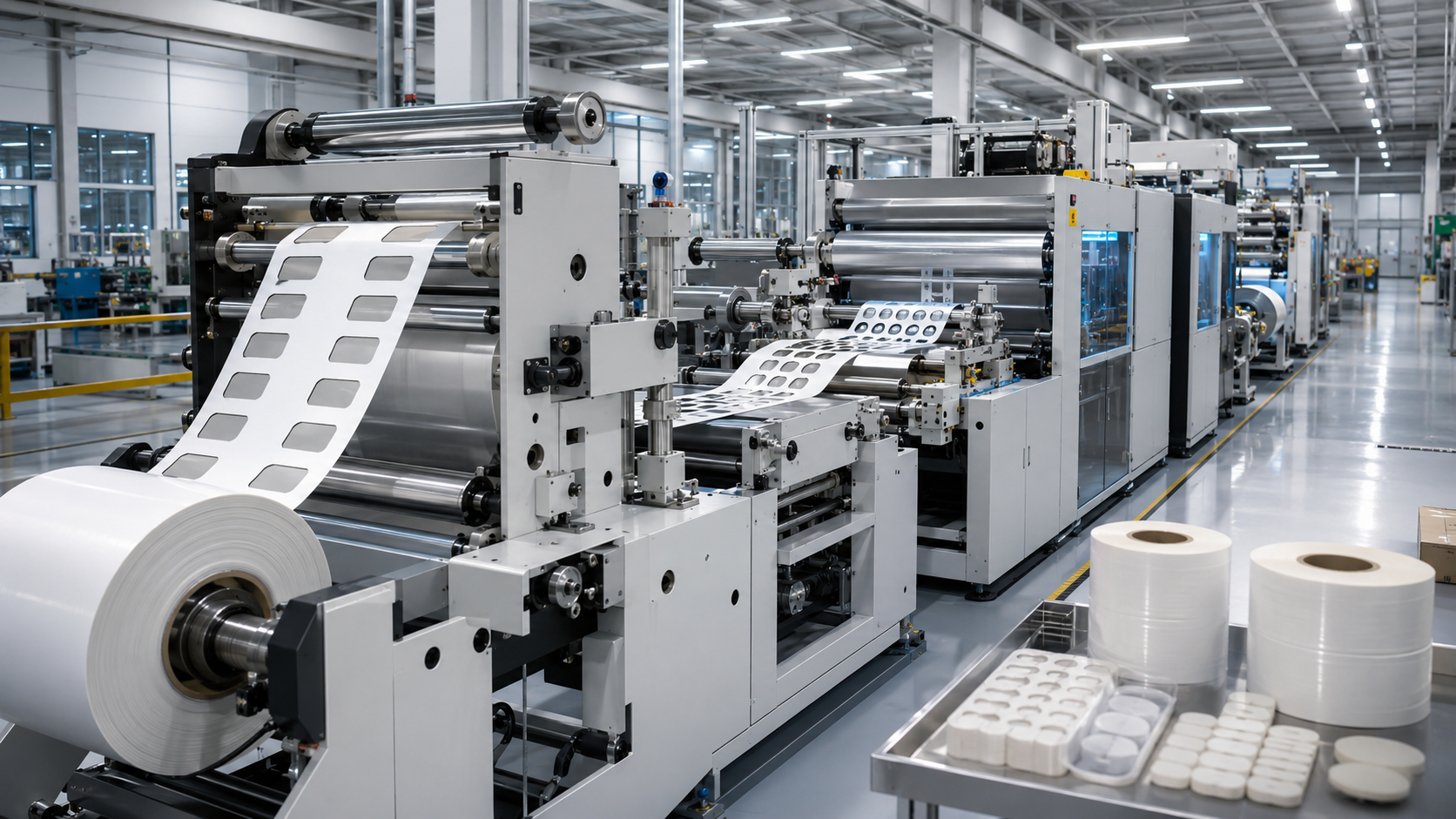
- High-speed roll-to-roll production
- Automated feeding
- Continuous multilayer processing
- Reduced material waste
- Faster assembly integration
Rotary die cutting systems are especially effective for large-volume OEM production ([placeholder link]).
Why Process Control Matters More Than the Machine Itself
Many factories can buy similar machines.
The real difference comes from:
- Material expertise
- Tooling optimization
- Adhesive knowledge
- Process integration
- Quality management systems
I’ve seen factories with expensive equipment still struggle with unstable production because they lacked converting experience.
At Sanken, our engineering team focuses heavily on manufacturability optimization before production even begins.
Why OEM Customers Choose Sanken
At Sanken, we provide more than die cutting services.
We offer integrated manufacturing solutions including:
- Precision die cutting
- Rotary converting
- Adhesive laminating
- Hot pressing
- Spraying and gluing
- Silk screen printing
- Injection molding
Our facilities operate under:
- IATF 16949
- ISO 9001
- ISO 14001
This allows us to support automotive, electronics, medical, and industrial OEM projects with stable large-scale production quality ([placeholder link]).
What Smart OEM Buyers Ask Suppliers
Experienced buyers usually ask:
- Can the supplier maintain tight tolerances consistently?
- Do they understand multilayer converting?
- Can they support prototype verification?
- Do they optimize material efficiency?
- Can they scale to stable mass production?
These questions matter far more than simply asking about machine speed or pricing.
Conclusion
A die cutting machine is used to convert industrial materials into precision functional components for sealing, insulation, bonding, shielding, and protection applications. At Sanken, we combine advanced die cutting technology, material expertise, and integrated converting solutions to help OEM customers achieve more reliable products and more stable manufacturing performance.