
What Features Make Matte Optical Film Ideal for Touch Display Assembly?
Matte optical films are widely used in touch display applications because they enhance visual performance, touch responsiveness, and assembly reliability. For OEM engineers and display manufacturers, choosing the right matte optical film ensures clear images, reduces glare, and prevents unwanted reflections while maintaining precise alignment with touch sensors.
At Sanken Manufacturing, we help electronics OEMs select, die-cut, and laminate matte optical films to meet high standards for touch display modules in smartphones, tablets, automotive displays, and industrial panels.
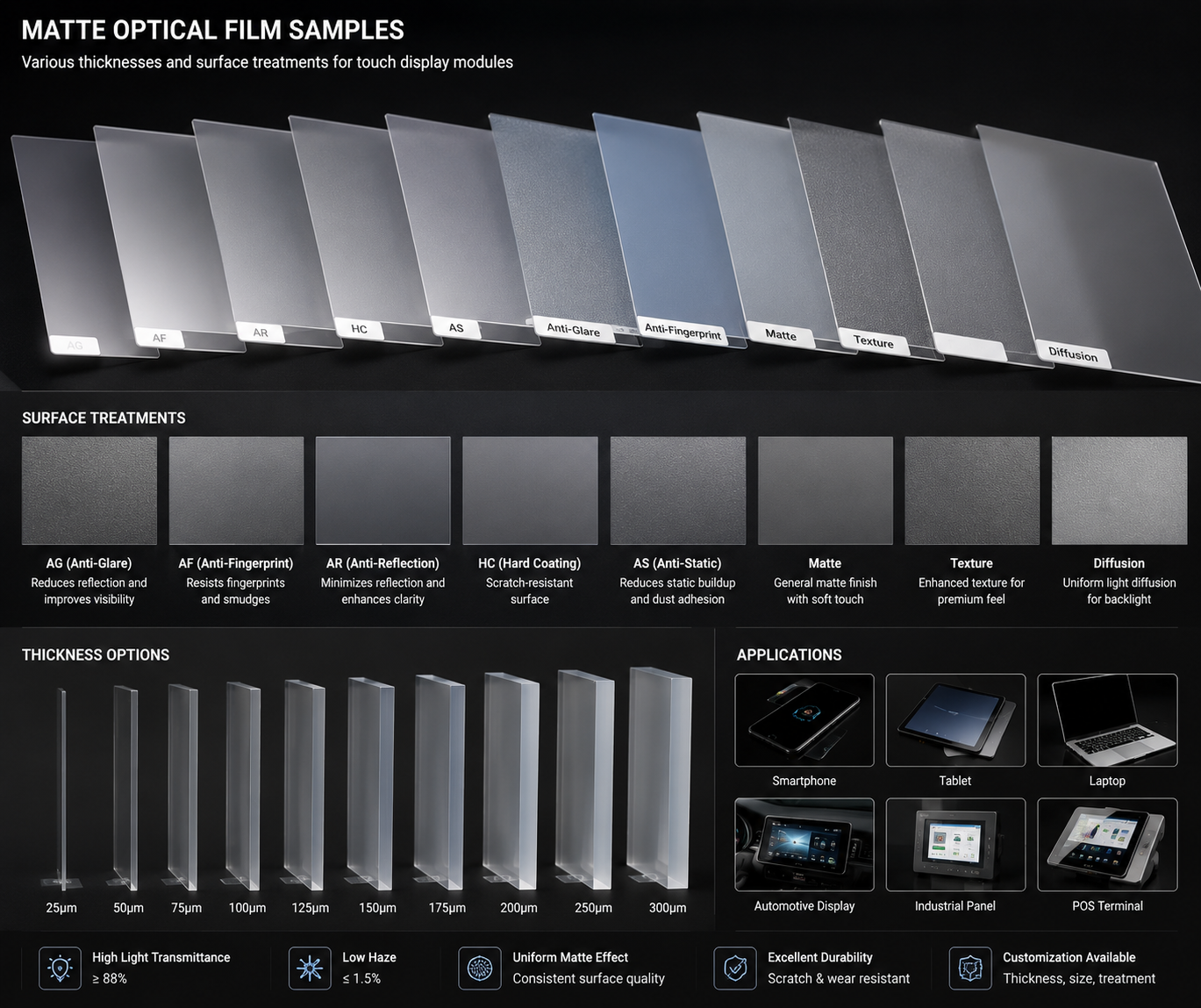
Key Features of Matte Optical Films
1. Anti-Glare and Reduced Reflection
Matte films diffuse incident light, minimizing reflection and glare. This improves readability under bright lighting conditions and reduces eye strain for users.
2. Smooth Touch Response
The surface texture of matte films provides consistent tactile feedback while remaining compatible with capacitive touch sensors. This ensures accurate touch response and minimal latency.
3. Scratch Resistance
High-quality matte optical films often include hard coating layers that resist scratches during assembly, transport, and user handling. This prevents surface defects that could interfere with display clarity or touch function.
4. Dimensional Stability
For precision assembly, films must maintain consistent thickness and flatness. Matte optical films are engineered to resist curling or warping during lamination, die cutting, or exposure to heat and humidity.
5. Anti-Fingerprint and Easy Cleaning
Matte surface reduces the visibility of fingerprints and smudges, which is critical for high-end consumer devices. It also facilitates cleaning without damaging the film surface.
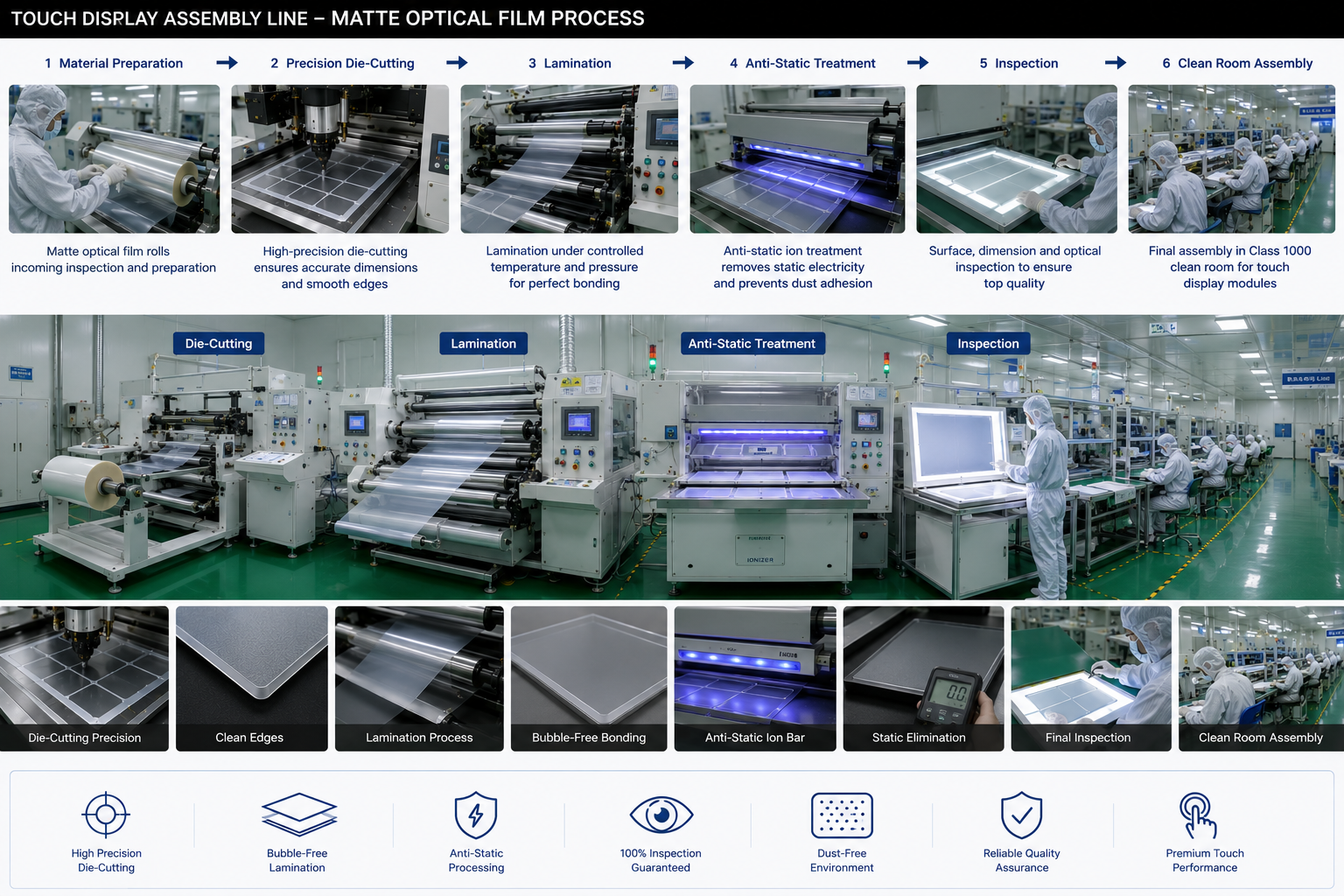
Additional Benefits for Assembly
- Precision Die-Cutting Compatibility: Matte optical films can be die-cut cleanly without edge fraying, maintaining dimensional tolerance for multi-layer touch panels.
- Lamination Ease: Matte films adhere uniformly to substrates, preventing air bubbles and wrinkles.
- Low Outgassing: Reduces risk of bubble formation under adhesive layers or over time, protecting sensitive electronic components.
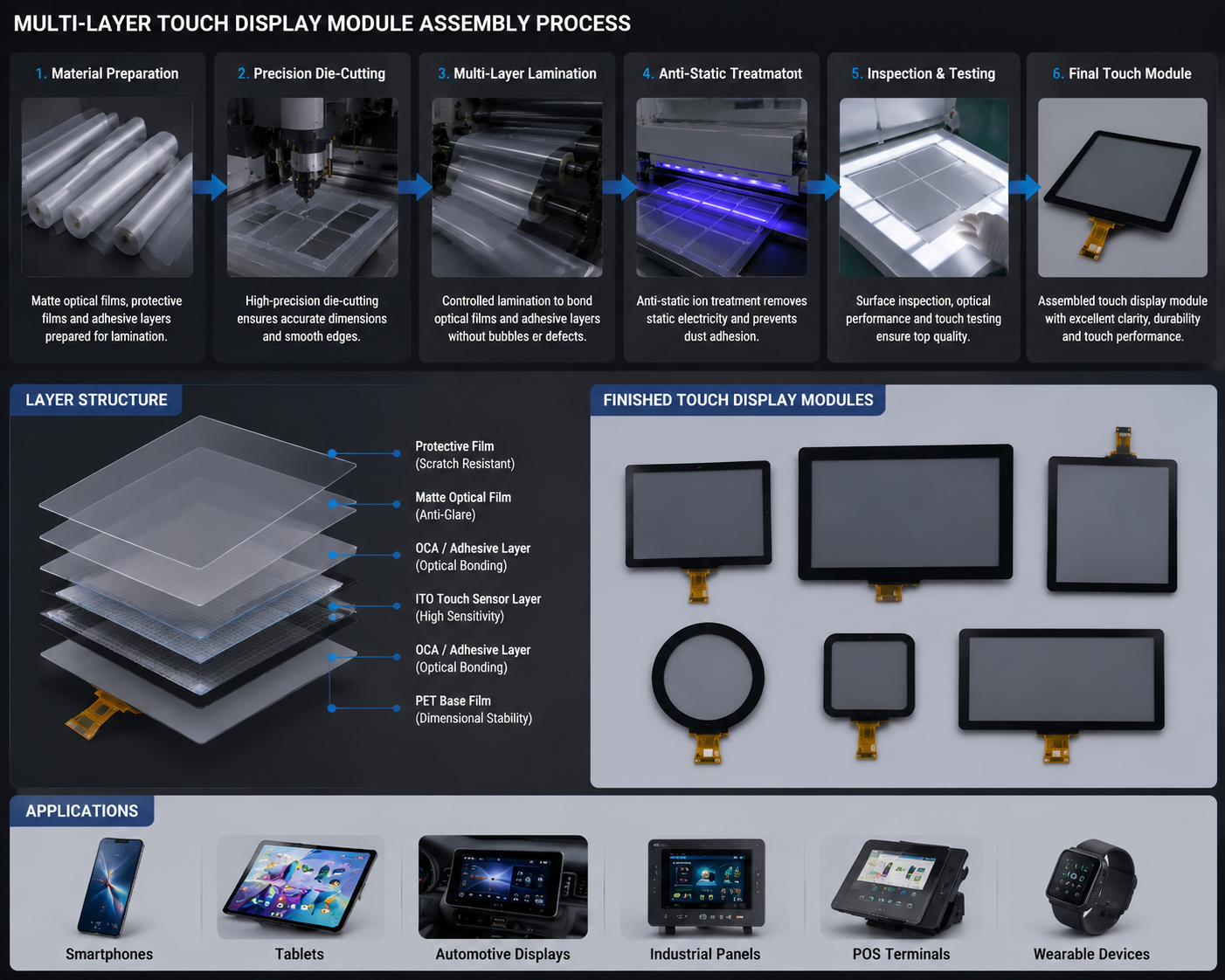
- Multi-Layer Integration: Compatible with PET layers, adhesives, protective films, and insulating layers in modern touch modules.
Material Considerations
When selecting matte optical films for touch displays:
| Feature | Ideal Specification | Impact on Assembly |
|---|---|---|
| Surface finish | Fine matte coating | Minimizes glare, smooth touch |
| Hardness | 2H–4H or as required | Scratch-resistant during handling |
| Thickness | 50–200 µm | Maintains sensor accuracy |
| Adhesive compatibility | Low-outgassing optically clear adhesives | Prevents bubbles, ensures lamination |
| Environmental stability | High dimensional stability | Reduces curling during assembly |
Conclusion
Matte optical films are ideal for touch display assembly because they combine anti-glare properties, smooth touch response, scratch resistance, dimensional stability, and lamination compatibility. Selecting the right matte film ensures a high-quality user experience, reliable touch performance, and efficient assembly, making them indispensable for modern electronic displays.