
What Is a Rotary Die Cutting Machine?
Many manufacturers struggle with slow production speeds, inconsistent cutting quality, and excessive material waste during converting processes. I’ve seen OEMs lose valuable production time because their suppliers could not maintain tight tolerances across high-volume runs. In industries like automotive, electronics, and medical manufacturing, even small cutting errors can create serious assembly problems ([placeholder link]).
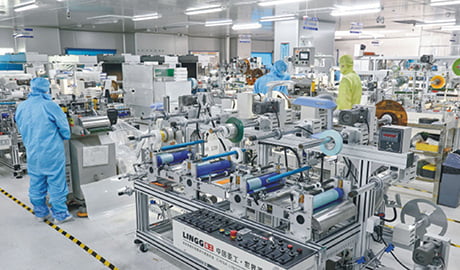
A rotary die cutting machine is a high-speed converting system that uses cylindrical dies to continuously cut, shape, laminate, or process materials in roll form. Unlike flatbed die cutting, rotary die cutting operates in a continuous rolling motion, making it ideal for large-volume production requiring speed, precision, and repeatability. It is widely used for foam, adhesive tapes, films, non-woven materials, rubber, insulation materials, and multilayer laminates ([placeholder link]).
At Sanken, rotary die cutting is one of the core technologies we use to help OEM customers improve production efficiency while maintaining stable product quality.
How Does a Rotary Die Cutting Machine Work?
The process is simple in concept but highly technical in execution.
A rotary die cutting machine feeds roll materials through rotating cylindrical dies.
As the material moves continuously, the die precisely cuts shapes, patterns, or layers at high speed.
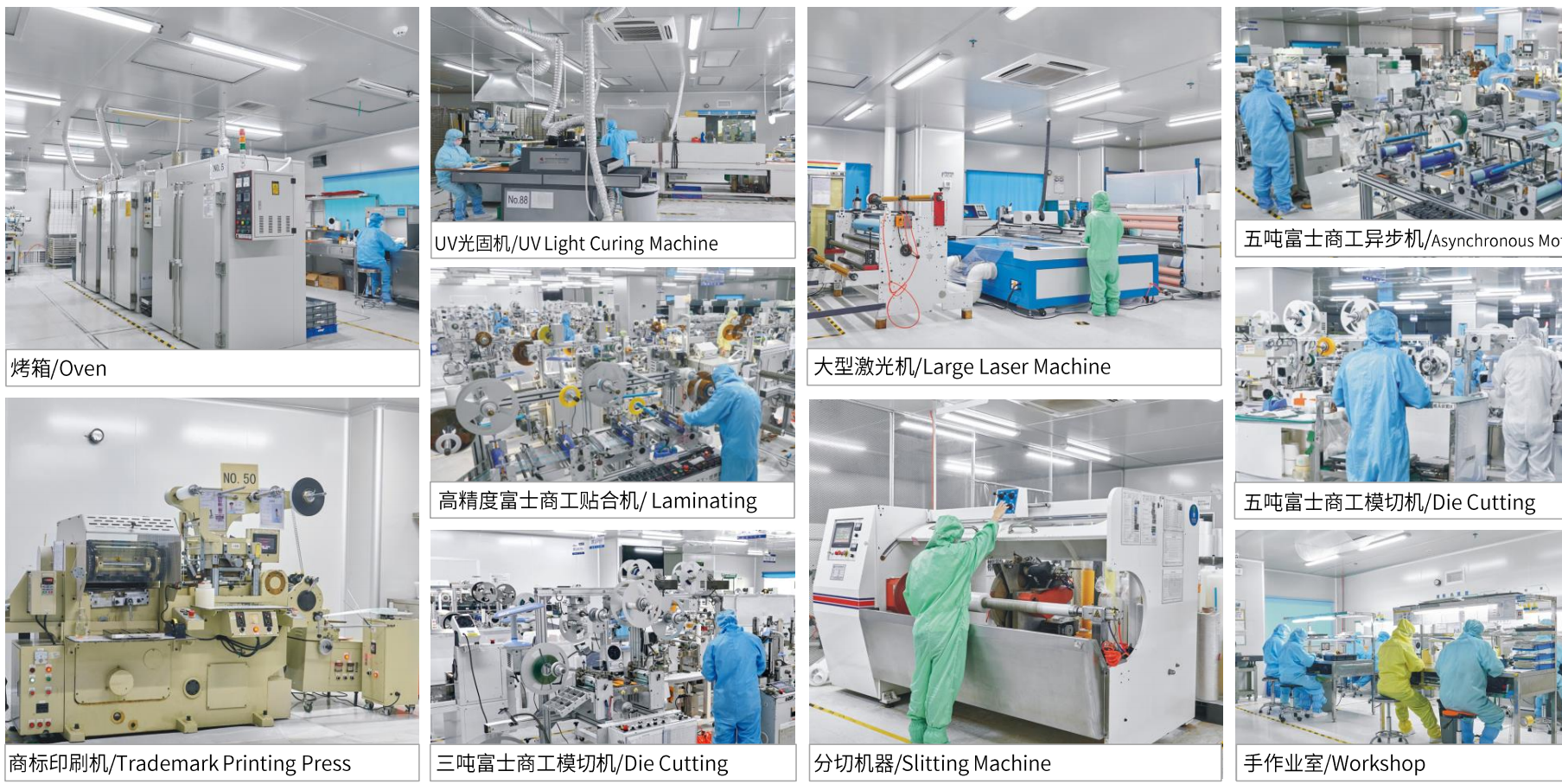
Depending on the application, the process may also include:
- Laminating
- Kiss cutting
- Slitting
- Hole punching
- Multi-layer bonding
- Waste removal
- Rewinding
This allows manufacturers to process large volumes efficiently with minimal interruption.
What Materials Can Be Processed?
One reason rotary die cutting is so widely used is its flexibility.
At Sanken, we process materials such as:
| Material | Common Applications |
|---|---|
| Foam | Cushioning and sealing |
| Double-sided tape | Bonding solutions |
| PET film | Electrical insulation |
| Non-woven fabric | Acoustic insulation |
| Rubber | Gaskets and waterproof sealing |
| Conductive materials | EMI shielding |
| Protective film | Surface protection |
| Silicone | High-temperature applications |
Many OEM products today require multilayer assemblies.
Rotary die cutting allows us to combine multiple materials into a single precision component.
Why Is Rotary Die Cutting Better for High-Volume Production?
1. Faster Production Speed
Traditional cutting methods are often too slow for modern manufacturing demands.
Rotary systems run continuously, significantly increasing throughput.
This is especially important in:
- Automotive production
- Electronics assembly
- Medical manufacturing
- Industrial automation
2. Higher Precision and Consistency
Poor cutting accuracy creates:
- Assembly misalignment
- Adhesive overflow
- Air gaps
- Product failures
Our rotary die cutting systems maintain stable tolerances even during large-volume production runs.
3. Lower Material Waste
At Sanken, we optimize material layouts and nesting designs to improve material utilization.
This helps customers reduce scrap and lower manufacturing costs.
4. Better Multi-Layer Processing
Many suppliers can only cut single-layer materials.
We integrate:
- Lamination
- Adhesive bonding
- Precision registration
- Multi-layer converting
This allows us to manufacture more complex functional components efficiently ([placeholder link]).
Rotary Die Cutting vs Flatbed Die Cutting
| Rotary Die Cutting | Flatbed Die Cutting |
|---|---|
| Continuous high-speed operation | Slower stop-start process |
| Best for roll materials | Better for thick rigid materials |
| Ideal for high-volume production | Suitable for smaller runs |
| Excellent repeatability | More flexible for prototypes |
| Lower unit cost at scale | Higher labor involvement |
Both technologies have advantages.
At Sanken, we help customers choose the right process based on:
- Material type
- Thickness
- Tolerance requirements
- Production volume
- Cost targets
Common Problems With Low-Quality Rotary Die Cutting
This is where many suppliers struggle.
We often see:
- Inconsistent die pressure
- Poor registration accuracy
- Adhesive contamination
- Material stretching
- Burrs and rough edges
- Layer misalignment
These issues lead to production delays and expensive quality failures.
That is why process control matters more than simply owning the equipment.
Why OEM Customers Choose Sanken
At Sanken, we combine:
- Precision rotary die cutting
- Material R&D
- Adhesive lamination
- Multi-process manufacturing
- Quality verification systems
Our facilities also support:
- Hot pressing
- Spraying and gluing
- Silk screen printing
- Injection molding
- One-stop material converting solutions
We operate under strict quality systems including:
- IATF 16949
- ISO 9001
- ISO 14001
This ensures stable production quality for automotive, electronics, medical, and industrial OEM customers ([placeholder link]).
How to Choose the Right Rotary Die Cutting Supplier?
Before selecting a supplier, I always recommend asking:
- Can they maintain stable tolerances at high speed?
- Do they understand material behavior during converting?
- Can they support multilayer assemblies?
- Do they provide engineering support before production?
- Can they handle both prototyping and mass production?
Many suppliers only provide cutting services.
Very few can solve manufacturing problems before they impact production lines.
That difference is critical for OEM manufacturers.
Conclusion
A rotary die cutting machine is essential for modern high-volume material converting. At Sanken, we use advanced rotary die cutting technology, material expertise, and strict quality control to help OEM customers achieve faster production, tighter tolerances, and more reliable product performance.