
What Is Custom Precision Manufacturing?
Many industrial products fail for a simple reason: standard components cannot meet exact application requirements. Dimensions drift, materials mismatch, assemblies loosen, and production delays increase. Custom precision manufacturing solves this problem by producing highly accurate components designed specifically for a customer’s application, tolerances, and production environment.
Custom precision manufacturing is a specialized production process that creates parts, assemblies, or components according to exact customer specifications using high-accuracy manufacturing technologies. It focuses on tight tolerances, repeatability, material performance, and consistent quality for OEM and industrial applications.
This manufacturing approach is widely used in automotive, electronics, medical devices, aerospace, industrial equipment, and precision converting industries.
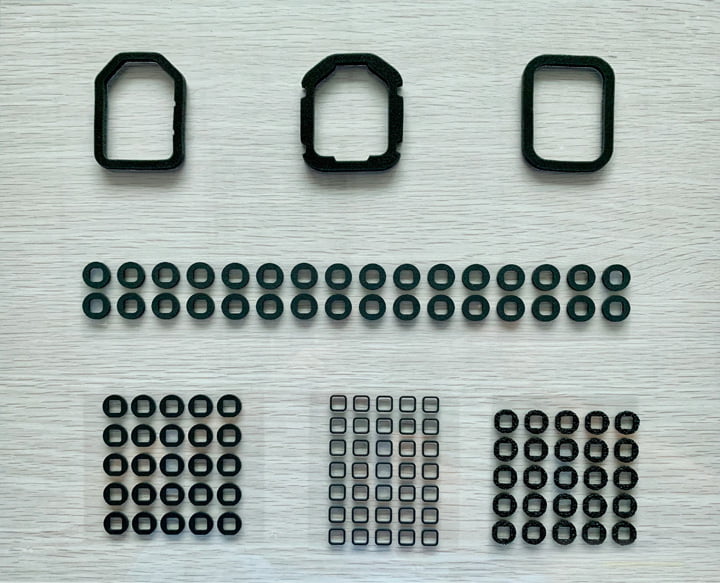
What Does “Custom Precision Manufacturing” Mean?
The term combines two concepts:
Custom Manufacturing
“Custom” means the product is designed specifically for a customer’s unique requirements rather than being a standard off-the-shelf item.
This may involve:
- Special dimensions
- Unique materials
- Specific performance requirements
- Custom assembly methods
- Industry-specific standards
Precision Manufacturing
“Precision” refers to producing components with:
- Tight tolerances
- Accurate dimensions
- Consistent repeatability
- Controlled quality standards
Precision manufacturing minimizes variation and ensures each part performs consistently in mass production.
How Does Custom Precision Manufacturing Work?
The process usually includes several stages:
1. Requirement Analysis
Manufacturers first evaluate:
- Product function
- Material requirements
- Environmental conditions
- Tolerance expectations
- Production volume
- Assembly methods
Understanding the application is critical.
2. Engineering and Design
Engineering teams create:
- CAD drawings
- Tooling designs
- Production workflows
- Material stack-up structures
Design optimization helps reduce production risk and improve manufacturability.
3. Material Selection
Material performance directly affects product reliability.
Common materials include:
- Foam
- Rubber
- Plastic films
- Metal
- Adhesive tapes
- Non-woven fabrics
- Composite laminates
Selection depends on:
- Heat resistance
- Chemical exposure
- Compression requirements
- Electrical insulation
- Mechanical strength
4. Precision Production
Manufacturing technologies may include:
- Precision die cutting
- CNC machining
- Injection molding
- Laser cutting
- Laminating
- Slitting
- Stamping
- Assembly processes
Each process is controlled to maintain dimensional accuracy.
5. Quality Control
Precision manufacturing requires strict inspection standards.
Quality systems may include:
- Dimensional inspection
- Material verification
- Functional testing
- Surface inspection
- Process monitoring
Stable quality is essential for OEM production.
Common Types of Custom Precision Manufacturing
Precision Die Cutting
Used for:
- Foam gaskets
- Adhesive components
- Insulation parts
- Protective films
Widely used in electronics, automotive, and medical industries.
CNC Precision Machining
Used for:
- Metal components
- Structural parts
- Tight-tolerance mechanical assemblies
Provides extremely high dimensional accuracy.
Precision Injection Molding
Used for:
- Plastic components
- Technical housings
- Medical parts
Suitable for high-volume production.
Precision Material Converting
Includes:
- Laminating
- Slitting
- Rewinding
- Multi-layer assembly
Common for flexible materials and industrial tapes.
Industries That Use Custom Precision Manufacturing
Custom precision manufacturing is critical in industries requiring consistent performance and exact tolerances.
Automotive
- Sealing systems
- Vibration control
- Thermal insulation
- Electronic protection
Electronics
- EMI shielding
- Thermal pads
- Insulation materials
- Adhesive assemblies
Medical Devices
- Medical tapes
- Precision adhesive parts
- Disposable components
Industrial Equipment
- Gaskets
- Protective materials
- Sealing components
Benefits of Custom Precision Manufacturing
Improved Product Performance
Custom parts are optimized for the actual application.
Better Assembly Efficiency
Precision components reduce installation errors.
Consistent Quality
Controlled processes improve repeatability.
Reduced Production Risk
Engineering validation prevents failure in mass production.
Supply Chain Simplification
One supplier can manage multiple converting or assembly steps.
Common Challenges in Precision Manufacturing
Without proper engineering control, manufacturers may face:
- Tolerance drift
- Material inconsistency
- Adhesive failure
- Assembly misalignment
- Production delays
- Increased scrap rates
This is why process control and supplier capability are critical.
How to Choose a Custom Precision Manufacturing Partner
A qualified supplier should provide:
- Engineering support
- Material expertise
- Stable production capability
- Quality management systems
- Prototype and pilot support
- OEM manufacturing experience
The ability to solve application problems is often more important than simply producing parts.
Featured Snippet Summary
Custom precision manufacturing is a production process that creates highly accurate parts and components according to customer-specific requirements. It combines custom engineering, tight tolerance control, specialized materials, and precision production technologies to ensure consistent performance in OEM and industrial applications.
Conclusion
Custom precision manufacturing focuses on producing accurate, repeatable components tailored to specific industrial applications. By combining engineering expertise, material selection, precision processing, and strict quality control, manufacturers can deliver reliable parts that support stable mass production and long-term product performance.